How to catch Grayling
Thymallus thymallus (Linnaeus, 1758)
About Grayling fishing
The grayling is a distinctive freshwater fish belonging to the salmon family Salmonidae and stands as the sole representative of its genus native to Europe. It features a slender fusiform body, an exceptionally large and colourful dorsal fin marked with rows of dark spots, and a small terminal mouth. Reaching a maximum length of sixty centimetres and a top recorded weight of six point seven kilograms, typical adults are much smaller. This species thrives in cold, fast-flowing submontane rivers with gravel or stone beds, as well as clear lakes and occasional brackish Baltic coastal waters. It prefers well-oxygenated currents, often holding position in hollows behind boulders or beneath overhanging banks. Gregarious by nature, grayling form schools and feed primarily on benthic invertebrates, insect larvae, nymphs, and terrestrial insects that fall onto the water surface. Spawning occurs during the spring months in shallow riffles over clean gravel beds. Because of its sporting qualities and delicate flavour, it holds considerable commercial and angling value across its native range.
-
Difficulty
Medium
-
Average size
30 cm TL
-
Market value
Very high
-
Habitat
Freshwater, Brackish
-
Season
Spring, Summer, Autumn, Winter
-
Also known as
European grayling

Adipose fin
Small fleshy fin located between the dorsal and caudal fins.
Caudal shape
Deeply forked caudal fin typical of active swimming salmonids.
Dorsal spots
Large greyish dorsal fin with parallel rows of round dark spots.
Grayling fishing facts
Characteristics
-
Typical size
30 cm TL (max 60 cm TL ) -
Typical weight
0.6 kg (max 6.7 kg ) -
Depth
15 m -
Longevity
14 years -
Body shape
Fusiform / Normal -
Commercial?
-
Vulnerability score
55.6
Best hours
-
Low
Dawn
First light
-
Peak
Morning
After sunrise
-
Active
Midday
High sun
-
Peak
Afternoon
Late day
-
Low
Dusk
Last light
-
Low
Night
After dark
When to fish for Grayling
How to catch Grayling
Tips for catching Grayling
European anglers target this elegant river dweller primarily with specialized fly fishing techniques during the open season extending from mid-June through to March. Because these fish feed predominantly on subsurface aquatic insects, successful presentations require careful micro-nymphing methods, such as Czech nymphing, to drift weighted imitations naturally along the stony river bed where fish congregate in deeper runs and slack water behind boulders. Dry flies and emergers work exceptionally well during warmer months when surface activity increases, while small shrimp patterns and traditional wet flies remain productive year-round. Anglers often wade carefully into moderate currents to present small flies upstream on light tackle, as these fish are less suspicious of waders than trout but demand delicate, drag-free drifts. Targeting deep riffles and pocket water during daylight hours yields the most consistent sport, particularly in autumn when feeding intensifies before the winter period.
Other names for Grayling
Local and alternate names anglers use for Grayling.
-
Grayling
-
European grayling
Best equipment to catch Grayling
Compare fishing methods for Grayling — sized kit for each technique.
Note: Typical fish is 0.6 kg Our algorithm will suggest the best equipment for you based on this weight.
Fly Fishing
Presenting artificial flies with a fly rod and weighted line.
90% Effectiveness
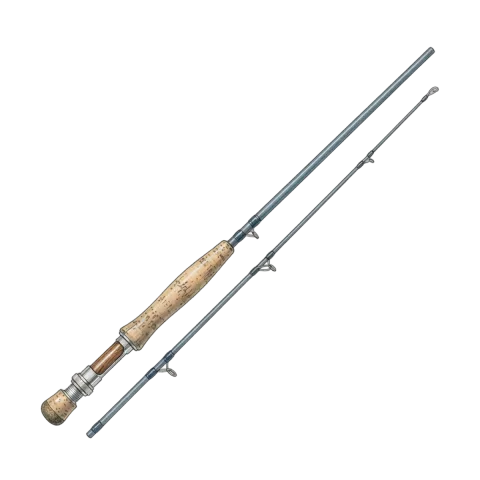
Rod
Fly rod
A fly rod is a fishing rod sized by line weight, with a fly reel seat. The fly line, not a heavy lure, loads the blank.
Sized for a typical fish
2.74 m · 5wt
- Reel seat
- Fly
- Form factor
- Multi-piece
- Action
- Moderate-fast
- Grip
- Cork
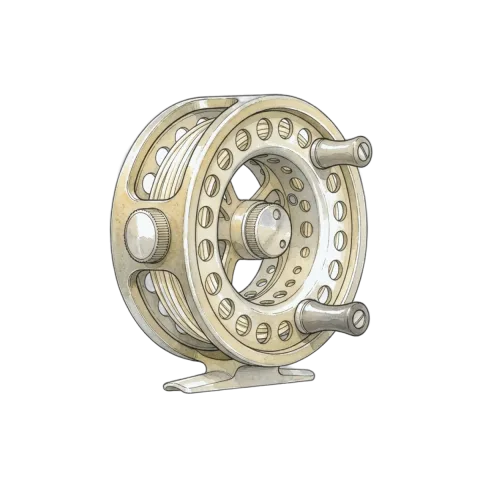
Reel
Fly reel
A fly reel is a large-arbor drum that stores backing and fly line. Drag is a disc; the reel does not cast the fly.
Sized for a typical fish
4 kg drag · 5wt
- Spool
- Drum
- Mount
- Under
- Drag
- Disc
- Retrieve
- Manual
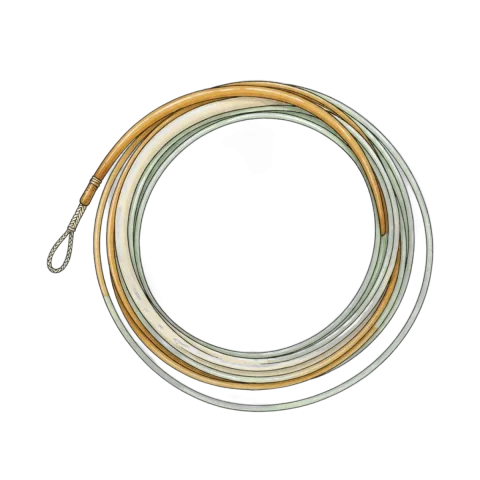
Line
Fly line
Fly line is the weighted shooting line that carries a near-weightless fly. Match it by weight class to the fly rod, not by kilo rating.
Sized for a typical fish
5wt
- Visibility
- Medium
- Abrasion
- Medium
- Stretch
- Low
- Sink rate
- Slow
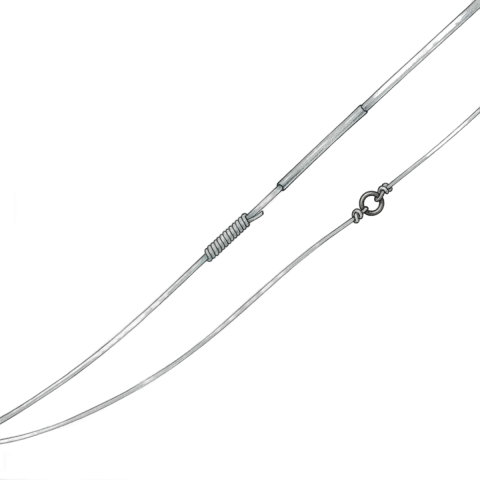
Leader
Tippet
Tippet is the fine, replaceable end of a fly leader, sized in X so you can match the fly and the fish.
Sized for a typical fish
2.8 kg · 0.18 mm · 80 cm · 4X
- Visibility
- Medium
- Abrasion
- Medium
- Stretch
- Medium
- Sink rate
- Slow
Best lures and baits for Grayling
Ranked lures and natural baits from every method, best first.
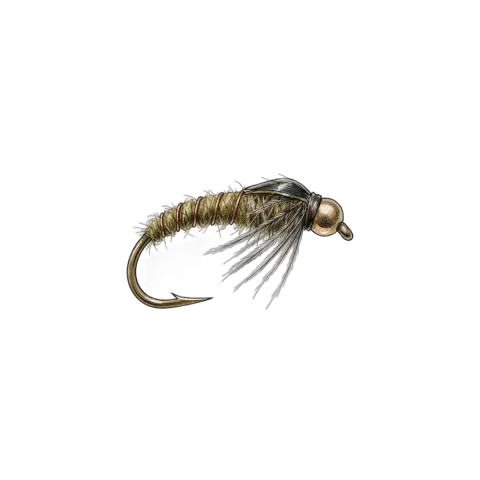
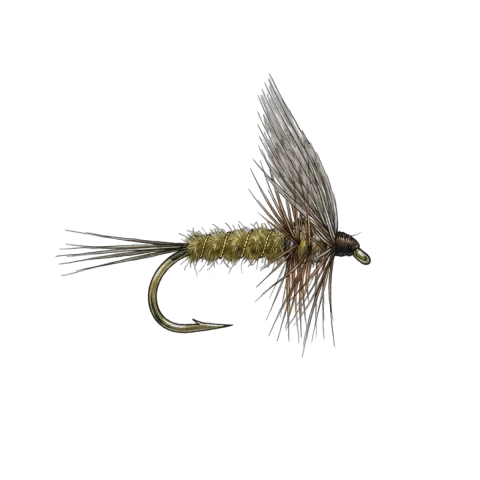
02
Dry fly
- Fly Fishing
A floating fly fished on the surface during a hatch.
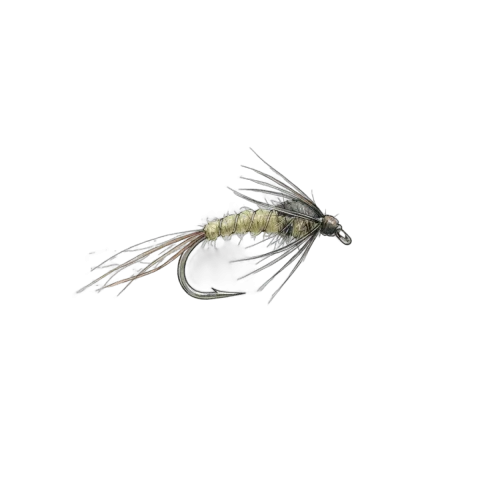
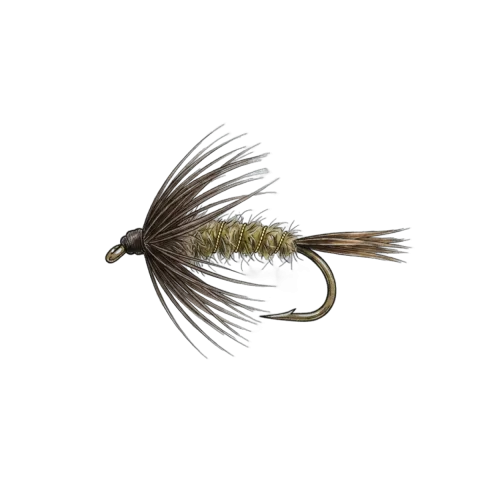
04
Wet fly
- Fly Fishing
A soft-hackle fly swung or drifted just under the film.
Where Grayling spends the year — Non-migratory
Stays in the same waters year-round. Look for it on the same grounds rather than timing a run.
1 Eggs
Same water all year
Laid on the home grounds.
2 Juveniles
Same water all year
Grow up close by.
3 Adults
Same water all year
Keep to a small home range.
4 Spawners
Same water all year
Spawn on the same grounds, with only short moves.
Hover or tap a number to read each stage.
Diet and behavior of Grayling
-
Diet
Carnivore -
Feeds by
Hunts animals -
Hunts
Morning · Afternoon -
Main prey
Baitfish
Prey and predators of Grayling
Prey is what Grayling eats. Predators are the animals that eat it.
That is how it feeds, and how it is hunted.
Prey
What it eats
Predators
What hunts it
Fish
Where Grayling lives
Lives near the bottom but swims in the water just above it. Cover the lower column, not only the mud.

Where this species lives
Grayling photos for identification
Compare these photos with the catalog plate to identify the species.
Where to fish for Grayling
Mapped fishing spots where Grayling is recorded — open a pin for access and methods.


