How to catch Twaite shad
Alosa fallax (Lacepède, 1803)
About Twaite shad fishing
The twaite shad is a pelagic schooling fish belonging to the family Alosidae, characterised by a compressed fusiform body, a deeply forked tail, and a distinctive row of dark spots along its silvery flanks behind the gills. Growing up to sixty centimetres in length, this anadromous species typically inhabits coastal marine waters and estuaries before undertaking spawning migrations into European rivers during the spring. Adults feed voraciously on small fish and crustaceans at sea, though feeding slows significantly once they enter freshwater reaches. Due to river impoundments and historical pollution, their distribution is heavily localized, making them a prized target for specialist European anglers during their seasonal runs.
-
Difficulty
Medium
-
Average size
40 cm SL
-
Market value
Low
-
Habitat
Freshwater, Brackish, Saltwater
-
Season
Spring, Summer
-
Also known as
Killarney shad, Shad, Twait shad, Twaite

Caudal shape
Deeply forked caudal fin helps distinguish it from round-tailed species.
Spots
Series of black blotches behind the gill opening distinguishes it from related shads.
Mouth position
Terminal mouth with distinct upper jaw notch separates it from subterminal feeders.
Twaite shad fishing facts
Characteristics
-
Typical size
40 cm SL (max 60 cm SL ) -
Typical weight
0.4 kg (max 1.5 kg ) -
Preferred temperature
8.7–19.3 °C -
Depth
55–64 m -
Longevity
25 years -
Body shape
Fusiform / Normal -
Commercial?
-
Vulnerability score
49.6
Best hours
-
Peak
Dawn
First light
-
Peak
Morning
After sunrise
-
Low
Midday
High sun
-
Active
Afternoon
Late day
-
Peak
Dusk
Last light
-
Low
Night
After dark
When to fish for Twaite shad
How to catch Twaite shad
Tips for catching Twaite shad
Anglers target twaite shad primarily during their spring spawning runs when schools push into tidal river stretches and lower freshwater reaches. The most productive approach is casting small spoons, spinners, or lightweight soft shads with a steady, varied retrieve that flutters near mid-depth or deeper as currents dictate. Fly fishers achieve success by swinging weighted streamers or small flashy wets through fast-flowing runs and pool tails. Although they largely cease feeding actively once inside freshwater, they strike aggressively out of instinct or territorial reaction. Early morning and late afternoon light conditions during rising spring tides provide the most consistent sport.
Other names for Twaite shad
Local and alternate names anglers use for Twaite shad.
-
Twaite shad
-
Twaite
-
Twait shad
-
Shad
-
Killarney shad
Best equipment to catch Twaite shad
Compare fishing methods for Twaite shad — sized kit for each technique.
Note: Typical fish is 0.4 kg Our algorithm will suggest the best equipment for you based on this weight.
Spinning
Casting and retrieving lures with a spinning rod and reel.
85% Effectiveness

Rod
Spinning rod
A spinning rod is a fishing rod built to carry a spinning reel under the blank. You cast lures and light baits with it from shore or a boat.
Sized for a typical fish
ultralight · 1.8 m
- Reel seat
- Spinning
- Form factor
- Multi-piece
- Action
- Fast
- Grip
- EVA

Reel
Spinning reel
A spinning reel hangs under the fishing rod and is the default reel for casting lures and light baits. Line peels off an open spool with a bail.
Sized for a typical fish
1000 · 3 kg drag · 185 g
- Spool
- Fixed
- Mount
- Under
- Drag
- Front
- Retrieve
- Manual

Line
Braided line
Braided fishing line is the thin, no-stretch main for long casts, jigging, and feeling every tick on the retrieve.
Sized for a typical fish
6 kg · 0.1 mm
- Visibility
- High
- Abrasion
- Low
- Stretch
- None
- Sink rate
- Floats

Leader
Fluorocarbon leader
A fluorocarbon leader is the clear, fast-sinking join between a visible main line and the lure or hook.
Sized for a typical fish
7 kg · 0.3 mm · 90 cm
- Visibility
- Very low
- Abrasion
- High
- Stretch
- Low
- Sink rate
- Fast
Fly Fishing
Presenting artificial flies with a fly rod and weighted line.
80% Effectiveness
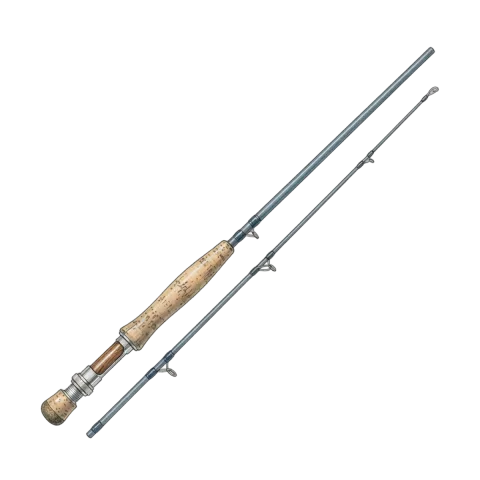
Rod
Fly rod
A fly rod is a fishing rod sized by line weight, with a fly reel seat. The fly line, not a heavy lure, loads the blank.
Sized for a typical fish
2.44 m · 3wt
- Reel seat
- Fly
- Form factor
- Multi-piece
- Action
- Moderate-fast
- Grip
- Cork
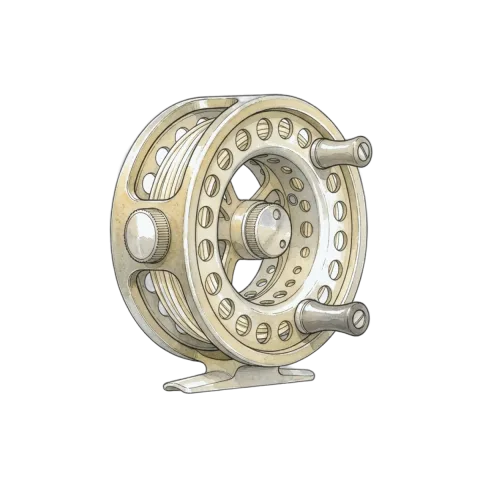
Reel
Fly reel
A fly reel is a large-arbor drum that stores backing and fly line. Drag is a disc; the reel does not cast the fly.
Sized for a typical fish
2 kg drag · 3wt
- Spool
- Drum
- Mount
- Under
- Drag
- Disc
- Retrieve
- Manual
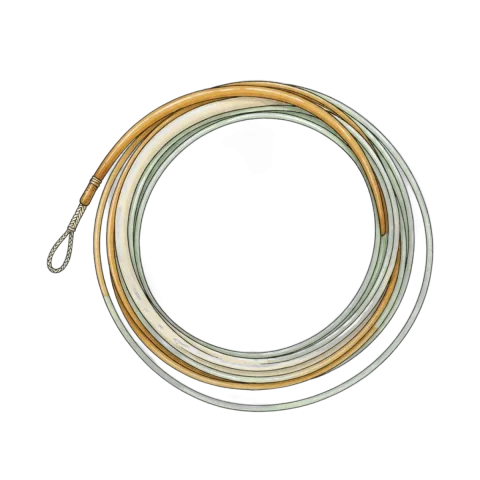
Line
Fly line
Fly line is the weighted shooting line that carries a near-weightless fly. Match it by weight class to the fly rod, not by kilo rating.
Sized for a typical fish
3wt
- Visibility
- Medium
- Abrasion
- Medium
- Stretch
- Low
- Sink rate
- Slow
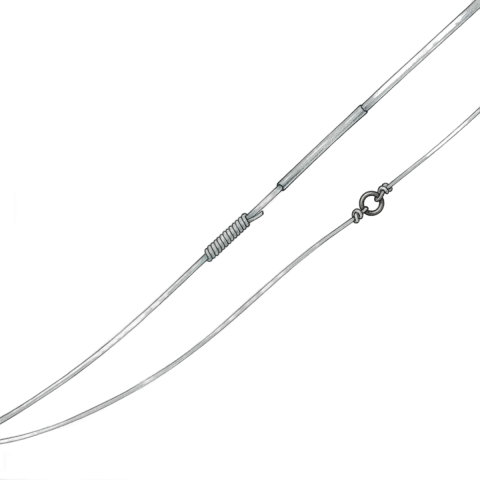
Leader
Tippet
Tippet is the fine, replaceable end of a fly leader, sized in X so you can match the fly and the fish.
Sized for a typical fish
1.6 kg · 0.13 mm · 75 cm · 6X
- Visibility
- Medium
- Abrasion
- Medium
- Stretch
- Medium
- Sink rate
- Slow
Best lures and baits for Twaite shad
Ranked lures and natural baits from every method, best first.
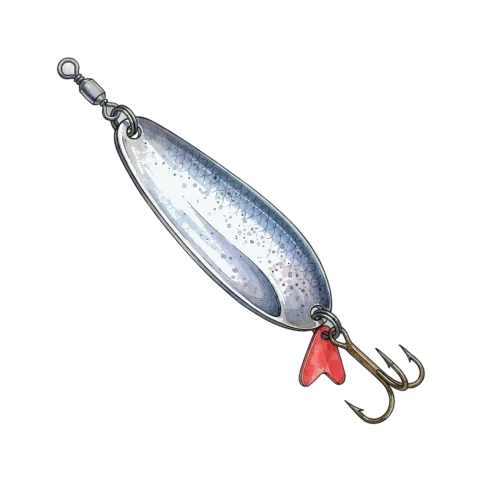
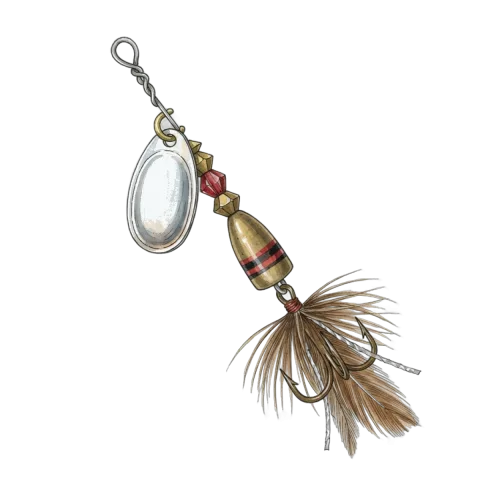
02
Inline spinner
- Spinning
An inline spinner with a blade that flashes on a straight retrieve.
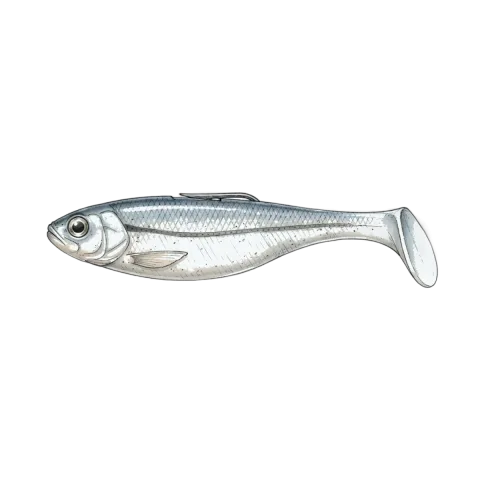
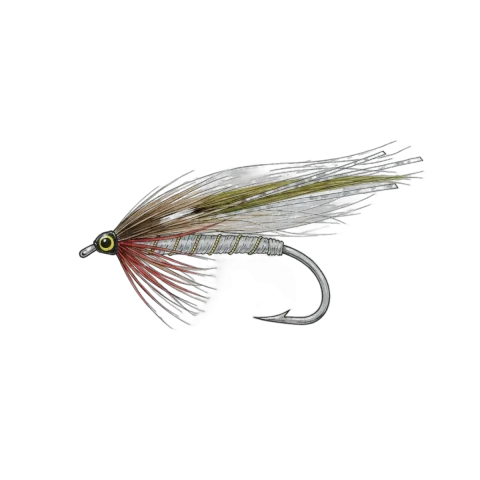
05
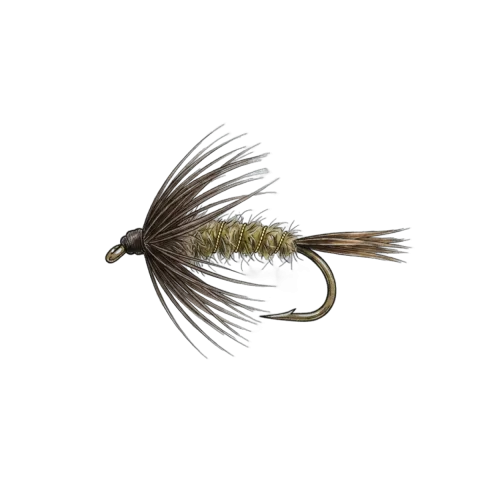
Wet fly
- Fly Fishing
A soft-hackle fly swung or drifted just under the film.
How Twaite shad migrates — Anadromous
Grows at sea and swims into rivers to spawn. Target the run as fish leave the ocean and push upstream.
1 Eggs
Fresh water
Laid in fresh water, usually well up the river.
2 Juveniles
→ Sea
Grow in the river, then head downstream to the sea.
3 Adults
Sea
Feed and grow at sea.
4 Spawners
→ Fresh water
Run back up the river to spawn.
Some populations never go to sea and complete the cycle in rivers and lakes.
Hover or tap a number to read each stage.
Diet and behavior of Twaite shad
-
Diet
Top predator -
Feeds by
Hunts animals -
Hunts
Dawn · Morning · Dusk -
Main prey
Baitfish · Bottom prey
Prey and predators of Twaite shad
Prey is what Twaite shad eats. Predators are the animals that eat it.
That is how it feeds, and how it is hunted.
Prey
What it eats
Where Twaite shad lives
Pelagic over the continental shelf — coastal open water, not the deep ocean.
55–64 m

River mouth
Where this species lives
Twaite shad photos for identification
Compare these photos with the catalog plate to identify the species.