How to catch Arawana
Osteoglossum bicirrhosum (Cuvier, 1829)
About Arawana fishing
The silver arowana is an elongated freshwater bony fish belonging to the family Osteoglossidae, native to major South American river basins including the Amazon and Essequibo. It features a compressed body covered in large, silvery armor-like scales, a tapered tail with nearly fused dorsal and anal fins, and two distinct barbels on its lower jaw. Operating primarily as a surface benthopelagic predator, it utilizes its superior drawbridge-like mouth to feed on insects, crustaceans, and small fish, and is well known for leaping high out of the water to capture airborne prey. It can adapt to low oxygen levels by utilizing its specialized swim bladder and inhabits both whitewater and blackwater streams as well as flooded forests. Highly regarded by anglers and aquarists alike, it provides an acrobatic and powerful fight on light tackle.
-
Difficulty
Medium
-
Average size
80 cm
-
Habitat
Freshwater
-
Also known as
Aruana, Silver arowana, Silver aruana

Pointed caudal shape
Pointed tail fin distinguishes this species from many other bony fishes.
Superior mouth
Upward-pointing mouth opening suits surface-feeding habits of the arowana.
Large cycloid scales
Very large, overlapping cycloid scales armor the elongated body.
Arawana fishing facts
Characteristics
-
Typical size
80 cm (max 90 cm TL ) -
Typical weight
4.2 kg (max 6 kg ) -
Longevity
16 years -
Body shape
Elongated -
Vulnerability score
31.1
Best hours
-
Peak
Dawn
First light
-
Active
Morning
After sunrise
-
Low
Midday
High sun
-
Active
Afternoon
Late day
-
Peak
Dusk
Last light
-
Low
Night
After dark
How to catch Arawana
Tips for catching Arawana
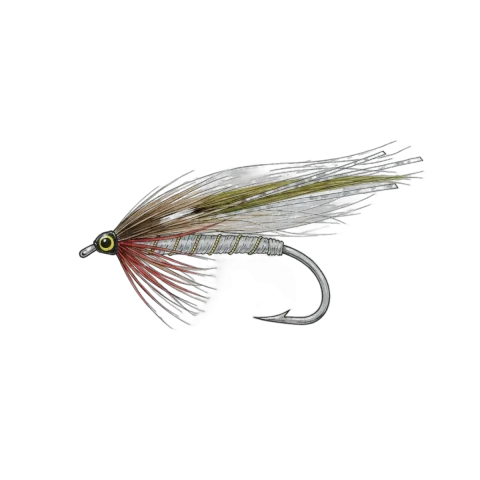
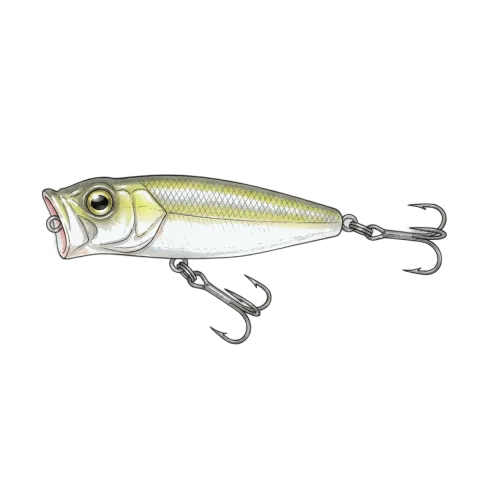
To target surface-oriented predators successfully, cast shallow-running minnows, soft swimbaits, or small topwater poppers tightly toward overhanging tree lines, submerged structure, and quiet margins where fish patrol just beneath the meniscus. Retrieve lures with erratic twitches or steady, slow sweeps to imitate distressed surface movement or falling terrestrial insects. Early morning and late afternoon provide the optimal light windows for consistent action, as these fish rely heavily on sharp eyesight to spot prey from below. Use medium-heavy baitcasting or spinning gear equipped with a sturdy leader to handle explosive strikes and acrobatic leaps.
Other names for Arawana
Local and alternate names anglers use for Arawana.
-
Arawana
-
Silver aruana
-
Silver arowana
-
Aruana
Best equipment to catch Arawana
Compare fishing methods for Arawana — sized kit for each technique.
Note: Typical fish is 4.2 kg Our algorithm will suggest the best equipment for you based on this weight.
Spinning
Casting and retrieving lures with a spinning rod and reel.
90% Effectiveness

Rod
Spinning rod
A spinning rod is a fishing rod built to carry a spinning reel under the blank. You cast lures and light baits with it from shore or a boat.
Sized for a typical fish
medium-heavy · 3 m
- Reel seat
- Spinning
- Form factor
- Multi-piece
- Action
- Fast
- Grip
- EVA

Reel
Spinning reel
A spinning reel hangs under the fishing rod and is the default reel for casting lures and light baits. Line peels off an open spool with a bail.
Sized for a typical fish
1000 · 3 kg drag · 185 g
- Spool
- Fixed
- Mount
- Under
- Drag
- Front
- Retrieve
- Manual

Line
Braided line
Braided fishing line is the thin, no-stretch main for long casts, jigging, and feeling every tick on the retrieve.
Sized for a typical fish
9 kg · 0.14 mm
- Visibility
- High
- Abrasion
- Low
- Stretch
- None
- Sink rate
- Floats

Leader
Fluorocarbon leader
A fluorocarbon leader is the clear, fast-sinking join between a visible main line and the lure or hook.
Sized for a typical fish
9 kg · 0.35 mm · 100 cm
- Visibility
- Very low
- Abrasion
- High
- Stretch
- Low
- Sink rate
- Fast
Fly Fishing
Presenting artificial flies with a fly rod and weighted line.
80% Effectiveness
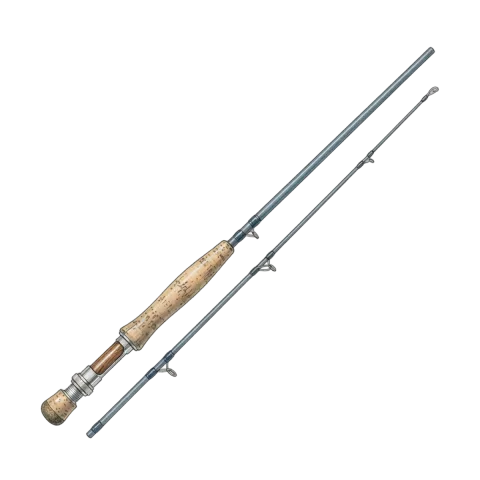
Rod
Fly rod
A fly rod is a fishing rod sized by line weight, with a fly reel seat. The fly line, not a heavy lure, loads the blank.
Sized for a typical fish
2.74 m · 8wt
- Reel seat
- Fly
- Form factor
- Multi-piece
- Action
- Moderate-fast
- Grip
- Cork
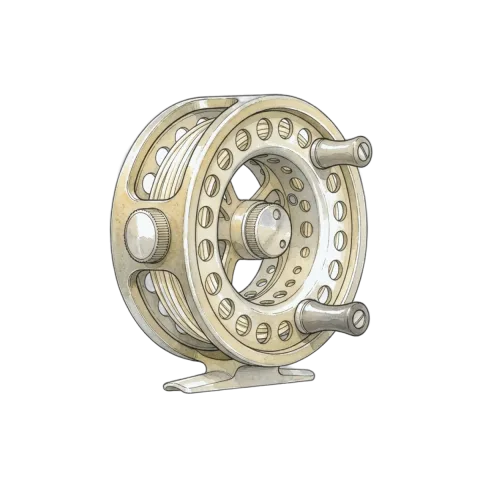
Reel
Fly reel
A fly reel is a large-arbor drum that stores backing and fly line. Drag is a disc; the reel does not cast the fly.
Sized for a typical fish
8 kg drag · 8wt
- Spool
- Drum
- Mount
- Under
- Drag
- Disc
- Retrieve
- Manual
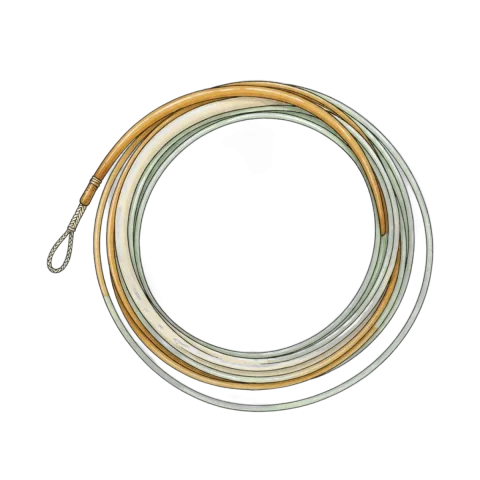
Line
Fly line
Fly line is the weighted shooting line that carries a near-weightless fly. Match it by weight class to the fly rod, not by kilo rating.
Sized for a typical fish
8wt
- Visibility
- Medium
- Abrasion
- Medium
- Stretch
- Low
- Sink rate
- Slow
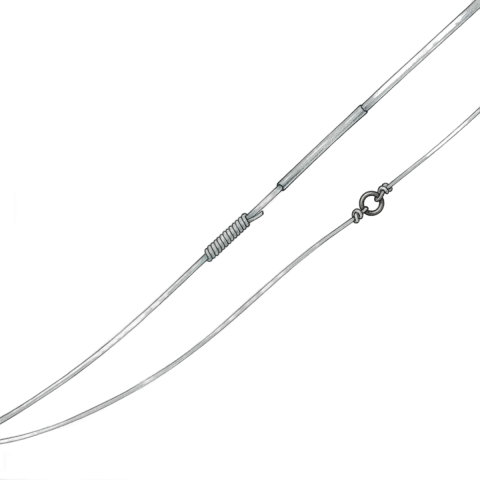
Leader
Tippet
Tippet is the fine, replaceable end of a fly leader, sized in X so you can match the fly and the fish.
Sized for a typical fish
6.8 kg · 0.26 mm · 90 cm · 1X
- Visibility
- Medium
- Abrasion
- Medium
- Stretch
- Medium
- Sink rate
- Slow
Popping
Working surface poppers or stickbaits for inshore and tropical predators.
75% Effectiveness
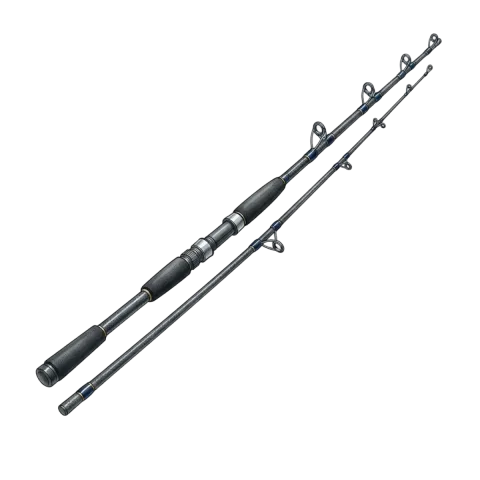
Rod
Offshore rod
An offshore rod is the one-piece boat fishing rod for deep jigging, trolling, and live bait in open salt water.
Sized for a typical fish
heavy · 1.68 m
- Reel seat
- Casting
- Form factor
- One-piece
- Action
- Fast
- Grip
- EVA
Reel
Spinning reel
A spinning reel hangs under the fishing rod and is the default reel for casting lures and light baits. Line peels off an open spool with a bail.
Sized for a typical fish
1000 · 3 kg drag · 185 g
- Spool
- Fixed
- Mount
- Under
- Drag
- Front
- Retrieve
- Manual
Line
Braided line
Braided fishing line is the thin, no-stretch main for long casts, jigging, and feeling every tick on the retrieve.
Sized for a typical fish
9 kg · 0.14 mm
- Visibility
- High
- Abrasion
- Low
- Stretch
- None
- Sink rate
- Floats
Leader
Fluorocarbon leader
A fluorocarbon leader is the clear, fast-sinking join between a visible main line and the lure or hook.
Sized for a typical fish
9 kg · 0.35 mm · 100 cm
- Visibility
- Very low
- Abrasion
- High
- Stretch
- Low
- Sink rate
- Fast
Best lures and baits for Arawana
Ranked lures and natural baits from every method, best first.
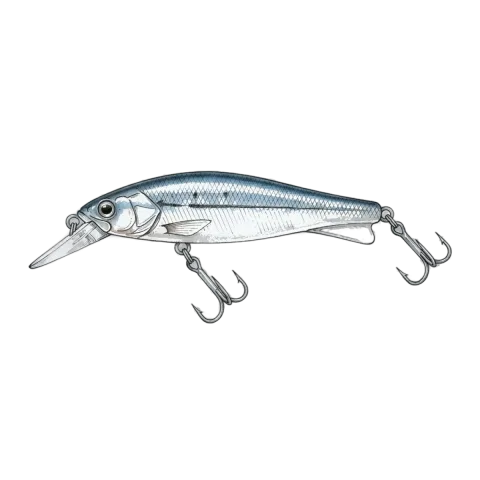
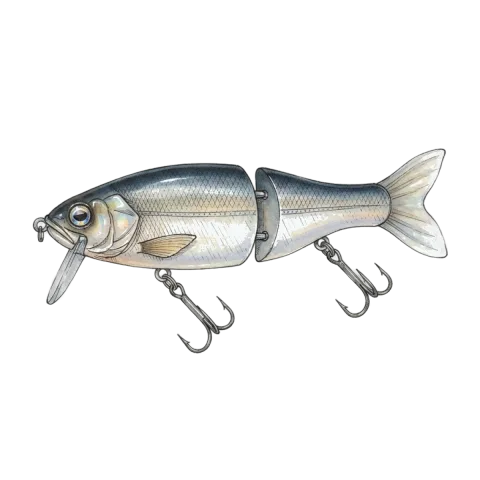
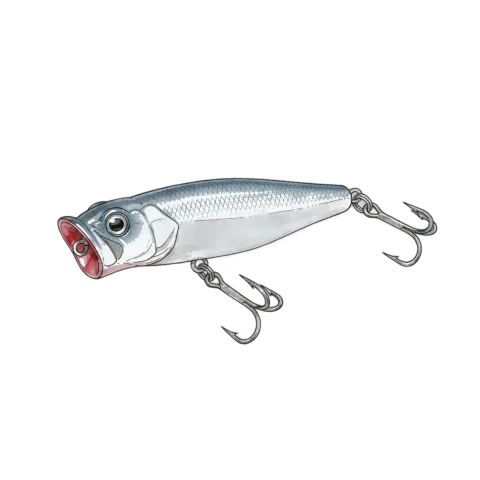
03
Topwater plug
- Spinning
A floating plug that pops and gurgles on the surface.
Where Arawana spends the year — Non-migratory
Stays in the same waters year-round. Look for it on the same grounds rather than timing a run.
1 Eggs
Same water all year
Laid on the home grounds.
2 Juveniles
Same water all year
Grow up close by.
3 Adults
Same water all year
Keep to a small home range.
4 Spawners
Same water all year
Spawn on the same grounds, with only short moves.
Hover or tap a number to read each stage.
Diet and behavior of Arawana
-
Diet
Carnivore -
Feeds by
Hunts animals -
Hunts
Dawn · Dusk -
Main prey
Baitfish · Bottom prey
Prey and predators of Arawana
Prey is what Arawana eats. Predators are the animals that eat it.
That is how it feeds, and how it is hunted.
Prey
What it eats
Where Arawana lives
Lives near the bottom but swims in the water just above it. Cover the lower column, not only the mud.

Where this species lives
Arawana photos for identification
Compare these photos with the catalog plate to identify the species.
Where to fish for Arawana
Mapped fishing spots where Arawana is recorded — open a pin for access and methods.
