How to catch Atlantic herring
Clupea harengus Linnaeus, 1758
About Atlantic herring fishing
The Atlantic herring is a pelagic schooling fish belonging to the family Clupeidae, characterised by a streamlined fusiform body, silvery flanks and a bluish-green back. Reaching up to 45 centimetres in length and just over one kilogram in weight, this slender species features an upturned mouth and delicate scales. It inhabits neritic and oceanic waters across the North Atlantic, forming massive schools that undertake extensive migrations between coastal spawning areas and offshore feeding grounds. Atlantic herring feed primarily on zooplankton such as copepods, krill and amphipods by filtering water through fine gill rakers or seizing prey visually. Due to their immense abundance, they serve as a crucial forage species for numerous marine predators including seabirds, marine mammals and larger fish, while also supporting significant commercial fisheries.
-
Difficulty
Medium
-
Average size
30 cm SL
-
Market value
Low
-
Habitat
Brackish, Saltwater
-
Season
Spring, Summer, Autumn
-
Also known as
Baltic herring, Bank herring, Bismark herring, Bloater, Cleanplate herring, Cut spiced herring

Forked caudal shape
Deeply forked caudal fin helps distinguish pelagic schooling herring.
Superior mouth
Slightly upturned superior mouth indicates feeding near the surface.
No spots
Unmarked silvery body distinguishes it from spotted clupeids.
Atlantic herring fishing facts
Characteristics
-
Typical size
30 cm SL (max 45 cm SL ) -
Typical weight
0.2 kg (max 1 kg ) -
Preferred temperature
0.5–11.2 °C -
Depth
0–364 m -
Longevity
25 years -
Body shape
Fusiform / Normal -
Commercial?
-
Vulnerability score
41
Best hours
-
Active
Dawn
First light
-
Peak
Morning
After sunrise
-
Low
Midday
High sun
-
Active
Afternoon
Late day
-
Peak
Dusk
Last light
-
Low
Night
After dark
When to fish for Atlantic herring
How to catch Atlantic herring
Tips for catching Atlantic herring
Anglers target Atlantic herring mostly when massive shoals migrate into coastal inlets, sea lochs and shallow coastal waters during the warmer summer and autumn months. Because these pelagic fish feed heavily on zooplankton and small marine organisms, traditional multi-hook feather rigs or Sabiki strings work exceptionally well when vertically jigged or cast and retrieved with a moderate speed. Look for surface activity, diving seabirds or feeding marine mammals that signal the presence of dense schools pushed up into the water column. Since herring rely heavily on their vision and feed actively during daylight hours, morning and late afternoon provide the most productive windows for catching them. Keep movements quiet around the boat or shoreline to avoid startling tightly packed shoals that frequent mid-water depths.
Other names for Atlantic herring
Local and alternate names anglers use for Atlantic herring.
-
Atlantic herring
-
Split cure herring
-
Sild
-
Sea herring
-
Red herring
-
Pearl essence
-
Norwegian milker
-
Mustard herring
-
Baltic herring
-
Whitebait
-
Bank herring
-
Mesh herring
-
Bismark herring
-
Norwegian cured herring
-
Bloater
-
Norwegian sloe
-
Pickling
-
Cleanplate herring
Best equipment to catch Atlantic herring
Compare fishing methods for Atlantic herring — sized kit for each technique.
Note: Typical fish is 0.2 kg Our algorithm will suggest the best equipment for you based on this weight.
Spinning
Casting and retrieving lures with a spinning rod and reel.
60% Effectiveness

Rod
Spinning rod
A spinning rod is a fishing rod built to carry a spinning reel under the blank. You cast lures and light baits with it from shore or a boat.
Sized for a typical fish
ultralight · 1.8 m
- Reel seat
- Spinning
- Form factor
- Multi-piece
- Action
- Fast
- Grip
- EVA

Reel
Spinning reel
A spinning reel hangs under the fishing rod and is the default reel for casting lures and light baits. Line peels off an open spool with a bail.
Sized for a typical fish
1000 · 3 kg drag · 185 g
- Spool
- Fixed
- Mount
- Under
- Drag
- Front
- Retrieve
- Manual

Line
Braided line
Braided fishing line is the thin, no-stretch main for long casts, jigging, and feeling every tick on the retrieve.
Sized for a typical fish
6 kg · 0.1 mm
- Visibility
- High
- Abrasion
- Low
- Stretch
- None
- Sink rate
- Floats

Leader
Fluorocarbon leader
A fluorocarbon leader is the clear, fast-sinking join between a visible main line and the lure or hook.
Sized for a typical fish
7 kg · 0.3 mm · 90 cm
- Visibility
- Very low
- Abrasion
- High
- Stretch
- Low
- Sink rate
- Fast
Best lures and baits for Atlantic herring
Ranked lures and natural baits from every method, best first.
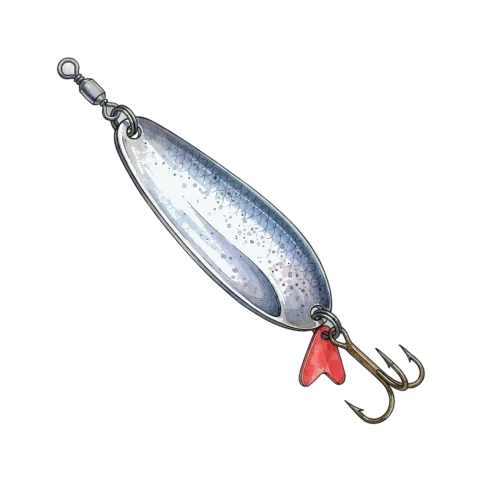
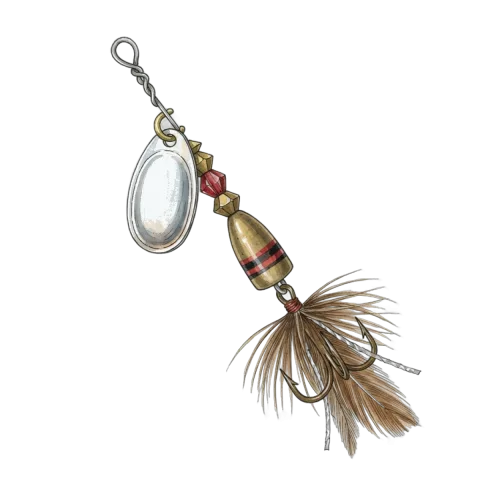
02
Inline spinner
- Spinning
An inline spinner with a blade that flashes on a straight retrieve.
How Atlantic herring migrates — Oceanodromous
Migrates within the sea between spawning, nursery and feeding grounds, and never enters fresh water. Follow its seasonal shifts along the coast and offshore.
1 Eggs
Spawning grounds
Laid on the spawning grounds.
2 Larvae
→ Nursery grounds
Drift with the currents to the nursery grounds.
3 Juveniles
Nursery grounds
Grow up in sheltered nursery waters.
4 Adults
Feeding grounds
Range widely over the feeding grounds.
5 Spawners
→ Spawning grounds
Return to the spawning grounds each season.
It stays in the sea and never runs up into fresh water.
Hover or tap a number to read each stage.
Diet and behavior of Atlantic herring
-
Diet
Carnivore -
Feeds by
Picks plankton -
Hunts
Morning · Dusk -
Feeds over
Intertidal -
Social
Schooling -
Main prey
Baitfish · Plankton · Bottom prey
Prey and predators of Atlantic herring
Prey is what Atlantic herring eats. Predators are the animals that eat it.
That is how it feeds, and how it is hunted.
Prey
What it eats
Predators
What hunts it
Where Atlantic herring lives
Lives near the bottom but swims in the water just above it. Cover the lower column, not only the mud.
0–364 m · usually 0–200 m

Estuary
Where this species lives
Atlantic herring photos for identification
Compare these photos with the catalog plate to identify the species.
Where to fish for Atlantic herring
Mapped fishing spots where Atlantic herring is recorded — open a pin for access and methods.


