How to catch Blue marlin
Makaira nigricans Lacepède, 1802
About Blue marlin fishing
The blue marlin is a magnificent pelagic apex predator belonging to the Istiophoridae family, easily recognised by its elongated body, cobalt blue upper flanks, silvery white underbelly, and rigid spear-like bill. Growing up to five metres in length and reaching extreme weights well over six hundred kilograms, females vastly outgrow their male counterparts. This oceanic traveler inhabits warm epipelagic waters down to one thousand metres, preferring deep blue offshore environments and undertaking wide oceanodromous migrations. It feeds primarily on surface-dwelling fish, squids, and cephalopods, utilizing its formidable bill to stun swift prey before consuming them. Spawning occurs during the peak summer months in open waters. As a legendary game fish, it attracts passionate sport anglers worldwide who seek its blistering runs and powerful acrobatic displays.
-
Difficulty
Medium
-
Average size
290 cm TL
-
Market value
High
-
Habitat
Saltwater
-
Season
Summer, Autumn
-
Also known as
Atlantic blue marlin, Billfish, Blue Marlin, Cuban black marlin, Marlin, Ocean gar

Long bill
Elongated spear-like upper jaw distinguishes this apex pelagic hunter.
Cobalt blue bars
Distinct vertical rows of bright blue spots or bars pattern the flanks.
Rigid pectoral fin
Stiff, sickle-shaped pectoral fin can be folded flat against the body.
Blue marlin fishing facts
Characteristics
-
Typical size
290 cm TL (max 500 cm TL ) -
Typical weight
35 kg (max 636 kg ) -
Preferred temperature
11.5–27.3 °C -
Depth
0–1,000 m -
Longevity
20 years -
Body shape
Elongated -
Commercial?
-
Vulnerability score
51.7
Best hours
-
Low
Dawn
First light
-
Peak
Morning
After sunrise
-
Peak
Midday
High sun
-
Active
Afternoon
Late day
-
Low
Dusk
Last light
-
Low
Night
After dark
When to fish for Blue marlin
How to catch Blue marlin
Tips for catching Blue marlin
Targeting this premier pelagic giant demands heavy offshore trolling gear equipped with large skirted lures or rigged oceanic baitfish pulled at higher speeds across deep blue water drop-offs and oceanic current lines. Concentrate your efforts during daylight hours, particularly from mid-morning through the afternoon when these solitary hunters actively patrol near the surface layers in search of schooling prey. Deploying large teaser chains and rigged natural baits helps raise cruising fish from the depths. Prepare for blistering high-speed runs and explosive aerial leaps once hooked, requiring robust heavy-tackle outfits, strong harnesses, and patient boat handling during long fights in deep offshore seas.
Other names for Blue marlin
Local and alternate names anglers use for Blue marlin.
-
Blue Marlin
-
Billfish
-
Atlantic blue marlin
-
Ocean guard
-
Marlin
-
Cuban black marlin
-
Ocean gar
-
Squadron
Best equipment to catch Blue marlin
Compare fishing methods for Blue marlin — sized kit for each technique.
Note: Typical fish is 35 kg Our algorithm will suggest the best equipment for you based on this weight.
Trolling
Drawing lures or baits behind a moving boat.
100% Effectiveness
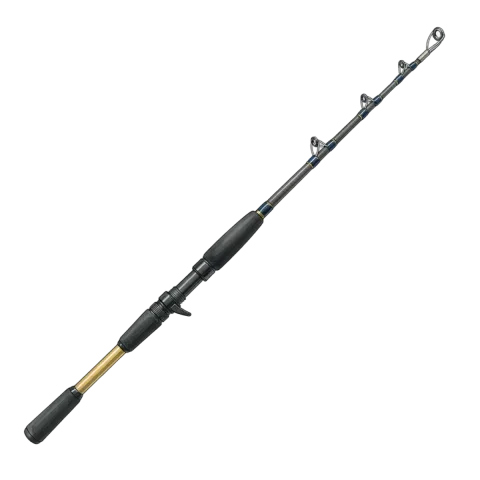
Rod
Trolling rod
A trolling rod is built to sit in a holder and pull a lure or bait at speed. Moderate action so the rod, not the reel, plays the fish.
Sized for a typical fish
extra-heavy · 2.29 m
- Reel seat
- Casting
- Form factor
- One-piece
- Action
- Moderate
- Grip
- EVA
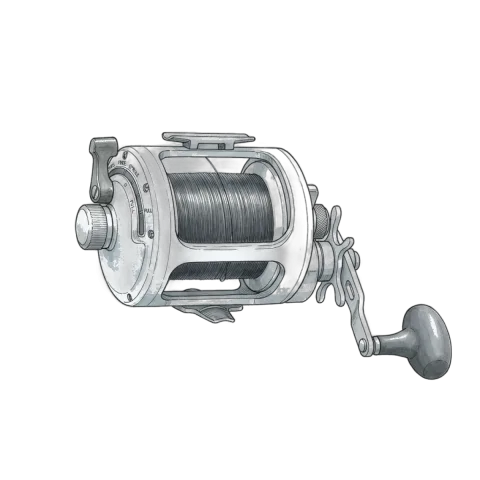
Reel
Trolling reel
A trolling reel is the dedicated lever-drag fishing reel for pulling lures behind a boat, often in a holder all day.
Sized for a typical fish
50 · 30 kg drag
- Spool
- Revolving
- Mount
- Over
- Drag
- Lever
- Retrieve
- Manual

Line
Braided line
Braided fishing line is the thin, no-stretch main for long casts, jigging, and feeling every tick on the retrieve.
Sized for a typical fish
90 kg · 0.76 mm
- Visibility
- High
- Abrasion
- Low
- Stretch
- None
- Sink rate
- Floats

Leader
Fluorocarbon leader
A fluorocarbon leader is the clear, fast-sinking join between a visible main line and the lure or hook.
Sized for a typical fish
136.1 kg · 1.885 mm · 180 cm
- Visibility
- Very low
- Abrasion
- High
- Stretch
- Low
- Sink rate
- Fast
Best lures and baits for Blue marlin
Ranked lures and natural baits from every method, best first.
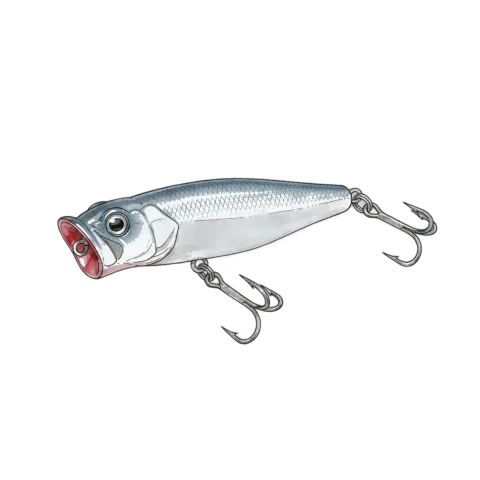
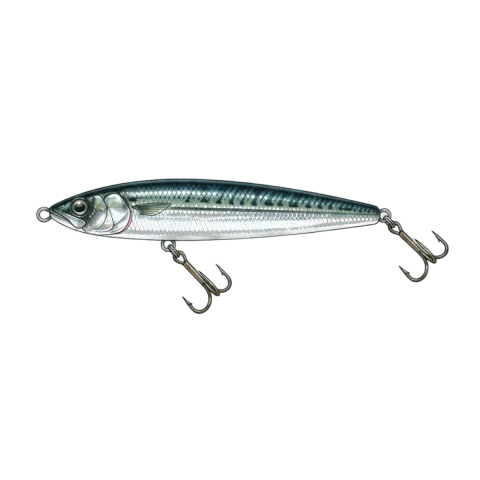
01
Topwater plug
- Trolling
A floating plug that pops and gurgles on the surface.
How Blue marlin migrates — Oceanodromous
Migrates within the sea between spawning, nursery and feeding grounds, and never enters fresh water. Follow its seasonal shifts along the coast and offshore.
1 Eggs
Spawning grounds
Laid on the spawning grounds.
2 Larvae
→ Nursery grounds
Drift with the currents to the nursery grounds.
3 Juveniles
Nursery grounds
Grow up in sheltered nursery waters.
4 Adults
Feeding grounds
Range widely over the feeding grounds.
5 Spawners
→ Spawning grounds
Return to the spawning grounds each season.
It stays in the sea and never runs up into fresh water.
Hover or tap a number to read each stage.
Diet and behavior of Blue marlin
-
Diet
Top predator -
Feeds by
Hunts animals -
Hunts
Morning · Midday -
Main prey
Baitfish
Prey and predators of Blue marlin
Prey is what Blue marlin eats. Predators are the animals that eat it.
That is how it feeds, and how it is hunted.
Prey
What it eats
Where Blue marlin lives
Pelagic in the open ocean beyond the shelf break.
0–1,000 m

Where this species lives
Blue marlin photos for identification
Compare these photos with the catalog plate to identify the species.
Where to fish for Blue marlin
Mapped fishing spots where Blue marlin is recorded — open a pin for access and methods.


