How to catch Cheekspot wrasse
Halichoeres melasmapomus Randall, 1981
About Cheekspot wrasse fishing
The cheekspot wrasse belongs to the family Labridae and features a fusiform body shape with vibrant coloration, including distinct dark markings near the head resembling earmuffs. Growing up to a maximum length of 24 cm, this marine reef-associated species inhabits tropical waters across the Indo-Pacific region, typically favoring steep drop-offs enriched with patches of rubble and coral at depths ranging from 10 to 56 metres. It behaves as an active benthic hunter, feeding primarily on small invertebrates living among the substrate, and reproduces through distinct pairing during its breeding cycle. Due to its striking appearance and specialized habitat requirements, it commands high commercial value primarily within the aquarium trade rather than traditional fisheries.
-
Difficulty
Medium
-
Average size
15 cm
-
Market value
Very high
-
Habitat
Saltwater
-
Season
Spring, Summer, Autumn, Winter
-
Also known as
Blackear wrasse, Black-ear wrasse, Earmuff wrasse, Ocellated wrasse

Truncate caudal fin
More or less truncate caudal shape characteristic of this species.
Terminal mouth
Terminal mouth position aids in identifying this wrasse.
Dorsal fin markings
More than one stripe along the dorsal fin.
Cheekspot wrasse fishing facts
Characteristics
-
Typical size
15 cm (max 24 cm TL ) -
Typical weight
0.2 kg (max 0.2 kg ) -
Preferred temperature
25.1–28.3 °C -
Depth
10–56 m -
Longevity
10 years -
Body shape
Fusiform / Normal -
Commercial?
-
Vulnerability score
28.9
Best hours
-
Low
Dawn
First light
-
Peak
Morning
After sunrise
-
Low
Midday
High sun
-
Peak
Afternoon
Late day
-
Low
Dusk
Last light
-
Low
Night
After dark
When to fish for Cheekspot wrasse
How to catch Cheekspot wrasse
Tips for catching Cheekspot wrasse
As a specialized reef dweller that feeds on benthic microfauna, this species is rarely targeted by conventional angling methods and is predominantly sourced for marine aquaria via specialized collection. Anglers exploring tropical reef drop-offs and rubble zones where the species naturally occurs would need to employ ultra-light tackle equipped with fine natural baits mimicking small marine worms or micro crustaceans if attempting line-caught methods. Success relies heavily on targeting structured drop-off zones during daylight hours when visual foraging peaks, keeping presentation close to the seabed substrate where the fish actively hunts and dives into sand beds for shelter.
Other names for Cheekspot wrasse
Local and alternate names anglers use for Cheekspot wrasse.
-
Ocellated wrasse
-
Earmuff wrasse
-
Cheekspot wrasse
-
Black-ear wrasse
-
Blackear wrasse
Best equipment to catch Cheekspot wrasse
Compare fishing methods for Cheekspot wrasse — sized kit for each technique.
Note: Typical fish is 0.2 kg Our algorithm will suggest the best equipment for you based on this weight.
Bottom Fishing
Presenting bait or rigs on or near the lake or sea floor.
70% Effectiveness

Rod
Spinning rod
A spinning rod is a fishing rod built to carry a spinning reel under the blank. You cast lures and light baits with it from shore or a boat.
Sized for a typical fish
ultralight · 1.8 m
- Reel seat
- Spinning
- Form factor
- Multi-piece
- Action
- Fast
- Grip
- EVA

Reel
Spinning reel
A spinning reel hangs under the fishing rod and is the default reel for casting lures and light baits. Line peels off an open spool with a bail.
Sized for a typical fish
1000 · 3 kg drag · 185 g
- Spool
- Fixed
- Mount
- Under
- Drag
- Front
- Retrieve
- Manual

Line
Monofilament line
Monofilament fishing line is the everyday main line: easy to knot, cheap to replace, and stretchy enough to forgive a hard strike.
Sized for a typical fish
1.3 kg · 0.125 mm
- Visibility
- Medium
- Abrasion
- Medium
- Stretch
- High
- Sink rate
- Slow

Leader
Fluorocarbon leader
A fluorocarbon leader is the clear, fast-sinking join between a visible main line and the lure or hook.
Sized for a typical fish
4 kg · 0.2 mm · 80 cm
- Visibility
- Very low
- Abrasion
- High
- Stretch
- Low
- Sink rate
- Fast

Hook
Circle hook
A circle hook turns in the mouth and usually finds the corner of the jaw. You do not strike hard — you come tight. It includes freshwater.
Sized for a typical fish
4
- Points
- 1
- Offset
- No
- Barbed
- Yes
- Gap
- Standard
Best lures and baits for Cheekspot wrasse
Ranked lures and natural baits from every method, best first.
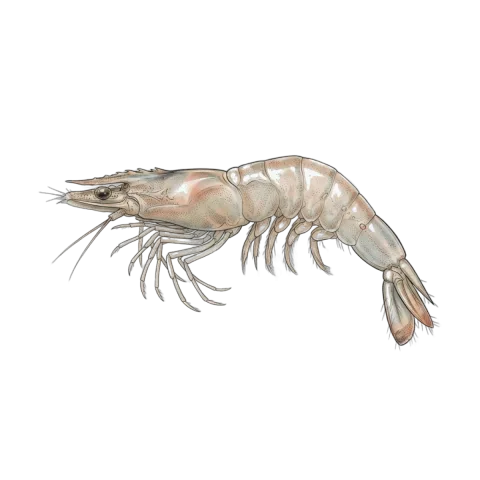
01
Shrimp
- Bottom Fishing
Translucent segmented carapace protects the body.
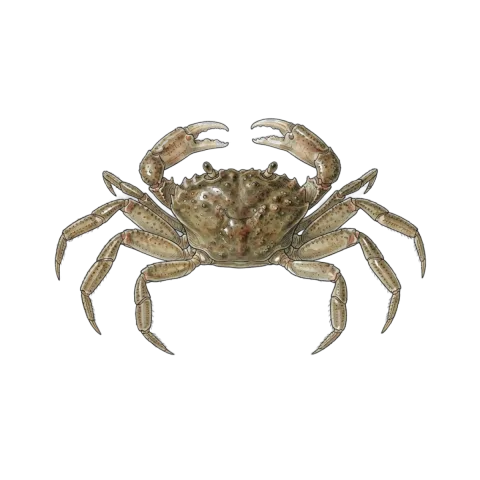
02
Crab
- Bottom Fishing
Hard upper shell protects the crab and anchors its vital organs.
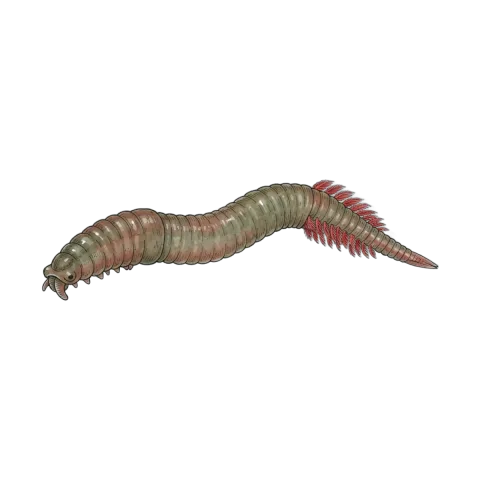
03
Lugworm
- Bottom Fishing
Fleshy, segmented body provides substantial scent and natural appeal for bottom fish.
Where Cheekspot wrasse spends the year — Non-migratory
Stays in the same waters year-round. Look for it on the same grounds rather than timing a run.
1 Eggs
Same water all year
Laid on the home grounds.
2 Juveniles
Same water all year
Grow up close by.
3 Adults
Same water all year
Keep to a small home range.
4 Spawners
Same water all year
Spawn on the same grounds, with only short moves.
Hover or tap a number to read each stage.
Diet and behavior of Cheekspot wrasse
-
Diet
Carnivore -
Feeds by
Hunts animals -
Hunts
Morning · Afternoon -
Feeds over
Coral reefs
Prey and predators of Cheekspot wrasse
Prey is what Cheekspot wrasse eats. Predators are the animals that eat it.
That is how it feeds, and how it is hunted.
Prey
What it eats
Other prey
Where Cheekspot wrasse lives
Tied to reefs and rocky structure in shallow coastal water.
10–56 m

Where this species lives
Where to fish for Cheekspot wrasse
Mapped fishing spots where Cheekspot wrasse is recorded — open a pin for access and methods.
