Line
Monofilament line
How to fish a monofilament line for Spinning, Float Fishing, Bottom Fishing, Surfcasting, Feeder Fishing, Pole Fishing, Live Baiting, Ice Fishing.
Characteristics
-
Visibility
Medium
-
Abrasion
Medium
-
Stretch
High
-
Sink rate
Slow
-
Memory
High
-
Habitats
Freshwater, Saltwater, Brackish
-
Methods
Spinning, Float Fishing, Bottom Fishing, Surfcasting, Feeder Fishing, Pole Fishing, Live Baiting, Ice Fishing
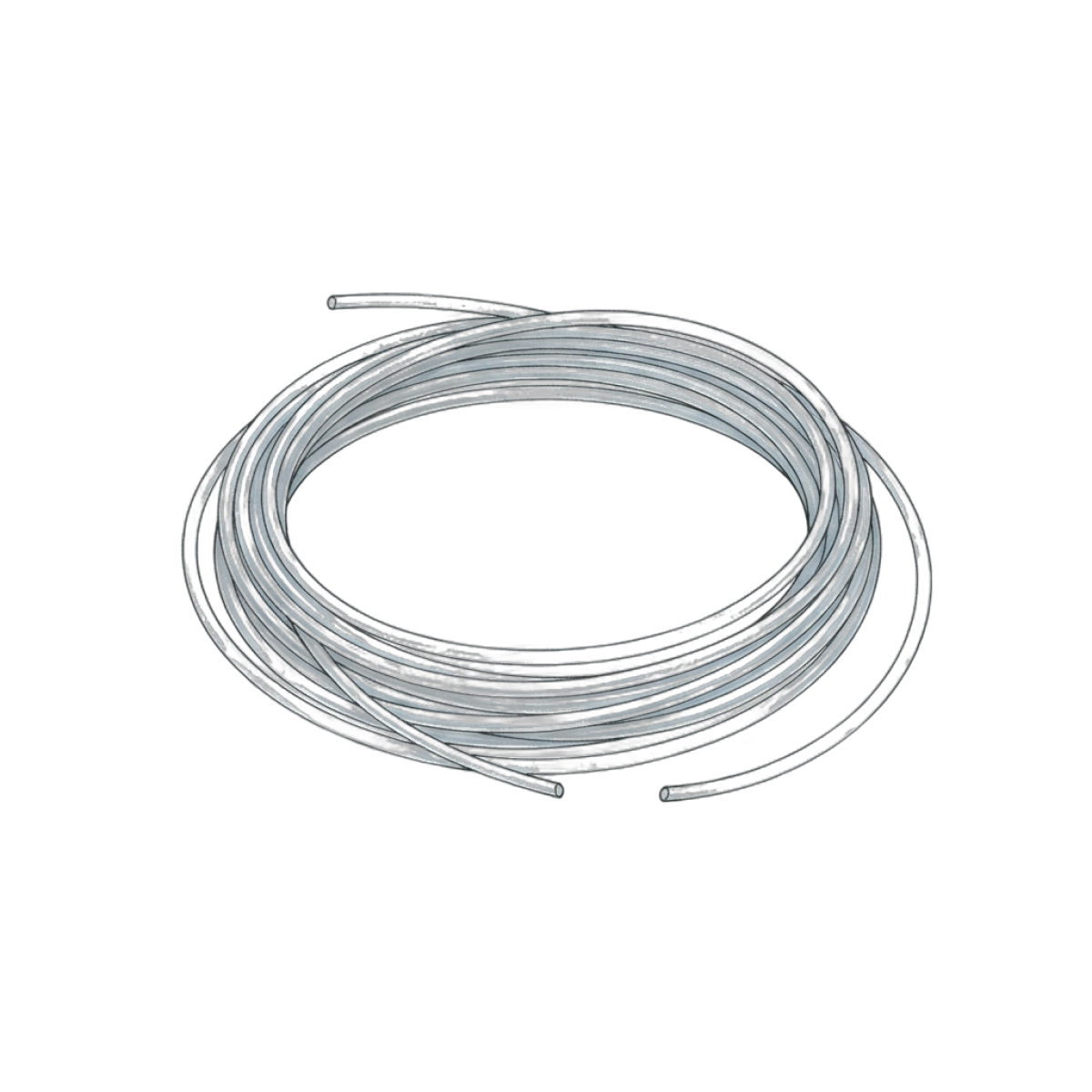
Clear monofilament
Smooth extruded nylon strand maintains low visibility underwater.
Memory coils
Circular loops form from spooling, characteristic of nylon line.
Line memory
Retains curved shape after being unspooled from the packaging.
What fish can you catch with a monofilament line?


What is a monofilament line used for?
Monofilament fishing line is the everyday main line: easy to knot, cheap to replace, and stretchy enough to forgive a hard strike.
How is a monofilament line different from similar gear?
Unlike braid it stretches and sinks slowly, so bites feel softer and the line shows less than superline. Older spools take coils and lose casting distance.
When should you use a monofilament line?
Spool it for float fishing, feeder fishing, and as a surfcasting shock when stretch protects light hooks or you need a line that still knots when wet.
What problems does a monofilament line solve?
One spool covers a mixed kit, and the stretch keeps a poorly set drag from ripping hooks out of soft mouths.
Monofilament line size chart
Common sizes and ratings for this part of the kit.
- 0.125 mm 1.3 kg
- 0.16 mm 2.5 kg
- 0.2 mm 3.6 kg
- 0.25 mm 5.5 kg
- 0.3 mm 7.5 kg
- 0.35 mm 10 kg
- 0.4 mm 13 kg
- 0.505 mm 19 kg
- 0.8 mm 37 kg
- 1.4 mm 91 kg
- 1.6 mm 130 kg
Monofilament line guides and comparisons
- Braid vs Mono vs Fluorocarbon: Which Fishing Line to Use Braid casts far and feels every touch, mono stretches and forgives, fluorocarbon disappears and resists abrasion. Here is when to use each.
- How to Put Braid on a Spinning Reel (Without Slipping) Braid slips on a bare spool. Use a mono backing or tape, spool it under tension, and fill to just below the lip. Step by step.