How to catch Largemouth black bass
Micropterus salmoides (Lacepède, 1802)
About Largemouth black bass fishing
The largemouth black bass is a robust freshwater predator belonging to the sunfish family Centrarchidae, featuring a fusiform body with an olive green to greenish-gray hue and a characteristic jagged dark lateral stripe along each flank. It is distinguished by an upper jaw that extends well beyond the rear margin of the eye. Growing up to a maximum length of ninety-seven centimetres and a top weight exceeding ten kilograms, this species prefers quiet, clear waters with dense aquatic vegetation, submerged timber, and shallow littoral zones in lakes, ponds, and slow rivers. As an apex aquatic predator, adults feed primarily on smaller fishes, crayfish, and frogs, while younger individuals consume aquatic insects and microcrustaceans. Highly valued as a sports fish across its introduced and native European ranges, it offers powerful fights and dramatic surface strikes.
-
Difficulty
Medium
-
Average size
40 cm TL
-
Habitat
Freshwater
-
Season
Spring, Summer, Autumn
-
Also known as
American black bass, Bass, Black bass, Black-bass, Green bass, Green trout

Horizontal stripe
Prominent dark lateral stripe running along the flank identifies the largemouth bass.
Terminal mouth
Large mouth extending past the rear edge of the eye.
Caudal shape
Forked tail fin typical of black basses.
Largemouth black bass fishing facts
Characteristics
-
Typical size
40 cm TL (max 97 cm TL ) -
Typical weight
1.2 kg (max 10.1 kg ) -
Depth
130 m -
Longevity
23 years -
Body shape
Fusiform / Normal -
Vulnerability score
42.4
Best hours
-
Peak
Dawn
First light
-
Active
Morning
After sunrise
-
Low
Midday
High sun
-
Active
Afternoon
Late day
-
Peak
Dusk
Last light
-
Active
Night
After dark
When to fish for Largemouth black bass
How to catch Largemouth black bass
Tips for catching Largemouth black bass
To successfully target largemouth bass, focus your efforts around heavy submerged cover such as reed beds, water lilies, fallen branches, and steep drop-offs where ambush predators wait for passing prey. Early morning and late evening hours during late spring and early summer provide the peak activity windows when fish move into shallow waters to feed aggressively. Use casting techniques with surface topwater plugs, crankbaits, or soft plastic worms worked near structure to provoke sharp reaction strikes. Alternatively, live bait presentations using small fish or frogs suspended near weed lines yield consistent results when artificial lures fail to tempt wary specimens.
Other names for Largemouth black bass
Local and alternate names anglers use for Largemouth black bass.
-
Large-mouth bass
-
Largemouth black bass
-
Largemouth bass
-
Black-bass
-
Black bass
-
Bass
-
Green bass
-
Green trout
-
Largemouth
-
Northern largemouth bass
-
American black bass
Best equipment to catch Largemouth black bass
Compare fishing methods for Largemouth black bass — sized kit for each technique.
Note: Typical fish is 1.2 kg Our algorithm will suggest the best equipment for you based on this weight.
Spinning
Casting and retrieving lures with a spinning rod and reel.
95% Effectiveness

Rod
Spinning rod
A spinning rod is a fishing rod built to carry a spinning reel under the blank. You cast lures and light baits with it from shore or a boat.
Sized for a typical fish
light · 2.1 m
- Reel seat
- Spinning
- Form factor
- Multi-piece
- Action
- Fast
- Grip
- EVA

Reel
Spinning reel
A spinning reel hangs under the fishing rod and is the default reel for casting lures and light baits. Line peels off an open spool with a bail.
Sized for a typical fish
1000 · 3 kg drag · 185 g
- Spool
- Fixed
- Mount
- Under
- Drag
- Front
- Retrieve
- Manual

Line
Braided line
Braided fishing line is the thin, no-stretch main for long casts, jigging, and feeling every tick on the retrieve.
Sized for a typical fish
6 kg · 0.1 mm
- Visibility
- High
- Abrasion
- Low
- Stretch
- None
- Sink rate
- Floats

Leader
Fluorocarbon leader
A fluorocarbon leader is the clear, fast-sinking join between a visible main line and the lure or hook.
Sized for a typical fish
7 kg · 0.3 mm · 90 cm
- Visibility
- Very low
- Abrasion
- High
- Stretch
- Low
- Sink rate
- Fast
Fly Fishing
Presenting artificial flies with a fly rod and weighted line.
80% Effectiveness
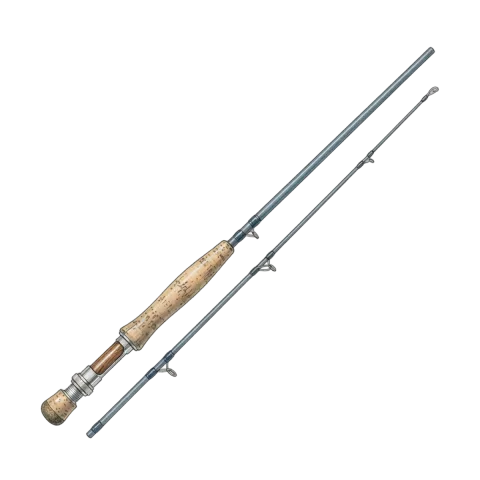
Rod
Fly rod
A fly rod is a fishing rod sized by line weight, with a fly reel seat. The fly line, not a heavy lure, loads the blank.
Sized for a typical fish
2.74 m · 5wt
- Reel seat
- Fly
- Form factor
- Multi-piece
- Action
- Moderate-fast
- Grip
- Cork
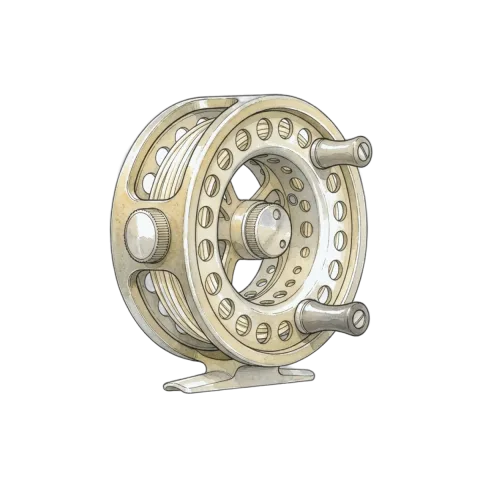
Reel
Fly reel
A fly reel is a large-arbor drum that stores backing and fly line. Drag is a disc; the reel does not cast the fly.
Sized for a typical fish
4 kg drag · 5wt
- Spool
- Drum
- Mount
- Under
- Drag
- Disc
- Retrieve
- Manual
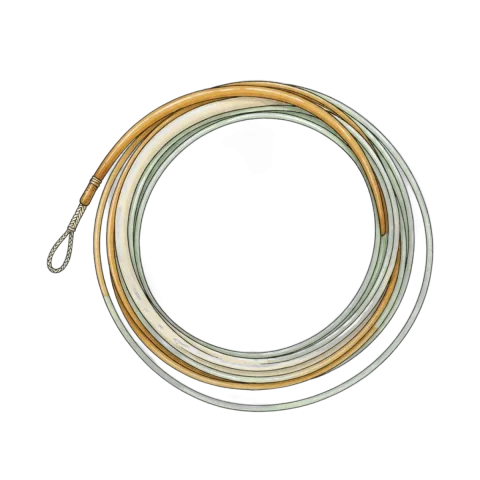
Line
Fly line
Fly line is the weighted shooting line that carries a near-weightless fly. Match it by weight class to the fly rod, not by kilo rating.
Sized for a typical fish
5wt
- Visibility
- Medium
- Abrasion
- Medium
- Stretch
- Low
- Sink rate
- Slow
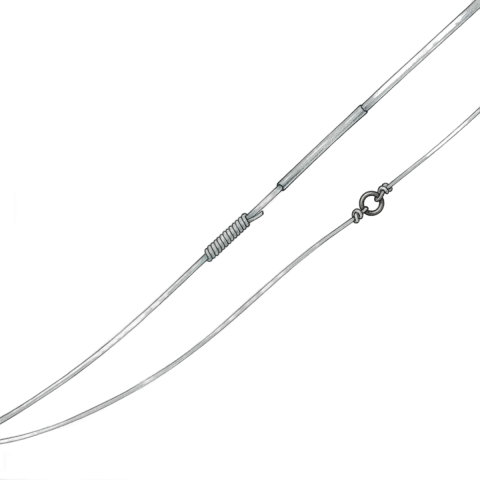
Leader
Tippet
Tippet is the fine, replaceable end of a fly leader, sized in X so you can match the fly and the fish.
Sized for a typical fish
2.8 kg · 0.18 mm · 80 cm · 4X
- Visibility
- Medium
- Abrasion
- Medium
- Stretch
- Medium
- Sink rate
- Slow
Live Baiting
Fishing a live baitfish or live invertebrate as the primary presentation.
80% Effectiveness
Rod
Spinning rod
A spinning rod is a fishing rod built to carry a spinning reel under the blank. You cast lures and light baits with it from shore or a boat.
Sized for a typical fish
medium-light · 2.13 m
- Reel seat
- Spinning
- Form factor
- Multi-piece
- Action
- Fast
- Grip
- EVA
Reel
Spinning reel
A spinning reel hangs under the fishing rod and is the default reel for casting lures and light baits. Line peels off an open spool with a bail.
Sized for a typical fish
1000 · 3 kg drag · 185 g
- Spool
- Fixed
- Mount
- Under
- Drag
- Front
- Retrieve
- Manual

Line
Monofilament line
Monofilament fishing line is the everyday main line: easy to knot, cheap to replace, and stretchy enough to forgive a hard strike.
Sized for a typical fish
3.6 kg · 0.2 mm
- Visibility
- Medium
- Abrasion
- Medium
- Stretch
- High
- Sink rate
- Slow
Leader
Fluorocarbon leader
A fluorocarbon leader is the clear, fast-sinking join between a visible main line and the lure or hook.
Sized for a typical fish
4 kg · 0.2 mm · 80 cm
- Visibility
- Very low
- Abrasion
- High
- Stretch
- Low
- Sink rate
- Fast

Hook
Circle hook
A circle hook turns in the mouth and usually finds the corner of the jaw. You do not strike hard — you come tight. It includes freshwater.
Sized for a typical fish
2
- Points
- 1
- Offset
- No
- Barbed
- Yes
- Gap
- Standard
Bottom Fishing
Presenting bait or rigs on or near the lake or sea floor.
60% Effectiveness
Rod
Spinning rod
A spinning rod is a fishing rod built to carry a spinning reel under the blank. You cast lures and light baits with it from shore or a boat.
Sized for a typical fish
medium-light · 2.13 m
- Reel seat
- Spinning
- Form factor
- Multi-piece
- Action
- Fast
- Grip
- EVA
Reel
Spinning reel
A spinning reel hangs under the fishing rod and is the default reel for casting lures and light baits. Line peels off an open spool with a bail.
Sized for a typical fish
1000 · 3 kg drag · 185 g
- Spool
- Fixed
- Mount
- Under
- Drag
- Front
- Retrieve
- Manual
Line
Monofilament line
Monofilament fishing line is the everyday main line: easy to knot, cheap to replace, and stretchy enough to forgive a hard strike.
Sized for a typical fish
3.6 kg · 0.2 mm
- Visibility
- Medium
- Abrasion
- Medium
- Stretch
- High
- Sink rate
- Slow
Leader
Fluorocarbon leader
A fluorocarbon leader is the clear, fast-sinking join between a visible main line and the lure or hook.
Sized for a typical fish
4 kg · 0.2 mm · 80 cm
- Visibility
- Very low
- Abrasion
- High
- Stretch
- Low
- Sink rate
- Fast
Hook
Circle hook
A circle hook turns in the mouth and usually finds the corner of the jaw. You do not strike hard — you come tight. It includes freshwater.
Sized for a typical fish
2
- Points
- 1
- Offset
- No
- Barbed
- Yes
- Gap
- Standard
Best lures and baits for Largemouth black bass
Ranked lures and natural baits from every method, best first.
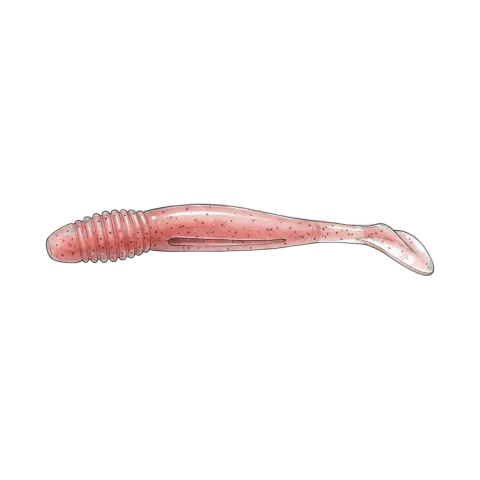
01
Soft worm
- Spinning
A long soft worm for Texas, wacky, and ned-style spinning.
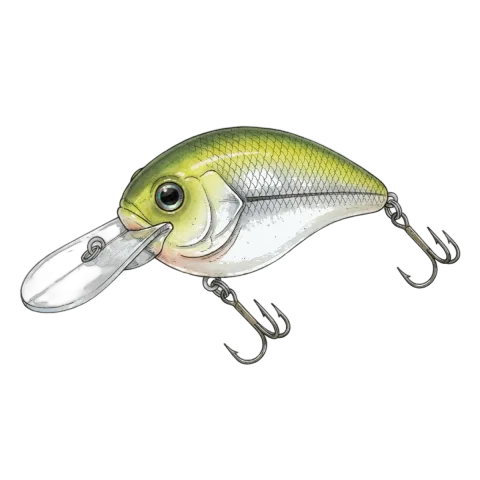
02
Crankbait
- Spinning
A diving hard bait that covers water and bumps cover.
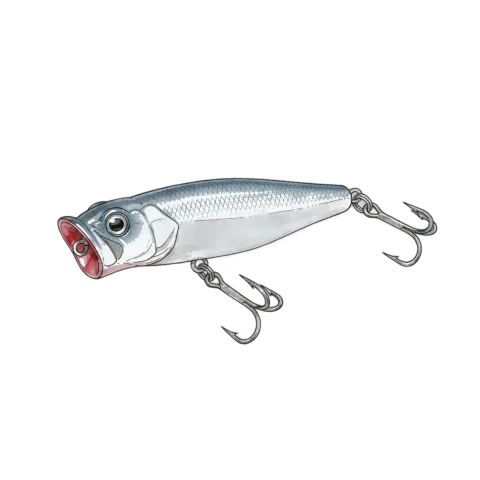
03
Topwater plug
- Spinning
A floating plug that pops and gurgles on the surface.
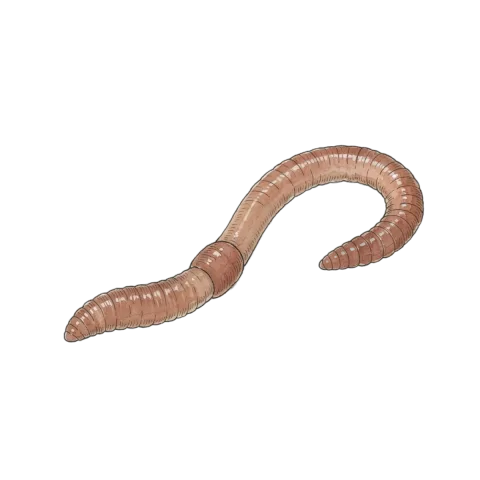
04
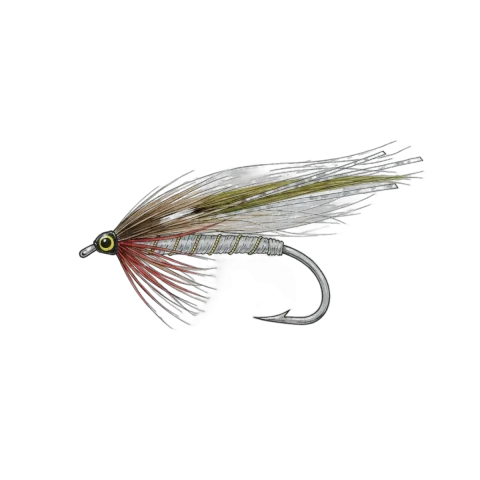
Live baitfish
- Live Baiting
Elongated segmented worm body provides natural movement to attract fish.
06
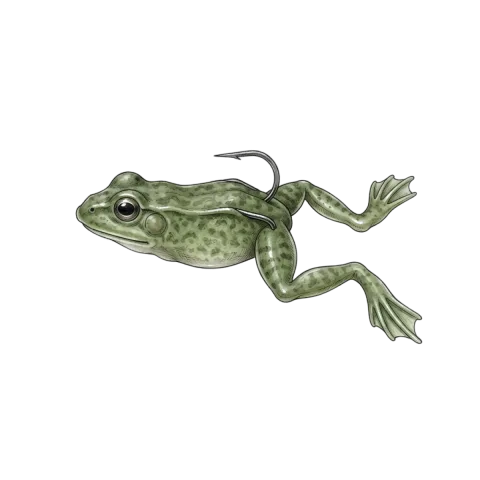
Frog
- Live Baiting
Realistic hinged legs provide swimming action in the water.
07
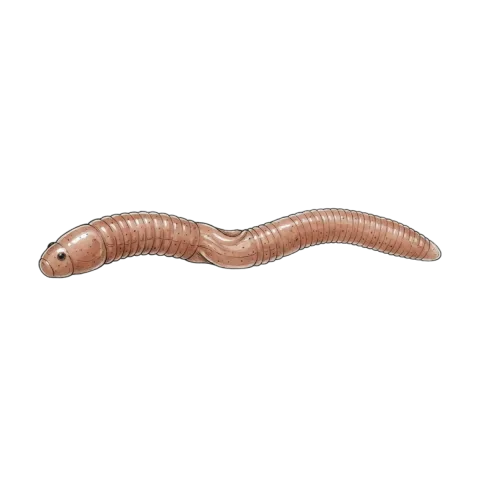
Worm
- Bottom Fishing
Rounded anterior end containing the mouth used for anchoring the bait on the hook.
Diet and behavior of Largemouth black bass
-
Diet
Carnivore -
Feeds by
Hunts animals -
Hunts
Dawn · Dusk -
Main prey
Baitfish · Bottom prey
Prey and predators of Largemouth black bass
Prey is what Largemouth black bass eats. Predators are the animals that eat it.
That is how it feeds, and how it is hunted.
Prey
What it eats
Predators
What hunts it
Fish
Where Largemouth black bass lives
Lives near the bottom but swims in the water just above it. Cover the lower column, not only the mud.

Where this species lives
Largemouth black bass photos for identification
Compare these photos with the catalog plate to identify the species.
Where to fish for Largemouth black bass
Mapped fishing spots where Largemouth black bass is recorded — open a pin for access and methods.


