How to catch Trahira
Hoplias malabaricus (Bloch, 1794)
About Trahira fishing
The trahira is a predatory freshwater fish belonging to the family Erythrinidae, featuring an elongated, cylindrical body shape, a broad head, and a large mouth equipped with prominent, dog-like teeth. Coloration ranges widely from grey to brown, often marked with darker vertical bands or a single horizontal stripe along the flank. Growing up to a maximum length of sixty-five centimetres and a weight of nearly four kilograms, this benthopelagic species inhabits a diverse range of tropical freshwaters from clear upland streams to slow-moving turbid rivers, swamps, and stagnant ponds. It is an ambush predator that spends daylight hours resting quietly among aquatic vegetation before becoming active after dark to hunt fish and crustaceans. Spawning occurs in shallow excavated pits during warmer months, with males exhibiting strong parental care by guarding the nest sites.
-
Difficulty
Medium
-
Habitat
Freshwater
-
Season
Spring, Summer, Autumn, Winter
-
Also known as
Guabine, Haimara, Tararura, Tiger characin, Tigerfish

Large Canine Teeth
Prominent sharp teeth on the jaws indicate an aggressive predatory ambush hunter.
Lateral Stripe
A broken dark horizontal band runs from the opercle to the tail.
Heavy Blunt Head
Massive rounded head profile with thick lips and upward-oriented cheeks.
Trahira fishing facts
Characteristics
-
Typical size
65 cm TL -
Typical weight
0.6 kg (max 3.8 kg ) -
Body shape
Elongated -
Vulnerability score
65.7
Best hours
-
Active
Dawn
First light
-
Low
Morning
After sunrise
-
Low
Midday
High sun
-
Low
Afternoon
Late day
-
Peak
Dusk
Last light
-
Peak
Night
After dark
When to fish for Trahira
How to catch Trahira
Tips for catching Trahira
Anglers target this aggressive ambush predator by casting lures or presenting live baits around heavy marginal cover, submerged timber, and dense aquatic vegetation where the fish conceals itself during daylight hours. Because it possesses an extremely hard, bony mouth and sharp teeth, a sturdy rod coupled with heavy braided mainline and a wire leader is essential to secure a solid hookset and prevent bite-offs during its forceful runs and jumps. Topwater plugs, weedless soft plastics, and surface frogs worked slowly across shallow areas trigger violent reactionary strikes, particularly during low-light conditions and at night when the species leaves its daytime refuges to feed actively.
Other names for Trahira
Local and alternate names anglers use for Trahira.
-
Trahira
-
Tigerfish
-
Tiger characin
-
Tararura
-
Haimara
-
Guabine
Best equipment to catch Trahira
Compare fishing methods for Trahira — sized kit for each technique.
Note: Typical fish is 0.6 kg Our algorithm will suggest the best equipment for you based on this weight.
Spinning
Casting and retrieving lures with a spinning rod and reel.
90% Effectiveness

Rod
Spinning rod
A spinning rod is a fishing rod built to carry a spinning reel under the blank. You cast lures and light baits with it from shore or a boat.
Sized for a typical fish
light · 2.1 m
- Reel seat
- Spinning
- Form factor
- Multi-piece
- Action
- Fast
- Grip
- EVA

Reel
Spinning reel
A spinning reel hangs under the fishing rod and is the default reel for casting lures and light baits. Line peels off an open spool with a bail.
Sized for a typical fish
1000 · 3 kg drag · 185 g
- Spool
- Fixed
- Mount
- Under
- Drag
- Front
- Retrieve
- Manual

Line
Braided line
Braided fishing line is the thin, no-stretch main for long casts, jigging, and feeling every tick on the retrieve.
Sized for a typical fish
6 kg · 0.1 mm
- Visibility
- High
- Abrasion
- Low
- Stretch
- None
- Sink rate
- Floats

Leader
Fluorocarbon leader
A fluorocarbon leader is the clear, fast-sinking join between a visible main line and the lure or hook.
Sized for a typical fish
7 kg · 0.3 mm · 90 cm
- Visibility
- Very low
- Abrasion
- High
- Stretch
- Low
- Sink rate
- Fast
Live Baiting
Fishing a live baitfish or live invertebrate as the primary presentation.
80% Effectiveness
Rod
Spinning rod
A spinning rod is a fishing rod built to carry a spinning reel under the blank. You cast lures and light baits with it from shore or a boat.
Sized for a typical fish
light · 2.1 m
- Reel seat
- Spinning
- Form factor
- Multi-piece
- Action
- Fast
- Grip
- EVA
Reel
Spinning reel
A spinning reel hangs under the fishing rod and is the default reel for casting lures and light baits. Line peels off an open spool with a bail.
Sized for a typical fish
1000 · 3 kg drag · 185 g
- Spool
- Fixed
- Mount
- Under
- Drag
- Front
- Retrieve
- Manual

Line
Monofilament line
Monofilament fishing line is the everyday main line: easy to knot, cheap to replace, and stretchy enough to forgive a hard strike.
Sized for a typical fish
2.5 kg · 0.16 mm
- Visibility
- Medium
- Abrasion
- Medium
- Stretch
- High
- Sink rate
- Slow
Leader
Fluorocarbon leader
A fluorocarbon leader is the clear, fast-sinking join between a visible main line and the lure or hook.
Sized for a typical fish
4 kg · 0.2 mm · 80 cm
- Visibility
- Very low
- Abrasion
- High
- Stretch
- Low
- Sink rate
- Fast

Hook
Circle hook
A circle hook turns in the mouth and usually finds the corner of the jaw. You do not strike hard — you come tight. It includes freshwater.
Sized for a typical fish
4
- Points
- 1
- Offset
- No
- Barbed
- Yes
- Gap
- Standard
Best lures and baits for Trahira
Ranked lures and natural baits from every method, best first.
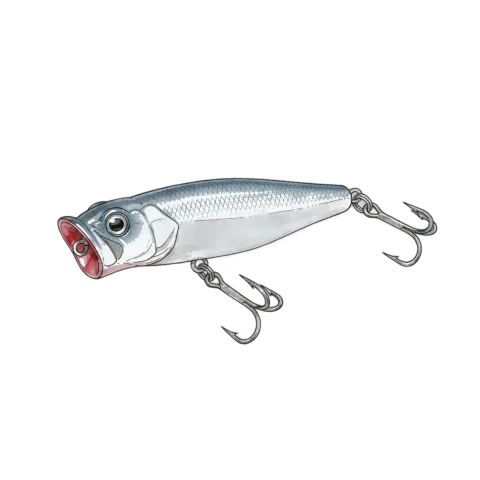
01
Topwater plug
- Spinning
A floating plug that pops and gurgles on the surface.
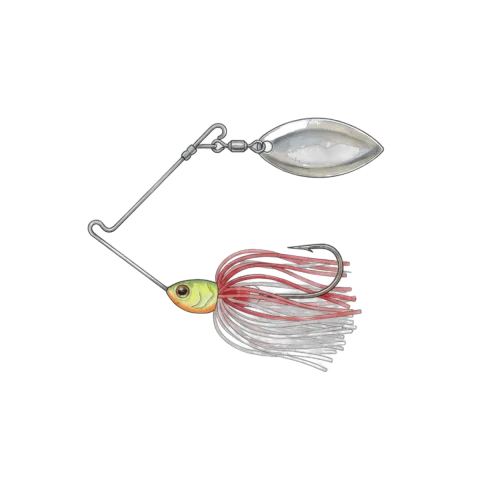
02
Spinnerbait
- Spinning
A weedless wire lure with flash and a pulsing skirt.
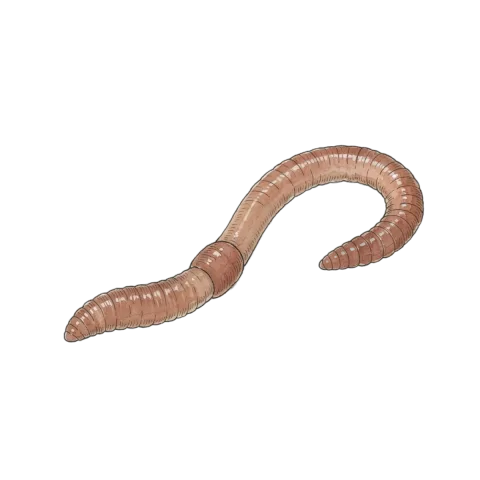
03
Live baitfish
- Live Baiting
Elongated segmented worm body provides natural movement to attract fish.
How Trahira migrates — Potamodromous
Migrates within rivers and lakes only. Fish upstream runs and seasonal lake movements, not saltwater.
1 Eggs
Upstream
Laid on gravel or weed upstream or in flooded shallows.
2 Larvae
→ Main river or lake
Fry drift or swim down to slower water.
3 Adults
Main river or lake
Feed in the main river or lake.
4 Spawners
→ Upstream
Move upstream or into the shallows to spawn.
The whole cycle stays in fresh water.
Hover or tap a number to read each stage.
Diet and behavior of Trahira
-
Diet
Top predator -
Feeds by
Hunts animals -
Hunts
Dusk · Night -
Main prey
Baitfish · Plants · Bottom prey
Prey and predators of Trahira
Prey is what Trahira eats. Predators are the animals that eat it.
That is how it feeds, and how it is hunted.
Prey
What it eats
Predators
What hunts it
Fish
Where Trahira lives
Lives near the bottom but swims in the water just above it. Cover the lower column, not only the mud.

Where this species lives
Trahira photos for identification
Compare these photos with the catalog plate to identify the species.
Where to fish for Trahira
Mapped fishing spots where Trahira is recorded — open a pin for access and methods.


