How to catch European perch
Perca fluviatilis Linnaeus, 1758
About European perch fishing
The European perch is a distinctive freshwater and brackish predator belonging to the true perch family Percidae. It is readily identified by its greenish body marked with five to eight bold dark vertical bars, bright red pelvic, anal and caudal fins, and a pronounced hump that develops between the head and the first dorsal fin as the fish matures. Typically reaching a common length of 25 cm alongside a maximum length of 60 cm and a maximum weight of 4.75 kg, females grow larger than males. This species inhabits a diverse range of environments including slow-flowing rivers, deep lakes, ponds, and estuarine lagoons, generally operating within depths from 2 to 30 metres. As an opportunistic carnivore, it feeds on zooplankton and benthic invertebrates during its early life stages before transitioning to a diet consisting largely of fish and macrofauna as it grows. Adults are active diurnal hunters that frequently forage in schools around submerged vegetation, drop-offs, and structural cover, undertaking short spawning migrations during the spring months when long egg ribbons are deposited over submerged objects.
-
Difficulty
Medium
-
Average size
25 cm TL
-
Habitat
Freshwater, Brackish
-
Season
Spring, Summer, Autumn
-
Also known as
English perch, Eurasian perch, Perch, Redfin perch, Reddie, Redfin

Convex forehead
Clearly convex profile helps distinguish the species.
Caudal shape
More or less truncate caudal fin shape.
Terminal mouth
Terminal mouth position aids in identification.
Dark vertical bars
Bold dark transverse bars on the flank.
European perch fishing facts
Characteristics
-
Typical size
25 cm TL (max 60 cm SL ) -
Typical weight
0.5 kg (max 4.8 kg ) -
Depth
2–30 m -
Longevity
22 years -
Body shape
Fusiform / Normal -
Vulnerability score
44.1
Best hours
-
Peak
Dawn
First light
-
Active
Morning
After sunrise
-
Low
Midday
High sun
-
Active
Afternoon
Late day
-
Peak
Dusk
Last light
-
Low
Night
After dark
When to fish for European perch
How to catch European perch
Tips for catching European perch
Successful perch fishing relies on locating shoals holding near underwater structures such as sunken timber, weed beds, rocky drop-offs, and bridge pilings where these predatory fish hunt for small prey. Since perch feed actively during daylight hours with notable peaks around sunrise and sunset, anglers achieve consistent results by working small soft plastics, spinnerbaits, or metal spoons close to the bottom using an erratic retrieve that mimics distressed baitfish. When fish are holding tight to vertical structures or deeper holes, vertical jigging with small soft grubs or blade baits proves exceptionally effective. Live bait presentation suspended beneath a sliding float works well when targeting wary specimens in calm lakes or slow rivers. Spring and autumn offer the most productive sport, particularly as cooling water temperatures draw fish into shallower bays and marginal zones to feed intensively before winter.
Other names for European perch
Local and alternate names anglers use for European perch.
-
Redfin perch
-
Reddie
-
Perch
-
Eurasian perch
-
European perch
-
River perch
-
Redfin
-
English perch
Best equipment to catch European perch
Compare fishing methods for European perch — sized kit for each technique.
Note: Typical fish is 0.5 kg Our algorithm will suggest the best equipment for you based on this weight.
Spinning
Casting and retrieving lures with a spinning rod and reel.
85% Effectiveness

Rod
Spinning rod
A spinning rod is a fishing rod built to carry a spinning reel under the blank. You cast lures and light baits with it from shore or a boat.
Sized for a typical fish
light · 2.1 m
- Reel seat
- Spinning
- Form factor
- Multi-piece
- Action
- Fast
- Grip
- EVA

Reel
Spinning reel
A spinning reel hangs under the fishing rod and is the default reel for casting lures and light baits. Line peels off an open spool with a bail.
Sized for a typical fish
1000 · 3 kg drag · 185 g
- Spool
- Fixed
- Mount
- Under
- Drag
- Front
- Retrieve
- Manual
Line
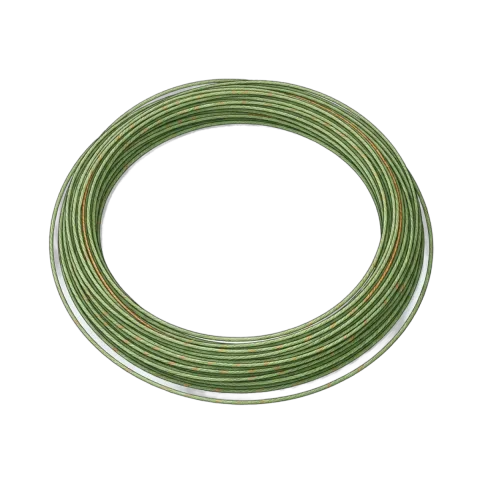
Braided line
Braided fishing line is the thin, no-stretch main for long casts, jigging, and feeling every tick on the retrieve.
Sized for a typical fish
6 kg · 0.1 mm
- Visibility
- High
- Abrasion
- Low
- Stretch
- None
- Sink rate
- Floats

Leader
Fluorocarbon leader
A fluorocarbon leader is the clear, fast-sinking join between a visible main line and the lure or hook.
Sized for a typical fish
7 kg · 0.3 mm · 90 cm
- Visibility
- Very low
- Abrasion
- High
- Stretch
- Low
- Sink rate
- Fast
Jigging
Working vertical lures with an active up-and-down motion.
80% Effectiveness
Rod
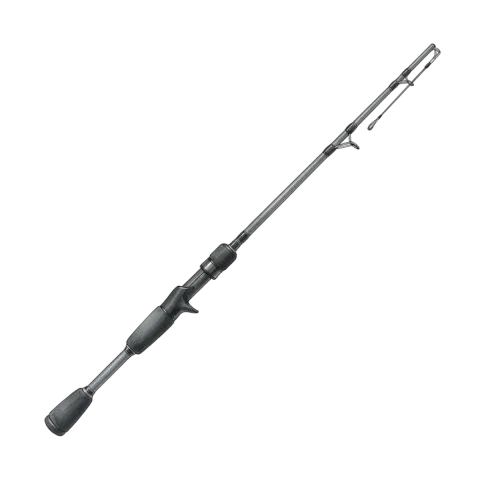
Jigging rod
A jigging rod is the short, powerful fishing rod for working a metal jig up through the column, including freshwater jigging.
Sized for a typical fish
heavy · 1.52 m
- Reel seat
- Casting
- Form factor
- One-piece
- Action
- Fast
- Grip
- EVA
Reel
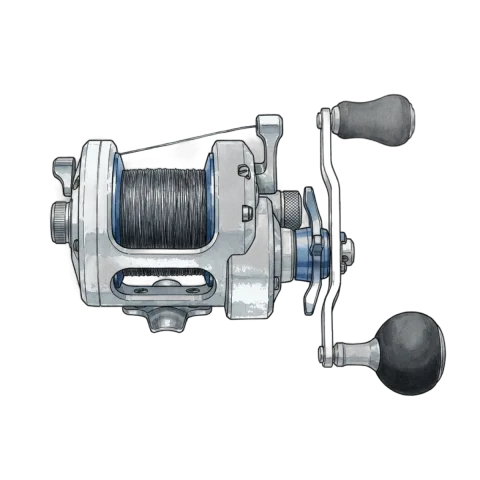
Jigging reel
A jigging reel is a compact, high-speed conventional for working metal jigs. A short retrieve picks up slack fast.
Sized for a typical fish
10 · 10 kg drag
- Spool
- Revolving
- Mount
- Over
- Drag
- Star
- Retrieve
- Manual
Line
Braided line
Braided fishing line is the thin, no-stretch main for long casts, jigging, and feeling every tick on the retrieve.
Sized for a typical fish
6 kg · 0.1 mm
- Visibility
- High
- Abrasion
- Low
- Stretch
- None
- Sink rate
- Floats
Leader
Fluorocarbon leader
A fluorocarbon leader is the clear, fast-sinking join between a visible main line and the lure or hook.
Sized for a typical fish
7 kg · 0.3 mm · 90 cm
- Visibility
- Very low
- Abrasion
- High
- Stretch
- Low
- Sink rate
- Fast
Best lures and baits for European perch
Ranked lures and natural baits from every method, best first.
01
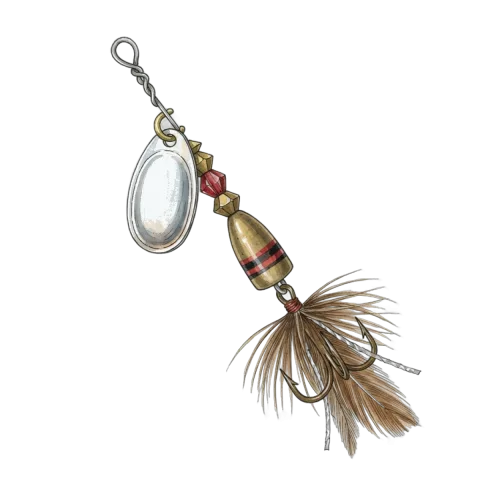
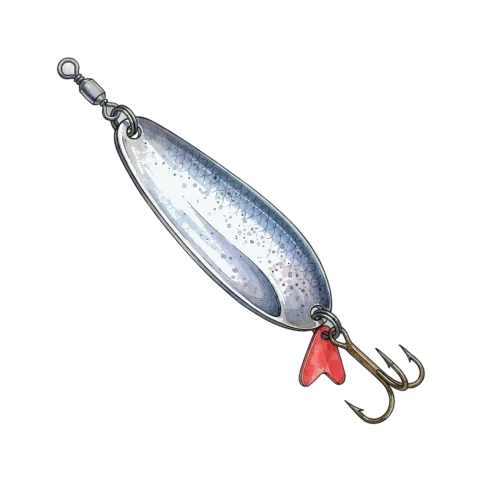
Inline spinner
- Spinning
An inline spinner with a blade that flashes on a straight retrieve.
03
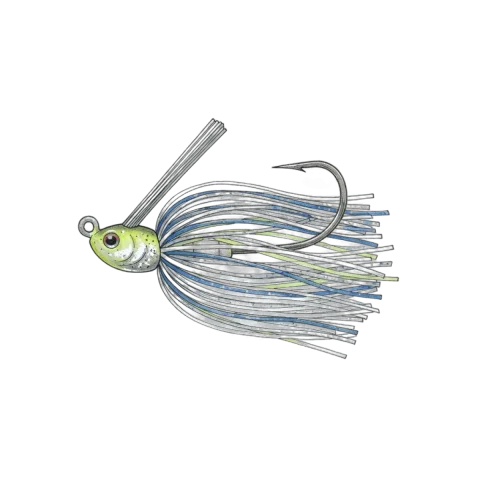
Casting jig
- Jigging
A casting jig you hop, drag, and swim on the bottom.
04
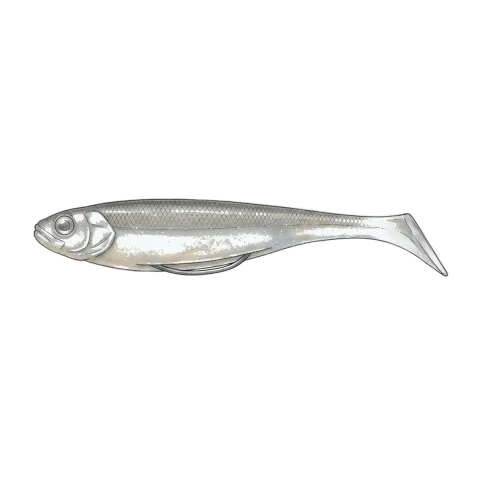
Soft jerkbait
- Jigging
A soft baitfish you twitch and kill like a jerkbait.
How European perch migrates — Anadromous
Grows at sea and swims into rivers to spawn. Target the run as fish leave the ocean and push upstream.
1 Eggs
Fresh water
Laid in fresh water, usually well up the river.
2 Juveniles
→ Sea
Grow in the river, then head downstream to the sea.
3 Adults
Sea
Feed and grow at sea.
4 Spawners
→ Fresh water
Run back up the river to spawn.
Some populations never go to sea and complete the cycle in rivers and lakes.
Hover or tap a number to read each stage.
Diet and behavior of European perch
-
Diet
Top predator -
Feeds by
Hunts animals -
Hunts
Dawn · Dusk -
Main prey
Baitfish
Prey and predators of European perch
Prey is what European perch eats. Predators are the animals that eat it.
That is how it feeds, and how it is hunted.
Prey
What it eats
Predators
What hunts it
Where European perch lives
Lives on or just above the bottom. Work jigs, bait, and lures along the seabed.
2–30 m

Where this species lives
European perch photos for identification
Compare these photos with the catalog plate to identify the species.
Where to fish for European perch
Mapped fishing spots where European perch is recorded — open a pin for access and methods.


