How to catch Rainbow trout
Oncorhynchus mykiss (Walbaum, 1792)
About Rainbow trout fishing
The rainbow trout is a streamlined salmonid originating from cold Pacific watersheds of North America and Asia, widely established across European freshwaters through stocking programmes. Adults display an olive-green back shading to silver flanks, marked by a distinct pink to crimson lateral stripe and fine black spots across the body and tail. This benthopelagic species inhabits clear, well-oxygenated rivers, streams, and cool lakes down to moderate depths, tolerating a range of temperatures up to ten degrees Celsius. They feed primarily on aquatic and terrestrial invertebrates, small fish, and drifting insects, executing short spawning migrations into gravel-bottomed tributaries during spring. Anglers prize this game fish for its acrobatic fights and strong stamina, making it a cornerstone of recreational sport fishing throughout its introduced European range.
-
Difficulty
Medium
-
Average size
60 cm TL
-
Market value
Low
-
Habitat
Freshwater, Brackish, Saltwater
-
Season
Spring, Summer, Autumn
-
Also known as
Baiser, Baja California rainbow trout, Bow, Brown trout, Coast angel trout, Coast rainbow trout

Adipose fin
Small fleshy fin located between dorsal and caudal fins.
Black spots
Numerous small black spots are scattered across the body and fins.
Pink stripe
A wide pink to red iridescent stripe runs along the midbody.
Rainbow trout fishing facts
Characteristics
-
Typical size
60 cm TL (max 123.2 cm TL ) -
Typical weight
1.5 kg (max 25.8 kg ) -
Preferred temperature
1.3–10 °C -
Depth
0–200 m -
Longevity
11 years -
Body shape
Fusiform / Normal -
Commercial?
-
Vulnerability score
42.7
Best hours
-
Peak
Dawn
First light
-
Active
Morning
After sunrise
-
Low
Midday
High sun
-
Active
Afternoon
Late day
-
Peak
Dusk
Last light
-
Low
Night
After dark
When to fish for Rainbow trout
How to catch Rainbow trout
Tips for catching Rainbow trout
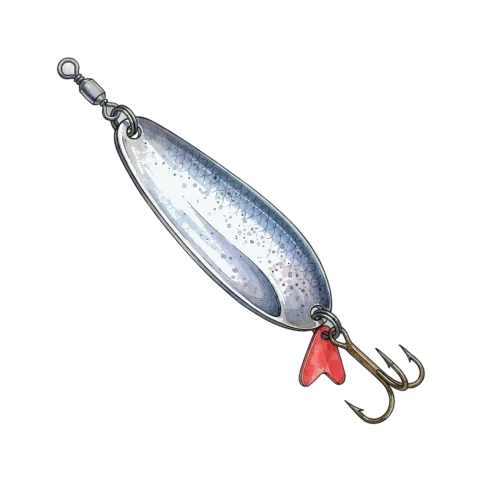
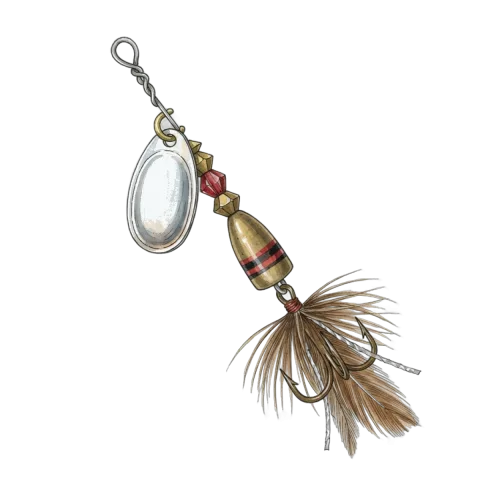
Targeting rainbow trout requires matching natural invertebrate and small fish prey using techniques adapted to clear water conditions and varying current speeds. In rivers and streams, presenting weighted nymphs or dry flies upstream allows a natural dead drift through riffles and runs where fish hold for food. When fishing deeper lakes or reservoirs, spinning with small metal spoons or feathered spinners near drop-offs and weed beds generates reaction strikes from cruising fish. Early morning and late afternoon hours provide the best sport during spring and autumn when lower light levels bring fish closer to the surface to feed actively. Polarised sunglasses help locate subsurface structure and resting fish holding behind boulders or in deeper pools.
Other names for Rainbow trout
Local and alternate names anglers use for Rainbow trout.
-
Baja California rainbow trout
-
Rainbow trout
-
Steelhead trout
-
Steelhead
-
Salmon trout
-
Hardhead
-
Coast rainbow trout
-
Coast range trout
-
Coast angel trout
-
Brown trout
-
Bow
-
Kamchatka salmon
-
Kamchatka steelhead
-
Kamchatka trout
-
Redband trout
-
Kamloops
-
Kamloops trout
-
Summer salmon
Best equipment to catch Rainbow trout
Compare fishing methods for Rainbow trout — sized kit for each technique.
Note: Typical fish is 1.5 kg Our algorithm will suggest the best equipment for you based on this weight.
Spinning
Casting and retrieving lures with a spinning rod and reel.
85% Effectiveness

Rod
Spinning rod
A spinning rod is a fishing rod built to carry a spinning reel under the blank. You cast lures and light baits with it from shore or a boat.
Sized for a typical fish
medium · 2.13 m
- Reel seat
- Spinning
- Form factor
- Multi-piece
- Action
- Fast
- Grip
- EVA

Reel
Spinning reel
A spinning reel hangs under the fishing rod and is the default reel for casting lures and light baits. Line peels off an open spool with a bail.
Sized for a typical fish
1000 · 3 kg drag · 185 g
- Spool
- Fixed
- Mount
- Under
- Drag
- Front
- Retrieve
- Manual

Line
Braided line
Braided fishing line is the thin, no-stretch main for long casts, jigging, and feeling every tick on the retrieve.
Sized for a typical fish
6 kg · 0.1 mm
- Visibility
- High
- Abrasion
- Low
- Stretch
- None
- Sink rate
- Floats

Leader
Fluorocarbon leader
A fluorocarbon leader is the clear, fast-sinking join between a visible main line and the lure or hook.
Sized for a typical fish
7 kg · 0.3 mm · 90 cm
- Visibility
- Very low
- Abrasion
- High
- Stretch
- Low
- Sink rate
- Fast
Best lures and baits for Rainbow trout
Ranked lures and natural baits from every method, best first.
02
Inline spinner
- Spinning
An inline spinner with a blade that flashes on a straight retrieve.
How Rainbow trout migrates — Anadromous
Grows at sea and swims into rivers to spawn. Target the run as fish leave the ocean and push upstream.
1 Eggs
Fresh water
Laid in fresh water, usually well up the river.
2 Juveniles
→ Sea
Grow in the river, then head downstream to the sea.
3 Adults
Sea
Feed and grow at sea.
4 Spawners
→ Fresh water
Run back up the river to spawn.
Some populations never go to sea and complete the cycle in rivers and lakes.
Hover or tap a number to read each stage.
Diet and behavior of Rainbow trout
-
Diet
Top predator -
Feeds by
Hunts animals -
Hunts
Dawn · Dusk -
Main prey
Bottom prey · Baitfish
Prey and predators of Rainbow trout
Prey is what Rainbow trout eats. Predators are the animals that eat it.
That is how it feeds, and how it is hunted.
Prey
What it eats
Predators
What hunts it
Where Rainbow trout lives
Lives near the bottom but swims in the water just above it. Cover the lower column, not only the mud.
0–200 m

River mouth
Where this species lives
Rainbow trout photos for identification
Compare these photos with the catalog plate to identify the species.
Where to fish for Rainbow trout
Mapped fishing spots where Rainbow trout is recorded — open a pin for access and methods.


