How to catch Chinook salmon
Oncorhynchus tshawytscha (Walbaum, 1792)
About Chinook salmon fishing
The chinook salmon is the largest representative of the salmon family, featuring a robust fusiform body with small dark spots across the back and both lobes of the caudal fin, alongside a distinctive black gum line on the lower jaw. Adults display dark greenish backs with silvery sides, though coloration varies prior to spawning when they develop reddish or purple hues. Reaching substantial proportions in marine and freshwater environments, this anadromous species inhabits deep coastal waters and extensive river systems before undertaking considerable spawning migrations. Juveniles feed primarily on aquatic insects and small crustaceans before transitioning to a predatory marine diet consisting of fish and invertebrates. Highly regarded by anglers for its immense strength and stamina, the species commands significant sporting and commercial value across its native range.
-
Difficulty
Medium
-
Average size
70 cm TL
-
Market value
Very high
-
Habitat
Freshwater, Brackish, Saltwater
-
Season
Spring, Summer, Autumn
-
Also known as
Blackmouth, Chinook, King salmon, King, Kippered salmon, Locks

Adipose fin
Small fleshy fin located between the dorsal fin and tail.
Caudal shape
Forked tail fin characteristic of salmonids.
Mouth position
Terminal mouth typical of predatory salmon species.
Chinook salmon fishing facts
Characteristics
-
Typical size
70 cm TL (max 150 cm TL ) -
Typical weight
6.8 kg (max 61.4 kg ) -
Preferred temperature
0.7–8 °C -
Depth
0–375 m -
Longevity
9 years -
Body shape
Fusiform / Normal -
Commercial?
-
Vulnerability score
68.2
Best hours
-
Peak
Dawn
First light
-
Active
Morning
After sunrise
-
Low
Midday
High sun
-
Active
Afternoon
Late day
-
Peak
Dusk
Last light
-
Low
Night
After dark
When to fish for Chinook salmon
How to catch Chinook salmon
Tips for catching Chinook salmon
Targeting large migratory salmon requires careful attention to water temperature and current flow around structural bottlenecks in deep rivers or coastal marine shelves. Deploying weighted gear near the river bed or using downriggers in the sea allows presentations to reach holding fish effectively during transition periods. Morning and evening hours offer prime opportunities when low light brings fish closer to the surface or active feeding lanes. Effective presentations include deep-trolling flashers paired with herring strips or synthetic plastics, casting heavy spoons around current seams, and swinging streamers through classic holding pools with balanced tackle.
Other names for Chinook salmon
Local and alternate names anglers use for Chinook salmon.
-
Smilie
-
Quinnat salmon
-
Pacific salmon
-
Quinnat
-
Spring salmon
-
Chinook
-
Chinook salmon
-
Spring
-
King salmon
-
Tyee
-
Lox
-
Pickled salmon
-
Salmon
-
King
-
Kippered salmon
-
Locks
-
Blackmouth
Best equipment to catch Chinook salmon
Compare fishing methods for Chinook salmon — sized kit for each technique.
Note: Typical fish is 6.8 kg Our algorithm will suggest the best equipment for you based on this weight.
Trolling
Drawing lures or baits behind a moving boat.
95% Effectiveness
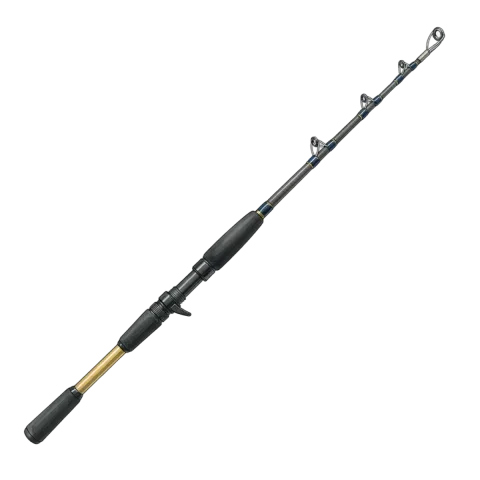
Rod
Trolling rod
A trolling rod is built to sit in a holder and pull a lure or bait at speed. Moderate action so the rod, not the reel, plays the fish.
Sized for a typical fish
medium-heavy · 2.13 m
- Reel seat
- Casting
- Form factor
- One-piece
- Action
- Moderate
- Grip
- EVA
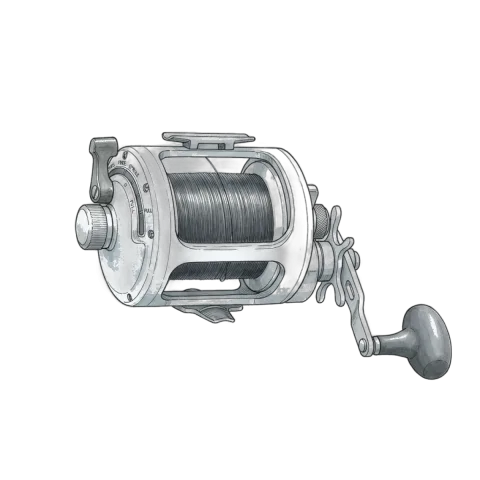
Reel
Trolling reel
A trolling reel is the dedicated lever-drag fishing reel for pulling lures behind a boat, often in a holder all day.
Sized for a typical fish
20 · 15 kg drag
- Spool
- Revolving
- Mount
- Over
- Drag
- Lever
- Retrieve
- Manual

Line
Braided line
Braided fishing line is the thin, no-stretch main for long casts, jigging, and feeling every tick on the retrieve.
Sized for a typical fish
14 kg · 0.2 mm
- Visibility
- High
- Abrasion
- Low
- Stretch
- None
- Sink rate
- Floats

Leader
Fluorocarbon leader
A fluorocarbon leader is the clear, fast-sinking join between a visible main line and the lure or hook.
Sized for a typical fish
18.1 kg · 0.602 mm · 120 cm
- Visibility
- Very low
- Abrasion
- High
- Stretch
- Low
- Sink rate
- Fast
Spinning
Casting and retrieving lures with a spinning rod and reel.
80% Effectiveness

Rod
Spinning rod
A spinning rod is a fishing rod built to carry a spinning reel under the blank. You cast lures and light baits with it from shore or a boat.
Sized for a typical fish
heavy · 2.13 m
- Reel seat
- Spinning
- Form factor
- Multi-piece
- Action
- Fast
- Grip
- EVA

Reel
Spinning reel
A spinning reel hangs under the fishing rod and is the default reel for casting lures and light baits. Line peels off an open spool with a bail.
Sized for a typical fish
2500 · 5 kg drag · 220 g
- Spool
- Fixed
- Mount
- Under
- Drag
- Front
- Retrieve
- Manual
Line
Braided line
Braided fishing line is the thin, no-stretch main for long casts, jigging, and feeling every tick on the retrieve.
Sized for a typical fish
14 kg · 0.2 mm
- Visibility
- High
- Abrasion
- Low
- Stretch
- None
- Sink rate
- Floats
Leader
Fluorocarbon leader
A fluorocarbon leader is the clear, fast-sinking join between a visible main line and the lure or hook.
Sized for a typical fish
18.1 kg · 0.602 mm · 120 cm
- Visibility
- Very low
- Abrasion
- High
- Stretch
- Low
- Sink rate
- Fast
Drift Fishing
Presenting bait or lures from a boat moving with wind or current, not under trolling speed.
75% Effectiveness
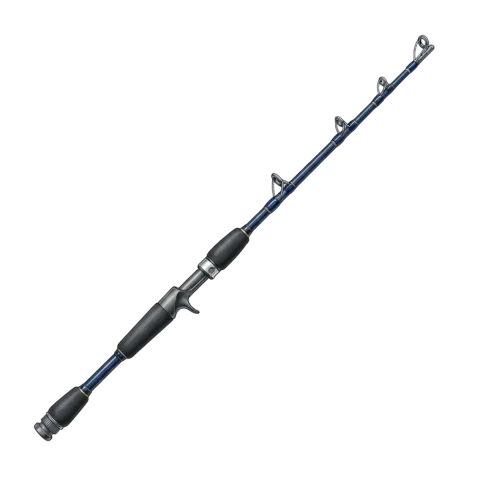
Rod
Boat rod
A boat rod is the short, stout fishing rod for work under the hull: bottom fishing, trolling, drift, and live bait in fresh or salt.
Sized for a typical fish
medium-heavy · 1.83 m
- Reel seat
- Casting
- Form factor
- One-piece
- Action
- Moderate-fast
- Grip
- EVA
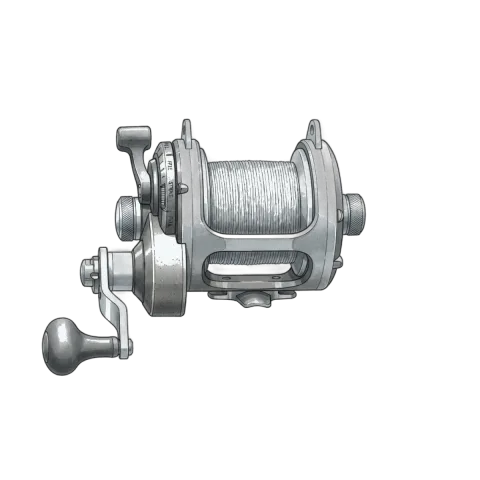
Reel
Conventional reel
A conventional reel is the lever-drag boat fishing reel for trolling and bottom fishing.
Sized for a typical fish
15 · 6 kg drag
- Spool
- Revolving
- Mount
- Over
- Drag
- Lever
- Retrieve
- Manual
Line
Braided line
Braided fishing line is the thin, no-stretch main for long casts, jigging, and feeling every tick on the retrieve.
Sized for a typical fish
14 kg · 0.2 mm
- Visibility
- High
- Abrasion
- Low
- Stretch
- None
- Sink rate
- Floats

Hook
Circle hook
A circle hook turns in the mouth and usually finds the corner of the jaw. You do not strike hard — you come tight. It includes freshwater.
Sized for a typical fish
3/0
- Points
- 1
- Offset
- No
- Barbed
- Yes
- Gap
- Standard
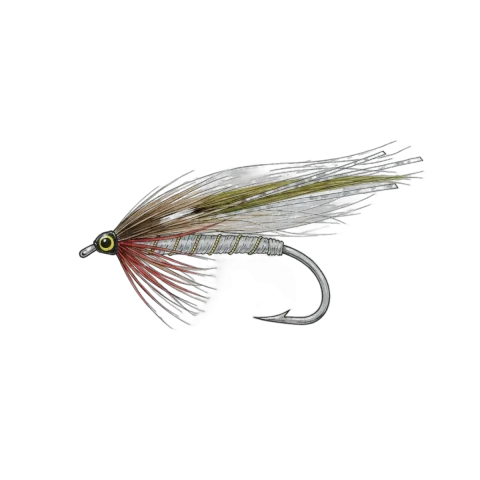
Fly Fishing
Presenting artificial flies with a fly rod and weighted line.
70% Effectiveness
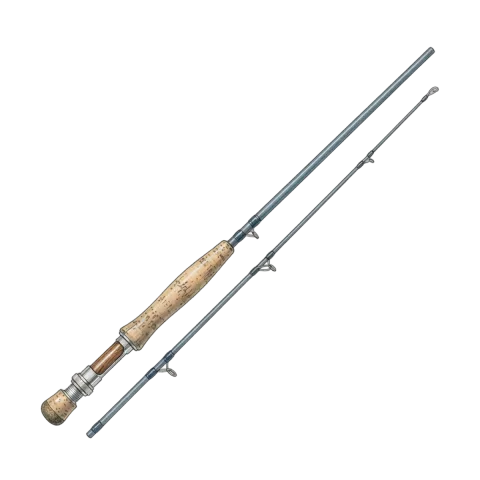
Rod
Fly rod
A fly rod is a fishing rod sized by line weight, with a fly reel seat. The fly line, not a heavy lure, loads the blank.
Sized for a typical fish
2.74 m · 8wt
- Reel seat
- Fly
- Form factor
- Multi-piece
- Action
- Moderate-fast
- Grip
- Cork
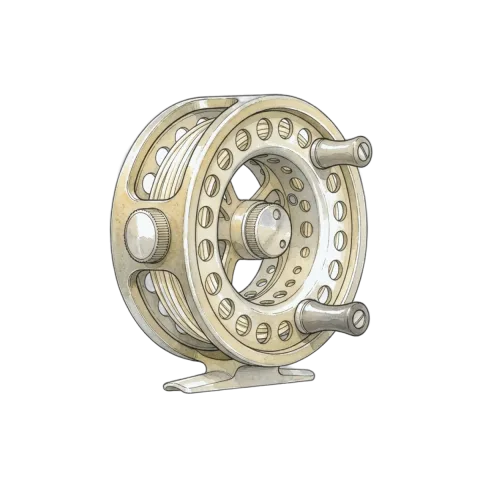
Reel
Fly reel
A fly reel is a large-arbor drum that stores backing and fly line. Drag is a disc; the reel does not cast the fly.
Sized for a typical fish
8 kg drag · 8wt
- Spool
- Drum
- Mount
- Under
- Drag
- Disc
- Retrieve
- Manual
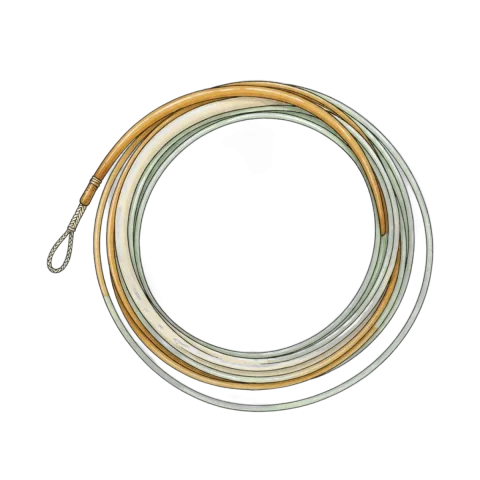
Line
Fly line
Fly line is the weighted shooting line that carries a near-weightless fly. Match it by weight class to the fly rod, not by kilo rating.
Sized for a typical fish
8wt
- Visibility
- Medium
- Abrasion
- Medium
- Stretch
- Low
- Sink rate
- Slow
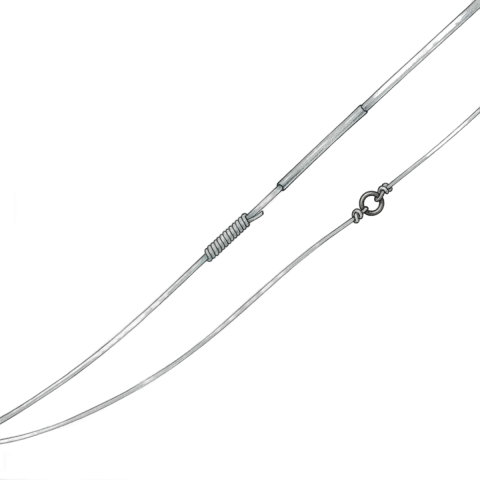
Leader
Tippet
Tippet is the fine, replaceable end of a fly leader, sized in X so you can match the fly and the fish.
Sized for a typical fish
6.8 kg · 0.26 mm · 90 cm · 1X
- Visibility
- Medium
- Abrasion
- Medium
- Stretch
- Medium
- Sink rate
- Slow
Best lures and baits for Chinook salmon
Ranked lures and natural baits from every method, best first.
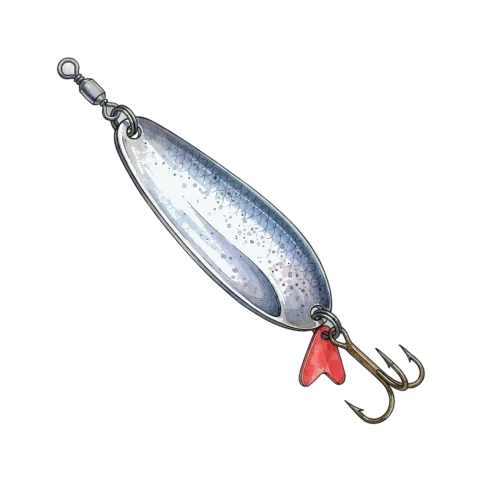
01
Spoon
- Trolling
- Spinning
A metal flutter bait for spinning, trolling, and ice.
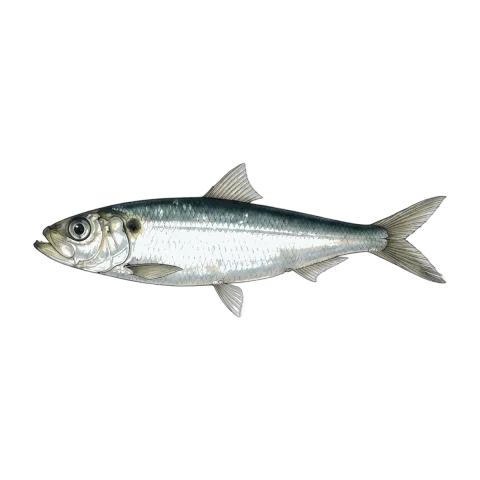
02
Sardine
- Trolling
Elongated silvery baitfish body releases strong scent trails.
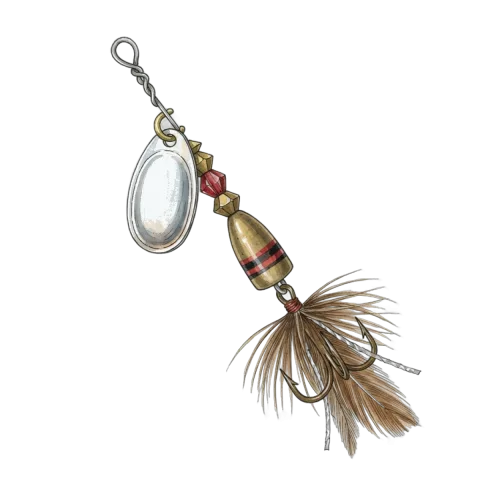
03
Inline spinner
- Spinning
An inline spinner with a blade that flashes on a straight retrieve.
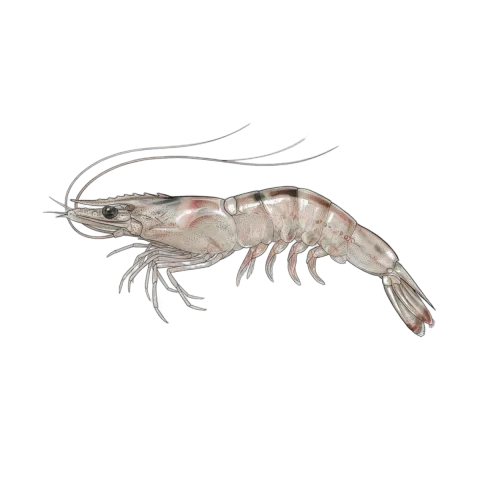
04
Prawn
- Drift Fishing
Powerful fan-shaped tail propels the prawn backward when escaping predatory fish.
How Chinook salmon migrates — Anadromous
Grows at sea and swims into rivers to spawn. Target the run as fish leave the ocean and push upstream.
1 Eggs
Fresh water
Laid in fresh water, usually well up the river.
2 Juveniles
→ Sea
Grow in the river, then head downstream to the sea.
3 Adults
Sea
Feed and grow at sea.
4 Spawners
→ Fresh water
Run back up the river to spawn.
Some populations never go to sea and complete the cycle in rivers and lakes.
Hover or tap a number to read each stage.
Diet and behavior of Chinook salmon
-
Diet
Top predator -
Feeds by
Hunts animals -
Hunts
Dawn · Dusk -
Main prey
Baitfish
Prey and predators of Chinook salmon
Prey is what Chinook salmon eats. Predators are the animals that eat it.
That is how it feeds, and how it is hunted.
Prey
What it eats
Predators
What hunts it
Where Chinook salmon lives
Lives near the bottom but swims in the water just above it. Cover the lower column, not only the mud.
0–375 m

River mouth
Where this species lives
Chinook salmon photos for identification
Compare these photos with the catalog plate to identify the species.
Where to fish for Chinook salmon
Mapped fishing spots where Chinook salmon is recorded — open a pin for access and methods.


