How to catch Common bully
Gobiomorphus cotidianus McDowall, 1975
About Common bully fishing
The common bully is a small demersal fish belonging to the family Eleotridae, native to New Zealand waters and characterised by an elongated body shape reaching up to fifteen centimetres in total length. It thrives across diverse aquatic environments ranging from freshwater streams and hypertrophic lakes to brackish estuaries and coastal marine zones. Exhibiting an amphidromous lifestyle, the species undertakes movements between fresh and saltwater habitats during its lifecycle. Its diet is primarily composed of various benthic invertebrates, insect larvae, and microcrustaceans gathered near the substrate. While lacking status as a major sport fish, it plays an important ecological role as a native forage species within littoral and riverine habitats.
-
Difficulty
Medium
-
Average size
10 cm
-
Habitat
Freshwater, Brackish, Saltwater
-
Season
Spring, Summer, Autumn, Winter

Spotted Fins
Distinct dark spots arranged in rows across the clear dorsal and caudal fins.
Cheek Markings
Dark spots and vermiculations on the cheek help distinguish this common bully.
Lateral Markings
A series of mottled dark blotches forms a broken mid-lateral band along the body.
Common bully fishing facts
Characteristics
-
Typical size
10 cm (max 15 cm TL ) -
Typical weight
0.2 kg (max 0 kg ) -
Preferred temperature
11.9–19.1 °C -
Depth
3–20 m -
Longevity
3 years -
Body shape
Elongated -
Vulnerability score
27.1
Best hours
-
Low
Dawn
First light
-
Peak
Morning
After sunrise
-
Active
Midday
High sun
-
Peak
Afternoon
Late day
-
Low
Dusk
Last light
-
Low
Night
After dark
When to fish for Common bully
How to catch Common bully
Tips for catching Common bully
Targeting this small benthic species requires fine tackle presented very close to the bottom in shallow margins, slow-flowing rivers, or lake edges where individuals find cover among rocks and vegetation. Because they feed actively on small aquatic organisms, presenting small natural baits on lightweight hooks yields the best results during calm daylight hours. Anglers should focus efforts around shallow littoral zones, particularly during warmer months when fish congregate near structured substrates. Using ultra-light gear with sensitive presentation allows detection of subtle bites from these bottom-dwelling inhabitants.
Other names for Common bully
Local and alternate names anglers use for Common bully.
-
Common bully
Best equipment to catch Common bully
Compare fishing methods for Common bully — sized kit for each technique.
Note: Typical fish is 0.2 kg Our algorithm will suggest the best equipment for you based on this weight.
Bottom Fishing
Presenting bait or rigs on or near the lake or sea floor.
60% Effectiveness

Rod
Spinning rod
A spinning rod is a fishing rod built to carry a spinning reel under the blank. You cast lures and light baits with it from shore or a boat.
Sized for a typical fish
ultralight · 1.8 m
- Reel seat
- Spinning
- Form factor
- Multi-piece
- Action
- Fast
- Grip
- EVA

Reel
Spinning reel
A spinning reel hangs under the fishing rod and is the default reel for casting lures and light baits. Line peels off an open spool with a bail.
Sized for a typical fish
1000 · 3 kg drag · 185 g
- Spool
- Fixed
- Mount
- Under
- Drag
- Front
- Retrieve
- Manual

Line
Monofilament line
Monofilament fishing line is the everyday main line: easy to knot, cheap to replace, and stretchy enough to forgive a hard strike.
Sized for a typical fish
1.3 kg · 0.125 mm
- Visibility
- Medium
- Abrasion
- Medium
- Stretch
- High
- Sink rate
- Slow

Leader
Fluorocarbon leader
A fluorocarbon leader is the clear, fast-sinking join between a visible main line and the lure or hook.
Sized for a typical fish
4 kg · 0.2 mm · 80 cm
- Visibility
- Very low
- Abrasion
- High
- Stretch
- Low
- Sink rate
- Fast

Hook
Circle hook
A circle hook turns in the mouth and usually finds the corner of the jaw. You do not strike hard — you come tight. It includes freshwater.
Sized for a typical fish
4
- Points
- 1
- Offset
- No
- Barbed
- Yes
- Gap
- Standard
Best lures and baits for Common bully
Ranked lures and natural baits from every method, best first.
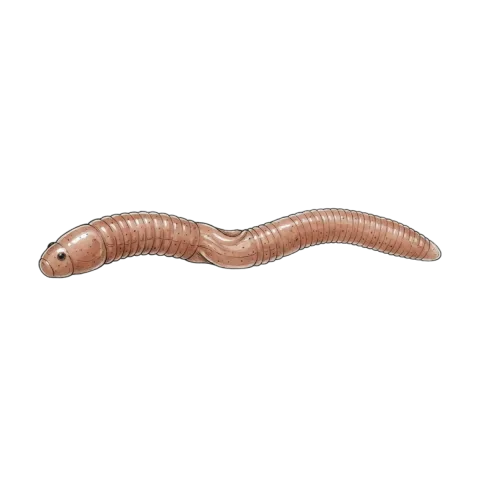
01
Worm
- Bottom Fishing
Rounded anterior end containing the mouth used for anchoring the bait on the hook.
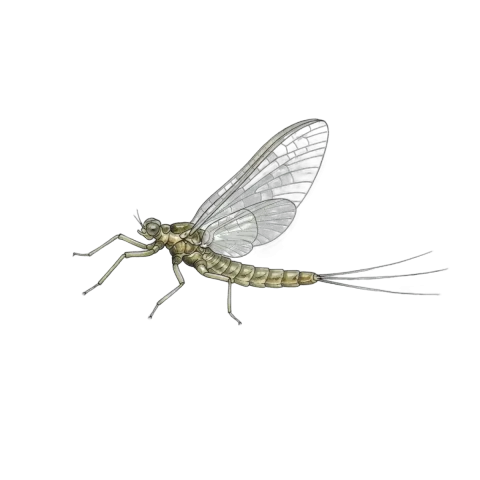
02
Insects
- Bottom Fishing
Translucent upright wings create surface disturbance that attracts rising freshwater fish.
How Common bully migrates — Amphidromous
Moves between fresh and salt water during its life, but not specifically to spawn. Fish the estuary and the lower river.
1 Eggs
Sea
Spawned at sea or along the coast.
2 Larvae
→ Estuary
Drift inshore with the currents.
3 Juveniles
Fresh water
Move into estuaries, lagoons and fresh water to feed and grow.
4 Adults
→ Sea
Return to the sea to mature and spawn.
The crossing is for feeding and growth, not to spawn.
Hover or tap a number to read each stage.
Diet and behavior of Common bully
-
Diet
Carnivore -
Feeds by
Hunts animals -
Hunts
Morning · Afternoon -
Main prey
Baitfish
Prey and predators of Common bully
Prey is what Common bully eats. Predators are the animals that eat it.
That is how it feeds, and how it is hunted.
Prey
What it eats
Predators
What hunts it
Fish
Where Common bully lives
Lives on or just above the bottom. Work jigs, bait, and lures along the seabed.
3–20 m

River mouth
Where this species lives
Common bully photos for identification
Compare these photos with the catalog plate to identify the species.