How to catch European smelt
Osmerus eperlanus (Linnaeus, 1758)
About European smelt fishing
The European smelt is a small slender fish belonging to the family Osmeridae, featuring an elongated body, pointed head, and a distinctive translucent olive-green back with a bright silver flank stripe. Reaching an average length around 16.5 cm alongside a maximum potential length of 45 cm, this pelagic species inhabits coastal marine waters, deep lakes, and estuaries across Western Europe. They are strongly anadromous, forming large shoals during their seasonal spawning runs into freshwater tributaries over sandy or gravelly shallows during spring. Their diet primarily consists of copepods, small crustaceans, and zooplankton, while larger specimens occasionally consume small fish. Known widely for emitting a strong, characteristic scent reminiscent of fresh cucumbers, they play a vital ecological role as forage for larger predatory fish and waterbirds.
-
Difficulty
Medium
-
Average size
16.5 cm TL
-
Market value
Very high
-
Habitat
Freshwater, Brackish, Saltwater
-
Season
Spring, Autumn, Winter
-
Also known as
Lake dwarf smelt, Sand smelt, Sea smelt, Smelt, Sparling

Adipose fin
Small fleshy fin between dorsal and tail confirms osmerid identity.
Caudal shape
Deeply forked pointed caudal fin helps distinguish smelt species.
Pelvic-fin position
Abdominal pelvic-fin placement is typical for primitive soft-rayed fishes.
European smelt fishing facts
Characteristics
-
Typical size
16.5 cm TL (max 45 cm TL ) -
Typical weight
0.2 kg (max 0.2 kg ) -
Preferred temperature
5.5–12 °C -
Depth
4–27 m -
Longevity
10 years -
Body shape
Elongated -
Commercial?
-
Vulnerability score
43.3
Best hours
-
Peak
Dawn
First light
-
Peak
Morning
After sunrise
-
Low
Midday
High sun
-
Active
Afternoon
Late day
-
Active
Dusk
Last light
-
Low
Night
After dark
When to fish for European smelt
How to catch European smelt
Tips for catching European smelt
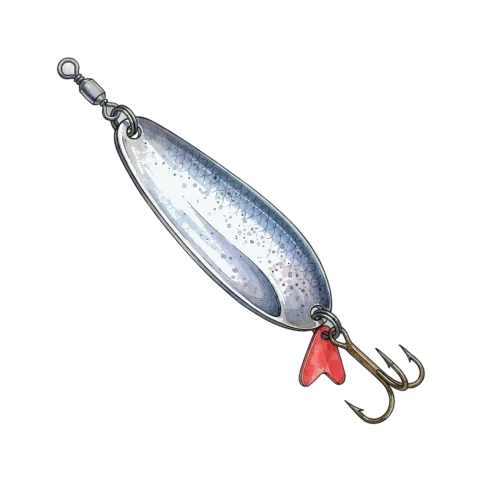
Targeting European smelt is most productive during their annual spring spawning migration when massive shoals congregate near river mouths and shallow estuarine zones. Anglers typically experience the best results during daylight hours by scaling down tackle with ultra-light gear, deploying delicate float-fishing setups equipped with tiny hooks baited with small marine worms or tiny strips of fish. Because these slender pelagic fish feed heavily on zooplankton and small aquatic invertebrates, slow retrieves with micro lures or small silver spoons can also tempt strikes when shoals are active in the lower reaches of rivers or coastal areas. Pay close attention to local environmental regulations and closed seasons that protect spawning migrations, and focus your efforts around steady currents where fish gather before pushing upstream.
Other names for European smelt
Local and alternate names anglers use for European smelt.
-
European smelt
-
Sparling
-
Smelt
-
Sea smelt
-
Sand smelt
-
Lake dwarf smelt
Best equipment to catch European smelt
Compare fishing methods for European smelt — sized kit for each technique.
Note: Typical fish is 0.2 kg Our algorithm will suggest the best equipment for you based on this weight.
Spinning
Casting and retrieving lures with a spinning rod and reel.
60% Effectiveness

Rod
Spinning rod
A spinning rod is a fishing rod built to carry a spinning reel under the blank. You cast lures and light baits with it from shore or a boat.
Sized for a typical fish
ultralight · 1.8 m
- Reel seat
- Spinning
- Form factor
- Multi-piece
- Action
- Fast
- Grip
- EVA

Reel
Spinning reel
A spinning reel hangs under the fishing rod and is the default reel for casting lures and light baits. Line peels off an open spool with a bail.
Sized for a typical fish
1000 · 3 kg drag · 185 g
- Spool
- Fixed
- Mount
- Under
- Drag
- Front
- Retrieve
- Manual

Line
Braided line
Braided fishing line is the thin, no-stretch main for long casts, jigging, and feeling every tick on the retrieve.
Sized for a typical fish
6 kg · 0.1 mm
- Visibility
- High
- Abrasion
- Low
- Stretch
- None
- Sink rate
- Floats

Leader
Fluorocarbon leader
A fluorocarbon leader is the clear, fast-sinking join between a visible main line and the lure or hook.
Sized for a typical fish
7 kg · 0.3 mm · 90 cm
- Visibility
- Very low
- Abrasion
- High
- Stretch
- Low
- Sink rate
- Fast
Best lures and baits for European smelt
Ranked lures and natural baits from every method, best first.
02
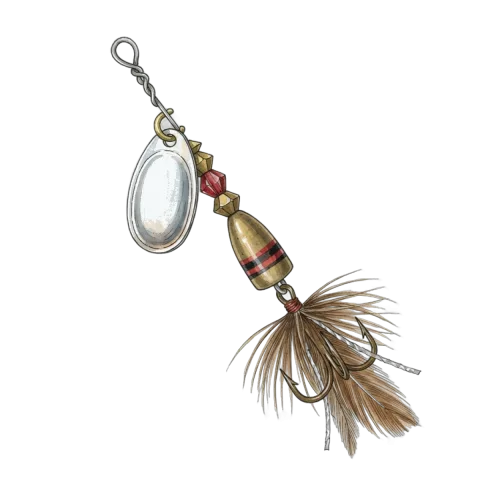
Inline spinner
- Spinning
An inline spinner with a blade that flashes on a straight retrieve.
How European smelt migrates — Anadromous
Grows at sea and swims into rivers to spawn. Target the run as fish leave the ocean and push upstream.
1 Eggs
Fresh water
Laid in fresh water, usually well up the river.
2 Juveniles
→ Sea
Grow in the river, then head downstream to the sea.
3 Adults
Sea
Feed and grow at sea.
4 Spawners
→ Fresh water
Run back up the river to spawn.
Some populations never go to sea and complete the cycle in rivers and lakes.
Hover or tap a number to read each stage.
Diet and behavior of European smelt
-
Diet
Carnivore -
Feeds by
Picks plankton -
Hunts
Dawn · Morning -
Feeds over
Intertidal -
Main prey
Plankton
Prey and predators of European smelt
Prey is what European smelt eats. Predators are the animals that eat it.
That is how it feeds, and how it is hunted.
Prey
What it eats
Predators
What hunts it
Where European smelt lives
Pelagic over the continental shelf — coastal open water, not the deep ocean.
4–27 m

River mouth
Where this species lives
European smelt photos for identification
Compare these photos with the catalog plate to identify the species.