How to catch Gray's charr
Salvelinus grayi (Günther, 1862)
About Gray's charr fishing
Grays charr is a rare lacustrine fish belonging to the salmon family, featuring a fusiform body that typically reaches twenty five centimetres in standard length and a maximum recorded weight of around zero point one seven kilograms. This species is distinguished by its deeper, laterally compressed body, a short caudal peduncle, and a dull grey appearance complemented by a yellowish to orangish belly and small whitish spots adorning its upper flanks, dorsal, and caudal fins. As a benthopelagic dweller, it inhabits deeper lake waters ranging from ten to thirty metres, feeding primarily on small planktonic crustaceans such as cladocerans. It migrates to shallow rocky areas during November to spawn, though its populations have suffered severe declines due to environmental changes and introduced species.
-
Difficulty
Medium
-
Average size
25 cm
-
Market value
Very high
-
Habitat
Freshwater
-
Also known as
Melvin charr

Adipose fin
Small fleshy fin located between dorsal and caudal fins marks it as a salmonid.
Forked caudal shape
Distinctly forked tail fin aids in swift swimming.
Whitish flank spots
Numerous small whitish spots distributed over the upper grey flanks.
Gray's charr fishing facts
Characteristics
-
Typical size
25 cm (max 25 cm SL ) -
Typical weight
0.2 kg (max 0.2 kg ) -
Depth
10–30 m -
Body shape
Fusiform / Normal -
Commercial?
-
Vulnerability score
37.7
When to fish for Gray's charr
How to catch Gray's charr
Tips for catching Gray's charr
Gray char inhabit deep lacustrine basins and feed primarily on small crustaceans suspended in the water column. Anglers target them using fine-tackled drift fishing or boat presentations over deep water trenches where the fish suspend off the bottom. Wet flies and micro-spinners worked slowly through the midwater column imitate their natural zooplankton prey.
Other names for Gray's charr
Local and alternate names anglers use for Gray's charr.
-
Melvin charr
-
Gray's charr
Best equipment to catch Gray's charr
Compare fishing methods for Gray's charr — sized kit for each technique.
Note: Typical fish is 0.2 kg Our algorithm will suggest the best equipment for you based on this weight.
Fly Fishing
Presenting artificial flies with a fly rod and weighted line.
80% Effectiveness
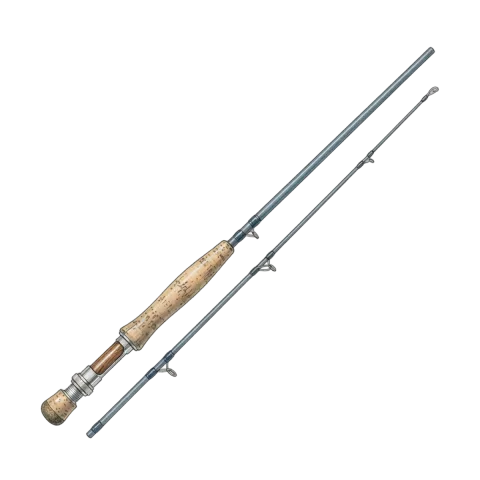
Rod
Fly rod
A fly rod is a fishing rod sized by line weight, with a fly reel seat. The fly line, not a heavy lure, loads the blank.
Sized for a typical fish
2.44 m · 3wt
- Reel seat
- Fly
- Form factor
- Multi-piece
- Action
- Moderate-fast
- Grip
- Cork
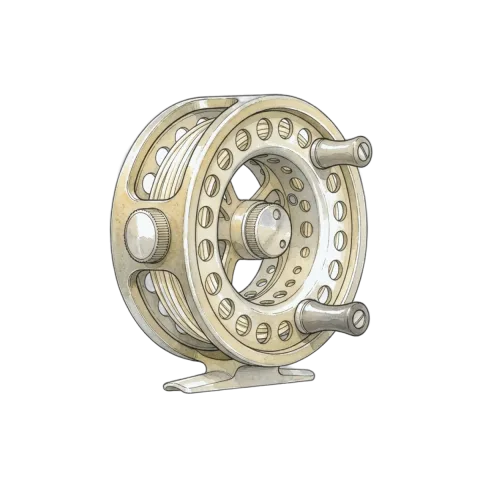
Reel
Fly reel
A fly reel is a large-arbor drum that stores backing and fly line. Drag is a disc; the reel does not cast the fly.
Sized for a typical fish
2 kg drag · 3wt
- Spool
- Drum
- Mount
- Under
- Drag
- Disc
- Retrieve
- Manual
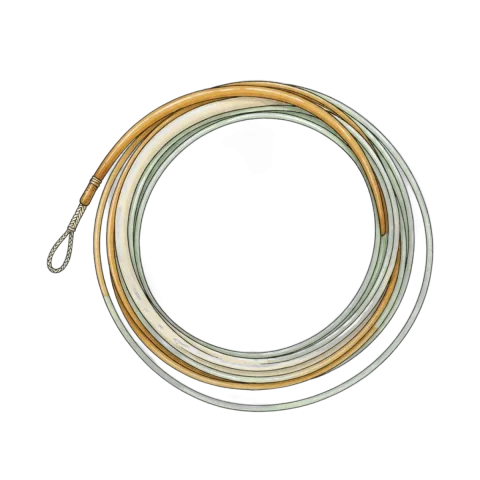
Line
Fly line
Fly line is the weighted shooting line that carries a near-weightless fly. Match it by weight class to the fly rod, not by kilo rating.
Sized for a typical fish
3wt
- Visibility
- Medium
- Abrasion
- Medium
- Stretch
- Low
- Sink rate
- Slow
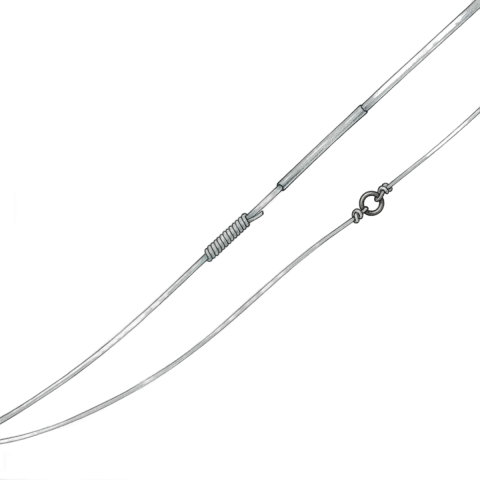
Leader
Tippet
Tippet is the fine, replaceable end of a fly leader, sized in X so you can match the fly and the fish.
Sized for a typical fish
1.6 kg · 0.13 mm · 75 cm · 6X
- Visibility
- Medium
- Abrasion
- Medium
- Stretch
- Medium
- Sink rate
- Slow
Spinning
Casting and retrieving lures with a spinning rod and reel.
50% Effectiveness

Rod
Spinning rod
A spinning rod is a fishing rod built to carry a spinning reel under the blank. You cast lures and light baits with it from shore or a boat.
Sized for a typical fish
ultralight · 1.8 m
- Reel seat
- Spinning
- Form factor
- Multi-piece
- Action
- Fast
- Grip
- EVA

Reel
Spinning reel
A spinning reel hangs under the fishing rod and is the default reel for casting lures and light baits. Line peels off an open spool with a bail.
Sized for a typical fish
1000 · 3 kg drag · 185 g
- Spool
- Fixed
- Mount
- Under
- Drag
- Front
- Retrieve
- Manual

Line
Braided line
Braided fishing line is the thin, no-stretch main for long casts, jigging, and feeling every tick on the retrieve.
Sized for a typical fish
6 kg · 0.1 mm
- Visibility
- High
- Abrasion
- Low
- Stretch
- None
- Sink rate
- Floats

Leader
Fluorocarbon leader
A fluorocarbon leader is the clear, fast-sinking join between a visible main line and the lure or hook.
Sized for a typical fish
7 kg · 0.3 mm · 90 cm
- Visibility
- Very low
- Abrasion
- High
- Stretch
- Low
- Sink rate
- Fast
Best lures and baits for Gray's charr
Ranked lures and natural baits from every method, best first.
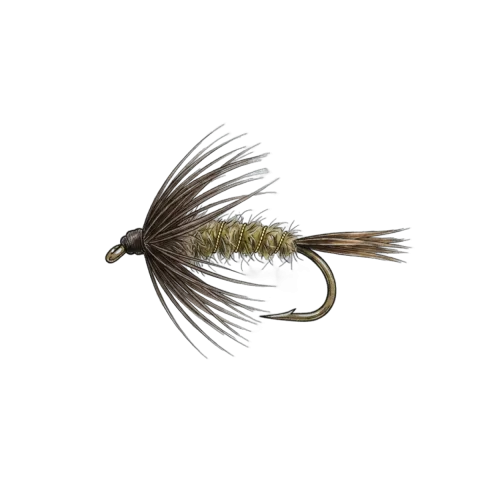
01
Wet fly
- Fly Fishing
A soft-hackle fly swung or drifted just under the film.
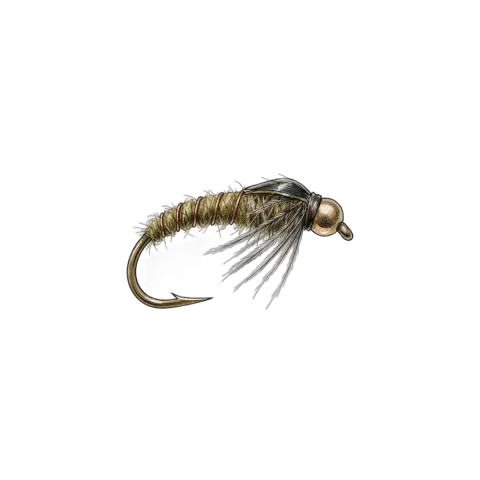
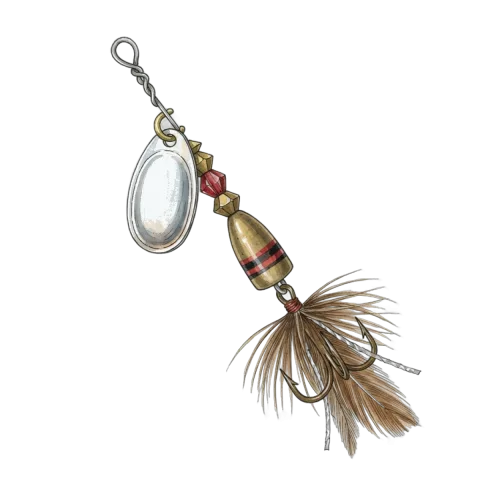
03
Inline spinner
- Spinning
An inline spinner with a blade that flashes on a straight retrieve.
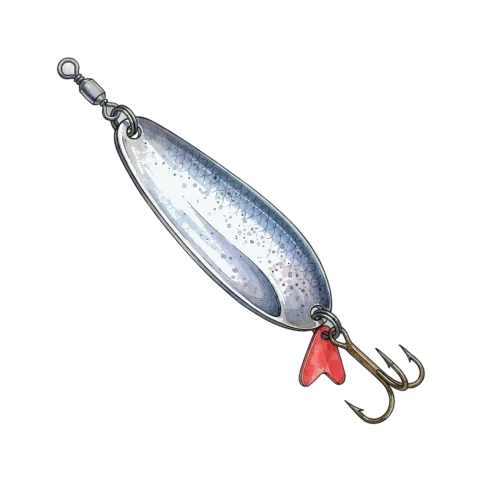
How Gray's charr migrates — Bathymetric
Shifts between shallow and deeper water with the seasons rather than moving along the coast. Change depth before you change venue.
1 Warm months
Shallow water
Feed in shallow water through the warm months.
2 Cold months
Deep water
Drop into deeper water as it cools.
Larger adults often stay deeper all year.
Hover or tap a number to read each stage.
Diet and behavior of Gray's charr
-
Diet
Carnivore
Where Gray's charr lives
Lives near the bottom but swims in the water just above it. Cover the lower column, not only the mud.
10–30 m

Where this species lives