How to catch Great barracuda
Sphyraena barracuda (Edwards, 1771)
About Great barracuda fishing
The great barracuda is a large predatory marine fish belonging to the family Sphyraenidae, readily recognised by its elongated, torpedo-shaped body, pointed pike-like head, and powerful jaws filled with fang-like teeth. Reaching maximum lengths of two hundred centimetres and weights up to fifty kilograms, it displays a bluish-grey dorsal coloration fading to a silvery, chalky-white belly, often marked with dark bars along the upper flanks. This epipelagic species inhabits tropical to warm temperate coastal waters, frequently cruising around coral reefs, seagrass beds, mangrove estuaries, and deep drop-offs from the surface down to one hundred metres. Primarily solitary as adults while juveniles form small shoals, it functions as a voracious ambush hunter feeding mainly on fishes and cephalopods using explosive bursts of short-range speed. Spawning occurs offshore during warmer months, and the species is widely acknowledged by anglers for its fierce strikes and blistering runs.
-
Difficulty
Medium
-
Average size
140 cm TL
-
Market value
Medium
-
Habitat
Brackish, Saltwater
-
Season
Spring, Summer, Autumn
-
Also known as
Akerstrom's sea-pike, Barra, Barracuda, Commerson's sea pike, Dingo-fish, Giant barracuda

Caudal shape
Emarginate caudal fin with large posterior lobes identifies the species.
Oblique bars
Oblique dark bars on upper half of body distinguish it.
Great barracuda fishing facts
Characteristics
-
Typical size
140 cm TL (max 200 cm TL ) -
Typical weight
5 kg (max 50 kg ) -
Preferred temperature
21.7–28.9 °C -
Depth
0–100 m -
Longevity
18.4 years -
Body shape
Elongated -
Commercial?
-
Vulnerability score
78.6
Best hours
-
Peak
Dawn
First light
-
Active
Morning
After sunrise
-
Low
Midday
High sun
-
Active
Afternoon
Late day
-
Peak
Dusk
Last light
-
Low
Night
After dark
When to fish for Great barracuda
How to catch Great barracuda
Tips for catching Great barracuda
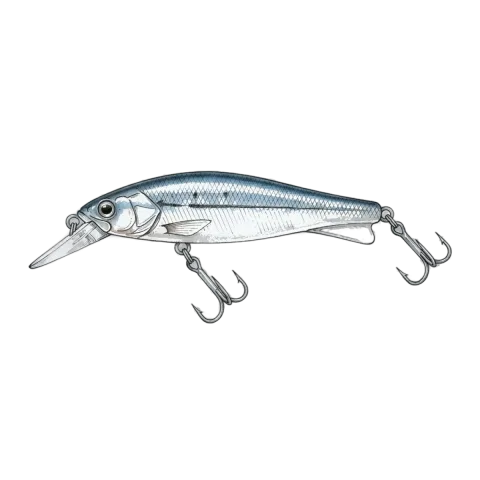
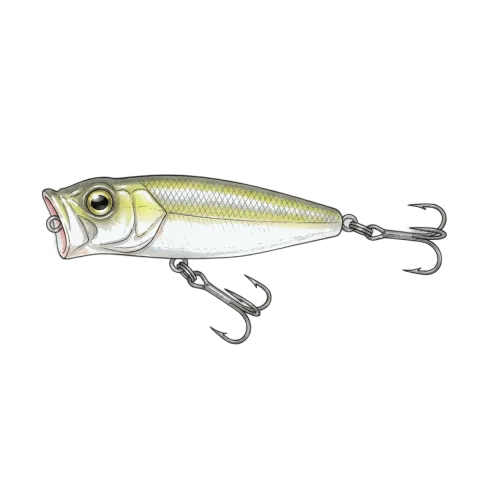
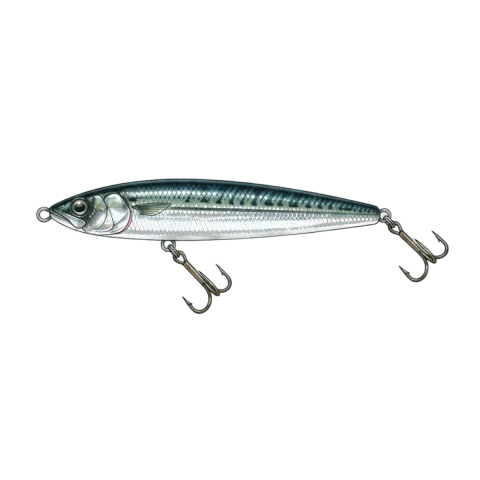
Targeting great barracuda requires gear capable of withstanding violent surface strikes and razor-sharp teeth, making wire traces essential when presenting lures or live baits. Anglers achieve great success by casting large spoons, surface poppers, and heavy jerkbaits around structural refuges such as reef edges, drop-offs, and shallow mangrove margins where these ambush predators wait for prey. Trolling along deep reef drop-offs with fast-moving minnow plugs or rigged fish baits during early morning and late afternoon hours effectively triggers aggressive feeding responses. Because these fish rely heavily on sight to ambush prey, calm and clear water conditions yield the highest catch rates, while maintaining a steady retrieve or intermittent pauses can entice hesitant followers into striking.
Other names for Great barracuda
Local and alternate names anglers use for Great barracuda.
-
Barracuda
-
Great barracuda
-
Small-eyed barracuda
-
Barra
-
Commerson's sea pike
-
Dingo-fish
-
Giant barracuda
-
Giant sea-pike
-
Great barra cuda
-
Short barracuda
-
Striped seapike
-
Akerstrom's sea-pike
Best equipment to catch Great barracuda
Compare fishing methods for Great barracuda — sized kit for each technique.
Note: Typical fish is 5 kg Our algorithm will suggest the best equipment for you based on this weight.
Spinning
Casting and retrieving lures with a spinning rod and reel.
90% Effectiveness

Rod
Spinning rod
A spinning rod is a fishing rod built to carry a spinning reel under the blank. You cast lures and light baits with it from shore or a boat.
Sized for a typical fish
medium-heavy · 3 m
- Reel seat
- Spinning
- Form factor
- Multi-piece
- Action
- Fast
- Grip
- EVA

Reel
Spinning reel
A spinning reel hangs under the fishing rod and is the default reel for casting lures and light baits. Line peels off an open spool with a bail.
Sized for a typical fish
2500 · 5 kg drag · 220 g
- Spool
- Fixed
- Mount
- Under
- Drag
- Front
- Retrieve
- Manual

Line
Braided line
Braided fishing line is the thin, no-stretch main for long casts, jigging, and feeling every tick on the retrieve.
Sized for a typical fish
12 kg · 0.18 mm
- Visibility
- High
- Abrasion
- Low
- Stretch
- None
- Sink rate
- Floats

Leader
Fluorocarbon leader
A fluorocarbon leader is the clear, fast-sinking join between a visible main line and the lure or hook.
Sized for a typical fish
12 kg · 0.4 mm · 120 cm
- Visibility
- Very low
- Abrasion
- High
- Stretch
- Low
- Sink rate
- Fast
Trolling
Drawing lures or baits behind a moving boat.
85% Effectiveness
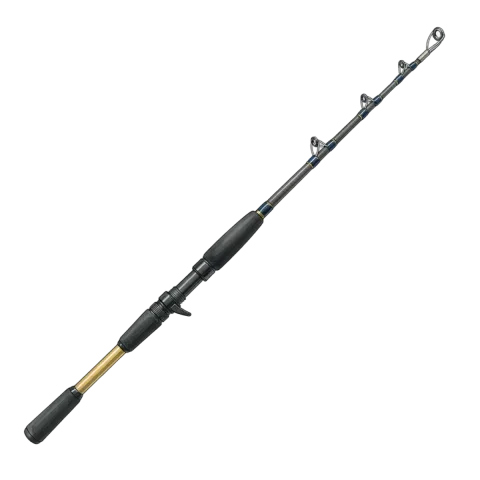
Rod
Trolling rod
A trolling rod is built to sit in a holder and pull a lure or bait at speed. Moderate action so the rod, not the reel, plays the fish.
Sized for a typical fish
medium-heavy · 2.13 m
- Reel seat
- Casting
- Form factor
- One-piece
- Action
- Moderate
- Grip
- EVA
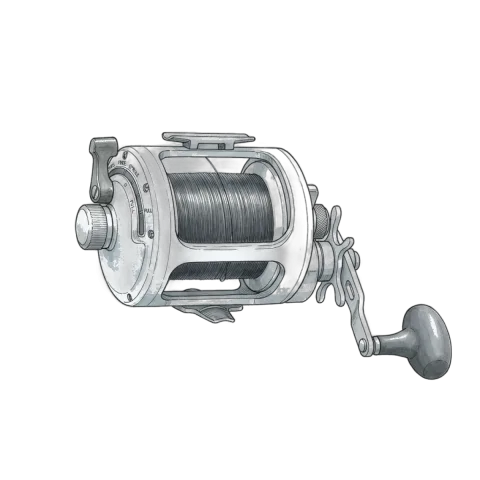
Reel
Trolling reel
A trolling reel is the dedicated lever-drag fishing reel for pulling lures behind a boat, often in a holder all day.
Sized for a typical fish
20 · 15 kg drag
- Spool
- Revolving
- Mount
- Over
- Drag
- Lever
- Retrieve
- Manual
Line
Braided line
Braided fishing line is the thin, no-stretch main for long casts, jigging, and feeling every tick on the retrieve.
Sized for a typical fish
12 kg · 0.18 mm
- Visibility
- High
- Abrasion
- Low
- Stretch
- None
- Sink rate
- Floats
Leader
Fluorocarbon leader
A fluorocarbon leader is the clear, fast-sinking join between a visible main line and the lure or hook.
Sized for a typical fish
12 kg · 0.4 mm · 120 cm
- Visibility
- Very low
- Abrasion
- High
- Stretch
- Low
- Sink rate
- Fast
Popping
Working surface poppers or stickbaits for inshore and tropical predators.
80% Effectiveness
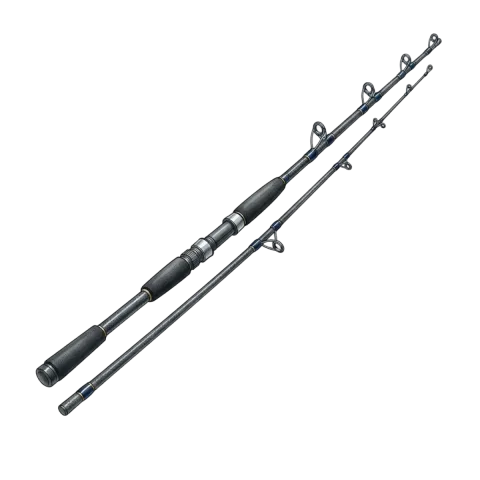
Rod
Offshore rod
An offshore rod is the one-piece boat fishing rod for deep jigging, trolling, and live bait in open salt water.
Sized for a typical fish
heavy · 1.68 m
- Reel seat
- Casting
- Form factor
- One-piece
- Action
- Fast
- Grip
- EVA
Reel
Spinning reel
A spinning reel hangs under the fishing rod and is the default reel for casting lures and light baits. Line peels off an open spool with a bail.
Sized for a typical fish
2500 · 5 kg drag · 220 g
- Spool
- Fixed
- Mount
- Under
- Drag
- Front
- Retrieve
- Manual
Line
Braided line
Braided fishing line is the thin, no-stretch main for long casts, jigging, and feeling every tick on the retrieve.
Sized for a typical fish
12 kg · 0.18 mm
- Visibility
- High
- Abrasion
- Low
- Stretch
- None
- Sink rate
- Floats
Leader
Fluorocarbon leader
A fluorocarbon leader is the clear, fast-sinking join between a visible main line and the lure or hook.
Sized for a typical fish
12 kg · 0.4 mm · 120 cm
- Visibility
- Very low
- Abrasion
- High
- Stretch
- Low
- Sink rate
- Fast
Best lures and baits for Great barracuda
Ranked lures and natural baits from every method, best first.
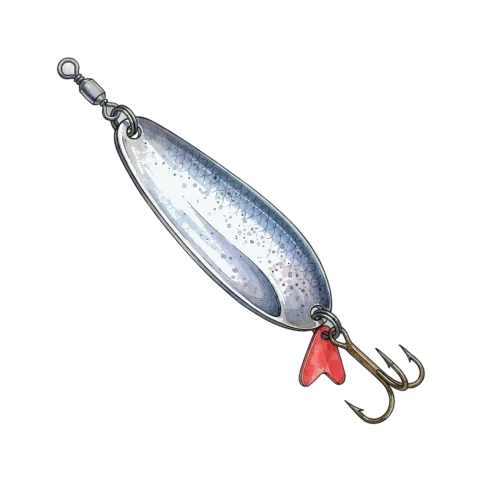
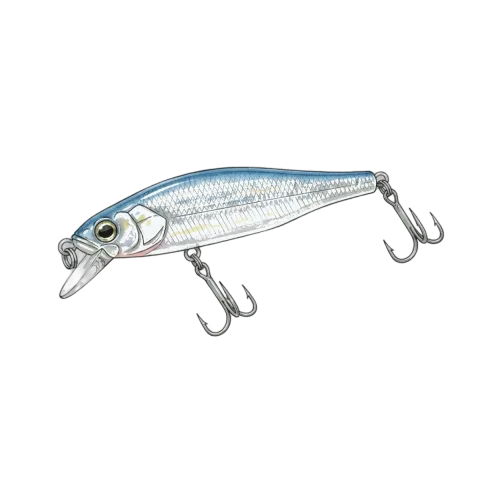
02
Jerkbait
- Spinning
A long hard bait you twitch and kill in the mid column.
How Great barracuda migrates — Inshore–offshore
Shifts between shallow inshore water and deeper offshore grounds with the season.
1 Warm months
Inshore
Stay close inshore through the warm months.
2 Cold months
Offshore
Move offshore into deeper water as it cools.
Hover or tap a number to read each stage.
Diet and behavior of Great barracuda
-
Diet
Top predator -
Feeds by
Hunts animals -
Hunts
Dawn · Dusk -
Feeds over
Seagrass · Coral reefs · Mangroves -
Social
Shoaling · Solitary -
Main prey
Baitfish
Prey and predators of Great barracuda
Prey is what Great barracuda eats. Predators are the animals that eat it.
That is how it feeds, and how it is hunted.
Prey
What it eats
Predators
What hunts it
Fish
Where Great barracuda lives
Tied to reefs and rocky structure in shallow coastal water.
0–100 m · usually 3–30 m

Estuary
Where this species lives
Great barracuda photos for identification
Compare these photos with the catalog plate to identify the species.
Where to fish for Great barracuda
Mapped fishing spots where Great barracuda is recorded — open a pin for access and methods.


