How to catch Lusitanian toadfish
Halobatrachus didactylus (Bloch & Schneider, 1801)
About Lusitanian toadfish fishing
The Lusitanian toadfish is a bottom-dwelling marine fish belonging to the family Batrachoididae, recognized by a robust, flattened head, wide mouth, and a rounded caudal fin. Growing up to fifty centimetres in total length, this solitary species features a fusiform body shape and inhabits shallow coastal waters down to fifty metres deep. It prefers soft sandy or muddy substrates where it often lies partially concealed or shelters inside rock crevices. As an opportunistic benthic predator, its diet consists primarily of crustaceans, molluscs, and small fishes. Although taken occasionally in artisanal fisheries and bycatch, it holds minor commercial importance and is not typically pursued as a primary game fish by sports anglers.
-
Difficulty
Medium
-
Average size
35 cm TL
-
Habitat
Saltwater
-
Season
Spring, Summer, Autumn
-
Also known as
Lusitarian toadfish, Toadfish

Rounded caudal fin
The rounded caudal fin shape helps identify this toadfish species.
Broad head
Massive depressed head and huge terminal mouth characterize this toadfish.
Mottled coloration
Dark brown and olive mottling provides camouflage along rocky seabeds.
Lusitanian toadfish fishing facts
Characteristics
-
Typical size
35 cm TL (max 50 cm TL ) -
Typical weight
0.4 kg (max 1.8 kg ) -
Preferred temperature
15.5–27.5 °C -
Depth
10–50 m -
Longevity
7 years -
Body shape
Fusiform / Normal -
Vulnerability score
54
Best hours
-
Active
Dawn
First light
-
Active
Morning
After sunrise
-
Low
Midday
High sun
-
Low
Afternoon
Late day
-
Peak
Dusk
Last light
-
Peak
Night
After dark
When to fish for Lusitanian toadfish
How to catch Lusitanian toadfish
Tips for catching Lusitanian toadfish
Anglers targeting bottom-dwelling species in shallow coastal sectors encounter this sedentary fish over soft sand, mud, or rocky structure where it waits in ambush for passing prey. Because it relies heavily on benthic invertebrates and small fish, presentation requires a stationary or slowly dragged bottom rig weighted to hold position against weak currents. Effective natural baits include small crabs, prawns, shrimp, and cut fish presented directly on the seabed. Fishing success improves during warmer spring and summer months when coastal water temperatures rise and fish become more active around inshore haunts.
Other names for Lusitanian toadfish
Local and alternate names anglers use for Lusitanian toadfish.
-
Lusitanian toadfish
-
Toadfish
-
Lusitarian toadfish
Best equipment to catch Lusitanian toadfish
Compare fishing methods for Lusitanian toadfish — sized kit for each technique.
Note: Typical fish is 0.4 kg Our algorithm will suggest the best equipment for you based on this weight.
Bottom Fishing
Presenting bait or rigs on or near the lake or sea floor.
85% Effectiveness

Rod
Spinning rod
A spinning rod is a fishing rod built to carry a spinning reel under the blank. You cast lures and light baits with it from shore or a boat.
Sized for a typical fish
ultralight · 1.8 m
- Reel seat
- Spinning
- Form factor
- Multi-piece
- Action
- Fast
- Grip
- EVA

Reel
Spinning reel
A spinning reel hangs under the fishing rod and is the default reel for casting lures and light baits. Line peels off an open spool with a bail.
Sized for a typical fish
1000 · 3 kg drag · 185 g
- Spool
- Fixed
- Mount
- Under
- Drag
- Front
- Retrieve
- Manual

Line
Monofilament line
Monofilament fishing line is the everyday main line: easy to knot, cheap to replace, and stretchy enough to forgive a hard strike.
Sized for a typical fish
1.3 kg · 0.125 mm
- Visibility
- Medium
- Abrasion
- Medium
- Stretch
- High
- Sink rate
- Slow

Leader
Fluorocarbon leader
A fluorocarbon leader is the clear, fast-sinking join between a visible main line and the lure or hook.
Sized for a typical fish
4 kg · 0.2 mm · 80 cm
- Visibility
- Very low
- Abrasion
- High
- Stretch
- Low
- Sink rate
- Fast

Hook
Circle hook
A circle hook turns in the mouth and usually finds the corner of the jaw. You do not strike hard — you come tight. It includes freshwater.
Sized for a typical fish
4
- Points
- 1
- Offset
- No
- Barbed
- Yes
- Gap
- Standard
Best lures and baits for Lusitanian toadfish
Ranked lures and natural baits from every method, best first.
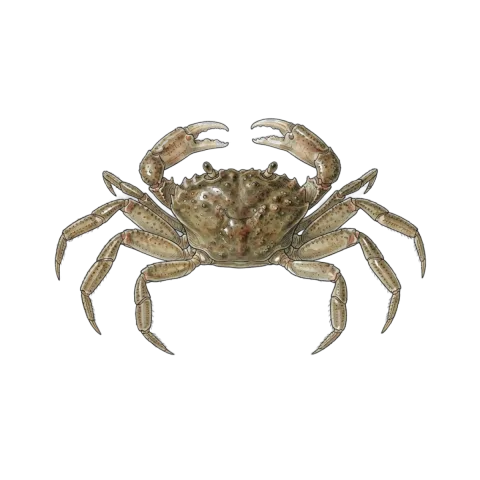
01
Crab
- Bottom Fishing
Hard upper shell protects the crab and anchors its vital organs.
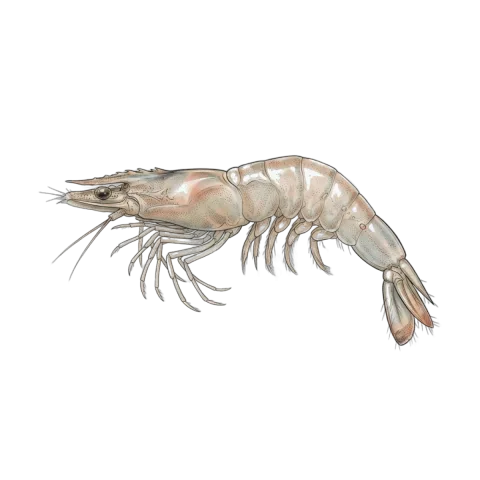
02
Shrimp
- Bottom Fishing
Translucent segmented carapace protects the body.
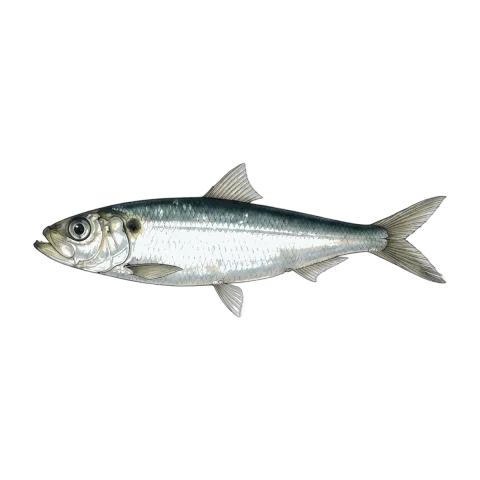
03
Sardine
- Bottom Fishing
Elongated silvery baitfish body releases strong scent trails.
Where Lusitanian toadfish spends the year — Non-migratory
Stays in the same waters year-round. Look for it on the same grounds rather than timing a run.
1 Eggs
Same water all year
Laid on the home grounds.
2 Juveniles
Same water all year
Grow up close by.
3 Adults
Same water all year
Keep to a small home range.
4 Spawners
Same water all year
Spawn on the same grounds, with only short moves.
Hover or tap a number to read each stage.
Diet and behavior of Lusitanian toadfish
-
Diet
Carnivore -
Feeds by
Hunts animals -
Hunts
Dusk · Night
Prey and predators of Lusitanian toadfish
Prey is what Lusitanian toadfish eats. Predators are the animals that eat it.
That is how it feeds, and how it is hunted.
Prey
What it eats
Other prey
Where Lusitanian toadfish lives
Lives on or just above the bottom. Work jigs, bait, and lures along the seabed.
10–50 m

Where this species lives
Lusitanian toadfish photos for identification
Compare these photos with the catalog plate to identify the species.