How to catch Killarney shad
Alosa killarnensis Regan, 1916
About Killarney shad fishing
The Killarney shad is a small freshwater fish belonging to the family Alosidae, characterized by a slender fusiform body shape and fine gill rakers. Endemic to a single lake system in southwestern Ireland, this rare pelagic dweller typically reaches fifteen centimetres in length and feeds predominantly on zooplankton drifting in open water. Being a landlocked form of anadromous stock, it completes its entire life cycle within the lake environment, forming shoals that gather over shallow gravel bars and around islands during the summer breeding period.
-
Difficulty
Medium
-
Average size
15 cm
-
Habitat
Freshwater
-
Season
Spring, Summer, Autumn

Shoulder spot series
A horizontal row of dark spots behind the operculum distinguishes this clupeid species.
Terminal mouth
Terminal and slightly superior mouth typical of midwater planktivorous feeding.
Fusiform body
Deep, compressed silvery body shape characteristic of freshwater shad species.
Killarney shad fishing facts
Characteristics
-
Typical size
15 cm (max 20 cm SL ) -
Typical weight
0.2 kg (max 0.1 kg ) -
Longevity
5 years -
Body shape
Fusiform / Normal -
Vulnerability score
23.5
Best hours
-
Active
Dawn
First light
-
Peak
Morning
After sunrise
-
Low
Midday
High sun
-
Peak
Afternoon
Late day
-
Active
Dusk
Last light
-
Low
Night
After dark
When to fish for Killarney shad
How to catch Killarney shad
Tips for catching Killarney shad
Angling for this protected endemic species is generally restricted or prohibited due to its critically endangered conservation status and extreme vulnerability to environmental changes. For scientific study or historical context, specialized ultra-light tackle using small artificial wet flies or tiny micro-spoons can occasionally imitate the zooplankton and small aquatic invertebrates that form its natural diet in the pelagic zone. Presentations should target open water columns or shallow gravel shoals during daylight hours, particularly matching the early summer months when schools congregate near island shallows.
Other names for Killarney shad
Local and alternate names anglers use for Killarney shad.
-
Killarney shad
Best equipment to catch Killarney shad
Compare fishing methods for Killarney shad — sized kit for each technique.
Note: Typical fish is 0.2 kg Our algorithm will suggest the best equipment for you based on this weight.
Fly Fishing
Presenting artificial flies with a fly rod and weighted line.
70% Effectiveness
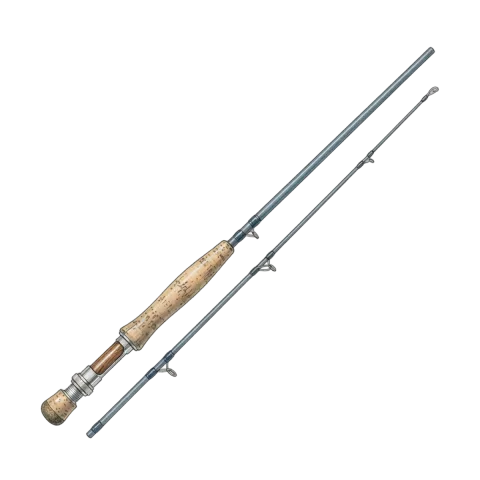
Rod
Fly rod
A fly rod is a fishing rod sized by line weight, with a fly reel seat. The fly line, not a heavy lure, loads the blank.
Sized for a typical fish
2.44 m · 3wt
- Reel seat
- Fly
- Form factor
- Multi-piece
- Action
- Moderate-fast
- Grip
- Cork
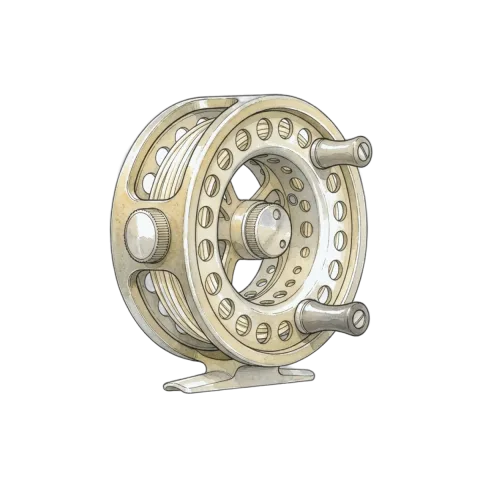
Reel
Fly reel
A fly reel is a large-arbor drum that stores backing and fly line. Drag is a disc; the reel does not cast the fly.
Sized for a typical fish
2 kg drag · 3wt
- Spool
- Drum
- Mount
- Under
- Drag
- Disc
- Retrieve
- Manual
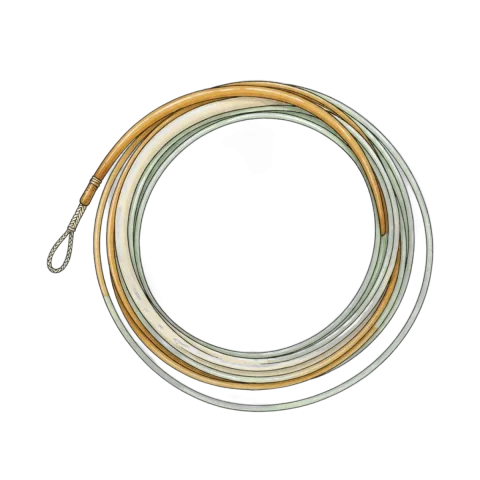
Line
Fly line
Fly line is the weighted shooting line that carries a near-weightless fly. Match it by weight class to the fly rod, not by kilo rating.
Sized for a typical fish
3wt
- Visibility
- Medium
- Abrasion
- Medium
- Stretch
- Low
- Sink rate
- Slow
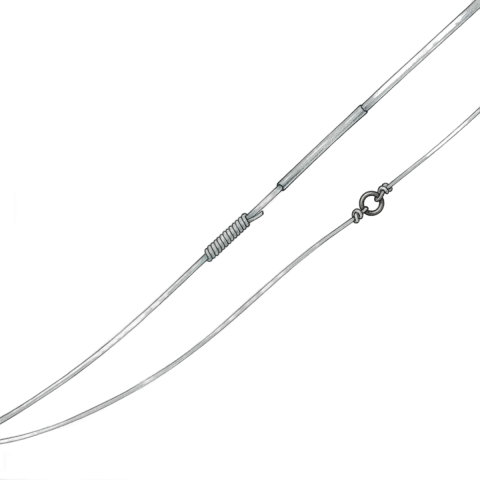
Leader
Tippet
Tippet is the fine, replaceable end of a fly leader, sized in X so you can match the fly and the fish.
Sized for a typical fish
1.6 kg · 0.13 mm · 75 cm · 6X
- Visibility
- Medium
- Abrasion
- Medium
- Stretch
- Medium
- Sink rate
- Slow
Spinning
Casting and retrieving lures with a spinning rod and reel.
50% Effectiveness

Rod
Spinning rod
A spinning rod is a fishing rod built to carry a spinning reel under the blank. You cast lures and light baits with it from shore or a boat.
Sized for a typical fish
ultralight · 1.8 m
- Reel seat
- Spinning
- Form factor
- Multi-piece
- Action
- Fast
- Grip
- EVA

Reel
Spinning reel
A spinning reel hangs under the fishing rod and is the default reel for casting lures and light baits. Line peels off an open spool with a bail.
Sized for a typical fish
1000 · 3 kg drag · 185 g
- Spool
- Fixed
- Mount
- Under
- Drag
- Front
- Retrieve
- Manual

Line
Braided line
Braided fishing line is the thin, no-stretch main for long casts, jigging, and feeling every tick on the retrieve.
Sized for a typical fish
6 kg · 0.1 mm
- Visibility
- High
- Abrasion
- Low
- Stretch
- None
- Sink rate
- Floats

Leader
Fluorocarbon leader
A fluorocarbon leader is the clear, fast-sinking join between a visible main line and the lure or hook.
Sized for a typical fish
7 kg · 0.3 mm · 90 cm
- Visibility
- Very low
- Abrasion
- High
- Stretch
- Low
- Sink rate
- Fast
Best lures and baits for Killarney shad
Ranked lures and natural baits from every method, best first.
01
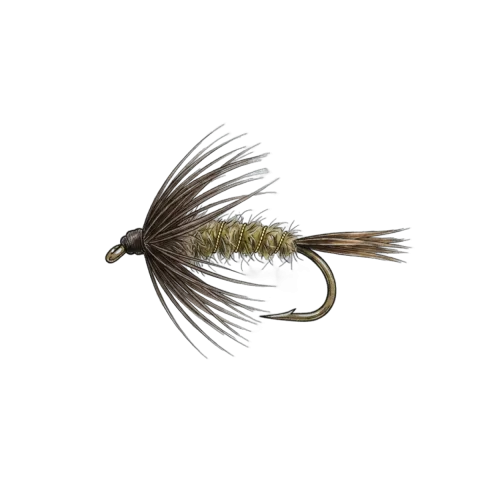
Wet fly
- Fly Fishing
A soft-hackle fly swung or drifted just under the film.
02
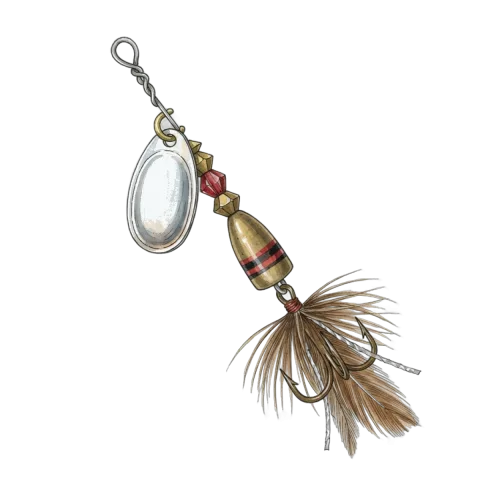
Inline spinner
- Spinning
An inline spinner with a blade that flashes on a straight retrieve.
Where Killarney shad spends the year — Non-migratory
Stays in the same waters year-round. Look for it on the same grounds rather than timing a run.
1 Eggs
Same water all year
Laid on the home grounds.
2 Juveniles
Same water all year
Grow up close by.
3 Adults
Same water all year
Keep to a small home range.
4 Spawners
Same water all year
Spawn on the same grounds, with only short moves.
Hover or tap a number to read each stage.
Diet and behavior of Killarney shad
-
Diet
Carnivore -
Hunts
Morning · Afternoon
Where Killarney shad lives
Pelagic over the continental shelf — coastal open water, not the deep ocean.

Where this species lives