How to catch Leatherjacket
Oligoplites saurus (Bloch & Schneider, 1801)
About Leatherjacket fishing
The leatherjacket is a sleek, fusiform coastal fish belonging to the jack family Carangidae, reaching a maximum length of thirty-five centimetres. It features an elongate, strongly compressed body with small needle-shaped scales embedded in the skin, a blue-green back, and silvery flanks often adorned with subtle golden highlights. This schooling species inhabits shallow inshore waters, sandy beaches, bays, inlets, and mangrove estuaries down to depths of fifty metres. Adults are active daytime predators that feed voraciously on small fish and crustaceans, frequently hunting in fast-moving groups near the surface. While their dorsal and anal spines are traditionally associated with venomous glands, they are primarily recognised by inshore anglers for their incredible speed and energetic fighting ability.
-
Difficulty
Medium
-
Average size
27 cm TL
-
Market value
Medium
-
Habitat
Brackish, Saltwater
-
Season
Spring, Summer, Autumn
-
Also known as
Jack, Leather jacket, Leathercoat, Leatherjack, Mackerel, Needlejack

Separate dorsal spines
Five nearly separate spines precede the main dorsal fin.
Extended upper jaw
Posterior end of upper jaw reaches posterior rim of eye.
Yellowish fins
Pectoral and caudal fins show distinct yellowish coloration.
Leatherjacket fishing facts
Characteristics
-
Typical size
27 cm TL (max 35 cm TL ) -
Typical weight
0.2 kg (max 0.3 kg ) -
Preferred temperature
21.8–28 °C -
Depth
0–50 m -
Body shape
Fusiform / Normal -
Commercial?
-
Vulnerability score
25.6
Best hours
-
Peak
Dawn
First light
-
Peak
Morning
After sunrise
-
Low
Midday
High sun
-
Active
Afternoon
Late day
-
Active
Dusk
Last light
-
Low
Night
After dark
When to fish for Leatherjacket
How to catch Leatherjacket
Tips for catching Leatherjacket
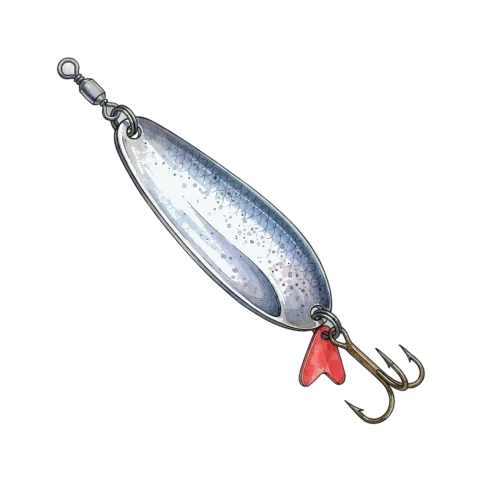
Target fast-moving schooling fish along shallow sandy beaches, tidal inlets, and mangrove edges by employing light spinning gear with fast retrieves. Because these predators aggressively chase small fish and crustaceans near the surface, cast small shiny spoons, slim metal jigs, or floating twitchbaits into active surface disturbances. Exercise extreme caution when handling captured specimens to avoid painful punctures from the venomous spines along the dorsal and anal fins.
Other names for Leatherjacket
Local and alternate names anglers use for Leatherjacket.
-
Leatherjack
-
Leathercoat
-
Leatherjacket
-
Leather jacket
-
Shoemaker
-
Runner
-
Needlejack
-
Mackerel
-
Zapate
-
Jack
Best equipment to catch Leatherjacket
Compare fishing methods for Leatherjacket — sized kit for each technique.
Note: Typical fish is 0.2 kg Our algorithm will suggest the best equipment for you based on this weight.
Spinning
Casting and retrieving lures with a spinning rod and reel.
85% Effectiveness

Rod
Spinning rod
A spinning rod is a fishing rod built to carry a spinning reel under the blank. You cast lures and light baits with it from shore or a boat.
Sized for a typical fish
ultralight · 1.8 m
- Reel seat
- Spinning
- Form factor
- Multi-piece
- Action
- Fast
- Grip
- EVA

Reel
Spinning reel
A spinning reel hangs under the fishing rod and is the default reel for casting lures and light baits. Line peels off an open spool with a bail.
Sized for a typical fish
1000 · 3 kg drag · 185 g
- Spool
- Fixed
- Mount
- Under
- Drag
- Front
- Retrieve
- Manual

Line
Braided line
Braided fishing line is the thin, no-stretch main for long casts, jigging, and feeling every tick on the retrieve.
Sized for a typical fish
6 kg · 0.1 mm
- Visibility
- High
- Abrasion
- Low
- Stretch
- None
- Sink rate
- Floats

Leader
Fluorocarbon leader
A fluorocarbon leader is the clear, fast-sinking join between a visible main line and the lure or hook.
Sized for a typical fish
7 kg · 0.3 mm · 90 cm
- Visibility
- Very low
- Abrasion
- High
- Stretch
- Low
- Sink rate
- Fast
Fly Fishing
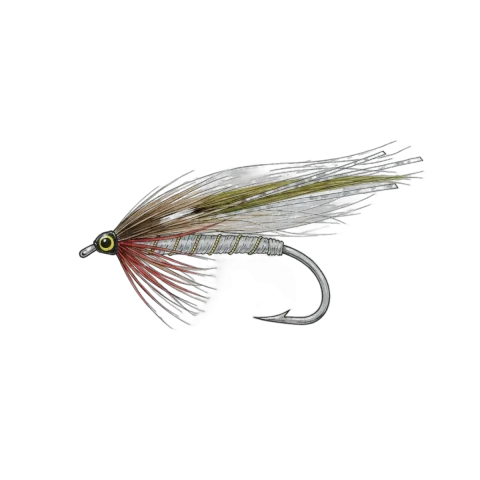
Presenting artificial flies with a fly rod and weighted line.
80% Effectiveness
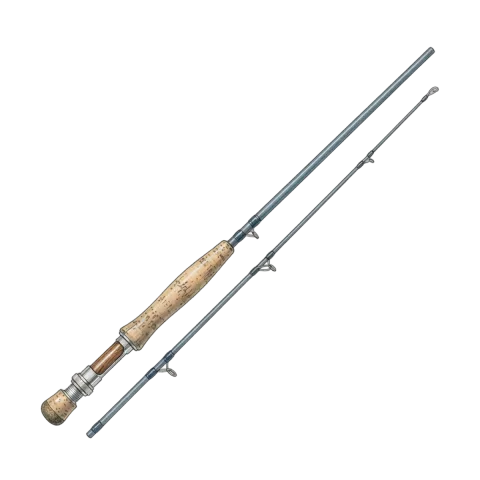
Rod
Fly rod
A fly rod is a fishing rod sized by line weight, with a fly reel seat. The fly line, not a heavy lure, loads the blank.
Sized for a typical fish
2.44 m · 3wt
- Reel seat
- Fly
- Form factor
- Multi-piece
- Action
- Moderate-fast
- Grip
- Cork
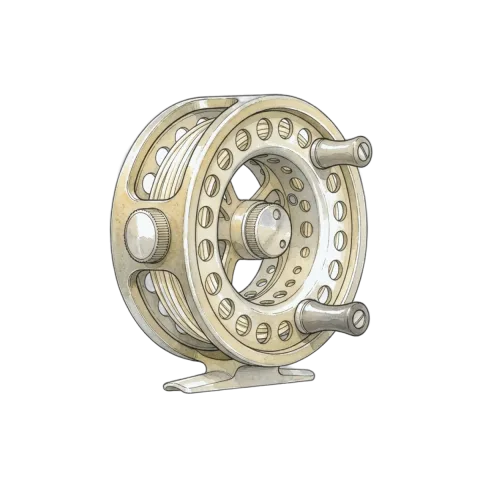
Reel
Fly reel
A fly reel is a large-arbor drum that stores backing and fly line. Drag is a disc; the reel does not cast the fly.
Sized for a typical fish
2 kg drag · 3wt
- Spool
- Drum
- Mount
- Under
- Drag
- Disc
- Retrieve
- Manual
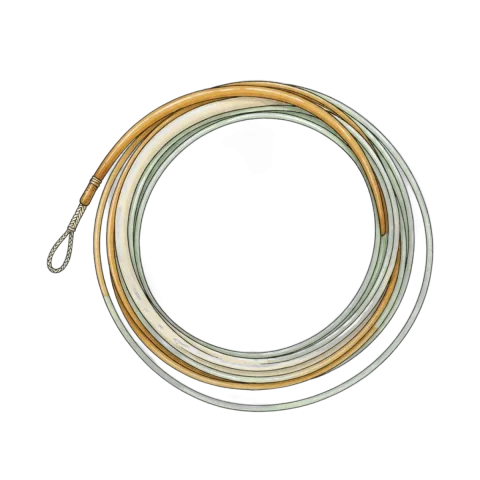
Line
Fly line
Fly line is the weighted shooting line that carries a near-weightless fly. Match it by weight class to the fly rod, not by kilo rating.
Sized for a typical fish
3wt
- Visibility
- Medium
- Abrasion
- Medium
- Stretch
- Low
- Sink rate
- Slow
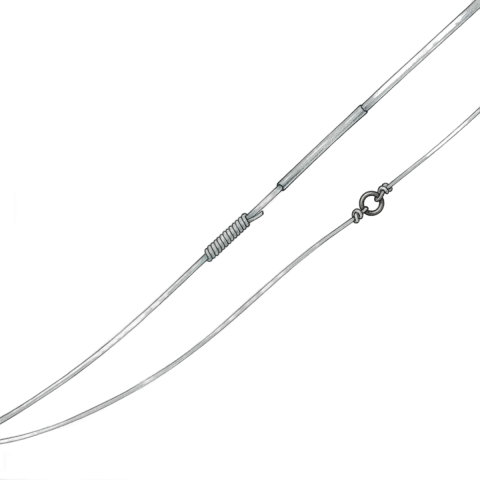
Leader
Tippet
Tippet is the fine, replaceable end of a fly leader, sized in X so you can match the fly and the fish.
Sized for a typical fish
1.6 kg · 0.13 mm · 75 cm · 6X
- Visibility
- Medium
- Abrasion
- Medium
- Stretch
- Medium
- Sink rate
- Slow
Best lures and baits for Leatherjacket
Ranked lures and natural baits from every method, best first.
02
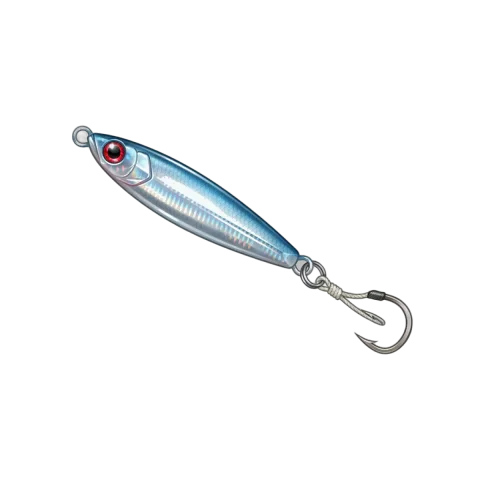
Metal jig
- Spinning
A long metal lure for speed-jigging the deep column.
03
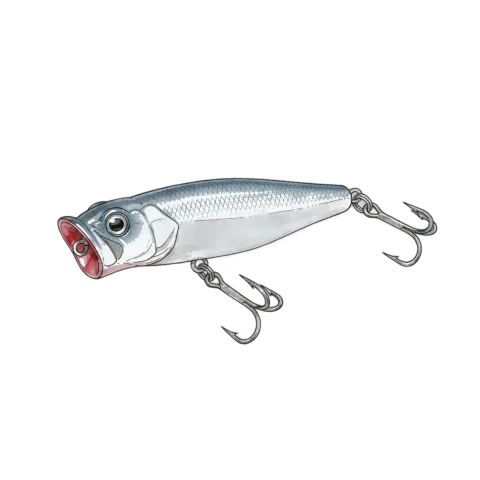
Topwater plug
- Spinning
A floating plug that pops and gurgles on the surface.
How Leatherjacket migrates — Inshore–offshore
Shifts between shallow inshore water and deeper offshore grounds with the season.
1 Warm months
Inshore
Stay close inshore through the warm months.
2 Cold months
Offshore
Move offshore into deeper water as it cools.
Hover or tap a number to read each stage.
Diet and behavior of Leatherjacket
-
Diet
Top predator -
Feeds by
Hunts animals -
Hunts
Dawn · Morning -
Feeds over
Coral reefs · Mangroves -
Social
Schooling -
Main prey
Baitfish -
Used as bait
Yes
Prey and predators of Leatherjacket
Prey is what Leatherjacket eats. Predators are the animals that eat it.
That is how it feeds, and how it is hunted.
Prey
What it eats
Where Leatherjacket lives
Tied to reefs and rocky structure in shallow coastal water.
0–50 m

Estuary
Where this species lives
Leatherjacket photos for identification
Compare these photos with the catalog plate to identify the species.
Where to fish for Leatherjacket
Mapped fishing spots where Leatherjacket is recorded — open a pin for access and methods.
