How to catch Longfin yellowtail
Seriola rivoliana Valenciennes, 1833
About Longfin yellowtail fishing
The longfin yellowtail is a pelagic marine game fish belonging to the family Carangidae, featuring a deep yet flattened body with pronounced sickle-shaped dorsal and anal fins. Adults typically measure around ninety centimetres in length while reaching a maximum of one hundred and sixty centimetres and a weight approaching fifty-nine kilograms. Their upper bodies display a dusky brownish or silvery blue-green tone, complemented by faint amber or olive lateral stripes and a lighter, brassy belly. This species inhabits oceanic zones and outer reef slopes at depths ranging from five to two hundred and forty-five metres, often associating with floating debris, offshore banks, and deep-water shipwrecks. They form small groups and hunt voraciously, feeding primarily on smaller fishes, squid, and crustaceans. Spawning occurs repeatedly throughout the year in warm oceanic waters, and the species is known for its remarkable stamina in strong currents.
-
Difficulty
Medium
-
Average size
90 cm TL
-
Market value
Very high
-
Habitat
Saltwater
-
Season
Summer, Autumn
-
Also known as
Almaco amberjack, Almaco jack, Amber, Amberjack, Crevalle, Deep-water amberjack

Diagonal stripe through eye
Dark yellowish-brown band from nape through eye to upper lip distinguishes this species.
Elongated dorsal fin
Tall, sickle-shaped anterior dorsal lobe characteristic of the longfin yellowtail.
Longfin yellowtail fishing facts
Characteristics
-
Typical size
90 cm TL (max 160 cm FL ) -
Typical weight
4.5 kg (max 59.9 kg ) -
Preferred temperature
22.1–28.6 °C -
Depth
5–245 m -
Body shape
Short And / Or Deep -
Commercial?
-
Vulnerability score
73.6
Best hours
-
Peak
Dawn
First light
-
Peak
Morning
After sunrise
-
Low
Midday
High sun
-
Active
Afternoon
Late day
-
Peak
Dusk
Last light
-
Active
Night
After dark
When to fish for Longfin yellowtail
How to catch Longfin yellowtail
Tips for catching Longfin yellowtail
Targeting this powerful pelagic predator requires heavy-duty saltwater tackle capable of withstanding blistering initial runs and deep dives. Offshore anglers find success by working vertical jigs or slow-pitch metal presentations around deep-water wrecks, seamounts, and outer reef drop-offs where the fish congregate in small shoals. Trolling deep-diving plugs or rigged natural baits along current lines and shelf breaks during early morning and late afternoon hours also triggers aggressive strikes. When surface activity or marking fish on sonar is observed, casting heavy metal lures or large topwater stickbaits near structure yields explosive visual takes. Pay close attention to water temperature and structure depth, as these fish relate strongly to thermoclines and upwellings while hunting for baitfish and squid.
Other names for Longfin yellowtail
Local and alternate names anglers use for Longfin yellowtail.
-
Almaco jack
-
Amber
-
Amberjack
-
Longfin yellowtail
-
Longfin kingfish
-
Jack
-
Highfin amberjack
-
Yellow kingfish
-
Greater amberjack
-
European amberjack
-
Falcate amberjack
-
Crevalle
-
Deep-water amberjack
-
Rock salmon
-
Silvercoat jack
-
Almaco amberjack
Best equipment to catch Longfin yellowtail
Compare fishing methods for Longfin yellowtail — sized kit for each technique.
Note: Typical fish is 4.5 kg Our algorithm will suggest the best equipment for you based on this weight.
Trolling
Drawing lures or baits behind a moving boat.
80% Effectiveness
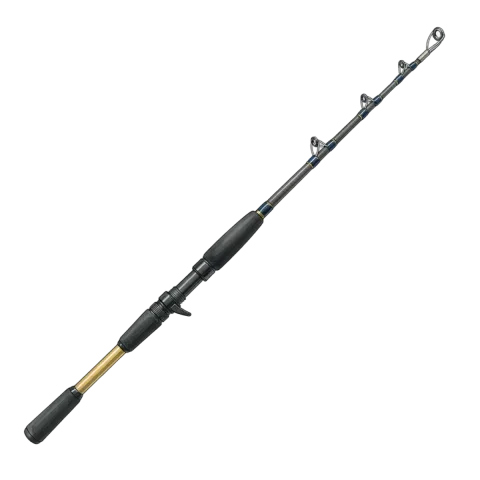
Rod
Trolling rod
A trolling rod is built to sit in a holder and pull a lure or bait at speed. Moderate action so the rod, not the reel, plays the fish.
Sized for a typical fish
medium-heavy · 2.13 m
- Reel seat
- Casting
- Form factor
- One-piece
- Action
- Moderate
- Grip
- EVA
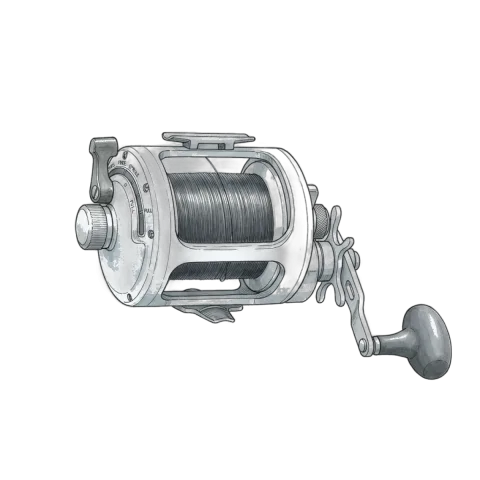
Reel
Trolling reel
A trolling reel is the dedicated lever-drag fishing reel for pulling lures behind a boat, often in a holder all day.
Sized for a typical fish
20 · 15 kg drag
- Spool
- Revolving
- Mount
- Over
- Drag
- Lever
- Retrieve
- Manual

Line
Braided line
Braided fishing line is the thin, no-stretch main for long casts, jigging, and feeling every tick on the retrieve.
Sized for a typical fish
12 kg · 0.18 mm
- Visibility
- High
- Abrasion
- Low
- Stretch
- None
- Sink rate
- Floats

Leader
Fluorocarbon leader
A fluorocarbon leader is the clear, fast-sinking join between a visible main line and the lure or hook.
Sized for a typical fish
12 kg · 0.4 mm · 120 cm
- Visibility
- Very low
- Abrasion
- High
- Stretch
- Low
- Sink rate
- Fast
Spinning
Casting and retrieving lures with a spinning rod and reel.
75% Effectiveness

Rod
Spinning rod
A spinning rod is a fishing rod built to carry a spinning reel under the blank. You cast lures and light baits with it from shore or a boat.
Sized for a typical fish
medium-heavy · 3 m
- Reel seat
- Spinning
- Form factor
- Multi-piece
- Action
- Fast
- Grip
- EVA

Reel
Spinning reel
A spinning reel hangs under the fishing rod and is the default reel for casting lures and light baits. Line peels off an open spool with a bail.
Sized for a typical fish
2500 · 5 kg drag · 220 g
- Spool
- Fixed
- Mount
- Under
- Drag
- Front
- Retrieve
- Manual
Line
Braided line
Braided fishing line is the thin, no-stretch main for long casts, jigging, and feeling every tick on the retrieve.
Sized for a typical fish
12 kg · 0.18 mm
- Visibility
- High
- Abrasion
- Low
- Stretch
- None
- Sink rate
- Floats
Leader
Fluorocarbon leader
A fluorocarbon leader is the clear, fast-sinking join between a visible main line and the lure or hook.
Sized for a typical fish
12 kg · 0.4 mm · 120 cm
- Visibility
- Very low
- Abrasion
- High
- Stretch
- Low
- Sink rate
- Fast
Best lures and baits for Longfin yellowtail
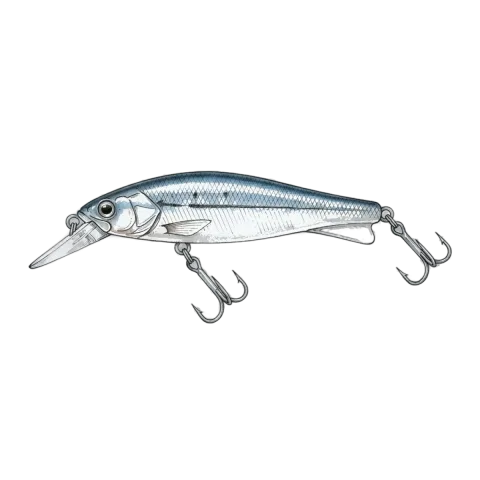
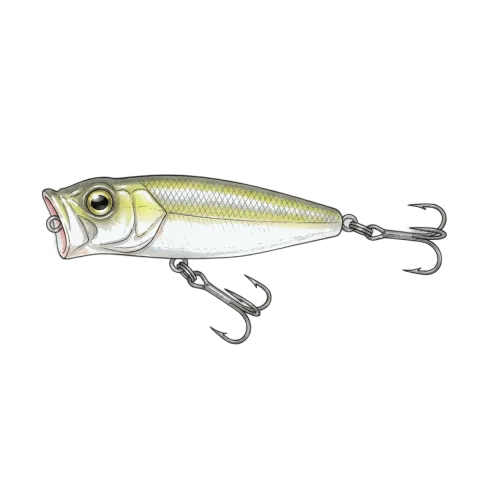
Ranked lures and natural baits from every method, best first.
How Longfin yellowtail migrates — Oceanodromous
Migrates within the sea between spawning, nursery and feeding grounds, and never enters fresh water. Follow its seasonal shifts along the coast and offshore.
1 Eggs
Spawning grounds
Laid on the spawning grounds.
2 Larvae
→ Nursery grounds
Drift with the currents to the nursery grounds.
3 Juveniles
Nursery grounds
Grow up in sheltered nursery waters.
4 Adults
Feeding grounds
Range widely over the feeding grounds.
5 Spawners
→ Spawning grounds
Return to the spawning grounds each season.
It stays in the sea and never runs up into fresh water.
Hover or tap a number to read each stage.
Diet and behavior of Longfin yellowtail
-
Diet
Top predator -
Feeds by
Hunts animals -
Hunts
Dawn · Morning · Dusk -
Feeds over
Coral reefs -
Social
Solitary -
Main prey
Baitfish
Prey and predators of Longfin yellowtail
Prey is what Longfin yellowtail eats. Predators are the animals that eat it.
That is how it feeds, and how it is hunted.
Prey
What it eats
Predators
What hunts it
Fish
Where Longfin yellowtail lives
Tied to reefs and rocky structure in shallow coastal water.
5–245 m · usually 30–35 m

Where this species lives
Longfin yellowtail photos for identification
Compare these photos with the catalog plate to identify the species.