How to catch New Zealand longfin eel
Anguilla dieffenbachii Gray, 1842
About New Zealand longfin eel fishing
The New Zealand longfin eel is a large freshwater predator belonging to the family Anguillidae, readily identified by its elongated, muscular body and a dorsal fin that originates significantly further forward than the anal fin. Endemic to New Zealand, this catadromous species inhabits clear stony rivers, deep streams, and inland lakes, frequently migrating vast distances upstream into remote catchments using its climbing ability. It possesses a broad diet consisting of macroinvertebrates, fish, and small mammals, hunting primarily during hours of darkness. Females grow considerably larger and live much longer than males before undertaking an epic oceanic migration to spawn once and die in the deep tropical Pacific.
-
Difficulty
Medium
-
Average size
60 cm TL
-
Habitat
Freshwater, Brackish, Saltwater
-
Season
Spring, Autumn, Winter
-
Also known as
Longfinned eel

Operculum present
Covered gill opening characteristic of bony fishes.
Long dorsal fin
Very long dorsal fin starting far forward distinguishes this eel species.
Lower jaw
Slightly protruding lower jaw characteristic of this eel.
New Zealand longfin eel fishing facts
Characteristics
-
Typical size
60 cm TL (max 185 cm TL ) -
Typical weight
3.5 kg (max 25 kg ) -
Preferred temperature
10.6–18.3 °C -
Depth
0–20 m -
Longevity
106 years -
Body shape
Eel Like -
Vulnerability score
88.8
Best hours
-
Active
Dawn
First light
-
Low
Morning
After sunrise
-
Low
Midday
High sun
-
Low
Afternoon
Late day
-
Active
Dusk
Last light
-
Peak
Night
After dark
When to fish for New Zealand longfin eel
How to catch New Zealand longfin eel
Tips for catching New Zealand longfin eel
Targeting large freshwater eels requires heavy tackle and sturdy bottom rigs fished securely on or near the floor in deep pools, slow runs, or close to undercut banks and submerged timber. Presentation should focus on natural scents, using fresh chunks of oily fish, large earthworms, or strips of squid left stationary on the bottom during late evening or night hours when these nocturnal predators emerge to hunt. Patience is essential as the fish locate baits through scent rather than sight, and heavier breaking-strain lines ensure you can control powerful runs around heavy underwater cover.
Other names for New Zealand longfin eel
Local and alternate names anglers use for New Zealand longfin eel.
-
New Zealand longfin eel
-
Longfinned eel
Best equipment to catch New Zealand longfin eel
Compare fishing methods for New Zealand longfin eel — sized kit for each technique.
Note: Typical fish is 3.5 kg Our algorithm will suggest the best equipment for you based on this weight.
Bottom Fishing
Presenting bait or rigs on or near the lake or sea floor.
90% Effectiveness

Rod
Spinning rod
A spinning rod is a fishing rod built to carry a spinning reel under the blank. You cast lures and light baits with it from shore or a boat.
Sized for a typical fish
medium · 2.13 m
- Reel seat
- Spinning
- Form factor
- Multi-piece
- Action
- Fast
- Grip
- EVA

Reel
Spinning reel
A spinning reel hangs under the fishing rod and is the default reel for casting lures and light baits. Line peels off an open spool with a bail.
Sized for a typical fish
2500 · 5 kg drag · 220 g
- Spool
- Fixed
- Mount
- Under
- Drag
- Front
- Retrieve
- Manual

Line
Monofilament line
Monofilament fishing line is the everyday main line: easy to knot, cheap to replace, and stretchy enough to forgive a hard strike.
Sized for a typical fish
13 kg · 0.4 mm
- Visibility
- Medium
- Abrasion
- Medium
- Stretch
- High
- Sink rate
- Slow

Leader
Fluorocarbon leader
A fluorocarbon leader is the clear, fast-sinking join between a visible main line and the lure or hook.
Sized for a typical fish
18.1 kg · 0.602 mm · 120 cm
- Visibility
- Very low
- Abrasion
- High
- Stretch
- Low
- Sink rate
- Fast

Hook
Circle hook
A circle hook turns in the mouth and usually finds the corner of the jaw. You do not strike hard — you come tight. It includes freshwater.
Sized for a typical fish
3/0
- Points
- 1
- Offset
- No
- Barbed
- Yes
- Gap
- Standard
Best lures and baits for New Zealand longfin eel
Ranked lures and natural baits from every method, best first.
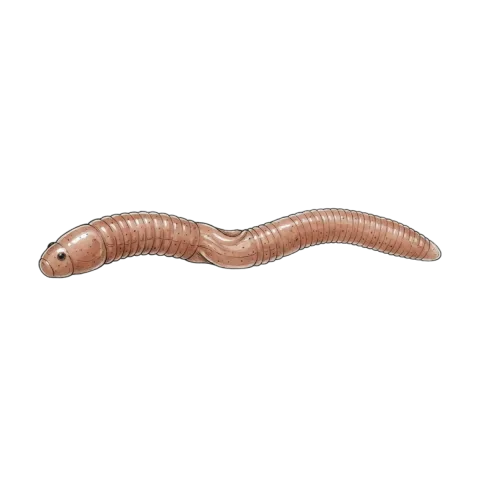
01
Worm
- Bottom Fishing
Rounded anterior end containing the mouth used for anchoring the bait on the hook.
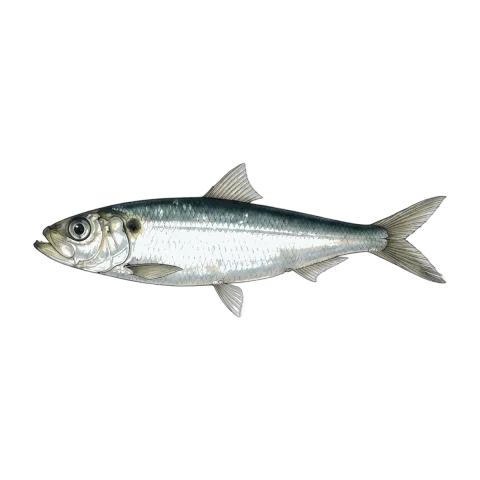
02
Sardine
- Bottom Fishing
Elongated silvery baitfish body releases strong scent trails.
How New Zealand longfin eel migrates — Catadromous
Grows in fresh or brackish water and migrates to the sea to spawn. Estuaries and lower rivers fire when adults drop downstream.
1 Eggs
Sea
Spawned out at sea.
2 Larvae
→ Estuary
Drift with the currents towards the coast.
3 Juveniles
→ Fresh water
Enter estuaries, and many move on into fresh water.
4 Adults
Fresh water
Feed and grow in rivers, lakes and estuaries, often for years.
5 Spawners
→ Sea
Head downstream and out to sea to spawn.
Many only reach estuaries and the lower river; eels travel far inland.
Hover or tap a number to read each stage.
Diet and behavior of New Zealand longfin eel
-
Diet
Top predator -
Feeds by
Hunts animals -
Hunts
Night -
Main prey
Baitfish
Prey and predators of New Zealand longfin eel
Prey is what New Zealand longfin eel eats. Predators are the animals that eat it.
That is how it feeds, and how it is hunted.
Prey
What it eats
Where New Zealand longfin eel lives
Lives on or just above the bottom. Work jigs, bait, and lures along the seabed.
0–20 m

River mouth
Where this species lives
New Zealand longfin eel photos for identification
Compare these photos with the catalog plate to identify the species.
Where to fish for New Zealand longfin eel
Mapped fishing spots where New Zealand longfin eel is recorded — open a pin for access and methods.


