How to catch Orinoco sailfin catfish
Pterygoplichthys multiradiatus (Hancock, 1828)
About Orinoco sailfin catfish fishing
The Orinoco sailfin catfish is a heavily armored freshwater fish belonging to the family Loricariidae, easily recognised by its prominent sail-like dorsal fin and elongated, mottled brown body covered in bony plates. Growing up to a maximum length of fifty centimetres, this benthic species inhabits warm streams, lakes, and muddy canals where it feeds primarily on algae, detritus, and small bottom-dwelling invertebrates. It is a nocturnal dweller that spends daylight hours hidden among submerged structure and excavated burrows, exhibiting year-round presence across its established range.
-
Difficulty
Medium
-
Habitat
Freshwater
-
Season
Spring, Summer, Autumn, Winter
-
Also known as
Long-fin armored catfish, Radiated ptero, Sailfin catfish, Sailfish catfish

Sailfin dorsal fin
Massive elevated dorsal fin with many rays separates it from typical catfish.
Armored body plates
Rows of heavy dermal scutes cover the entire body.
Dark spots
Distinct dark spots pattern the entire head, body, and all fins.
Suckermouth
Inferior sucker-like mouth adapted for scraping algae and clinging to surfaces.
Orinoco sailfin catfish fishing facts
Characteristics
-
Typical size
50 cm TL -
Typical weight
0.4 kg (max 1.9 kg ) -
Body shape
Elongated -
Vulnerability score
57.6
Best hours
-
Active
Dawn
First light
-
Low
Morning
After sunrise
-
Low
Midday
High sun
-
Low
Afternoon
Late day
-
Active
Dusk
Last light
-
Peak
Night
After dark
When to fish for Orinoco sailfin catfish
How to catch Orinoco sailfin catfish
Tips for catching Orinoco sailfin catfish
Targeting this heavy-bodied armored catfish requires presenting small natural offerings directly on the muddy bottom where it grazes during nocturnal hours. Because this species feeds primarily on benthic algae, detritus and small aquatic invertebrates, standard hook and line methods are rarely effective under normal conditions, leading anglers to focus on deep slow-moving canals and lake margins with heavy organic debris. Look for structured banks containing submerged timber or undercut mud shelves where individuals construct burrows and seek refuge from daylight. Using a fine ledger rig equipped with small earthworm pieces can occasionally tempt them when they turn their attention toward animal matter on the substrate.
Other names for Orinoco sailfin catfish
Local and alternate names anglers use for Orinoco sailfin catfish.
-
Orinoco sailfin catfish
-
Sailfish catfish
-
Sailfin catfish
-
Radiated ptero
-
Long-fin armored catfish
Best equipment to catch Orinoco sailfin catfish
Compare fishing methods for Orinoco sailfin catfish — sized kit for each technique.
Note: Typical fish is 0.4 kg Our algorithm will suggest the best equipment for you based on this weight.
Bottom Fishing
Presenting bait or rigs on or near the lake or sea floor.
30% Effectiveness

Rod
Spinning rod
A spinning rod is a fishing rod built to carry a spinning reel under the blank. You cast lures and light baits with it from shore or a boat.
Sized for a typical fish
ultralight · 1.8 m
- Reel seat
- Spinning
- Form factor
- Multi-piece
- Action
- Fast
- Grip
- EVA

Reel
Spinning reel
A spinning reel hangs under the fishing rod and is the default reel for casting lures and light baits. Line peels off an open spool with a bail.
Sized for a typical fish
1000 · 3 kg drag · 185 g
- Spool
- Fixed
- Mount
- Under
- Drag
- Front
- Retrieve
- Manual

Line
Monofilament line
Monofilament fishing line is the everyday main line: easy to knot, cheap to replace, and stretchy enough to forgive a hard strike.
Sized for a typical fish
1.3 kg · 0.125 mm
- Visibility
- Medium
- Abrasion
- Medium
- Stretch
- High
- Sink rate
- Slow

Leader
Fluorocarbon leader
A fluorocarbon leader is the clear, fast-sinking join between a visible main line and the lure or hook.
Sized for a typical fish
4 kg · 0.2 mm · 80 cm
- Visibility
- Very low
- Abrasion
- High
- Stretch
- Low
- Sink rate
- Fast

Hook
Circle hook
A circle hook turns in the mouth and usually finds the corner of the jaw. You do not strike hard — you come tight. It includes freshwater.
Sized for a typical fish
4
- Points
- 1
- Offset
- No
- Barbed
- Yes
- Gap
- Standard
Best lures and baits for Orinoco sailfin catfish
Ranked lures and natural baits from every method, best first.
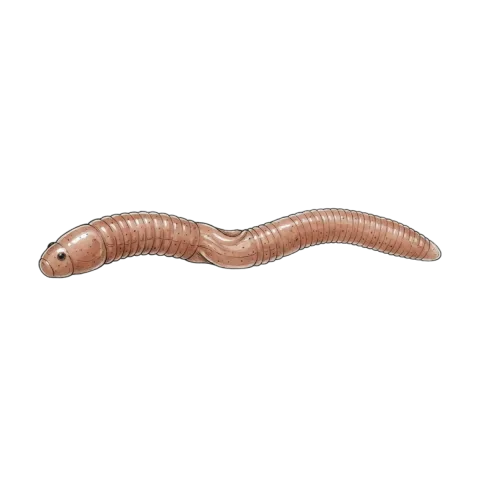
01
Worm
- Bottom Fishing
Rounded anterior end containing the mouth used for anchoring the bait on the hook.
Diet and behavior of Orinoco sailfin catfish
-
Diet
Herbivore -
Feeds by
Browses the bottom -
Hunts
Night
Prey and predators of Orinoco sailfin catfish
Prey is what Orinoco sailfin catfish eats. Predators are the animals that eat it.
That is how it feeds, and how it is hunted.
Prey
What it eats
Other prey
Where Orinoco sailfin catfish lives
Lives on or just above the bottom. Work jigs, bait, and lures along the seabed.

Where this species lives
Orinoco sailfin catfish photos for identification
Compare these photos with the catalog plate to identify the species.