How to catch Pearly razorfish
Xyrichtys novacula (Linnaeus, 1758)
About Pearly razorfish fishing
The pearly razorfish is a small marine member of the wrasse family characterized by a highly compressed, elongated body and a steep, sharp-edged head profile. Reaching a common length of 20 centimetres with a maximum of 38 centimetres, it displays vibrant reddish-pink and greenish hues with pale blue facial markings. This species inhabits shallow coastal waters over sandy bottoms down to 90 metres, frequently near seagrass beds and coral patches. It feeds primarily on benthic mollusks, crustaceans, and echinoderms, and is well known for diving headfirst into the sand to evade danger. Anglers value it as an entertaining game fish in subtropical and temperate seas.
-
Difficulty
Medium
-
Average size
20 cm TL
-
Market value
Very high
-
Habitat
Saltwater
-
Season
Spring, Summer, Autumn
-
Also known as
Cleaver wrasse

Caudal shape
More or less truncate tail fin characteristic of the species.
Steep head profile
Very blunt and steep snout profile forming a sharp edge.
Head lines
Head with alternating vertical lines of light blue and light yellow-orange.
Pearly razorfish fishing facts
Characteristics
-
Typical size
20 cm TL (max 38 cm TL ) -
Typical weight
0.2 kg (max 0.5 kg ) -
Preferred temperature
17.4–27.9 °C -
Depth
1–90 m -
Longevity
8 years -
Body shape
Elongated -
Commercial?
-
Vulnerability score
36.3
Best hours
-
Low
Dawn
First light
-
Peak
Morning
After sunrise
-
Peak
Midday
High sun
-
Active
Afternoon
Late day
-
Low
Dusk
Last light
-
Low
Night
After dark
When to fish for Pearly razorfish
How to catch Pearly razorfish
Tips for catching Pearly razorfish
To target the pearly razorfish successfully, focus your efforts on clear, shallow coastal zones with fine sandy substrates during the warmer daytime hours. Ledgering close to the sea floor using fine tackle is essential, as these fish possess cautious bites and specialized dentition. Equip your rig with small hooks baited with pieces of marine worm, small shrimp, or crab fragments to match their natural benthic diet. Maintain close contact with the bottom and remain vigilant, as hooked specimens often attempt to dive into sandy cover or use their sharp teeth and jaw rotation to escape.
Other names for Pearly razorfish
Local and alternate names anglers use for Pearly razorfish.
-
Pearly razorfish
-
Cleaver wrasse
Best equipment to catch Pearly razorfish
Compare fishing methods for Pearly razorfish — sized kit for each technique.
Note: Typical fish is 0.2 kg Our algorithm will suggest the best equipment for you based on this weight.
Bottom Fishing
Presenting bait or rigs on or near the lake or sea floor.
85% Effectiveness

Rod
Spinning rod
A spinning rod is a fishing rod built to carry a spinning reel under the blank. You cast lures and light baits with it from shore or a boat.
Sized for a typical fish
ultralight · 1.8 m
- Reel seat
- Spinning
- Form factor
- Multi-piece
- Action
- Fast
- Grip
- EVA

Reel
Spinning reel
A spinning reel hangs under the fishing rod and is the default reel for casting lures and light baits. Line peels off an open spool with a bail.
Sized for a typical fish
1000 · 3 kg drag · 185 g
- Spool
- Fixed
- Mount
- Under
- Drag
- Front
- Retrieve
- Manual

Line
Monofilament line
Monofilament fishing line is the everyday main line: easy to knot, cheap to replace, and stretchy enough to forgive a hard strike.
Sized for a typical fish
1.3 kg · 0.125 mm
- Visibility
- Medium
- Abrasion
- Medium
- Stretch
- High
- Sink rate
- Slow

Leader
Fluorocarbon leader
A fluorocarbon leader is the clear, fast-sinking join between a visible main line and the lure or hook.
Sized for a typical fish
4 kg · 0.2 mm · 80 cm
- Visibility
- Very low
- Abrasion
- High
- Stretch
- Low
- Sink rate
- Fast

Hook
Circle hook
A circle hook turns in the mouth and usually finds the corner of the jaw. You do not strike hard — you come tight. It includes freshwater.
Sized for a typical fish
4
- Points
- 1
- Offset
- No
- Barbed
- Yes
- Gap
- Standard
Best lures and baits for Pearly razorfish
Ranked lures and natural baits from every method, best first.
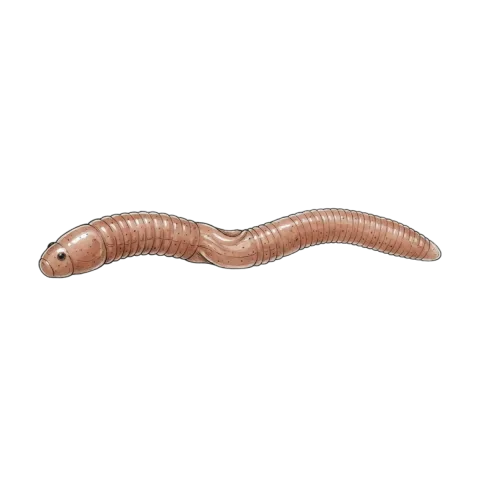
01
Worm
- Bottom Fishing
Rounded anterior end containing the mouth used for anchoring the bait on the hook.
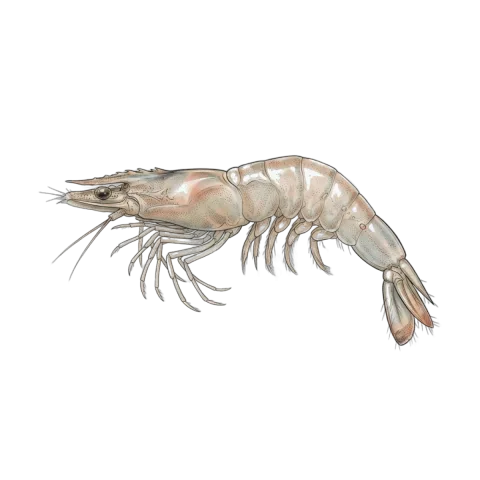
02
Shrimp
- Bottom Fishing
Translucent segmented carapace protects the body.
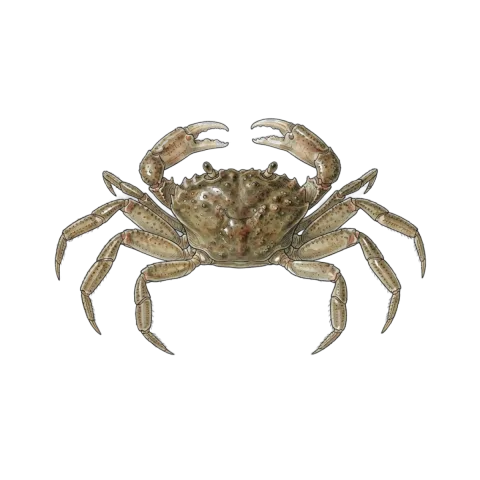
03
Crab
- Bottom Fishing
Hard upper shell protects the crab and anchors its vital organs.
How Pearly razorfish migrates — Bathymetric
Shifts between shallow and deeper water with the seasons rather than moving along the coast. Change depth before you change venue.
1 Warm months
Shallow water
Feed in shallow water through the warm months.
2 Cold months
Deep water
Drop into deeper water as it cools.
Larger adults often stay deeper all year.
Hover or tap a number to read each stage.
Diet and behavior of Pearly razorfish
-
Diet
Carnivore -
Feeds by
Hunts animals -
Hunts
Morning · Midday -
Feeds over
Soft bottom · Seagrass · Coral reefs -
Main prey
Baitfish
Prey and predators of Pearly razorfish
Prey is what Pearly razorfish eats. Predators are the animals that eat it.
That is how it feeds, and how it is hunted.
Prey
What it eats
Baitfish
Where Pearly razorfish lives
Tied to reefs and rocky structure in shallow coastal water.
1–90 m

Where this species lives
Pearly razorfish photos for identification
Compare these photos with the catalog plate to identify the species.
Where to fish for Pearly razorfish
Mapped fishing spots where Pearly razorfish is recorded — open a pin for access and methods.

