How to catch Purplemouth moray
Gymnothorax vicinus (Castelnau, 1855)
About Purplemouth moray fishing
The purplemouth moray is a benthic marine eel belonging to the family Muraenidae, featuring an elongated, robust body shape and distinctive mottled greenish or brownish coloration with pale fin margins. Growing up to a maximum length of 132 centimetres, this solitary predator inhabits clear shallow waters down to moderate depths around rocky shores, coral reefs, and complex boulder structures. It functions as a high-trophic-level carnivore that feeds primarily on reef fish and mobile macrofauna such as crabs and shrimp. While primarily a nocturnal hunter that remains concealed inside deep rock crevices during daylight hours, it commands minor commercial interest and is occasionally encountered by coastal anglers.
-
Difficulty
Medium
-
Average size
70 cm TL
-
Market value
Medium
-
Habitat
Saltwater
-
Season
Spring, Summer, Autumn, Winter
-
Also known as
Brown conger, Brown moray, Congo, Dark moray, Deepwater conger, Dusky-mouthed moray

Mottled coloration
Mottled greenish or brown overall body pattern with darker flecks.
White fin margins
Anal and caudal fins feature distinct white margins distinguishing this moray.
Purplemouth moray fishing facts
Characteristics
-
Typical size
70 cm TL (max 132 cm TL ) -
Typical weight
0.2 kg (max 0.8 kg ) -
Preferred temperature
19.5–27.9 °C -
Depth
50–145 m -
Body shape
Eel Like -
Commercial?
-
Vulnerability score
72.5
Best hours
-
Active
Dawn
First light
-
Low
Morning
After sunrise
-
Low
Midday
High sun
-
Low
Afternoon
Late day
-
Active
Dusk
Last light
-
Peak
Night
After dark
When to fish for Purplemouth moray
How to catch Purplemouth moray
Tips for catching Purplemouth moray
Targeting this species requires heavy bottom fishing tackle equipped with abrasion-resistant leaders and robust hooks to withstand strong jaws and prevent the fish from retreating permanently into rock crevices. Presentation is most effective after sunset or during late evening hours when the eel emerges from deep shelters to forage. Natural dead baits such as strips of oily fish or squid presented directly on the sea floor close to rocky structures offer the highest chance of success. Anglers must apply steady and immediate pressure upon receiving a bite to keep the powerful creature clear of underwater snags, exercising extreme caution during handling due to its defensive temperament and severe bite risk.
Other names for Purplemouth moray
Local and alternate names anglers use for Purplemouth moray.
-
Purplemouth moray
-
Purple-mouthed moray eel
-
Dusky-mouthed moray
-
Dusky-mouthed moray eel
-
Deepwater conger
-
Dark moray
-
Congo
-
Brown moray
-
Brown conger
Best equipment to catch Purplemouth moray
Compare fishing methods for Purplemouth moray — sized kit for each technique.
Note: Typical fish is 0.2 kg Our algorithm will suggest the best equipment for you based on this weight.
Bottom Fishing
Presenting bait or rigs on or near the lake or sea floor.
90% Effectiveness

Rod
Spinning rod
A spinning rod is a fishing rod built to carry a spinning reel under the blank. You cast lures and light baits with it from shore or a boat.
Sized for a typical fish
ultralight · 1.8 m
- Reel seat
- Spinning
- Form factor
- Multi-piece
- Action
- Fast
- Grip
- EVA

Reel
Spinning reel
A spinning reel hangs under the fishing rod and is the default reel for casting lures and light baits. Line peels off an open spool with a bail.
Sized for a typical fish
1000 · 3 kg drag · 185 g
- Spool
- Fixed
- Mount
- Under
- Drag
- Front
- Retrieve
- Manual

Line
Monofilament line
Monofilament fishing line is the everyday main line: easy to knot, cheap to replace, and stretchy enough to forgive a hard strike.
Sized for a typical fish
1.3 kg · 0.125 mm
- Visibility
- Medium
- Abrasion
- Medium
- Stretch
- High
- Sink rate
- Slow

Leader
Fluorocarbon leader
A fluorocarbon leader is the clear, fast-sinking join between a visible main line and the lure or hook.
Sized for a typical fish
4 kg · 0.2 mm · 80 cm
- Visibility
- Very low
- Abrasion
- High
- Stretch
- Low
- Sink rate
- Fast

Hook
Circle hook
A circle hook turns in the mouth and usually finds the corner of the jaw. You do not strike hard — you come tight. It includes freshwater.
Sized for a typical fish
4
- Points
- 1
- Offset
- No
- Barbed
- Yes
- Gap
- Standard
Best lures and baits for Purplemouth moray
Ranked lures and natural baits from every method, best first.
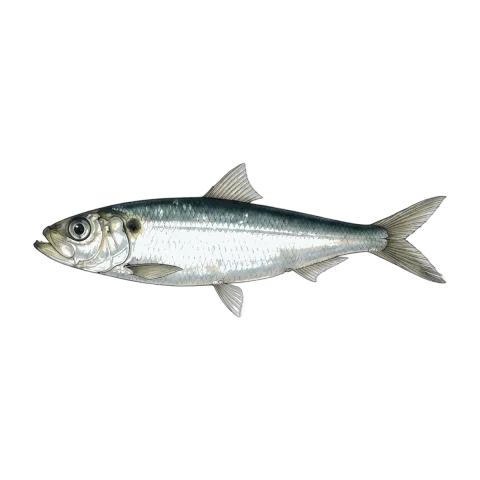
01
Sardine
- Bottom Fishing
Elongated silvery baitfish body releases strong scent trails.
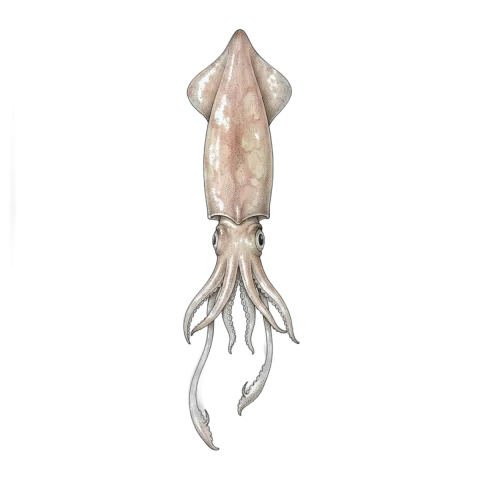
02
Squid
- Bottom Fishing
Elongated muscular body holds internal organs and secretes scent in the water.
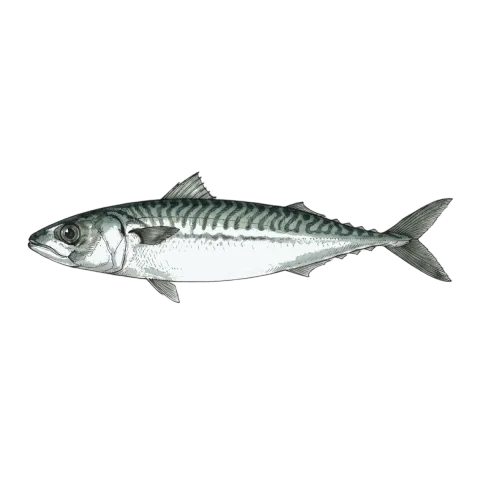
03
Mackerel
- Bottom Fishing
Distinctive wavy dorsal stripes provide high contrast and flash underwater.
Where Purplemouth moray spends the year — Non-migratory
Stays in the same waters year-round. Look for it on the same grounds rather than timing a run.
1 Eggs
Same water all year
Laid on the home grounds.
2 Juveniles
Same water all year
Grow up close by.
3 Adults
Same water all year
Keep to a small home range.
4 Spawners
Same water all year
Spawn on the same grounds, with only short moves.
Hover or tap a number to read each stage.
Diet and behavior of Purplemouth moray
-
Diet
Top predator -
Feeds by
Hunts animals -
Hunts
Night -
Feeds over
Seagrass · Coral reefs · Mangroves -
Main prey
Baitfish
Prey and predators of Purplemouth moray
Prey is what Purplemouth moray eats. Predators are the animals that eat it.
That is how it feeds, and how it is hunted.
Prey
What it eats
Where Purplemouth moray lives
Tied to reefs and rocky structure in shallow coastal water.
50–145 m

Where this species lives
Purplemouth moray photos for identification
Compare these photos with the catalog plate to identify the species.
Where to fish for Purplemouth moray
Mapped fishing spots where Purplemouth moray is recorded — open a pin for access and methods.

