How to catch Shad
Pellona castelnaeana Valenciennes, 1847
About Shad fishing
The Amazon pellona is a distinctive freshwater pelagic fish belonging to the family Pristigasteridae, native to major South American river networks including the Amazon and Orinoco basins. It exhibits a compressed, fusiform body shape with a striking silvery gold and orange hue, superior mouth orientation, and deep forked caudal fins. Growing to notable dimensions as a midwater predator, it feeds primarily on macrofauna such as small fish, aquatic insects, and crustaceans. Known for forming sizeable schools in river channels and near rapids, this species undertakes seasonal movements and provides an exciting target for sports enthusiasts due to its dynamic behavior.
-
Difficulty
Medium
-
Average size
45 cm
-
Market value
High
-
Habitat
Freshwater, Brackish
-
Season
Spring, Summer, Autumn, Winter
-
Also known as
Amazon pellona

Caudal shape
Deeply forked tail fin characteristic of pelagic schooling predators.
Mouth position
Superior mouth pointing upwards for surface feeding.
Forehead
Straight dorsal profile leading smoothly to the small dorsal fin.
Shad fishing facts
Characteristics
-
Typical size
45 cm (max 80 cm FL ) -
Typical weight
1.5 kg (max 7.1 kg ) -
Body shape
Fusiform / Normal -
Commercial?
-
Vulnerability score
51.6
Best hours
-
Peak
Dawn
First light
-
Active
Morning
After sunrise
-
Low
Midday
High sun
-
Active
Afternoon
Late day
-
Peak
Dusk
Last light
-
Low
Night
After dark
When to fish for Shad
How to catch Shad
Tips for catching Shad
Anglers targeting this energetic tropical predator should employ medium-light spinning gear or robust freshwater fly outfits when working river channels and current edges where schools congregate. Because these fish hunt visual prey like small baitfish and aquatic insects, presentations featuring active retrieves with small minnow lures, spoons, or flashy streamers yield the best strikes. Early morning and late afternoon hours offer prime opportunities when fish move actively near the surface. Expect spirited resistance characterized by rapid runs and frequent aerial leaps, requiring careful handling due to delicate body structures and sharp scutes.
Other names for Shad
Local and alternate names anglers use for Shad.
-
Shad
-
Amazon pellona
Best equipment to catch Shad
Compare fishing methods for Shad — sized kit for each technique.
Note: Typical fish is 1.5 kg Our algorithm will suggest the best equipment for you based on this weight.
Spinning
Casting and retrieving lures with a spinning rod and reel.
85% Effectiveness

Rod
Spinning rod
A spinning rod is a fishing rod built to carry a spinning reel under the blank. You cast lures and light baits with it from shore or a boat.
Sized for a typical fish
medium · 2.13 m
- Reel seat
- Spinning
- Form factor
- Multi-piece
- Action
- Fast
- Grip
- EVA

Reel
Spinning reel
A spinning reel hangs under the fishing rod and is the default reel for casting lures and light baits. Line peels off an open spool with a bail.
Sized for a typical fish
1000 · 3 kg drag · 185 g
- Spool
- Fixed
- Mount
- Under
- Drag
- Front
- Retrieve
- Manual

Line
Braided line
Braided fishing line is the thin, no-stretch main for long casts, jigging, and feeling every tick on the retrieve.
Sized for a typical fish
6 kg · 0.1 mm
- Visibility
- High
- Abrasion
- Low
- Stretch
- None
- Sink rate
- Floats

Leader
Fluorocarbon leader
A fluorocarbon leader is the clear, fast-sinking join between a visible main line and the lure or hook.
Sized for a typical fish
7 kg · 0.3 mm · 90 cm
- Visibility
- Very low
- Abrasion
- High
- Stretch
- Low
- Sink rate
- Fast
Fly Fishing
Presenting artificial flies with a fly rod and weighted line.
75% Effectiveness
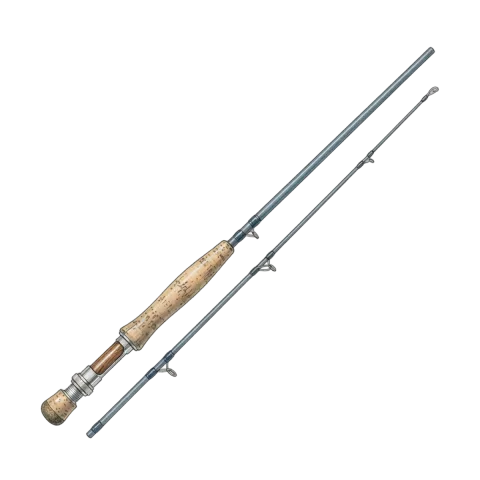
Rod
Fly rod
A fly rod is a fishing rod sized by line weight, with a fly reel seat. The fly line, not a heavy lure, loads the blank.
Sized for a typical fish
2.74 m · 5wt
- Reel seat
- Fly
- Form factor
- Multi-piece
- Action
- Moderate-fast
- Grip
- Cork
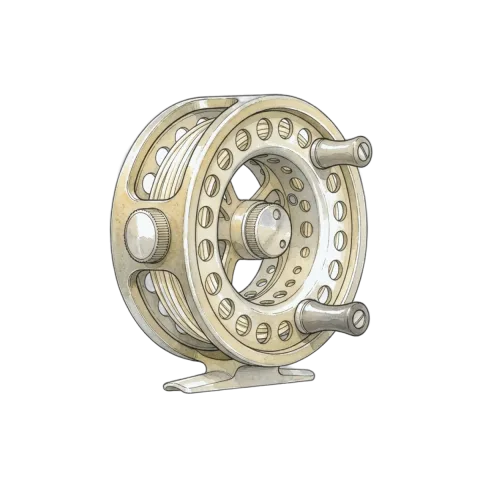
Reel
Fly reel
A fly reel is a large-arbor drum that stores backing and fly line. Drag is a disc; the reel does not cast the fly.
Sized for a typical fish
4 kg drag · 5wt
- Spool
- Drum
- Mount
- Under
- Drag
- Disc
- Retrieve
- Manual
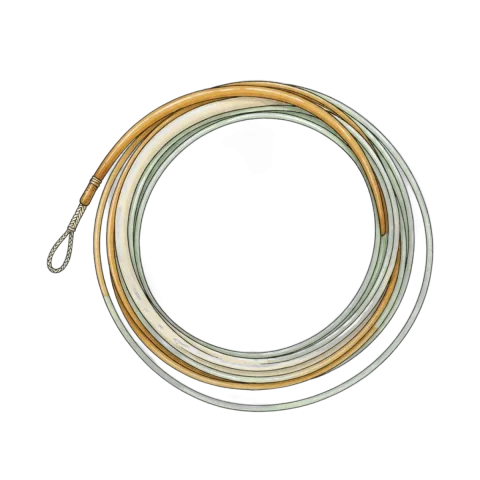
Line
Fly line
Fly line is the weighted shooting line that carries a near-weightless fly. Match it by weight class to the fly rod, not by kilo rating.
Sized for a typical fish
5wt
- Visibility
- Medium
- Abrasion
- Medium
- Stretch
- Low
- Sink rate
- Slow
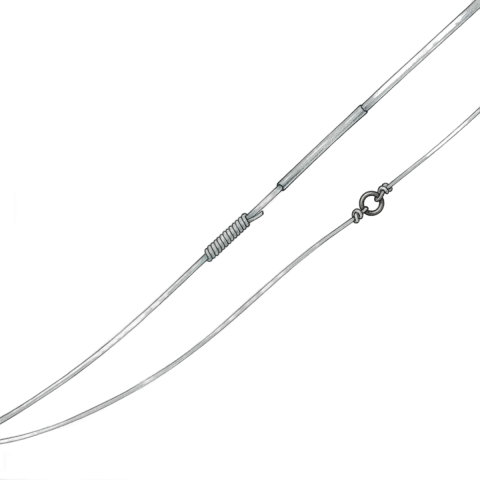
Leader
Tippet
Tippet is the fine, replaceable end of a fly leader, sized in X so you can match the fly and the fish.
Sized for a typical fish
2.8 kg · 0.18 mm · 80 cm · 4X
- Visibility
- Medium
- Abrasion
- Medium
- Stretch
- Medium
- Sink rate
- Slow
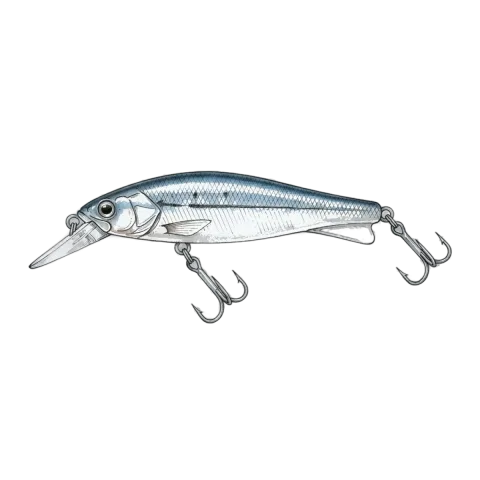
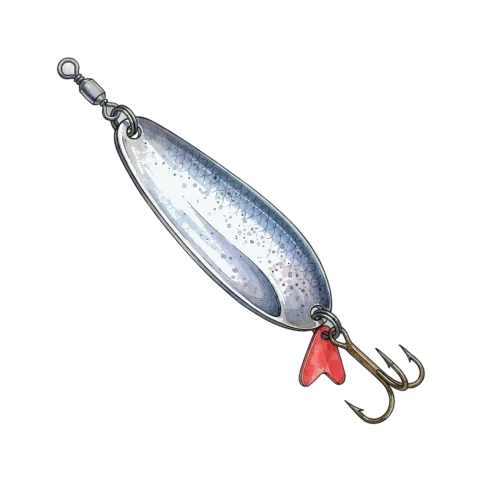
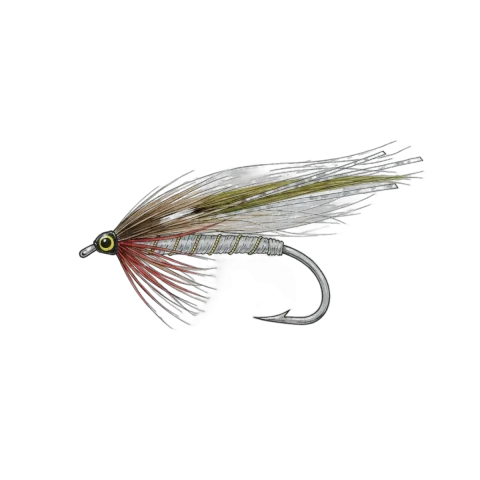
Best lures and baits for Shad
Ranked lures and natural baits from every method, best first.
How Shad migrates — Potamodromous
Migrates within rivers and lakes only. Fish upstream runs and seasonal lake movements, not saltwater.
1 Eggs
Upstream
Laid on gravel or weed upstream or in flooded shallows.
2 Larvae
→ Main river or lake
Fry drift or swim down to slower water.
3 Adults
Main river or lake
Feed in the main river or lake.
4 Spawners
→ Upstream
Move upstream or into the shallows to spawn.
The whole cycle stays in fresh water.
Hover or tap a number to read each stage.
Diet and behavior of Shad
-
Diet
Carnivore -
Feeds by
Hunts animals -
Hunts
Dawn · Dusk
Prey and predators of Shad
Prey is what Shad eats. Predators are the animals that eat it.
That is how it feeds, and how it is hunted.
Prey
What it eats
Other prey
Where Shad lives
Open-water fish in the main water column, away from the bottom.

Where this species lives
Shad photos for identification
Compare these photos with the catalog plate to identify the species.