How to catch Shortfin mako
Isurus oxyrinchus Rafinesque, 1810
About Shortfin mako fishing
The shortfin mako is a large pelagic mackerel shark belonging to the family Lamnidae, featuring a fusiform body, conical snout, large black eyes, and striking metallic blue countershading. It typically reaches a common length of two hundred seventy centimetres and a maximum length of four hundred forty-five centimetres, supported by a powerful lunate caudal fin. Inhabiting oceanic and epipelagic temperate to tropical waters down to eight hundred eighty-eight metres, this endothermic predator hunts bony fishes, cephalopods, and marine mammals at the apex of the food web. Renowned for its exceptional burst speed and dramatic aerial leaps when hooked, it is a highly sought-after game fish with an oceanodromous migration pattern.
-
Difficulty
Medium
-
Average size
270 cm TL
-
Market value
Medium
-
Habitat
Saltwater
-
Season
Spring, Summer, Autumn
-
Also known as
Atlantic mako, Blue pointer, Blue shark, Bonito shark, Dog shark, Mackerel porbeagle

Lunate caudal fin
Lunate caudal fin with strongly developed lower lobe distinguishes this pelagic shark.
Dark blue and white
Dark blue upper body contrasting with white belly identifies the shortfin mako.
Shortfin mako fishing facts
Characteristics
-
Typical size
270 cm TL (max 445 cm TL ) -
Typical weight
35 kg (max 505.8 kg ) -
Preferred temperature
9.7–24.4 °C -
Depth
0–888 m -
Longevity
32 years -
Body shape
Fusiform / Normal -
Commercial?
-
Vulnerability score
79.4
Best hours
-
Active
Dawn
First light
-
Peak
Morning
After sunrise
-
Low
Midday
High sun
-
Peak
Afternoon
Late day
-
Active
Dusk
Last light
-
Low
Night
After dark
When to fish for Shortfin mako
How to catch Shortfin mako
Tips for catching Shortfin mako
Anglers target this powerful pelagic predator by heading several miles offshore into deep blue water and setting up an oily scent trail or berley slick to draw fish from the depths. Presenting whole dead baits such as mackerel, pilchards, or squid on wire-backed traces behind a drifting boat is the standard technique, though they will also strike trolled baits or artificial lures intended for billfish. Because these sharks possess explosive speed and aggressive fighting qualities, heavy game gear is essential, and special care must be taken near the boat as hooked individuals frequently leap high into the air or thrash violently.
Other names for Shortfin mako
Local and alternate names anglers use for Shortfin mako.
-
Mako
-
Mackerel shark
-
Mako shark
-
Dog shark
-
Mackerel porbeagle
-
Blue shark
-
Bonito shark
-
Blue pointer
-
Shortfin mako
-
Snapper shark
-
Sharp-nosed mackerel shark
-
Sharp-nosed shark
-
Sharpnose mackerel shark
-
Sharp-nose mackerel shark
-
Pointed nose shark
-
Atlantic mako
-
Short finned mako shark
-
Shortfin mako shark
Best equipment to catch Shortfin mako
Compare fishing methods for Shortfin mako — sized kit for each technique.
Note: Typical fish is 35 kg Our algorithm will suggest the best equipment for you based on this weight.
Drift Fishing
Presenting bait or lures from a boat moving with wind or current, not under trolling speed.
85% Effectiveness
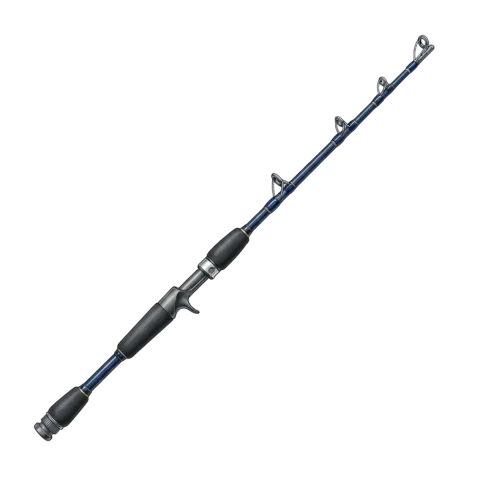
Rod
Boat rod
A boat rod is the short, stout fishing rod for work under the hull: bottom fishing, trolling, drift, and live bait in fresh or salt.
Sized for a typical fish
heavy · 2.29 m
- Reel seat
- Casting
- Form factor
- One-piece
- Action
- Moderate-fast
- Grip
- EVA
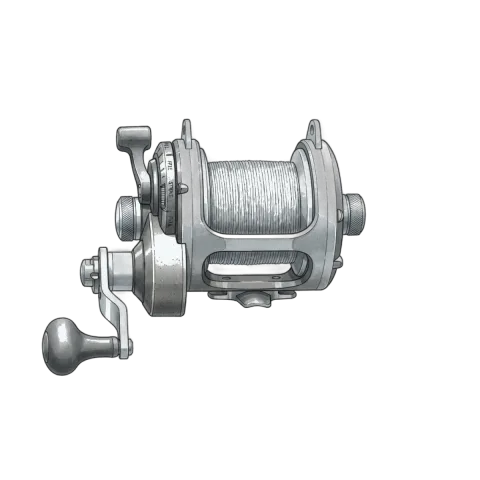
Reel
Conventional reel
A conventional reel is the lever-drag boat fishing reel for trolling and bottom fishing.
Sized for a typical fish
50 · 25 kg drag
- Spool
- Revolving
- Mount
- Over
- Drag
- Lever
- Retrieve
- Manual

Line
Braided line
Braided fishing line is the thin, no-stretch main for long casts, jigging, and feeling every tick on the retrieve.
Sized for a typical fish
90 kg · 0.76 mm
- Visibility
- High
- Abrasion
- Low
- Stretch
- None
- Sink rate
- Floats

Hook
Circle hook
A circle hook turns in the mouth and usually finds the corner of the jaw. You do not strike hard — you come tight. It includes freshwater.
Sized for a typical fish
6/0
- Points
- 1
- Offset
- No
- Barbed
- Yes
- Gap
- Standard
Trolling
Drawing lures or baits behind a moving boat.
75% Effectiveness
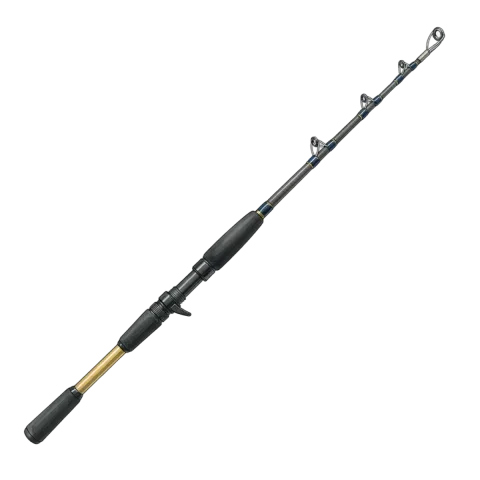
Rod
Trolling rod
A trolling rod is built to sit in a holder and pull a lure or bait at speed. Moderate action so the rod, not the reel, plays the fish.
Sized for a typical fish
extra-heavy · 2.29 m
- Reel seat
- Casting
- Form factor
- One-piece
- Action
- Moderate
- Grip
- EVA
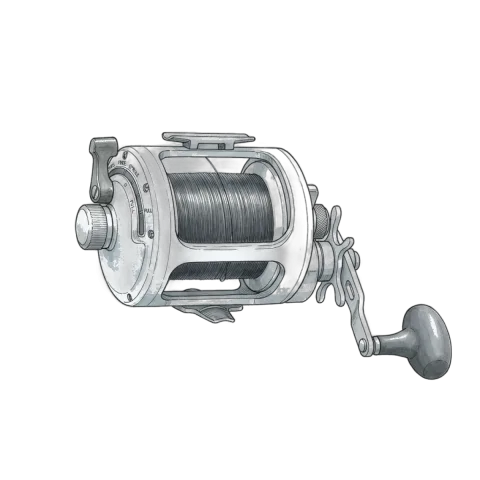
Reel
Trolling reel
A trolling reel is the dedicated lever-drag fishing reel for pulling lures behind a boat, often in a holder all day.
Sized for a typical fish
50 · 30 kg drag
- Spool
- Revolving
- Mount
- Over
- Drag
- Lever
- Retrieve
- Manual
Line
Braided line
Braided fishing line is the thin, no-stretch main for long casts, jigging, and feeling every tick on the retrieve.
Sized for a typical fish
90 kg · 0.76 mm
- Visibility
- High
- Abrasion
- Low
- Stretch
- None
- Sink rate
- Floats

Leader
Fluorocarbon leader
A fluorocarbon leader is the clear, fast-sinking join between a visible main line and the lure or hook.
Sized for a typical fish
136.1 kg · 1.885 mm · 180 cm
- Visibility
- Very low
- Abrasion
- High
- Stretch
- Low
- Sink rate
- Fast
Best lures and baits for Shortfin mako
Ranked lures and natural baits from every method, best first.
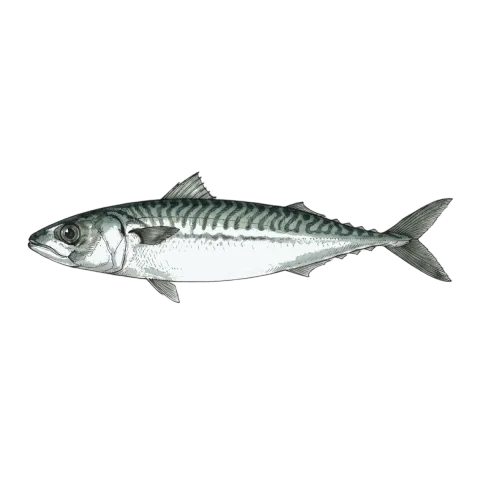
01
Mackerel
- Drift Fishing
- Trolling
Distinctive wavy dorsal stripes provide high contrast and flash underwater.
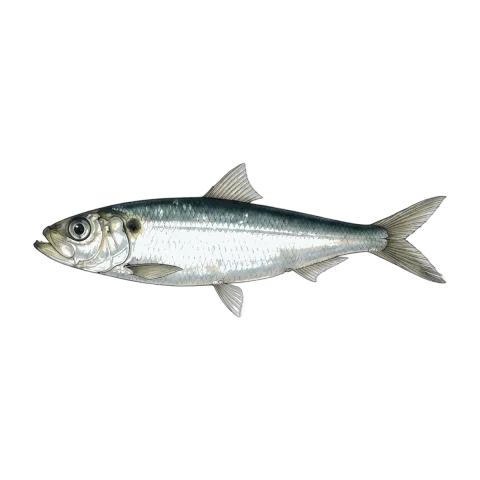
02
Sardine
- Drift Fishing
- Trolling
Elongated silvery baitfish body releases strong scent trails.
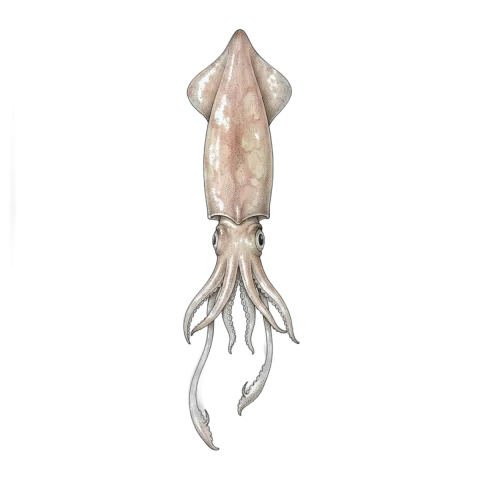
03
Squid
- Drift Fishing
Elongated muscular body holds internal organs and secretes scent in the water.
How Shortfin mako migrates — Oceanodromous
Migrates within the sea between spawning, nursery and feeding grounds, and never enters fresh water. Follow its seasonal shifts along the coast and offshore.
1 Young
Breeding grounds
Born live, not hatched from eggs.
2 Juveniles
Nursery grounds
Grow up in sheltered nursery waters.
3 Adults
Feeding grounds
Range widely over the feeding grounds.
4 Mature adults
→ Breeding grounds
Return to the breeding grounds to give birth.
It stays in the sea and never runs up into fresh water.
Hover or tap a number to read each stage.
Diet and behavior of Shortfin mako
-
Diet
Top predator -
Feeds by
Hunts animals -
Hunts
Morning · Afternoon -
Main prey
Baitfish
Prey and predators of Shortfin mako
Prey is what Shortfin mako eats. Predators are the animals that eat it.
That is how it feeds, and how it is hunted.
Prey
What it eats
Where Shortfin mako lives
Pelagic in the open ocean beyond the shelf break.
0–888 m · usually 100–150 m

Where this species lives
Shortfin mako photos for identification
Compare these photos with the catalog plate to identify the species.
Where to fish for Shortfin mako
Mapped fishing spots where Shortfin mako is recorded — open a pin for access and methods.

