How to catch Shorthorn sculpin
Myoxocephalus scorpius (Linnaeus, 1758)
About Shorthorn sculpin fishing
The shorthorn sculpin is a demersal marine and brackish fish belonging to the family Cottidae, inhabiting coastal waters down to depths of 451 metres. It features a squat, tapering body with a large spiny head, wide mouth, and mottled grey-brown coloration marked with dark blotches. Growing up to a maximum length of 78 centimetres and a maximum weight of nearly 8 kilograms, this species relies on specialized antifreeze proteins to thrive in cold northern seas. It feeds primarily on a wide range of benthic and demersal fish and crustaceans across rocky bottoms and among seaweeds. Spawning takes place during the winter months from December through March, during which males aggressively protect egg masses deposited between rocks.
-
Difficulty
Medium
-
Average size
24 cm SL
-
Market value
Very high
-
Habitat
Brackish, Saltwater
-
Season
Spring, Summer, Autumn, Winter
-
Also known as
Arctic sculpin, Bullhead, Bull-rout, Daddy sculpin, European sculpin, Father-lasher

Rounded Caudal Shape
Rounded caudal fin with dark bands helps identify the sculpin.
Large Pectoral Fins
Very large lobe-like pectoral fins with distinctive dark banding patterns.
Shorthorn sculpin fishing facts
Characteristics
-
Typical size
24 cm SL (max 78 cm TL ) -
Typical weight
1.2 kg (max 8 kg ) -
Preferred temperature
0.4–10.3 °C -
Depth
0–451 m -
Longevity
18 years -
Body shape
Fusiform / Normal -
Commercial?
-
Vulnerability score
35.7
Best hours
-
Peak
Dawn
First light
-
Active
Morning
After sunrise
-
Low
Midday
High sun
-
Active
Afternoon
Late day
-
Peak
Dusk
Last light
-
Peak
Night
After dark
When to fish for Shorthorn sculpin
How to catch Shorthorn sculpin
Tips for catching Shorthorn sculpin
Targeting this species involves presenting baits or bottom rigs directly over rocky ground, mixed substrate, and seaweed beds where the fish lies in wait for passing prey. Since they feed heavily on crustaceans and small fish, static or slowly dragged presentations close to the seabed yield the most consistent results. Anglers generally find success during the colder months when these demersal predators move into shallower inshore zones. Early morning and dusk hours offer good opportunities, though overcast days can trigger daytime feeding responses as well. Heavy coastal spinning gear equipped with bottom-hugging lures or natural baits rigged securely will reliably tempt this ambush hunter.
Other names for Shorthorn sculpin
Local and alternate names anglers use for Shorthorn sculpin.
-
Shorthorn sculpin
-
Short-spined sea scorpion
-
Shortspined sea scorpion
-
Sculpin
-
Scumpy
-
Father-lasher
-
Goat sculpin
-
European sculpin
-
Daddy sculpin
-
Bull-rout
-
Bullhead
-
Greenland bullhead
-
Scully
-
Greenland sculpin
-
Scummy
-
Guffy
-
Sea-scorpion
-
Horny whore
Best equipment to catch Shorthorn sculpin
Compare fishing methods for Shorthorn sculpin — sized kit for each technique.
Note: Typical fish is 1.2 kg Our algorithm will suggest the best equipment for you based on this weight.
Spinning
Casting and retrieving lures with a spinning rod and reel.
50% Effectiveness

Rod
Spinning rod
A spinning rod is a fishing rod built to carry a spinning reel under the blank. You cast lures and light baits with it from shore or a boat.
Sized for a typical fish
light · 2.1 m
- Reel seat
- Spinning
- Form factor
- Multi-piece
- Action
- Fast
- Grip
- EVA

Reel
Spinning reel
A spinning reel hangs under the fishing rod and is the default reel for casting lures and light baits. Line peels off an open spool with a bail.
Sized for a typical fish
1000 · 3 kg drag · 185 g
- Spool
- Fixed
- Mount
- Under
- Drag
- Front
- Retrieve
- Manual

Line
Braided line
Braided fishing line is the thin, no-stretch main for long casts, jigging, and feeling every tick on the retrieve.
Sized for a typical fish
6 kg · 0.1 mm
- Visibility
- High
- Abrasion
- Low
- Stretch
- None
- Sink rate
- Floats

Leader
Fluorocarbon leader
A fluorocarbon leader is the clear, fast-sinking join between a visible main line and the lure or hook.
Sized for a typical fish
7 kg · 0.3 mm · 90 cm
- Visibility
- Very low
- Abrasion
- High
- Stretch
- Low
- Sink rate
- Fast
Best lures and baits for Shorthorn sculpin
Ranked lures and natural baits from every method, best first.
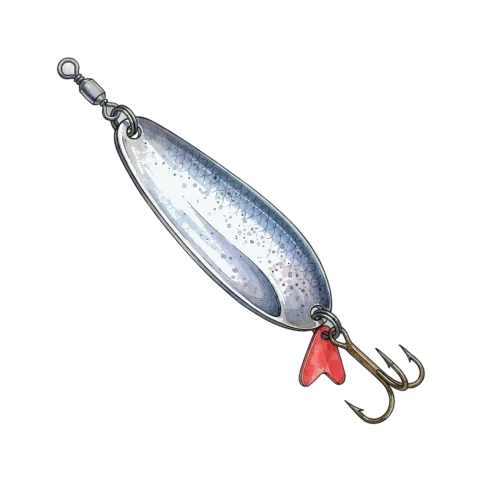
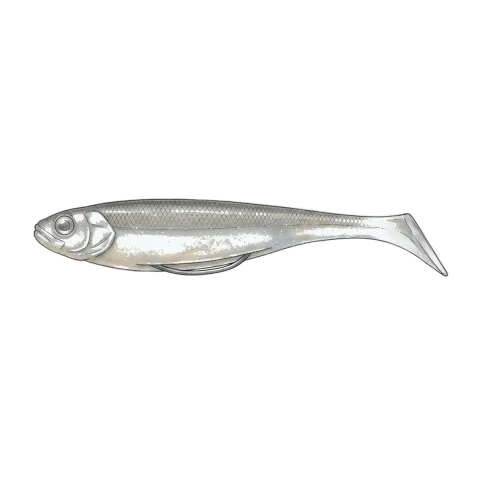
02
Soft jerkbait
- Spinning
A soft baitfish you twitch and kill like a jerkbait.
Where Shorthorn sculpin spends the year — Non-migratory
Stays in the same waters year-round. Look for it on the same grounds rather than timing a run.
1 Eggs
Same water all year
Laid on the home grounds.
2 Juveniles
Same water all year
Grow up close by.
3 Adults
Same water all year
Keep to a small home range.
4 Spawners
Same water all year
Spawn on the same grounds, with only short moves.
Hover or tap a number to read each stage.
Diet and behavior of Shorthorn sculpin
-
Diet
Carnivore -
Feeds by
Hunts animals -
Hunts
Dawn · Dusk · Night -
Feeds over
Soft bottom · Hard bottom -
Social
Schooling · Shoaling -
Main prey
Baitfish · Bottom prey · Plankton
Prey and predators of Shorthorn sculpin
Prey is what Shorthorn sculpin eats. Predators are the animals that eat it.
That is how it feeds, and how it is hunted.
Prey
What it eats
Predators
What hunts it
Where Shorthorn sculpin lives
Lives on or just above the bottom. Work jigs, bait, and lures along the seabed.
0–451 m

Estuary
Where this species lives
Shorthorn sculpin photos for identification
Compare these photos with the catalog plate to identify the species.
Where to fish for Shorthorn sculpin
Mapped fishing spots where Shorthorn sculpin is recorded — open a pin for access and methods.


