How to catch Siberian sturgeon
Acipenser baerii Brandt, 1869
About Siberian sturgeon fishing
The Siberian sturgeon is an elongated freshwater and brackish fish belonging to the family Acipenseridae. It features a distinctive sub-terminal inferior mouth with four barbels and rows of bony scutes along its body. Growing up to a maximum length of 200 cm and a maximum weight of 210 kg, this demersal species inhabits deep and shallow river channels with moderate to swift currents. It feeds primarily on benthic macrofauna such as crustaceans and chironomid larvae, exhibits a potamodromous migration pattern, and undertakes spawning runs over stone-gravel substrates during the summer months.
-
Difficulty
Medium
-
Average size
110 cm
-
Habitat
Freshwater, Brackish
-
Season
Spring, Summer, Autumn
-
Also known as
Baikal sturgeon, Lena River sturgeon, Long-nosed Siberian sturgeon, Siberian baikal sturgeon, Siberian ocetr, Sturgeon

Heterocercal caudal fin
Upper lobe of tail is significantly elongated characteristic of sturgeons.
Inferior mouth
Underslung protrusible mouth with four barbels adapted for bottom feeding.
Bony scutes
Distinct rows of bony plates along the body instead of normal scales.
Siberian sturgeon fishing facts
Characteristics
-
Typical size
110 cm (max 200 cm TL ) -
Typical weight
25 kg (max 210 kg ) -
Depth
0–200 m -
Longevity
63 years -
Body shape
Elongated -
Vulnerability score
87.3
Best hours
-
Peak
Dawn
First light
-
Active
Morning
After sunrise
-
Low
Midday
High sun
-
Low
Afternoon
Late day
-
Peak
Dusk
Last light
-
Peak
Night
After dark
When to fish for Siberian sturgeon
How to catch Siberian sturgeon
Tips for catching Siberian sturgeon
Targeting this bottom-feeding species requires heavy ledgering tackle positioned firmly in deeper river channels where moderate currents sweep natural food items along the substrate. Because these fish hunt primarily by scent using their sensitive barbels, presentation of fresh and aromatic natural baits is essential for success. Late spring and early summer offer prime angling opportunities as fish become more active during their upstream reproductive runs. Quiet water conditions around dawn and dusk often yield the most consistent action when patrolling fish move closer to intermediate depths.
Other names for Siberian sturgeon
Local and alternate names anglers use for Siberian sturgeon.
-
Siberian sturgeon
-
Sturgeon
-
Siberian ocetr
-
Siberian baikal sturgeon
-
Long-nosed Siberian sturgeon
-
Lena River sturgeon
-
Baikal sturgeon
Best equipment to catch Siberian sturgeon
Compare fishing methods for Siberian sturgeon — sized kit for each technique.
Note: Typical fish is 25 kg Our algorithm will suggest the best equipment for you based on this weight.
Bottom Fishing
Presenting bait or rigs on or near the lake or sea floor.
90% Effectiveness

Rod
Spinning rod
A spinning rod is a fishing rod built to carry a spinning reel under the blank. You cast lures and light baits with it from shore or a boat.
Sized for a typical fish
extra-heavy · 2.18 m
- Reel seat
- Spinning
- Form factor
- Multi-piece
- Action
- Fast
- Grip
- EVA

Reel
Spinning reel
A spinning reel hangs under the fishing rod and is the default reel for casting lures and light baits. Line peels off an open spool with a bail.
Sized for a typical fish
30000 · 30 kg drag · 1107 g
- Spool
- Fixed
- Mount
- Under
- Drag
- Front
- Retrieve
- Manual

Line
Monofilament line
Monofilament fishing line is the everyday main line: easy to knot, cheap to replace, and stretchy enough to forgive a hard strike.
Sized for a typical fish
91 kg · 1.4 mm
- Visibility
- Medium
- Abrasion
- Medium
- Stretch
- High
- Sink rate
- Slow

Leader
Fluorocarbon leader
A fluorocarbon leader is the clear, fast-sinking join between a visible main line and the lure or hook.
Sized for a typical fish
136.1 kg · 1.885 mm · 180 cm
- Visibility
- Very low
- Abrasion
- High
- Stretch
- Low
- Sink rate
- Fast

Hook
Circle hook
A circle hook turns in the mouth and usually finds the corner of the jaw. You do not strike hard — you come tight. It includes freshwater.
Sized for a typical fish
6/0
- Points
- 1
- Offset
- No
- Barbed
- Yes
- Gap
- Standard
Best lures and baits for Siberian sturgeon
Ranked lures and natural baits from every method, best first.
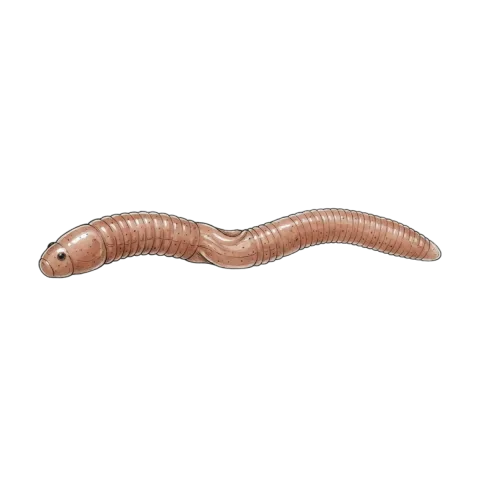
01
Worm
- Bottom Fishing
Rounded anterior end containing the mouth used for anchoring the bait on the hook.
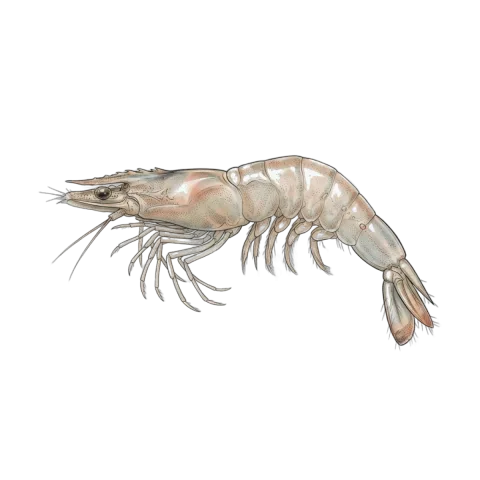
02
Shrimp
- Bottom Fishing
Translucent segmented carapace protects the body.
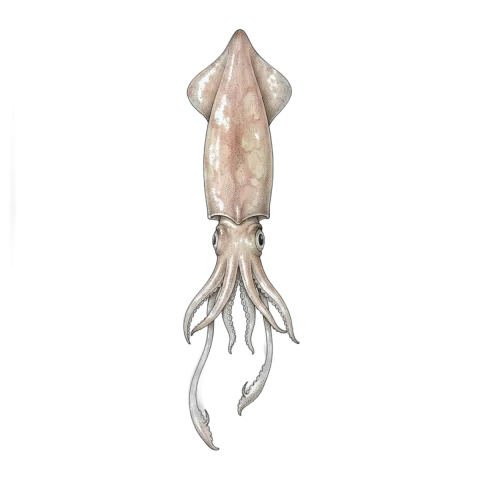
03
Squid
- Bottom Fishing
Elongated muscular body holds internal organs and secretes scent in the water.
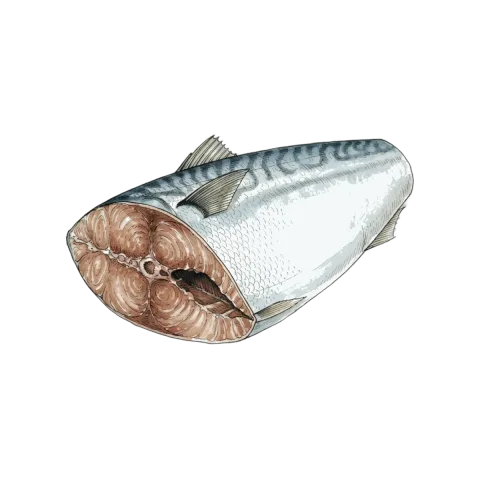
04
Fish chunks
- Bottom Fishing
Freshly sliced fish chunk providing rich scent attraction for bottom fishing.
How Siberian sturgeon migrates — Potamodromous
Migrates within rivers and lakes only. Fish upstream runs and seasonal lake movements, not saltwater.
1 Eggs
Upstream
Laid on gravel or weed upstream or in flooded shallows.
2 Larvae
→ Main river or lake
Fry drift or swim down to slower water.
3 Adults
Main river or lake
Feed in the main river or lake.
4 Spawners
→ Upstream
Move upstream or into the shallows to spawn.
The whole cycle stays in fresh water.
Hover or tap a number to read each stage.
Diet and behavior of Siberian sturgeon
-
Diet
Carnivore -
Feeds by
Hunts animals -
Hunts
Dawn · Dusk · Night -
Main prey
Bottom prey · Baitfish
Prey and predators of Siberian sturgeon
Prey is what Siberian sturgeon eats. Predators are the animals that eat it.
That is how it feeds, and how it is hunted.
Prey
What it eats
Where Siberian sturgeon lives
Lives on or just above the bottom. Work jigs, bait, and lures along the seabed.
0–200 m · usually 1–8 m

Where this species lives
Siberian sturgeon photos for identification
Compare these photos with the catalog plate to identify the species.
Where to fish for Siberian sturgeon
Mapped fishing spots where Siberian sturgeon is recorded — open a pin for access and methods.
