How to catch Slender tuna
Allothunnus fallai Serventy, 1948
About Slender tuna fishing
The slender tuna is a pelagic oceanic fish belonging to the mackerel family Scombridae, distinguished by a more elongated fusiform body than other sympatric tunas. It features a blue-black back transitioning to silvery greyish-white sides, occasionally displaying a fleeting coppery sheen after capture, alongside purple-tinted pectoral and pelvic fins. Growing up to 105 centimetres fork length, this species typically inhabits surface waters down to 20 metres depth in southern oceans. It exhibits oceanodromous migratory behavior, occasionally forming schools while feeding selectively on krill, squids, and small fishes. Although taken primarily as commercial bycatch, it is valued for its oily, nutrient-rich flesh.
-
Difficulty
Medium
-
Average size
86 cm TL
-
Market value
Very high
-
Habitat
Saltwater
-
Season
Spring, Summer, Autumn, Winter
-
Also known as
Falla's tuna, Tuna

Caudal shape
Deeply forked tail fin characteristic of slender tuna species.
Terminal mouth
Terminal mouth position helps identify this predatory pelagic fish.
No spots
Plain body lacking striking spots or stripes distinguishes slender tuna.
Straight forehead
More or less straight forehead profile typical of this tuna.
Slender tuna fishing facts
Characteristics
-
Typical size
86 cm TL (max 105 cm FL ) -
Typical weight
3.5 kg (max 13.7 kg ) -
Preferred temperature
15.8–24.6 °C -
Depth
0–20 m -
Body shape
Fusiform / Normal -
Commercial?
-
Vulnerability score
50.6
Best hours
-
Peak
Dawn
First light
-
Active
Morning
After sunrise
-
Low
Midday
High sun
-
Active
Afternoon
Late day
-
Peak
Dusk
Last light
-
Low
Night
After dark
When to fish for Slender tuna
How to catch Slender tuna
Tips for catching Slender tuna
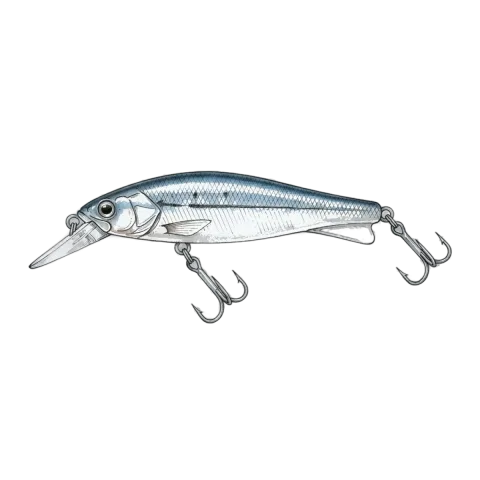
Anglers targeting pelagic schooling tunas in deep offshore waters achieve the best results by deploying high-speed trolling techniques using streamlined skirted lures or small metal jets that mimic fleeing prey. When surface activity or feeding frenzies occur, casting metal jigs or durable hard baits into the breaking water can trigger aggressive strikes. Concentrate efforts during early morning or late afternoon hours when visibility and light conditions encourage active feeding near the surface layers. Because these fish roam widely across open oceanic zones, locating temperature breaks, surface current edges, and concentrations of seabirds greatly increases encounter rates.
Other names for Slender tuna
Local and alternate names anglers use for Slender tuna.
-
Slender tuna
-
Tuna
-
Falla's tuna
Best equipment to catch Slender tuna
Compare fishing methods for Slender tuna — sized kit for each technique.
Note: Typical fish is 3.5 kg Our algorithm will suggest the best equipment for you based on this weight.
Trolling
Drawing lures or baits behind a moving boat.
80% Effectiveness
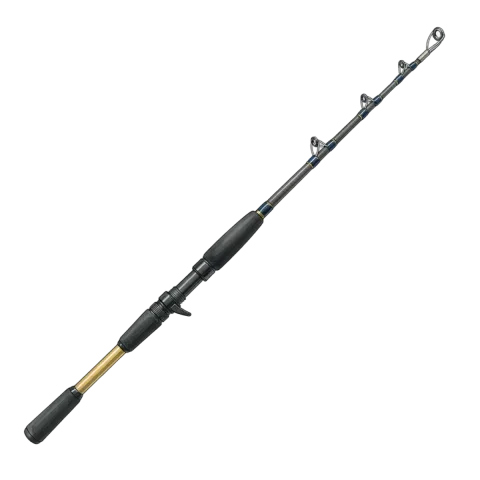
Rod
Trolling rod
A trolling rod is built to sit in a holder and pull a lure or bait at speed. Moderate action so the rod, not the reel, plays the fish.
Sized for a typical fish
medium · 1.83 m
- Reel seat
- Casting
- Form factor
- One-piece
- Action
- Moderate
- Grip
- EVA
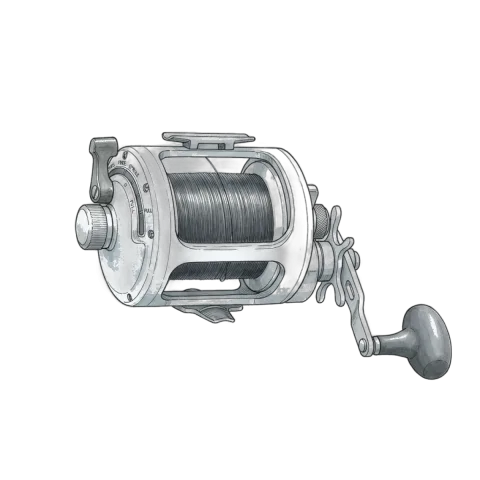
Reel
Trolling reel
A trolling reel is the dedicated lever-drag fishing reel for pulling lures behind a boat, often in a holder all day.
Sized for a typical fish
20 · 15 kg drag
- Spool
- Revolving
- Mount
- Over
- Drag
- Lever
- Retrieve
- Manual

Line
Braided line
Braided fishing line is the thin, no-stretch main for long casts, jigging, and feeling every tick on the retrieve.
Sized for a typical fish
9 kg · 0.14 mm
- Visibility
- High
- Abrasion
- Low
- Stretch
- None
- Sink rate
- Floats

Leader
Fluorocarbon leader
A fluorocarbon leader is the clear, fast-sinking join between a visible main line and the lure or hook.
Sized for a typical fish
9 kg · 0.35 mm · 100 cm
- Visibility
- Very low
- Abrasion
- High
- Stretch
- Low
- Sink rate
- Fast
Spinning
Casting and retrieving lures with a spinning rod and reel.
60% Effectiveness

Rod
Spinning rod
A spinning rod is a fishing rod built to carry a spinning reel under the blank. You cast lures and light baits with it from shore or a boat.
Sized for a typical fish
medium · 2.13 m
- Reel seat
- Spinning
- Form factor
- Multi-piece
- Action
- Fast
- Grip
- EVA

Reel
Spinning reel
A spinning reel hangs under the fishing rod and is the default reel for casting lures and light baits. Line peels off an open spool with a bail.
Sized for a typical fish
1000 · 3 kg drag · 185 g
- Spool
- Fixed
- Mount
- Under
- Drag
- Front
- Retrieve
- Manual
Line
Braided line
Braided fishing line is the thin, no-stretch main for long casts, jigging, and feeling every tick on the retrieve.
Sized for a typical fish
9 kg · 0.14 mm
- Visibility
- High
- Abrasion
- Low
- Stretch
- None
- Sink rate
- Floats
Leader
Fluorocarbon leader
A fluorocarbon leader is the clear, fast-sinking join between a visible main line and the lure or hook.
Sized for a typical fish
9 kg · 0.35 mm · 100 cm
- Visibility
- Very low
- Abrasion
- High
- Stretch
- Low
- Sink rate
- Fast
Best lures and baits for Slender tuna
Ranked lures and natural baits from every method, best first.
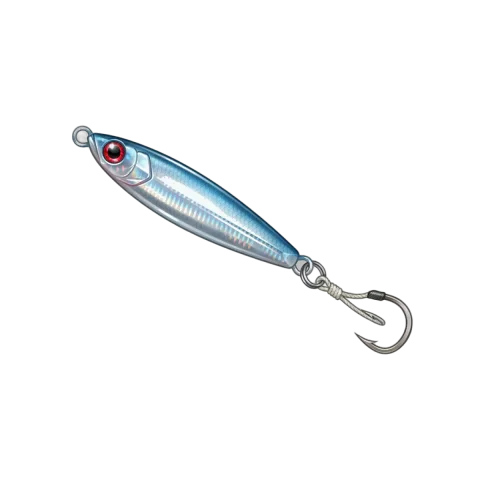
01
Metal jig
- Trolling
- Spinning
A long metal lure for speed-jigging the deep column.
How Slender tuna migrates — Oceanodromous
Migrates within the sea between spawning, nursery and feeding grounds, and never enters fresh water. Follow its seasonal shifts along the coast and offshore.
1 Eggs
Spawning grounds
Laid on the spawning grounds.
2 Larvae
→ Nursery grounds
Drift with the currents to the nursery grounds.
3 Juveniles
Nursery grounds
Grow up in sheltered nursery waters.
4 Adults
Feeding grounds
Range widely over the feeding grounds.
5 Spawners
→ Spawning grounds
Return to the spawning grounds each season.
It stays in the sea and never runs up into fresh water.
Hover or tap a number to read each stage.
Diet and behavior of Slender tuna
-
Diet
Carnivore -
Feeds by
Picks plankton -
Hunts
Dawn · Dusk -
Main prey
Baitfish · Plankton
Prey and predators of Slender tuna
Prey is what Slender tuna eats. Predators are the animals that eat it.
That is how it feeds, and how it is hunted.
Prey
What it eats
Where Slender tuna lives
Pelagic in the open ocean beyond the shelf break.
0–20 m

Where this species lives
Slender tuna photos for identification
Compare these photos with the catalog plate to identify the species.