How to catch Sockeye salmon
Oncorhynchus nerka (Walbaum, 1792)
About Sockeye salmon fishing
The sockeye salmon is a distinctive member of the salmon family known for its slender, streamlined body and finely serrated gill rakers. Living an anadromous life cycle, this species spends its adult years in open marine waters before returning to natal freshwater lakes and streams to spawn. During their ocean phase, they display a brilliant blue and silver coloration, which dramatically transforms into a deep crimson red body with a pale green head upon entering spawning grounds. Adults commonly reach substantial lengths and weights, feeding heavily on zooplankton and small aquatic organisms using specialized limnetic filtration strategies. Because of their impressive upstream migrations and remarkable physical transformation, they represent a high value target for commercial fisheries and recreational anglers alike across their native range.
-
Difficulty
Medium
-
Average size
45 cm TL
-
Market value
Very high
-
Habitat
Freshwater, Brackish, Saltwater
-
Season
Spring, Summer, Autumn
-
Also known as
Blueback, Blue-back, Blueback salmon, Fraser river salmon, Kennerly's salmon, Kickininee

Adipose fin
Small fleshy fin between dorsal and tail confirms salmonid identity.
Convex forehead
Clearly convex forehead shape characteristic of breeding adult.
Caudal shape
Emarginate caudal fin shape typical for the species.
Sockeye salmon fishing facts
Characteristics
-
Typical size
45 cm TL (max 84 cm TL ) -
Typical weight
2.3 kg (max 7.7 kg ) -
Preferred temperature
1–8.4 °C -
Depth
0–250 m -
Longevity
8 years -
Body shape
Fusiform / Normal -
Commercial?
-
Vulnerability score
29.2
Best hours
-
Peak
Dawn
First light
-
Active
Morning
After sunrise
-
Low
Midday
High sun
-
Low
Afternoon
Late day
-
Peak
Dusk
Last light
-
Low
Night
After dark
When to fish for Sockeye salmon
How to catch Sockeye salmon
Tips for catching Sockeye salmon
Anglers targeting sockeye salmon typically focus their efforts during the warmer summer and early autumn months when mature fish stage near lake entries and travel up coastal river systems. Because these fish feed primarily on zooplankton and small aquatic prey rather than aggressive fish species, success relies on presenting presentations that mimic small crustaceans or trigger reactive strikes. Trolling deep drop offs and lake basins with small spoons or flashers followed by trailing flies often proves highly effective from a boat. Bank anglers find success in rivers using spinning gear equipped with small bright coloured lures or drifting weighted flies through deep holding pools where migrating fish pause. Early morning and late afternoon hours provide the most consistent action as low light conditions encourage fish to move closer to surface layers and active travel corridors.
Other names for Sockeye salmon
Local and alternate names anglers use for Sockeye salmon.
-
Pygmy sockeye salmon
-
Little redfish
-
Pygmy salmon
-
Kokanee
-
Land-locked sockeye
-
Kickininee
-
Fraser river salmon
-
Kennerly's salmon
-
Blueback salmon
-
Quinalt
-
Red caviar
-
Sockeye salmon
-
Red salmon
-
Silver trout
-
Redfish
-
Salmon
-
Blue-back
-
Sock-eye salmon
Best equipment to catch Sockeye salmon
Compare fishing methods for Sockeye salmon — sized kit for each technique.
Note: Typical fish is 2.3 kg Our algorithm will suggest the best equipment for you based on this weight.
Fly Fishing
Presenting artificial flies with a fly rod and weighted line.
85% Effectiveness
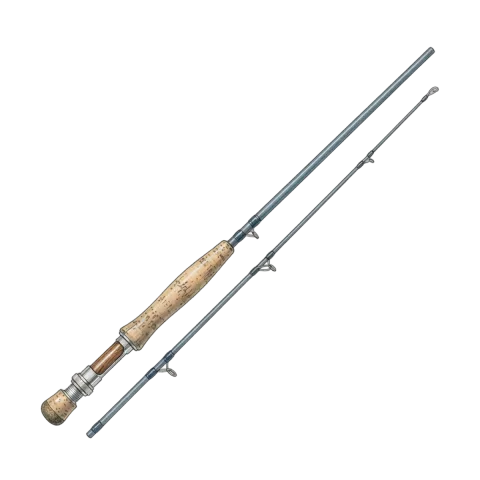
Rod
Fly rod
A fly rod is a fishing rod sized by line weight, with a fly reel seat. The fly line, not a heavy lure, loads the blank.
Sized for a typical fish
2.74 m · 6wt
- Reel seat
- Fly
- Form factor
- Multi-piece
- Action
- Moderate-fast
- Grip
- Cork
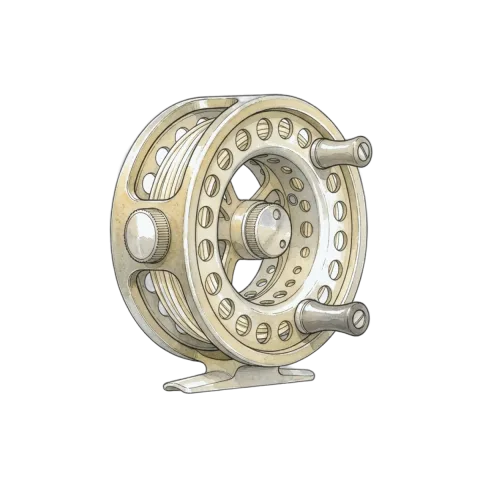
Reel
Fly reel
A fly reel is a large-arbor drum that stores backing and fly line. Drag is a disc; the reel does not cast the fly.
Sized for a typical fish
5 kg drag · 6wt
- Spool
- Drum
- Mount
- Under
- Drag
- Disc
- Retrieve
- Manual
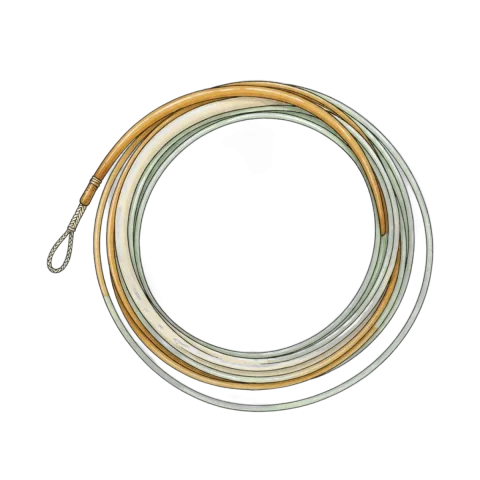
Line
Fly line
Fly line is the weighted shooting line that carries a near-weightless fly. Match it by weight class to the fly rod, not by kilo rating.
Sized for a typical fish
6wt
- Visibility
- Medium
- Abrasion
- Medium
- Stretch
- Low
- Sink rate
- Slow
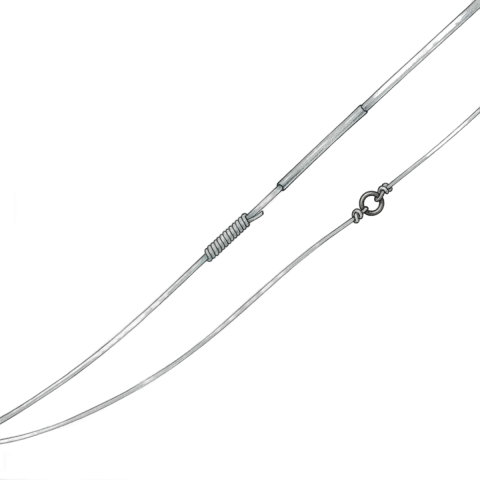
Leader
Tippet
Tippet is the fine, replaceable end of a fly leader, sized in X so you can match the fly and the fish.
Sized for a typical fish
3.6 kg · 0.2 mm · 80 cm · 3X
- Visibility
- Medium
- Abrasion
- Medium
- Stretch
- Medium
- Sink rate
- Slow
Spinning
Casting and retrieving lures with a spinning rod and reel.
80% Effectiveness

Rod
Spinning rod
A spinning rod is a fishing rod built to carry a spinning reel under the blank. You cast lures and light baits with it from shore or a boat.
Sized for a typical fish
medium · 2.13 m
- Reel seat
- Spinning
- Form factor
- Multi-piece
- Action
- Fast
- Grip
- EVA

Reel
Spinning reel
A spinning reel hangs under the fishing rod and is the default reel for casting lures and light baits. Line peels off an open spool with a bail.
Sized for a typical fish
1000 · 3 kg drag · 185 g
- Spool
- Fixed
- Mount
- Under
- Drag
- Front
- Retrieve
- Manual

Line
Braided line
Braided fishing line is the thin, no-stretch main for long casts, jigging, and feeling every tick on the retrieve.
Sized for a typical fish
6 kg · 0.1 mm
- Visibility
- High
- Abrasion
- Low
- Stretch
- None
- Sink rate
- Floats

Leader
Fluorocarbon leader
A fluorocarbon leader is the clear, fast-sinking join between a visible main line and the lure or hook.
Sized for a typical fish
7 kg · 0.3 mm · 90 cm
- Visibility
- Very low
- Abrasion
- High
- Stretch
- Low
- Sink rate
- Fast
Trolling
Drawing lures or baits behind a moving boat.
75% Effectiveness
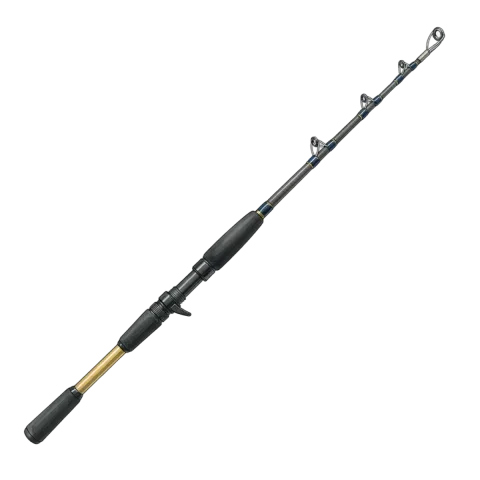
Rod
Trolling rod
A trolling rod is built to sit in a holder and pull a lure or bait at speed. Moderate action so the rod, not the reel, plays the fish.
Sized for a typical fish
medium · 1.83 m
- Reel seat
- Casting
- Form factor
- One-piece
- Action
- Moderate
- Grip
- EVA
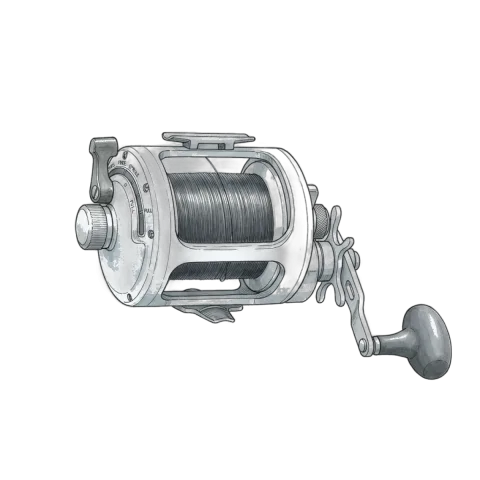
Reel
Trolling reel
A trolling reel is the dedicated lever-drag fishing reel for pulling lures behind a boat, often in a holder all day.
Sized for a typical fish
20 · 15 kg drag
- Spool
- Revolving
- Mount
- Over
- Drag
- Lever
- Retrieve
- Manual
Line
Braided line
Braided fishing line is the thin, no-stretch main for long casts, jigging, and feeling every tick on the retrieve.
Sized for a typical fish
6 kg · 0.1 mm
- Visibility
- High
- Abrasion
- Low
- Stretch
- None
- Sink rate
- Floats
Leader
Fluorocarbon leader
A fluorocarbon leader is the clear, fast-sinking join between a visible main line and the lure or hook.
Sized for a typical fish
7 kg · 0.3 mm · 90 cm
- Visibility
- Very low
- Abrasion
- High
- Stretch
- Low
- Sink rate
- Fast
Best lures and baits for Sockeye salmon
Ranked lures and natural baits from every method, best first.
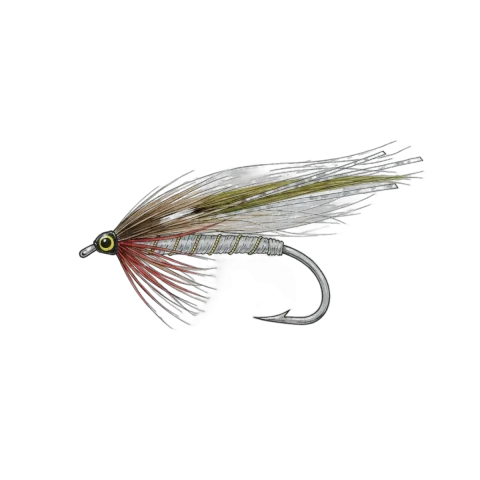
02
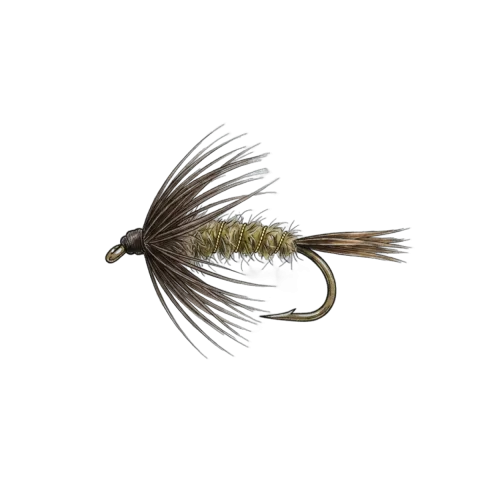
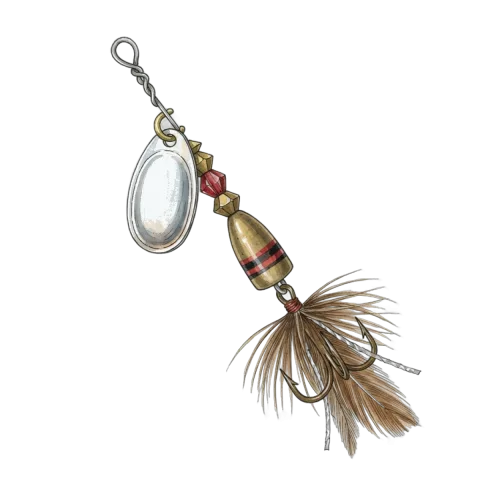
Wet fly
- Fly Fishing
A soft-hackle fly swung or drifted just under the film.
04
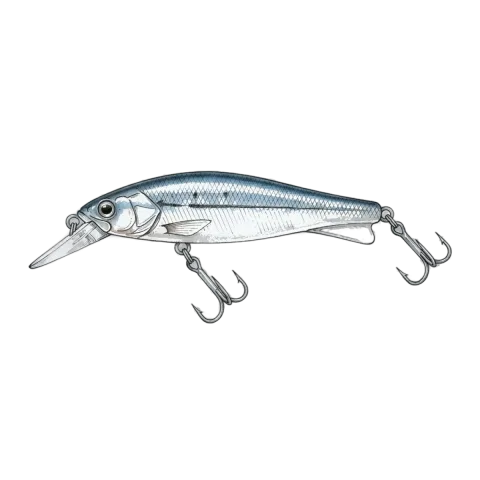
Inline spinner
- Spinning
An inline spinner with a blade that flashes on a straight retrieve.
How Sockeye salmon migrates — Anadromous
Grows at sea and swims into rivers to spawn. Target the run as fish leave the ocean and push upstream.
1 Eggs
Fresh water
Laid in fresh water, usually well up the river.
2 Juveniles
→ Sea
Grow in the river, then head downstream to the sea.
3 Adults
Sea
Feed and grow at sea.
4 Spawners
→ Fresh water
Run back up the river to spawn.
Some populations never go to sea and complete the cycle in rivers and lakes.
Hover or tap a number to read each stage.
Diet and behavior of Sockeye salmon
-
Diet
Carnivore -
Feeds by
Picks plankton -
Hunts
Dawn · Dusk -
Main prey
Baitfish
Prey and predators of Sockeye salmon
Prey is what Sockeye salmon eats. Predators are the animals that eat it.
That is how it feeds, and how it is hunted.
Prey
What it eats
Baitfish
Predators
What hunts it
Where Sockeye salmon lives
Pelagic in the open ocean beyond the shelf break.
0–250 m

River mouth
Where this species lives
Sockeye salmon photos for identification
Compare these photos with the catalog plate to identify the species.