How to catch Speckled longfin eel
Anguilla reinhardtii Steindachner, 1867
About Speckled longfin eel fishing
The speckled longfin eel is a large freshwater and brackish fish belonging to the family Anguillidae, featuring an elongated snake-like cylindrical body with continuous dorsal, tail, and anal fins. Its olive-green to brownish skin is heavily mottled with dark spots and blotches, complemented by a paler underside, thick lips, and small gill openings. Growing up to significant proportions with females reaching much larger sizes than males, this demersal predator inhabits diverse aquatic environments including rivers, streams, lakes, and coastal lagoons. It lives a largely nocturnal life, hunting voraciously on crustaceans, mollusks, insects, and fish using its sharp sense of smell before undertaking epic catadromous migrations to deep ocean waters for spawning.
-
Difficulty
Medium
-
Average size
100 cm TL
-
Habitat
Freshwater, Brackish, Saltwater
-
Season
Spring, Autumn, Winter
-
Also known as
Australian longfinned eel, Conger eel, Freshwater eel, Longfin eel, Longfinned eel, Marbled eel

Mottled Color
Distinctive dark speckles and marbling over the body.
Speckled longfin eel fishing facts
Characteristics
-
Typical size
100 cm TL (max 165 cm TL ) -
Typical weight
3.5 kg (max 22 kg ) -
Preferred temperature
3.8–12.7 °C -
Depth
0–3,000 m -
Longevity
41 years -
Body shape
Eel Like -
Vulnerability score
87.1
Best hours
-
Active
Dawn
First light
-
Low
Morning
After sunrise
-
Low
Midday
High sun
-
Low
Afternoon
Late day
-
Active
Dusk
Last light
-
Peak
Night
After dark
When to fish for Speckled longfin eel
How to catch Speckled longfin eel
Tips for catching Speckled longfin eel
Targeting this powerful nocturnal predator requires heavy ledgering or float gear fished tight to snags, undercut banks, and deep river holes where large specimens hide during daylight hours. Because these eels rely heavily on scent rather than sight to locate meals, presentation must centre around rich natural offerings such as large lobworms or oily fish sections fished directly on the bottom. Sessions are most productive from dusk through the night when the fish move out of deep cover to patrol shallow margins and river currents. Anglers should use robust tackle including abrasion-resistant lines and strong hooks to prevent powerful fish from diving back into impenetrable underwater obstacles.
Other names for Speckled longfin eel
Local and alternate names anglers use for Speckled longfin eel.
-
Speckled longfin eel
-
Spotted eel
-
Speckled longfin-eel
-
River eel
-
Longfinned eel
-
Marbled eel
-
Longfin eel
-
Freshwater eel
-
Conger eel
-
Australian longfinned eel
Best equipment to catch Speckled longfin eel
Compare fishing methods for Speckled longfin eel — sized kit for each technique.
Note: Typical fish is 3.5 kg Our algorithm will suggest the best equipment for you based on this weight.
Bottom Fishing
Presenting bait or rigs on or near the lake or sea floor.
90% Effectiveness

Rod
Spinning rod
A spinning rod is a fishing rod built to carry a spinning reel under the blank. You cast lures and light baits with it from shore or a boat.
Sized for a typical fish
medium · 2.13 m
- Reel seat
- Spinning
- Form factor
- Multi-piece
- Action
- Fast
- Grip
- EVA

Reel
Spinning reel
A spinning reel hangs under the fishing rod and is the default reel for casting lures and light baits. Line peels off an open spool with a bail.
Sized for a typical fish
2500 · 5 kg drag · 220 g
- Spool
- Fixed
- Mount
- Under
- Drag
- Front
- Retrieve
- Manual

Line
Monofilament line
Monofilament fishing line is the everyday main line: easy to knot, cheap to replace, and stretchy enough to forgive a hard strike.
Sized for a typical fish
13 kg · 0.4 mm
- Visibility
- Medium
- Abrasion
- Medium
- Stretch
- High
- Sink rate
- Slow

Leader
Fluorocarbon leader
A fluorocarbon leader is the clear, fast-sinking join between a visible main line and the lure or hook.
Sized for a typical fish
18.1 kg · 0.602 mm · 120 cm
- Visibility
- Very low
- Abrasion
- High
- Stretch
- Low
- Sink rate
- Fast

Hook
Circle hook
A circle hook turns in the mouth and usually finds the corner of the jaw. You do not strike hard — you come tight. It includes freshwater.
Sized for a typical fish
3/0
- Points
- 1
- Offset
- No
- Barbed
- Yes
- Gap
- Standard
Best lures and baits for Speckled longfin eel
Ranked lures and natural baits from every method, best first.
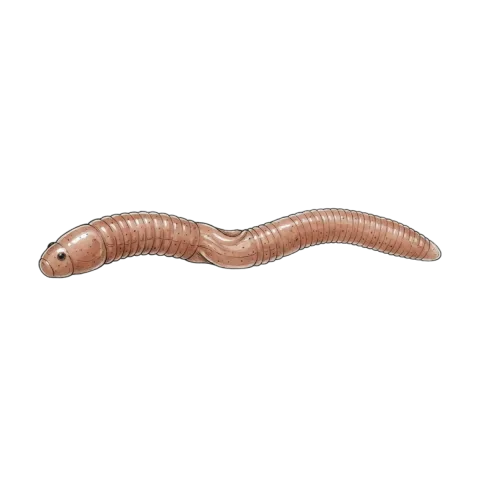
01
Worm
- Bottom Fishing
Rounded anterior end containing the mouth used for anchoring the bait on the hook.
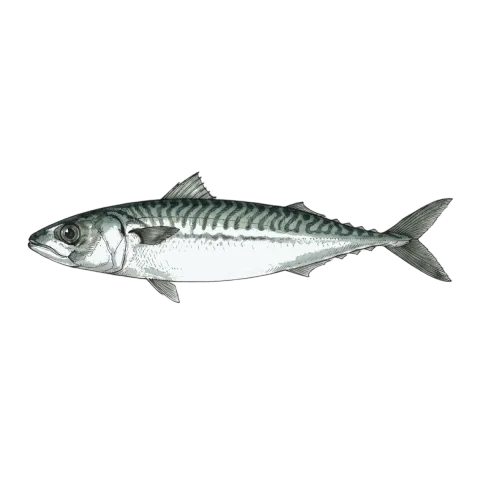
02
Mackerel
- Bottom Fishing
Distinctive wavy dorsal stripes provide high contrast and flash underwater.
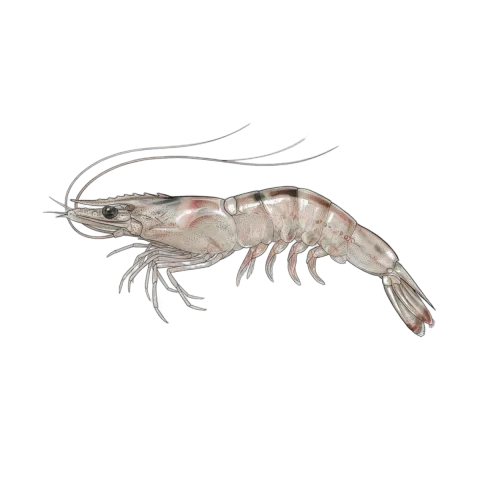
03
Prawn
- Bottom Fishing
Powerful fan-shaped tail propels the prawn backward when escaping predatory fish.
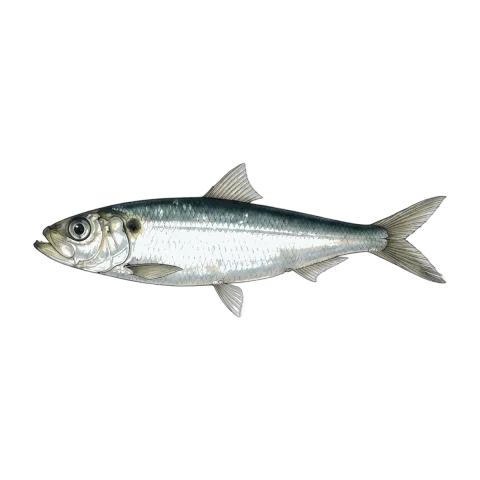
04
Sardine
- Bottom Fishing
Elongated silvery baitfish body releases strong scent trails.
How Speckled longfin eel migrates — Catadromous
Grows in fresh or brackish water and migrates to the sea to spawn. Estuaries and lower rivers fire when adults drop downstream.
1 Eggs
Sea
Spawned out at sea.
2 Larvae
→ Estuary
Drift with the currents towards the coast.
3 Juveniles
→ Fresh water
Enter estuaries, and many move on into fresh water.
4 Adults
Fresh water
Feed and grow in rivers, lakes and estuaries, often for years.
5 Spawners
→ Sea
Head downstream and out to sea to spawn.
Many only reach estuaries and the lower river; eels travel far inland.
Hover or tap a number to read each stage.
Diet and behavior of Speckled longfin eel
-
Diet
Carnivore -
Feeds by
Hunts animals -
Hunts
Night -
Main prey
Baitfish · Bottom prey
Prey and predators of Speckled longfin eel
Prey is what Speckled longfin eel eats. Predators are the animals that eat it.
That is how it feeds, and how it is hunted.
Prey
What it eats
Predators
What hunts it
Fish
Where Speckled longfin eel lives
Lives on or just above the bottom. Work jigs, bait, and lures along the seabed.
0–3,000 m

River mouth
Where this species lives
Speckled longfin eel photos for identification
Compare these photos with the catalog plate to identify the species.