How to catch Tiger sorubim
Pseudoplatystoma tigrinum (Valenciennes, 1840)
About Tiger sorubim fishing
The tiger sorubim is a magnificent large pimelodid catfish distinguished by a striking pattern of dark hieroglyphic stripes and markings across its elongated silvery body. Growing up to a substantial length and weight, this apex freshwater predator inhabits the main channels and flooded forests of major South American river basins, showing a strong preference for deep, flowing waters and estuarine zones. It operates primarily as a nocturnal hunter, feeding voraciously on various fish species and aquatic macrofauna. Due to its impressive size, fighting capabilities, and beautiful appearance, it is highly regarded by anglers pursuing heavy freshwater game.
-
Difficulty
Medium
-
Average size
90 cm
-
Habitat
Freshwater, Brackish
-
Season
Spring, Summer, Autumn, Winter
-
Also known as
Catfish, Tiger catfish

Vertical Stripes
Dark vertical stripes along the flanks resemble tiger markings, distinguishing this species.
Depressed Head
Long, extremely flattened snout typical of large predatory sorubim catfishes.
Adipose Fin
Small fleshy adipose fin present on the upper tail region.
Tiger sorubim fishing facts
Characteristics
-
Typical size
90 cm (max 130 cm TL ) -
Typical weight
4.5 kg (max 17 kg ) -
Longevity
18 years -
Body shape
Elongated -
Vulnerability score
56.8
Best hours
-
Active
Dawn
First light
-
Low
Morning
After sunrise
-
Low
Midday
High sun
-
Low
Afternoon
Late day
-
Active
Dusk
Last light
-
Peak
Night
After dark
When to fish for Tiger sorubim
How to catch Tiger sorubim
Tips for catching Tiger sorubim
Targeting this heavy nocturnal predator requires robust heavy-action tackle capable of handling powerful bottom-dwelling runs and snaggy riverbeds. Presenting large live or freshly cut baits directly on the bottom near deep river channels, drop-offs, and submerged structure yields the best results during the darker hours. Anglers should exercise patience during the initial bite, allowing the fish to take the bait properly before setting the hook firmly. Fishing effort is most rewarding during seasonal low-water transitions and periods aligned with active local prey migrations.
Other names for Tiger sorubim
Local and alternate names anglers use for Tiger sorubim.
-
Tiger sorubim
-
Tiger catfish
-
Catfish
Best equipment to catch Tiger sorubim
Compare fishing methods for Tiger sorubim — sized kit for each technique.
Note: Typical fish is 4.5 kg Our algorithm will suggest the best equipment for you based on this weight.
Bottom Fishing
Presenting bait or rigs on or near the lake or sea floor.
85% Effectiveness

Rod
Spinning rod
A spinning rod is a fishing rod built to carry a spinning reel under the blank. You cast lures and light baits with it from shore or a boat.
Sized for a typical fish
heavy · 2.13 m
- Reel seat
- Spinning
- Form factor
- Multi-piece
- Action
- Fast
- Grip
- EVA

Reel
Spinning reel
A spinning reel hangs under the fishing rod and is the default reel for casting lures and light baits. Line peels off an open spool with a bail.
Sized for a typical fish
4000 · 8 kg drag · 275 g
- Spool
- Fixed
- Mount
- Under
- Drag
- Front
- Retrieve
- Manual

Line
Monofilament line
Monofilament fishing line is the everyday main line: easy to knot, cheap to replace, and stretchy enough to forgive a hard strike.
Sized for a typical fish
19 kg · 0.505 mm
- Visibility
- Medium
- Abrasion
- Medium
- Stretch
- High
- Sink rate
- Slow

Leader
Fluorocarbon leader
A fluorocarbon leader is the clear, fast-sinking join between a visible main line and the lure or hook.
Sized for a typical fish
36.3 kg · 0.847 mm · 150 cm
- Visibility
- Very low
- Abrasion
- High
- Stretch
- Low
- Sink rate
- Fast

Hook
Circle hook
A circle hook turns in the mouth and usually finds the corner of the jaw. You do not strike hard — you come tight. It includes freshwater.
Sized for a typical fish
3/0
- Points
- 1
- Offset
- No
- Barbed
- Yes
- Gap
- Standard
Best lures and baits for Tiger sorubim
Ranked lures and natural baits from every method, best first.
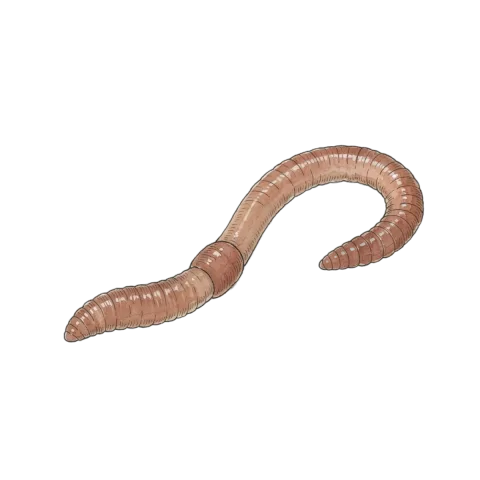
01
Live baitfish
- Bottom Fishing
Elongated segmented worm body provides natural movement to attract fish.
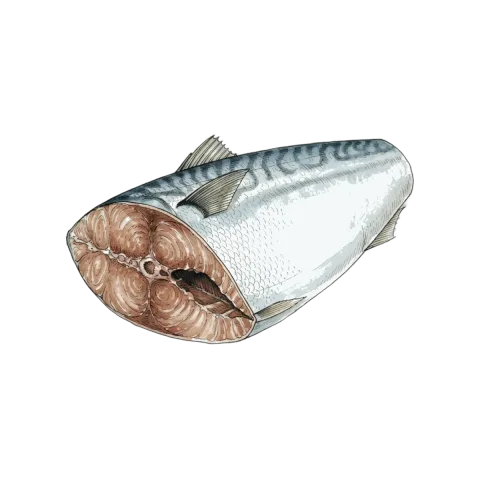
02
Fish chunks
- Bottom Fishing
Freshly sliced fish chunk providing rich scent attraction for bottom fishing.
How Tiger sorubim migrates — Potamodromous
Migrates within rivers and lakes only. Fish upstream runs and seasonal lake movements, not saltwater.
1 Eggs
Upstream
Laid on gravel or weed upstream or in flooded shallows.
2 Larvae
→ Main river or lake
Fry drift or swim down to slower water.
3 Adults
Main river or lake
Feed in the main river or lake.
4 Spawners
→ Upstream
Move upstream or into the shallows to spawn.
The whole cycle stays in fresh water.
Hover or tap a number to read each stage.
Diet and behavior of Tiger sorubim
-
Diet
Top predator -
Feeds by
Hunts animals -
Hunts
Night -
Main prey
Baitfish
Prey and predators of Tiger sorubim
Prey is what Tiger sorubim eats. Predators are the animals that eat it.
That is how it feeds, and how it is hunted.
Prey
What it eats
Baitfish
Where Tiger sorubim lives
Lives on or just above the bottom. Work jigs, bait, and lures along the seabed.

Where this species lives
Tiger sorubim photos for identification
Compare these photos with the catalog plate to identify the species.