How to Catch Big Northern Pike: Tactics for Trophy Giants
Learn how to target trophy northern pike by upsizing your baits, trolling deep weed edges, and understanding their seasonal migrations. Master the heavy-duty gear and specialized tactics needed to land a true giant.
Hunting trophy northern pike requires a completely different approach than catching small fish. Targeting 40-plus-inch females means leaving standard tactics behind. You need to master seasonal movements, throw supersized gear, and focus entirely on the habits of giant fish.

Northern pike
Esox lucius
Seasonal Movements of Giant Pike
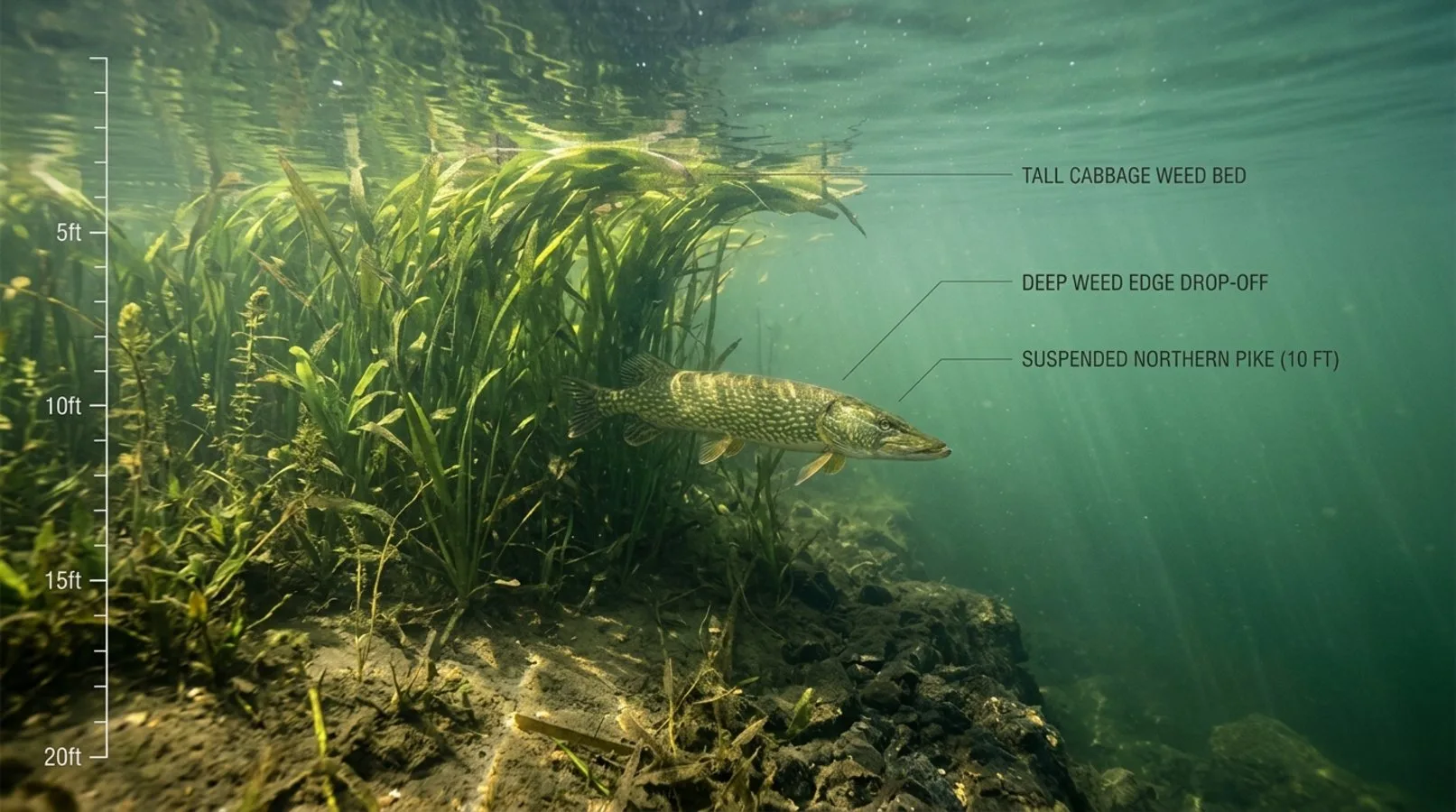
Targeting giants means accepting a lower catch rate. A 40-plus-inch northern pike behaves differently than smaller fish, often suspending in open water or holding on specific deep weed edges. You are hunting the apex predator of the system, so location is everything.
Pre-Spawn Staging
Late ice is the best time to intercept trophy pike as they prepare for the spawn. Before pushing ultra-shallow into weed-filled bays, they stage on flats between 8 and 12 feet deep. These staging zones sit just outside the first major drop-off, offering quick access to deep water security while keeping them close to spawning grounds.
Summer Deep Water Suspension
From June through September, adult pike relate to weed beds in 6 to 10 feet of water. While smaller fish hold on the shallow weed edges, mature giants patrol the deep water edge of the cover. Look for cabbage weed that grows right to the surface. Giant pike use this deep cabbage wall to ambush passing baitfish while remaining in cooler water.
Upsizing Your Lures
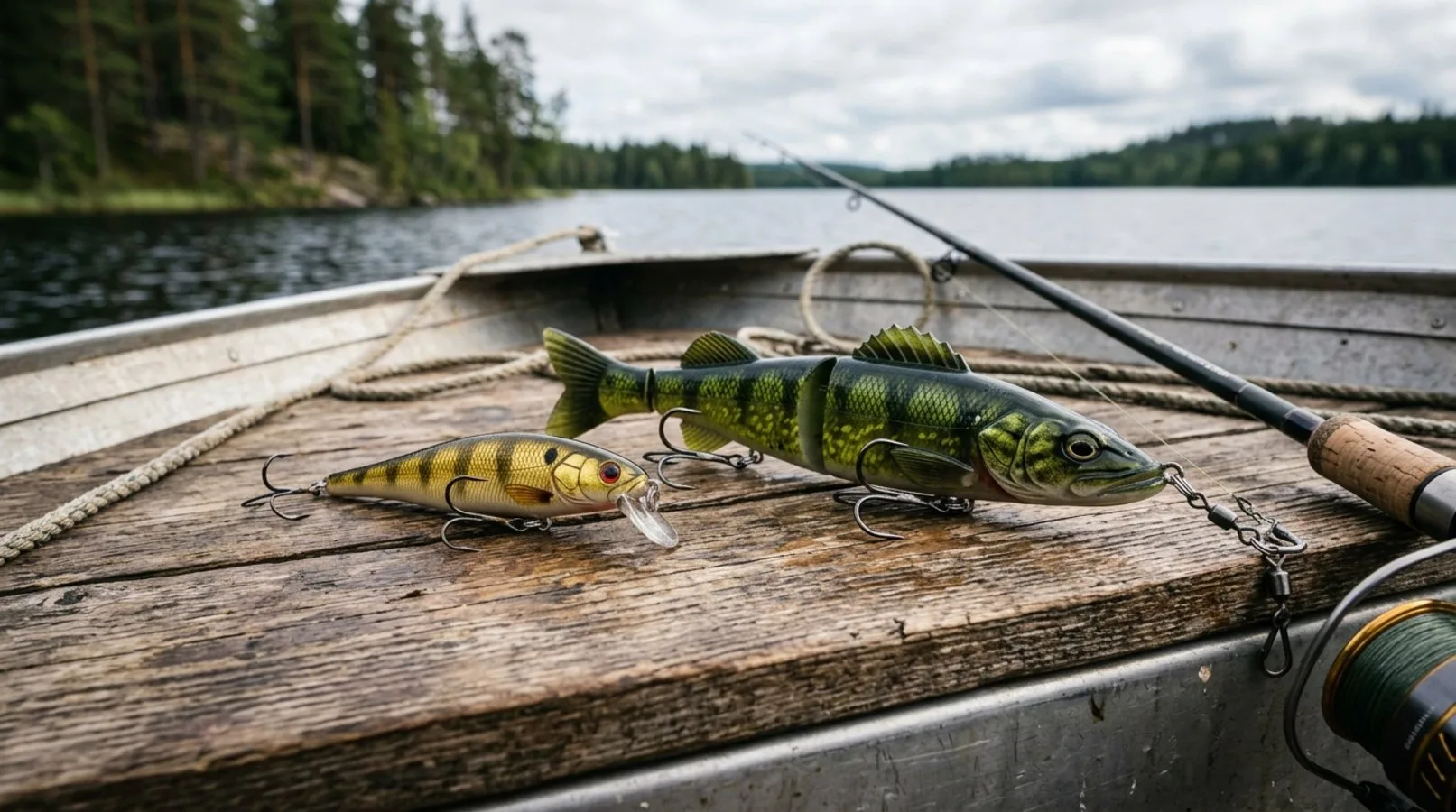
To trigger strikes from giant pike and deter smaller fish, you need to throw massive baits. Adult northern pike routinely hunt perch and suckers in the 4- to 15-inch range. Your artificial presentations must match this substantial prey profile.
Throwing large swimbaits, oversized spoons, and massive jerkbaits is the standard for trophy hunters. Jerkbaits that mimic an injured or dying fish are especially effective because pike often stalk their prey from below. The erratic, dying action triggers their predatory instinct for an easy meal.
Big pike also hit surface lures and large spoons like Daredevils incredibly hard when burned near the surface or fluttered over weed tops. Change your bait early and often to dial in the preferred profile and action for the day.
Trolling Tactics
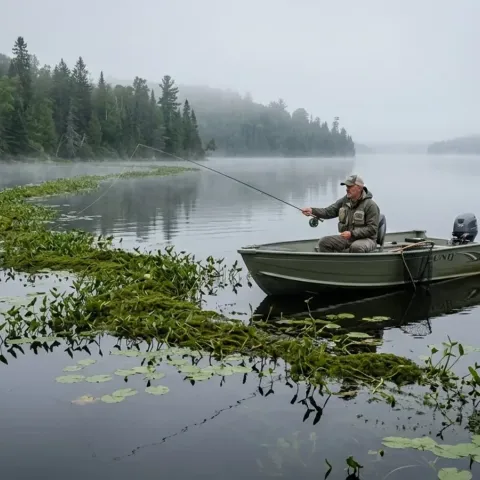
When targeting vast weed beds or open water basins, trolling is the most practical way to cover water and locate suspended giants. A "troll, then cast" strategy breaks down large expanses of water efficiently. This helps you pinpoint where the biggest fish are actively feeding.
Start by trolling large crankbaits or swimbaits along the deep water edge of the weed cover. Once you get a strike or spot a concentration of large baitfish on your electronics, stop the boat and cast to that specific area. Trolling first lets aggressive fish reveal the prime holding zones, allowing you to thoroughly pick apart the area.
Dead Bait Rigging for Cold Water
During late ice or early spring, a sluggish monster pike wants a large, easy meal. Rig a tip-up with a quick-strike rig and an oversized dead bait, such as a large sucker. These massive fish cruise near the bottom of the water column during cold water periods, so suspend your dead bait just inches off the bottom.
A quick-strike rig ensures that when a giant inhales the bait, you can set the hook immediately, preventing the fish from swallowing it deeply. Follow these steps for rigging a quick-strike rig for dead bait:
Select a heavy-duty quick-strike rig with two treble hooks and a wire or heavy fluorocarbon leader.
Insert the first treble hook lightly into the baitfish just behind the dorsal fin.
Secure the second treble hook near the baitfish's pectoral fin or head.
Ensure the wire leader is straight and the bait hangs horizontally when suspended.
Attach the rig to your main line using a heavy-duty ball bearing swivel.
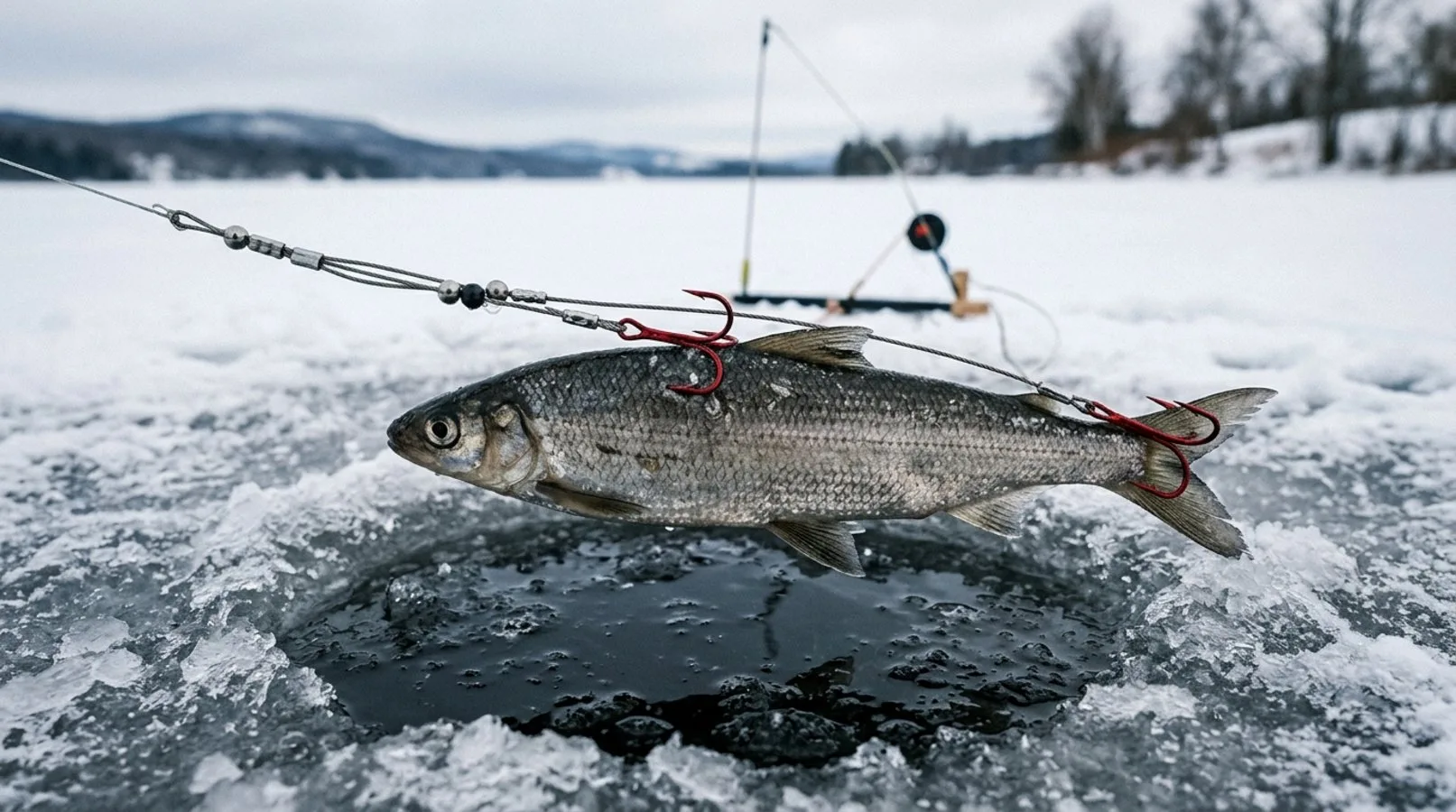
Rigging a Quick-Strike Rig for Dead Bait
Secure your dead bait horizontally for maximum hookup ratios on trophy pike.
- Select a heavy-duty quick-strike rig with two treble hooks and a wire or heavy fluorocarbon leader.
- Insert the first treble hook lightly into the baitfish just behind the dorsal fin.
- Secure the second treble hook near the baitfish's pectoral fin or head.
- Ensure the wire leader is straight and the bait hangs horizontally when suspended.
- Attach the rig to your main line using a heavy-duty ball bearing swivel.
Heavy Duty Gear
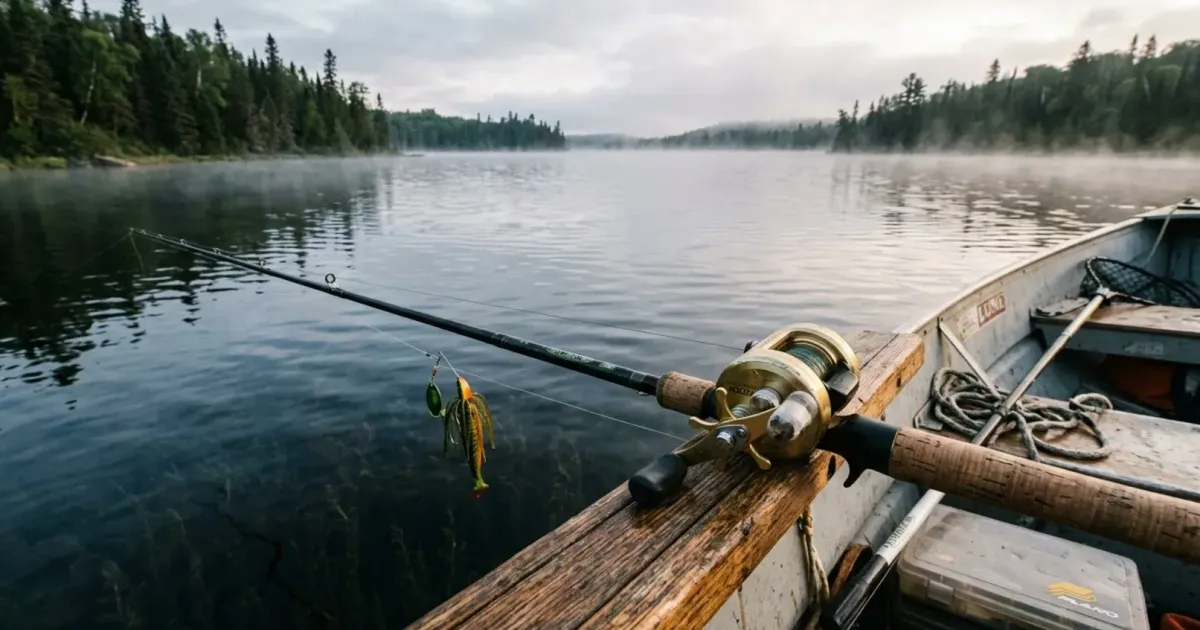
You cannot target 40-plus-inch fish with standard bass or walleye gear. Use heavy-power baitcasting rods around 7 feet long to handle massive lures and drive large hooks into a bony jaw. Pair this with a high-capacity baitcast reel to manage heavy line and absorb powerful runs.
For casting, spool up with 30- to 40-pound test super braid, or a high-quality 15-pound test braided line at minimum. If you are using a tip-up on the ice, opt for heavy 80-pound braid to handle the abrasion of the ice edge and the raw power of a giant fish.
Bite protection is non-negotiable. Use thick 12-inch leaders rated for at least 30 pounds, or a 24-inch leader of 40- to 50-pound test fluorocarbon. This prevents bite-offs and provides stability when casting heavy lures.
Handling Trophy Pike
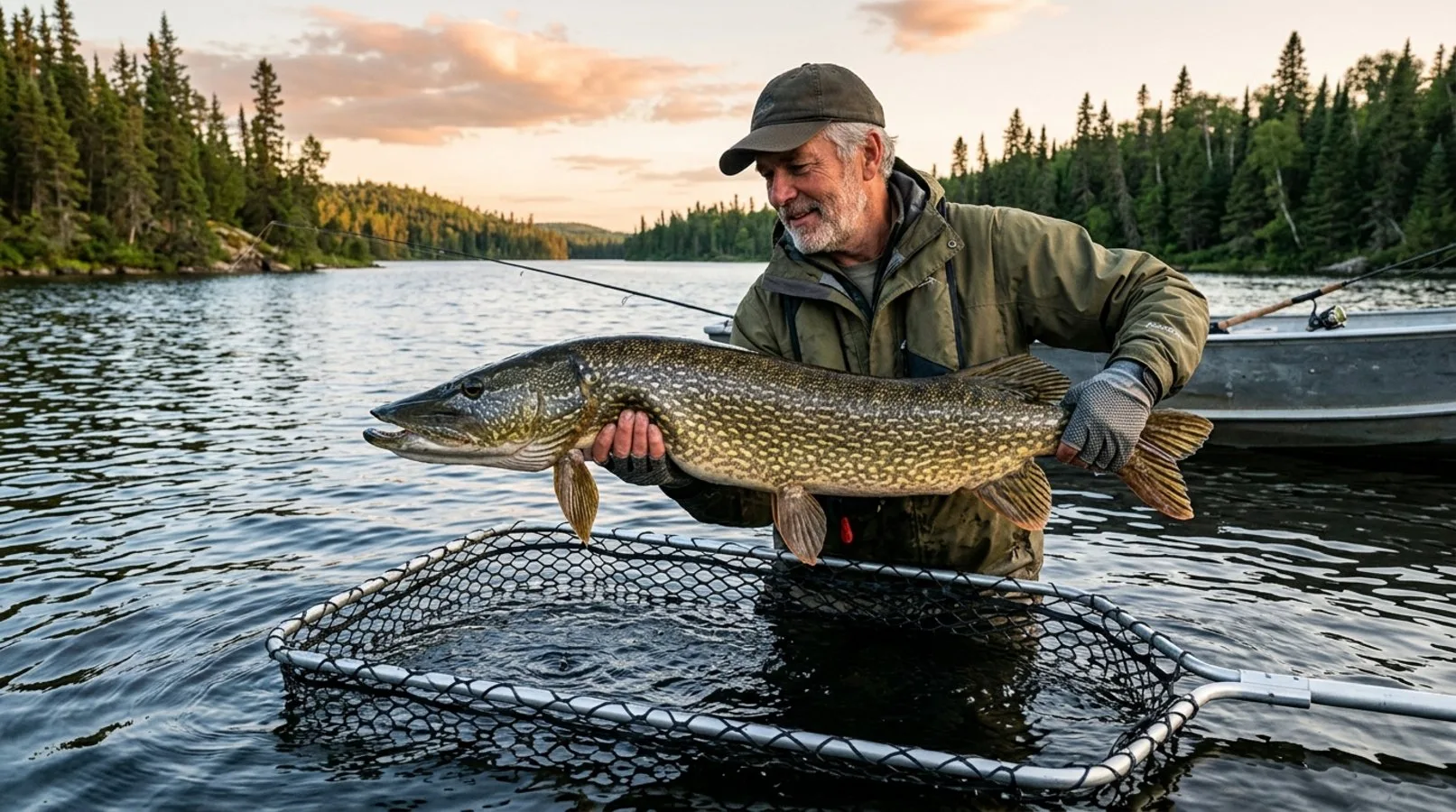
Catch and release is vital for managing trophy pike populations, as these massive females are the crucial breeding stock of the fishery. They have an exceptionally slimy body that reduces friction as they accelerate through the water, so always wet your hands before handling to protect their slime coat.
Always use a large, rubberized landing net or cradle to secure the fish while keeping it in the water as much as possible. Keep long-nosed pliers and jaw spreaders readily available to remove hooks quickly and safely.
When lifting a giant for a quick photo, support its belly and hold it horizontally. Never hang a massive pike vertically by its jaw or gills, as this can cause fatal internal damage to these heavy, old fish.
Note: Always check local fishing regulations for specific seasons, size limits, and gear restrictions before heading out, as rules can vary significantly by location.