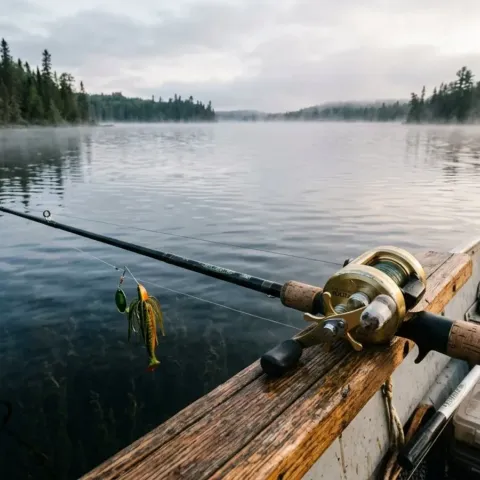
How to Catch Northern Pike: The Complete Beginner's Guide
Learn the essentials of northern pike fishing, from locating weed beds and choosing the right lures to safely handling these aggressive, toothy predators.
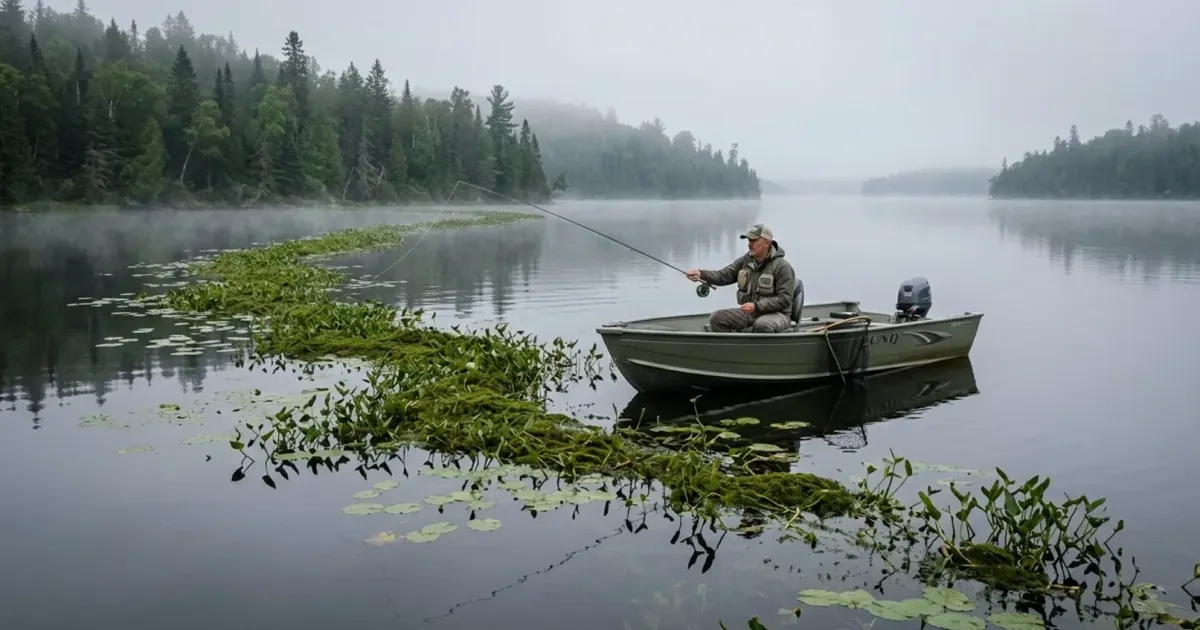
Northern pike strike with ferocity, making them an excellent target for anglers building their confidence. You can find them in nearly every lake and river in Minnesota, as well as across the northern tier of the United States in places like Vermont, New York, Michigan, and Wisconsin.

Northern pike
Esox lucius
Where to Find Pike
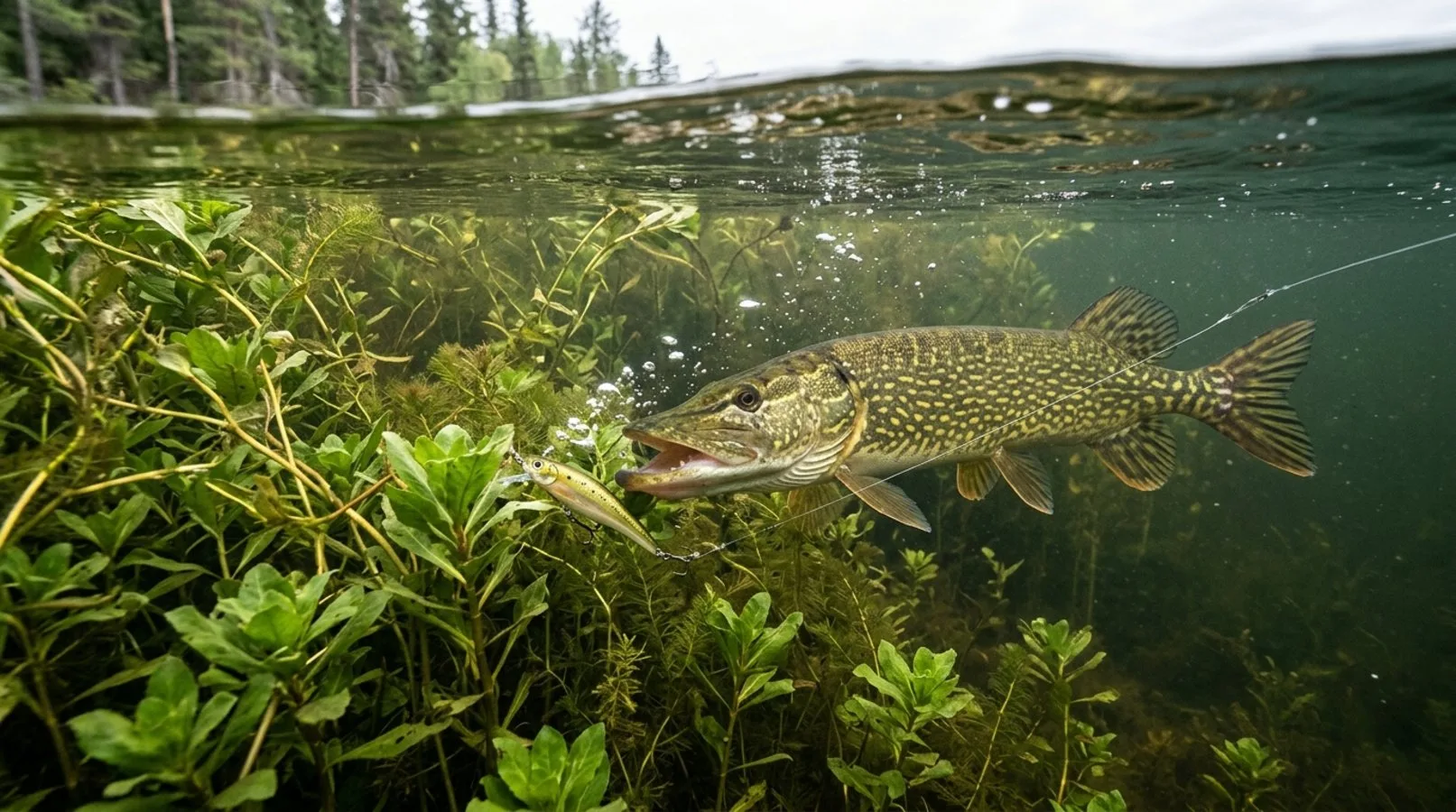
Pike rely on cover to ambush their prey. They typically inhabit waters 2 to 15 feet deep, positioning themselves near drop-offs and vegetation.
Spring Shallows
Right after ice-out, pike do not wait for warm water to spawn. They remain active in cold conditions and gravitate to secondary coves that warm up faster than the main bay. Focus your early-season efforts on shallow bays, flooded grasses, and creek mouths.
Water temperatures ranging from the mid-30s to the upper 40s dictate their behavior. Even a two- to three-degree temperature difference can turn on the bite. Because they linger near their spawning grounds, proximity to these shallow areas matters more than fishing deep water.
Summer Weeds
As the water warms, northern pike move out of the shallow bays. They hunt around underwater vegetation in deeper waters, preferring established weed beds. Weedy points and mid-bay weed shoals become highly productive. Work the edges of these weed lines, as pike sit just inside the cover waiting to ambush passing baitfish.
Rods, Reels, and Wire Leaders
A standard wilderness northern weighs between 10 and 20 pounds, and true giants grow much larger. The Minnesota state record weighed 45 pounds, 12 ounces.
Rods and Reels
Leave your ultralight trout gear at home. A 7-foot medium-heavy spinning or casting rod provides the necessary backbone for driving large hooks into a pike's bony jaw. Pair your rod with a reliable reel spooled with braided line of at least 15-pound test. Braid offers exceptional strength and zero stretch, allowing you to rip lures cleanly through thick weed beds.
Wire Leaders
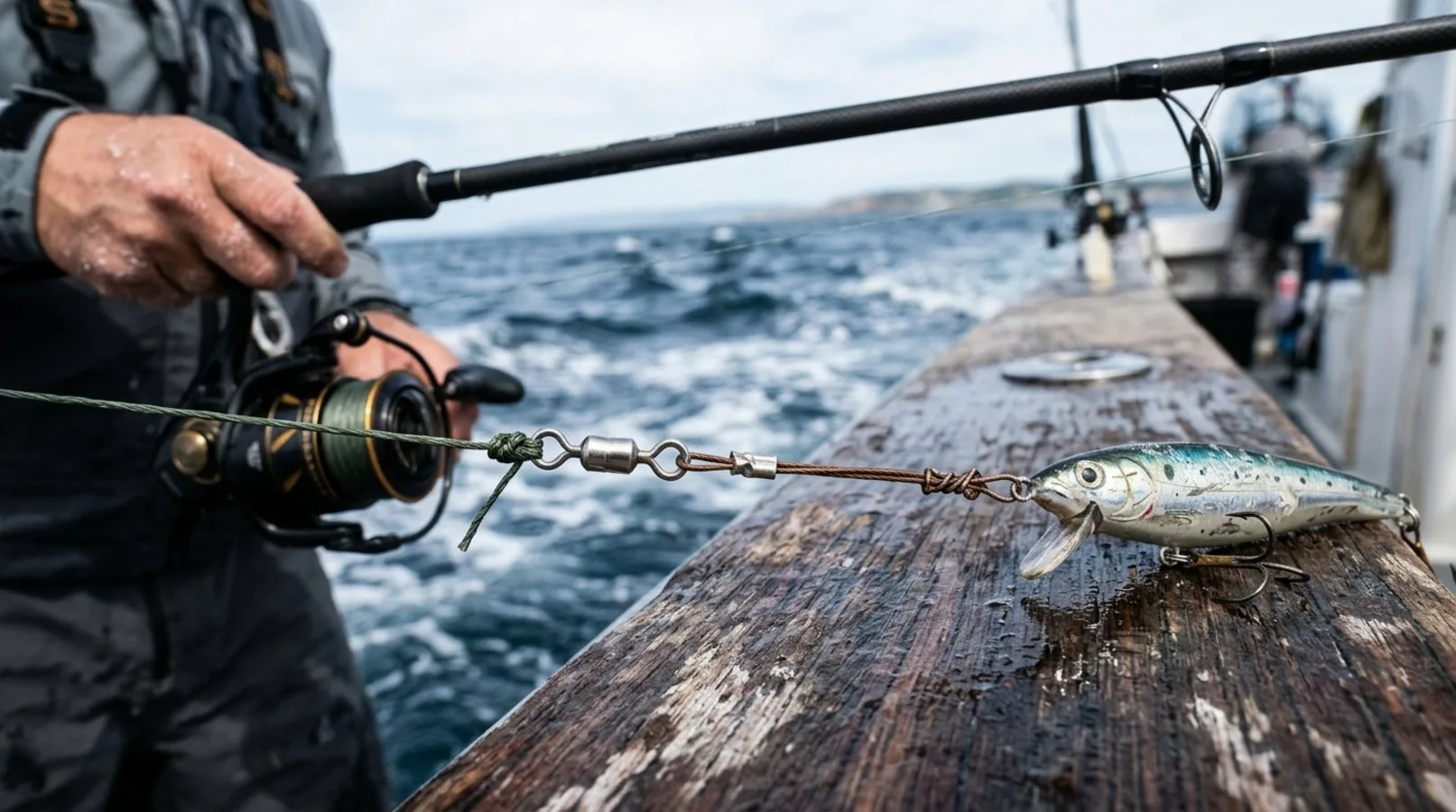
Pike have mouths full of razor-sharp teeth that effortlessly slice through standard monofilament or fluorocarbon lines. Attach a strong wire leader between your main line and your lure to prevent bite-offs and lost fish.
Top Lures and Baits
Because pike are visual hunters, selecting the right colors and profiles triggers their predatory instincts. You do not need a massive tackle box to catch them.
Spoons and Spinnerbaits
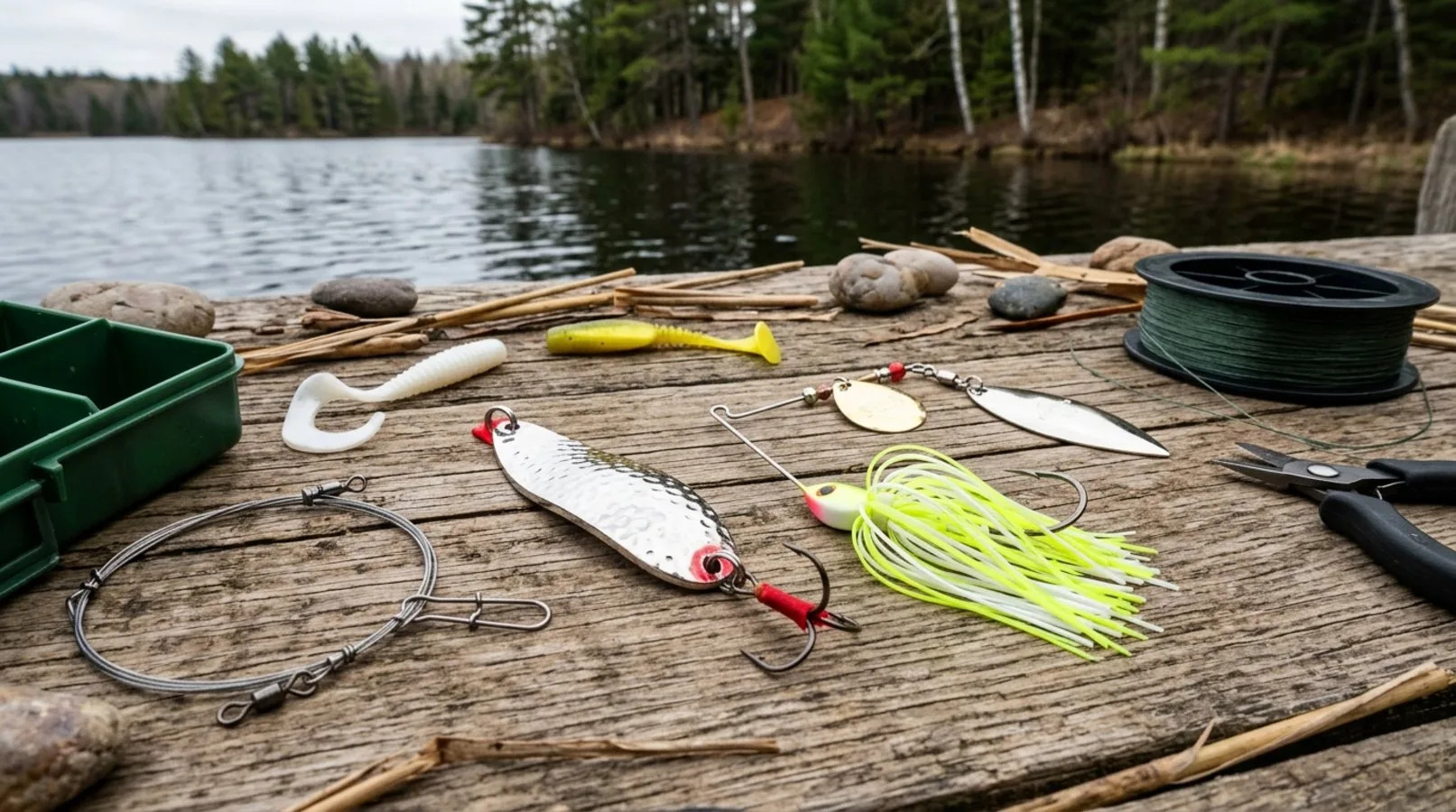
Bright, flashy presentations excel in pike territory. White, yellow, and chartreuse are proven lure colors. Classic inline spinners and heavy spoons cast far and create heavy vibration in the water. Surface plugs also provide explosive topwater action when fished over submerged weed beds.
During the early season when the water is cold, switch to suspending jerkbaits, soft swimbaits, or glide baits. These allow for a slower retrieve, keeping the lure in the strike zone longer for sluggish fish.
Live and Dead Bait
Adult northern pike readily eat perch and suckers in the 4- to 15-inch range. Suspending a large live sucker under a heavy bobber rig, or using a drift rig along a weed edge, is a reliable way to tempt a trophy-sized fish. In colder months, many anglers find that dead bait fished on the bottom works well, as pike scavenge for an easy meal.
Landing and Unhooking
A pike's thrashing and mouth full of teeth require specific tools and techniques for safe unhooking.
Handling Tools
Never attempt to unhook a northern pike with your bare hands. Carry jaw spreaders to hold their mouth open and long-nose pliers to reach deep hooks while keeping your fingers clear of their teeth.
The Gill-Plate Hold
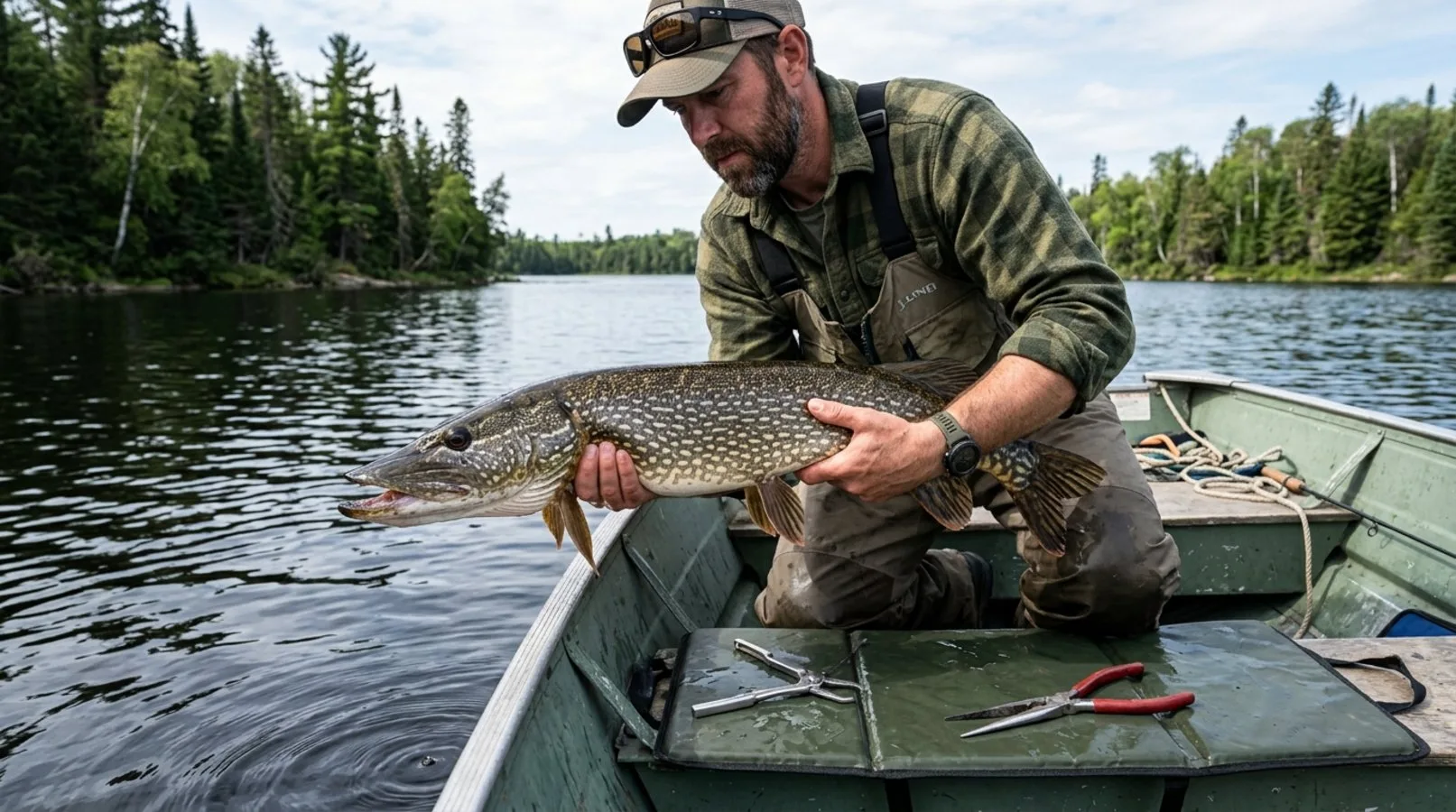
The safest way to control a pike is by using the gill-plate hold. This technique immobilizes the fish and naturally opens its mouth, making hook removal easier.
How to Safely Unhook a Northern Pike:
Keep the pike in the net while it calms down.
Firmly grip the fish using the gill-plate hold, sliding your fingers under the gill plate without touching the red gills.
Insert jaw spreaders to keep the toothy mouth open safely.
Use long-nose pliers to grasp the hook by the shank.
Push the hook back to dislodge the barb, then twist and pull it out.
Support the fish horizontally in the water until it swims away under its own power.
Safely Unhooking a Northern Pike
Protect your fingers and the fish with this essential handling technique.
- Keep the fish in the net to calm down
- Apply the gill-plate hold carefully
- Insert jaw spreaders to open the mouth
- Remove the hook with long-nose pliers
- Support horizontally for release
Catch and Release
Always support a large pike's weight horizontally; holding them vertically by the jaw or gills can cause severe internal damage. Minimize their time out of the water, keeping them submerged in the net while you prepare your camera or pliers. During autumn, pike fatten up for winter, making them heavier and more susceptible to handling stress.
Always check local fishing regulations for specific seasons, bag limits, and size restrictions before heading out, as rules vary by location. For example, the inland northern pike season in Minnesota typically opens in mid-May and closes in mid-February, while other states may offer year-round opportunities.
Frequently Asked Questions
Do I really need a wire leader for northern pike?Yes. Pike have razor-sharp teeth that easily cut through standard monofilament or fluorocarbon lines, resulting in lost lures and harmed fish.
What is the best time of year to catch northern pike?Pike can be caught year-round, but early spring right after ice-out and the cooler months of autumn are highly productive. During these times, they feed aggressively in shallower waters.
Are northern pike dangerous to handle?Their sharp teeth and gill rakers can cause deep cuts. Always use a net, a proper gill-plate hold, jaw spreaders, and long-nose pliers to protect yourself.
What size rod is best for beginner pike fishing?A 7-foot medium-heavy spinning or casting rod provides enough backbone to cast heavier lures and properly set the hook into a pike's bony mouth.