How to catch European eel
Anguilla anguilla (Linnaeus, 1758)
About European eel fishing
The European eel is an elongated, snakelike fish belonging to the family Anguillidae, possessing a cylindrical body, a protruding lower jaw, and continuous dorsal, caudal, and anal fins. Ranging widely across fresh, brackish, and marine waters, this bottom-dwelling species inhabits deep benthic zones, rivers, and coastal areas down to one thousand two hundred metres. It is a nocturnal predator with an exceptional sense of smell, feeding primarily on worms, crustaceans, and small fish. Known for its catadromous migration, mature silver eels undertake a vast journey across the Atlantic to spawn in the distant Sargasso Sea. Anglers prize this elusive species for its powerful fight and mysterious life cycle.
-
Difficulty
Medium
-
Average size
35 cm TL
-
Habitat
Freshwater, Brackish, Saltwater
-
Season
Spring, Summer, Autumn
-
Also known as
Anguille d’europe, Common eel, Eel, River eel, Silver eel, Sing eel

Continuous fin
Elongated dorsal and anal fins confluent with the caudal fin.
Pointed caudal shape
Rounded and pointed caudal fin continuous with the body.
No pelvic fins
Pelvic fins are completely absent, characteristic of anguilliforms.
European eel fishing facts
Characteristics
-
Typical size
35 cm TL (max 121.5 cm TL ) -
Typical weight
0.8 kg (max 6.6 kg ) -
Preferred temperature
3–14.5 °C -
Depth
85–1,200 m -
Longevity
23 years -
Body shape
Eel Like -
Vulnerability score
64.4
Best hours
-
Active
Dawn
First light
-
Low
Morning
After sunrise
-
Low
Midday
High sun
-
Low
Afternoon
Late day
-
Active
Dusk
Last light
-
Peak
Night
After dark
When to fish for European eel
How to catch European eel
Tips for catching European eel
Targeting this species requires patience and a nocturnal approach, as these fish rely heavily on scent rather than sight to locate food after dark. Set up along slow-flowing rivers, still waters, or margin structure such as reed beds and snags where mature specimens hide during daylight hours. Present natural scent-rich baits directly on the bottom using a sliding leger rig or a sensitive running lead setup that allows the fish to take the bait without feeling immediate resistance. Earthworms and small strips of fresh sea fish are exceptionally effective choices. Maintain a tight line with a responsive bobber or electronic bite indicator, and wait briefly before striking to ensure a secure hook hold.
Other names for European eel
Local and alternate names anglers use for European eel.
-
River eel
-
European eel
-
Weed eel
-
Common eel
-
Eel
-
Silver eel
-
Sing eel
-
Yellow eel
-
Anguille d’europe
Best equipment to catch European eel
Compare fishing methods for European eel — sized kit for each technique.
Note: Typical fish is 0.8 kg Our algorithm will suggest the best equipment for you based on this weight.
Bottom Fishing
Presenting bait or rigs on or near the lake or sea floor.
90% Effectiveness

Rod
Spinning rod
A spinning rod is a fishing rod built to carry a spinning reel under the blank. You cast lures and light baits with it from shore or a boat.
Sized for a typical fish
medium-light · 2.13 m
- Reel seat
- Spinning
- Form factor
- Multi-piece
- Action
- Fast
- Grip
- EVA

Reel
Spinning reel
A spinning reel hangs under the fishing rod and is the default reel for casting lures and light baits. Line peels off an open spool with a bail.
Sized for a typical fish
1000 · 3 kg drag · 185 g
- Spool
- Fixed
- Mount
- Under
- Drag
- Front
- Retrieve
- Manual

Line
Monofilament line
Monofilament fishing line is the everyday main line: easy to knot, cheap to replace, and stretchy enough to forgive a hard strike.
Sized for a typical fish
3.6 kg · 0.2 mm
- Visibility
- Medium
- Abrasion
- Medium
- Stretch
- High
- Sink rate
- Slow

Leader
Fluorocarbon leader
A fluorocarbon leader is the clear, fast-sinking join between a visible main line and the lure or hook.
Sized for a typical fish
4 kg · 0.2 mm · 80 cm
- Visibility
- Very low
- Abrasion
- High
- Stretch
- Low
- Sink rate
- Fast

Hook
Circle hook
A circle hook turns in the mouth and usually finds the corner of the jaw. You do not strike hard — you come tight. It includes freshwater.
Sized for a typical fish
4
- Points
- 1
- Offset
- No
- Barbed
- Yes
- Gap
- Standard
Float Fishing
Suspending bait beneath a float at a controlled depth.
70% Effectiveness
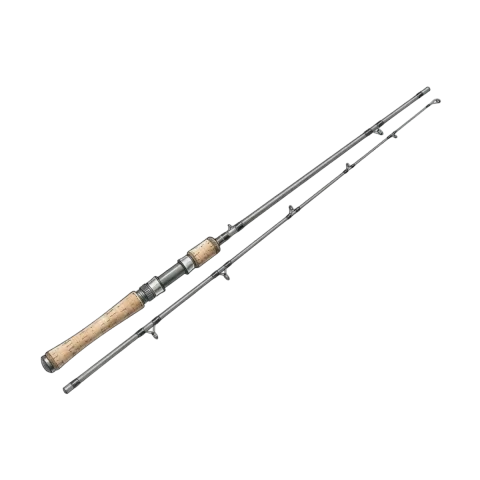
Rod
Float rod
A float rod is the all-round fishing rod for a float in rivers and still water, a step down in length from match.
Sized for a typical fish
light · 3.6 m
- Reel seat
- Spinning
- Form factor
- Multi-piece
- Action
- Moderate
- Grip
- Cork
Reel
Spinning reel
A spinning reel hangs under the fishing rod and is the default reel for casting lures and light baits. Line peels off an open spool with a bail.
Sized for a typical fish
1000 · 3 kg drag · 185 g
- Spool
- Fixed
- Mount
- Under
- Drag
- Front
- Retrieve
- Manual
Line
Monofilament line
Monofilament fishing line is the everyday main line: easy to knot, cheap to replace, and stretchy enough to forgive a hard strike.
Sized for a typical fish
3.6 kg · 0.2 mm
- Visibility
- Medium
- Abrasion
- Medium
- Stretch
- High
- Sink rate
- Slow
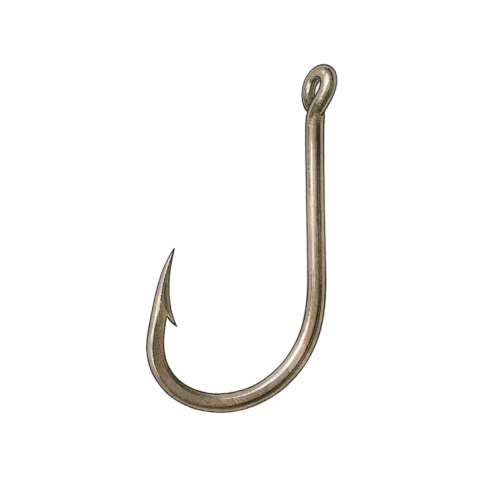
Hook
J-hook
A J-hook is the classic J-bend fishing hook for bait. You set it with a strike. Sizes are tokens such as 12 or 1/0.
Sized for a typical fish
8
- Points
- 1
- Offset
- No
- Barbed
- Yes
- Gap
- Standard
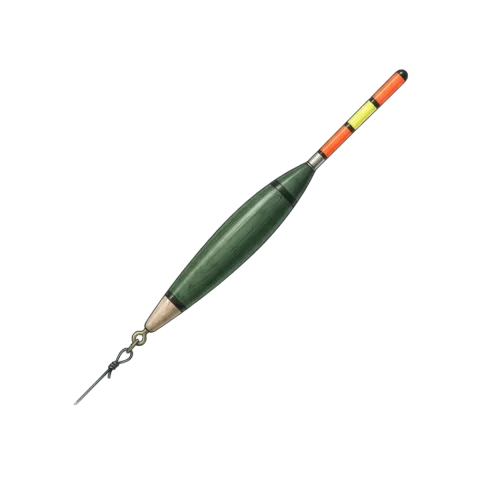
Float
Waggler
A waggler is a bottom-only attachment float for stillwaters and slow rivers. You shot it down and watch the antenna.
Sized for a typical fish
4 g
- Attachment
- Fixed
- Habitats
- Freshwater
- Methods
- Float Fishing
Best lures and baits for European eel
Ranked lures and natural baits from every method, best first.
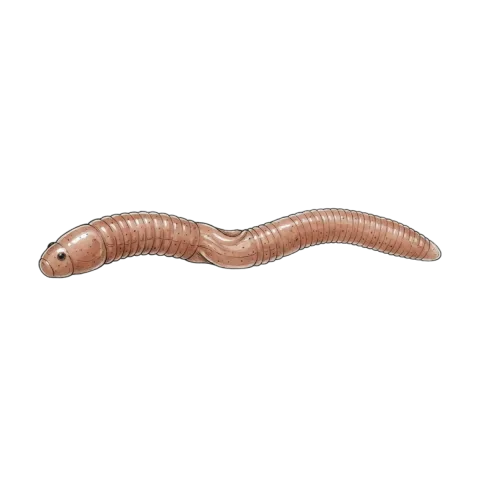
01
Worm
- Bottom Fishing
- Float Fishing
Rounded anterior end containing the mouth used for anchoring the bait on the hook.
02
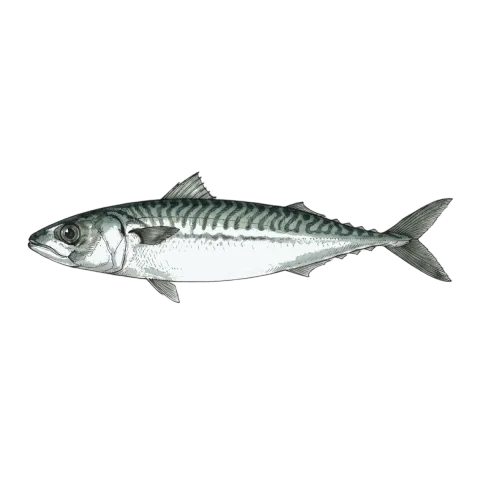
Mackerel
- Bottom Fishing
Distinctive wavy dorsal stripes provide high contrast and flash underwater.
03
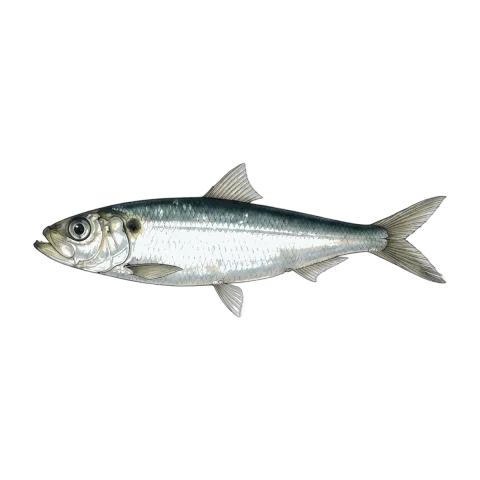
Sardine
- Bottom Fishing
Elongated silvery baitfish body releases strong scent trails.
How European eel migrates — Catadromous
Grows in fresh or brackish water and migrates to the sea to spawn. Estuaries and lower rivers fire when adults drop downstream.
1 Eggs
Sea
Spawned out at sea.
2 Larvae
→ Estuary
Drift with the currents towards the coast.
3 Juveniles
→ Fresh water
Enter estuaries, and many move on into fresh water.
4 Adults
Fresh water
Feed and grow in rivers, lakes and estuaries, often for years.
5 Spawners
→ Sea
Head downstream and out to sea to spawn.
Many only reach estuaries and the lower river; eels travel far inland.
Hover or tap a number to read each stage.
Diet and behavior of European eel
-
Diet
Carnivore -
Feeds by
Hunts animals -
Hunts
Night -
Feeds over
Intertidal -
Main prey
Baitfish · Bottom prey · Plankton
Prey and predators of European eel
Prey is what European eel eats. Predators are the animals that eat it.
That is how it feeds, and how it is hunted.
Prey
What it eats
Predators
What hunts it
Where European eel lives
Lives on or just above the bottom. Work jigs, bait, and lures along the seabed.
85–1,200 m

River mouth
Where this species lives
European eel photos for identification
Compare these photos with the catalog plate to identify the species.
Where to fish for European eel
Mapped fishing spots where European eel is recorded — open a pin for access and methods.


