Hook
J-hook
How to fish a J-hook for Float Fishing, Bottom Fishing, Spinning, Feeder Fishing, Surfcasting.
Characteristics
-
Points
1
-
Offset
No
-
Barbed
Yes
-
Gap
Standard
-
Shank
Standard
-
Weedless
No
-
Habitats
Freshwater, Saltwater, Brackish
-
Methods
Float Fishing, Bottom Fishing, Spinning, Feeder Fishing, Surfcasting
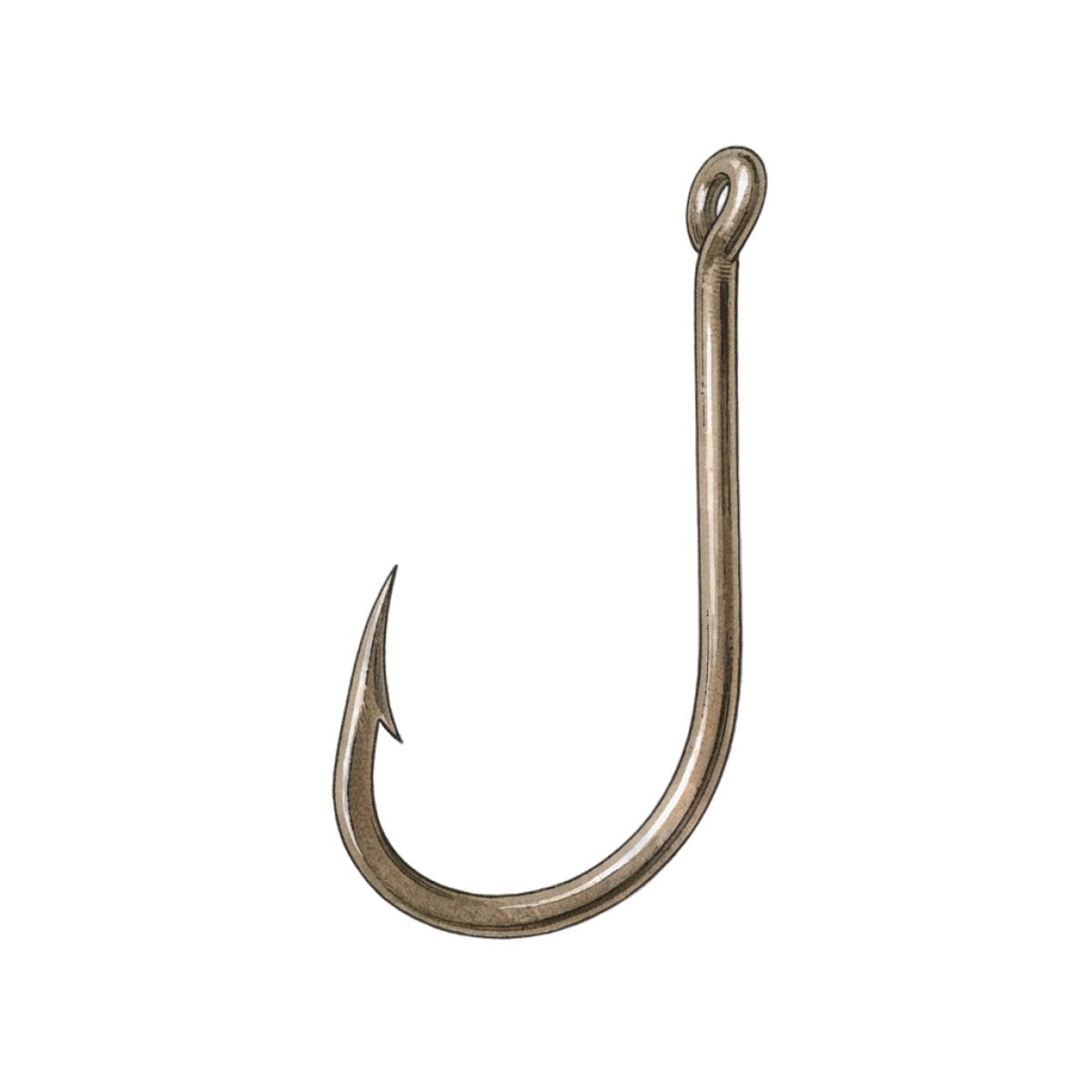
Eye
The closed loop at the top secures the fishing line or knot.
Point
The sharp tip pierces the fish securely during a strike.
Barb
The rear-facing projection prevents the hooked fish from escaping.
Bend
The curved section distributes holding pressure when fighting a fish.
What fish can you catch with a J-hook?


What is a J-hook used for?
A J-hook is the classic J-bend fishing hook for bait. You set it with a strike. Sizes are tokens such as 12 or 1/0.
How is a J-hook different from similar gear?
The J-bend is the type — not a circle hook and not a lure-replacement single. It covers float, bottom, spinning, feeder, and surf.
When should you use a J-hook?
Use it whenever you fish bait and expect to strike, from worms under a float to a surfcast lugworm.
What problems does a J-hook solve?
It is the hook most anglers already know how to set, and it holds a bait without a circle’s delayed pull.
J-hook size chart
Common sizes and ratings for this part of the kit.
- 12
- 10
- 8
- 6
- 4
- 2
- 1/0
- 2/0
- 3/0
- 4/0
- 6/0
- 8/0
- 10/0
J-hook guides and comparisons
- How to Tie a Fishing Hook: 3 Knots That Hold Three ways to tie a hook to fishing line — the Palomar, the improved clinch and the snell — and when to use each one.
- Circle Hook vs J Hook: Differences and When to Use Each Circle hooks set themselves in the corner of the mouth and suit bait fishing and catch-and-release. J hooks need a hook set and suit active fishing.
- Fishing Hook Size Chart: How Hook Sizes Work Hook sizes run backwards: a size 20 is tiny, a size 1 is large, then 1/0, 2/0 and up get bigger again. A chart by species and bait.