How to catch Atlantic bigeye
Priacanthus arenatus Cuvier, 1829
About Atlantic bigeye fishing
The Atlantic bigeye is a small marine ray-finned fish belonging to the family Priacanthidae, easily recognised by its deep, compressed body and striking reddish-orange colouration matched by large luminous eyes. It grows up to fifty centimetres in total length with a common length of thirty-five centimetres, inhabiting marine waters at depths ranging from ten to two hundred metres over rocky bottoms and coral reef slopes. Operating primarily as a nocturnal predator, it forms small aggregations near the seabed during daylight hours before rising to feed on small fish, crustaceans, and invertebrate larvae after dark. Highly regarded for its excellent culinary quality, it is taken mainly as a minor commercial catch and occasionally by recreational anglers.
-
Difficulty
Medium
-
Average size
35 cm TL
-
Market value
High
-
Habitat
Saltwater
-
Season
Summer, Autumn
-
Also known as
Atlantic big-eye, Balarton, Balatan, Bigeye, Big-eye, Catalufa

Enormous Eye
Extremely large eye characteristic of nocturnal bigeye species.
Upturned Mouth
Strongly oblique mouth extending upwards helps identify predatory habits.
Spotted Pelvic Fins
Distinct dark spots on the ventral fins distinguish this bigeye.
Bright Red Color
Intense overall red coloration marks it as a reef-dwelling bigeye.
Atlantic bigeye fishing facts
Characteristics
-
Typical size
35 cm TL (max 50 cm TL ) -
Typical weight
0.5 kg (max 2.8 kg ) -
Preferred temperature
16.7–27.8 °C -
Depth
10–200 m -
Body shape
Fusiform / Normal -
Commercial?
-
Vulnerability score
24.6
Best hours
-
Active
Dawn
First light
-
Low
Morning
After sunrise
-
Low
Midday
High sun
-
Low
Afternoon
Late day
-
Active
Dusk
Last light
-
Peak
Night
After dark
When to fish for Atlantic bigeye
How to catch Atlantic bigeye
Tips for catching Atlantic bigeye
Targeting the Atlantic bigeye requires night fishing sessions around deep reef edges, drop-offs, and rocky structures where these nocturnal hunters congregate near the bottom. Use a sensitive medium spinning outfit paired with an abrasion-resistant fluorocarbon leader and minimal lead weight to present natural baits like cut squid or shrimp right on or just above the seabed with subtle lifts and pauses. Slow-pitch jigging with small metal jigs or weighted bucktails worked close to the substrate during dark hours also provokes aggressive strikes from these large-eyed predators.
Other names for Atlantic bigeye
Local and alternate names anglers use for Atlantic bigeye.
-
Atlantic bigeye
-
Moonshine snapper
-
Johnny diggens
-
Glasseye snapper
-
Common bigeye
-
Catalufa
-
Big-eye
-
Bigeye
-
Balatan
-
Balarton
-
Atlantic big-eye
-
Glasseye
-
Goggle eye
-
Moonshine conga
-
Red bigeye
Best equipment to catch Atlantic bigeye
Compare fishing methods for Atlantic bigeye — sized kit for each technique.
Note: Typical fish is 0.5 kg Our algorithm will suggest the best equipment for you based on this weight.
Bottom Fishing
Presenting bait or rigs on or near the lake or sea floor.
90% Effectiveness

Rod
Spinning rod
A spinning rod is a fishing rod built to carry a spinning reel under the blank. You cast lures and light baits with it from shore or a boat.
Sized for a typical fish
light · 2.1 m
- Reel seat
- Spinning
- Form factor
- Multi-piece
- Action
- Fast
- Grip
- EVA

Reel
Spinning reel
A spinning reel hangs under the fishing rod and is the default reel for casting lures and light baits. Line peels off an open spool with a bail.
Sized for a typical fish
1000 · 3 kg drag · 185 g
- Spool
- Fixed
- Mount
- Under
- Drag
- Front
- Retrieve
- Manual

Line
Monofilament line
Monofilament fishing line is the everyday main line: easy to knot, cheap to replace, and stretchy enough to forgive a hard strike.
Sized for a typical fish
2.5 kg · 0.16 mm
- Visibility
- Medium
- Abrasion
- Medium
- Stretch
- High
- Sink rate
- Slow

Leader
Fluorocarbon leader
A fluorocarbon leader is the clear, fast-sinking join between a visible main line and the lure or hook.
Sized for a typical fish
4 kg · 0.2 mm · 80 cm
- Visibility
- Very low
- Abrasion
- High
- Stretch
- Low
- Sink rate
- Fast

Hook
Circle hook
A circle hook turns in the mouth and usually finds the corner of the jaw. You do not strike hard — you come tight. It includes freshwater.
Sized for a typical fish
4
- Points
- 1
- Offset
- No
- Barbed
- Yes
- Gap
- Standard
Slow-Pitch Jigging
Working a slow-pitch jig with a rhythmic lift-and-fall from a boat.
75% Effectiveness
Rod
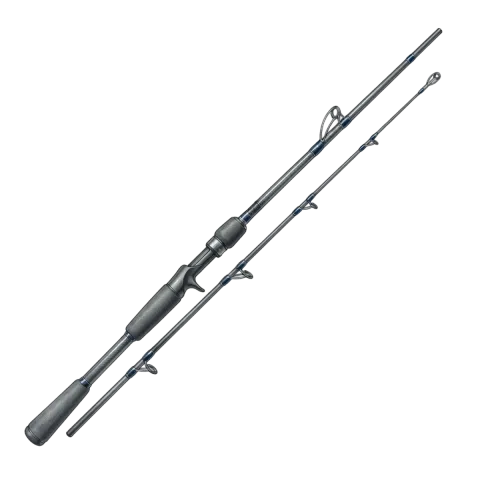
Slow pitch jigging rod
A slow pitch jigging rod is a parabolic boat rod that flicks a slow-pitch jig into a wide, falling glide.
Sized for a typical fish
medium · 1.83 m
- Reel seat
- Casting
- Form factor
- One-piece
- Action
- Moderate
- Grip
- EVA
Reel
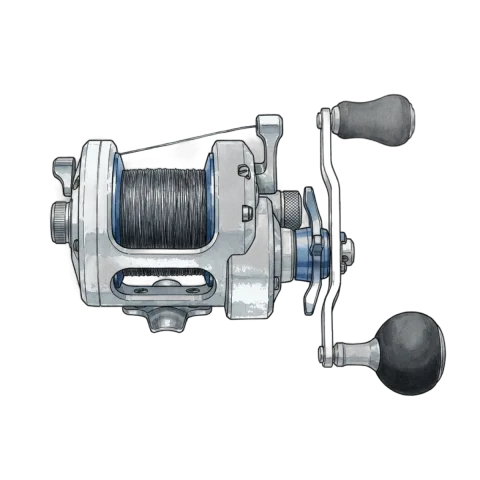
Jigging reel
A jigging reel is a compact, high-speed conventional for working metal jigs. A short retrieve picks up slack fast.
Sized for a typical fish
10 · 10 kg drag
- Spool
- Revolving
- Mount
- Over
- Drag
- Star
- Retrieve
- Manual

Line
Braided line
Braided fishing line is the thin, no-stretch main for long casts, jigging, and feeling every tick on the retrieve.
Sized for a typical fish
6 kg · 0.1 mm
- Visibility
- High
- Abrasion
- Low
- Stretch
- None
- Sink rate
- Floats
Jigging
Working vertical lures with an active up-and-down motion.
60% Effectiveness
Rod
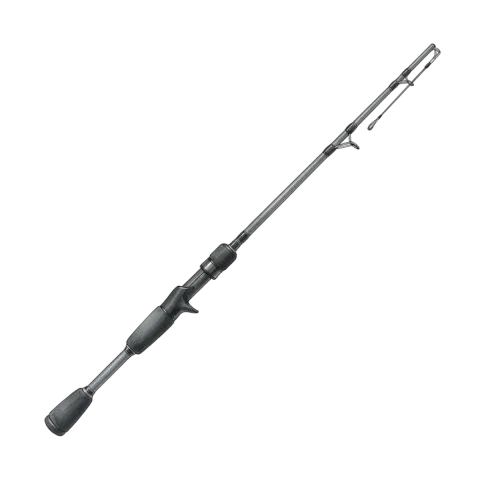
Jigging rod
A jigging rod is the short, powerful fishing rod for working a metal jig up through the column, including freshwater jigging.
Sized for a typical fish
heavy · 1.52 m
- Reel seat
- Casting
- Form factor
- One-piece
- Action
- Fast
- Grip
- EVA
Reel
Jigging reel
A jigging reel is a compact, high-speed conventional for working metal jigs. A short retrieve picks up slack fast.
Sized for a typical fish
10 · 10 kg drag
- Spool
- Revolving
- Mount
- Over
- Drag
- Star
- Retrieve
- Manual
Line
Braided line
Braided fishing line is the thin, no-stretch main for long casts, jigging, and feeling every tick on the retrieve.
Sized for a typical fish
6 kg · 0.1 mm
- Visibility
- High
- Abrasion
- Low
- Stretch
- None
- Sink rate
- Floats
Leader
Fluorocarbon leader
A fluorocarbon leader is the clear, fast-sinking join between a visible main line and the lure or hook.
Sized for a typical fish
7 kg · 0.3 mm · 90 cm
- Visibility
- Very low
- Abrasion
- High
- Stretch
- Low
- Sink rate
- Fast
Best lures and baits for Atlantic bigeye
Ranked lures and natural baits from every method, best first.
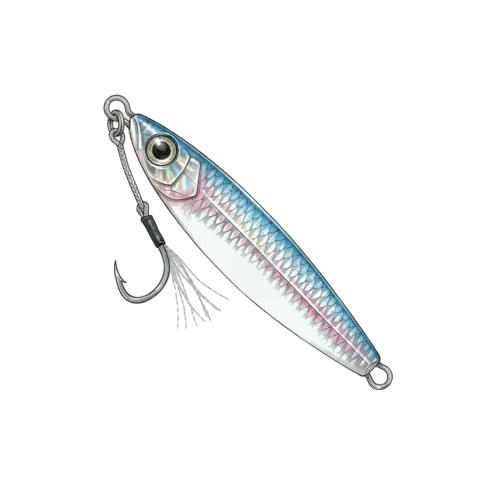
01
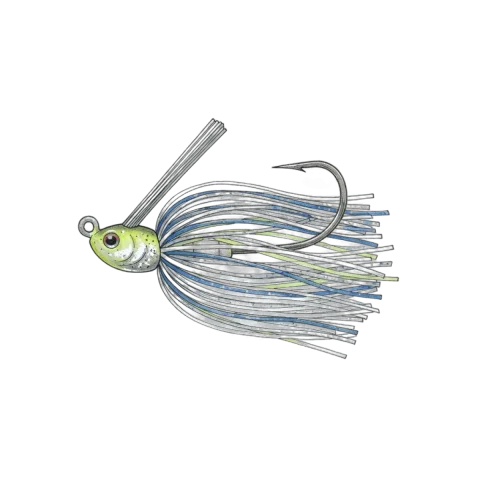
Casting jig
- Bottom Fishing
A casting jig you hop, drag, and swim on the bottom.
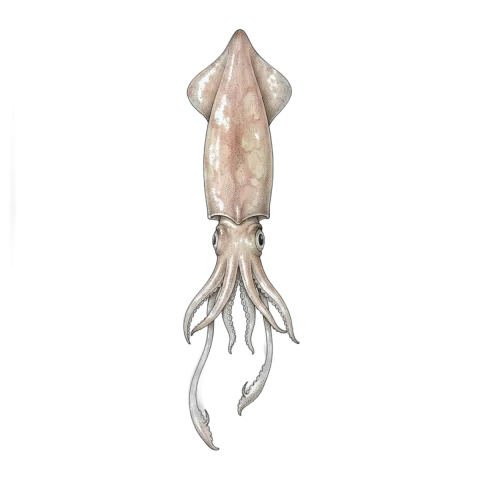
02
Squid
- Bottom Fishing
Elongated muscular body holds internal organs and secretes scent in the water.
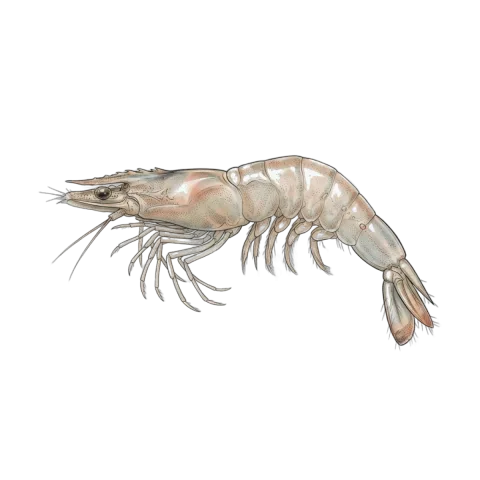
03
Shrimp
- Bottom Fishing
Translucent segmented carapace protects the body.
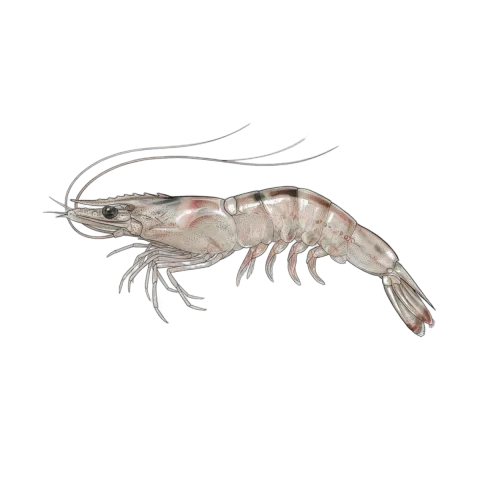
04
Prawn
- Bottom Fishing
Powerful fan-shaped tail propels the prawn backward when escaping predatory fish.
05
Slow pitch jig
- Slow-Pitch Jigging
A flat-sided jig built for slow-pitch jigging.
06
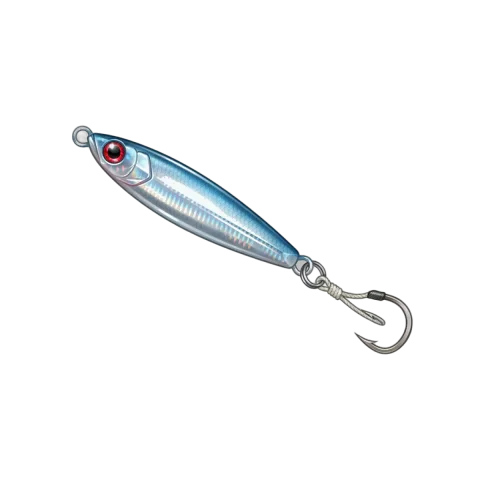
Metal jig
- Jigging
A long metal lure for speed-jigging the deep column.
Diet and behavior of Atlantic bigeye
-
Diet
Top predator -
Feeds by
Hunts animals -
Hunts
Night -
Feeds over
Hard bottom · Coral reefs -
Main prey
Baitfish · Bottom prey
Prey and predators of Atlantic bigeye
Prey is what Atlantic bigeye eats. Predators are the animals that eat it.
That is how it feeds, and how it is hunted.
Prey
What it eats
Predators
What hunts it
Fish
Where Atlantic bigeye lives
Tied to reefs and rocky structure in shallow coastal water.
10–200 m · usually 15–100 m

Where this species lives
Atlantic bigeye photos for identification
Compare these photos with the catalog plate to identify the species.
Where to fish for Atlantic bigeye
Mapped fishing spots where Atlantic bigeye is recorded — open a pin for access and methods.

