How to catch Australian salmon
Arripis trutta (Forster, 1801)
About Australian salmon fishing
The Australian salmon is a streamlined pelagic neritic fish belonging to the family Arripidae, featuring a fusiform body with dark bluish-green upper flanks and silvery white underneath. It reaches a maximum recorded total length of 89 centimetres and a top weight of 9.4 kilograms, with common adults measuring around 47 centimetres. Inhabiting coastal shelf waters, estuaries, and exposed surf beaches down to depths of 39 metres, this migratory species forms large active schools that hunt small pelagic fish and crustaceans. Highly regarded as a powerful sport fish, it is frequently targeted by recreational anglers along coastal areas for its exceptional fighting endurance and acrobatic surface leaps.
-
Difficulty
Medium
-
Average size
47 cm TL
-
Market value
Very high
-
Habitat
Brackish, Saltwater
-
Season
Spring, Summer, Autumn, Winter
-
Also known as
Bay trout, Black back, Black-backed salmon, Buck, Buck salmon, Cocky salmon

Forked caudal shape
Forked tail fin structure characteristic of active pelagic swimming.
Terminal mouth
Terminal mouth position aids in midwater prey capture.
Straight forehead
Straight dorsal profile leading from snout to dorsal fin.
Indistinct lateral spots
Irregular dark spots arranged in rows along upper flanks.
Australian salmon fishing facts
Characteristics
-
Typical size
47 cm TL (max 89 cm TL ) -
Typical weight
1.5 kg (max 9.4 kg ) -
Preferred temperature
15.6–22.3 °C -
Depth
30–39 m -
Longevity
26 years -
Body shape
Fusiform / Normal -
Commercial?
-
Vulnerability score
37.4
Best hours
-
Peak
Dawn
First light
-
Active
Morning
After sunrise
-
Low
Midday
High sun
-
Active
Afternoon
Late day
-
Peak
Dusk
Last light
-
Low
Night
After dark
When to fish for Australian salmon
How to catch Australian salmon
Tips for catching Australian salmon
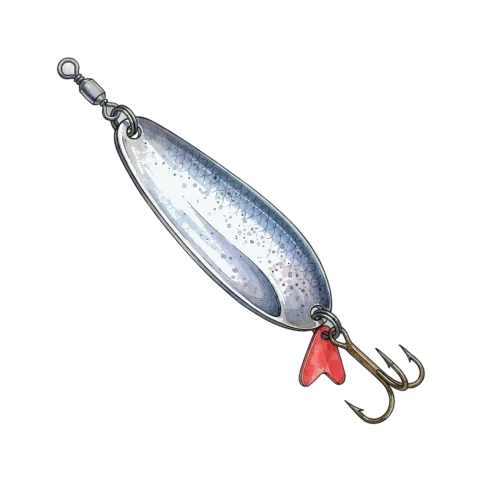
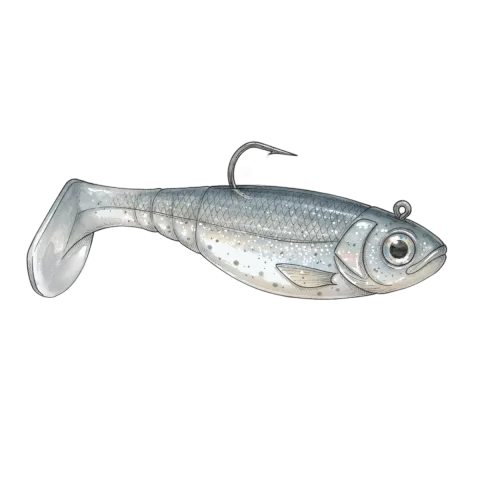
To successfully target this energetic schooling predator, focus your efforts around turbulent ocean surf beaches, deep coastal gutters, and rocky headlands where water movement concentrates baitfish. Anglers achieve the best results by casting shiny metal spoons or small bouncing soft plastics on high-speed erratic retrieves that mimic fleeing whitebait or pilchards. When surfcasting from sandy shores, presenting a fresh pilchard or squid strip on a paternoster rig into deep channels is exceptionally effective. Plan sessions around early morning or late afternoon light windows when visibility aids visual hunting, and watch for diving seabirds signalling active feeding packs crashing into surface bait balls.
Other names for Australian salmon
Local and alternate names anglers use for Australian salmon.
-
Australian salmon
-
Kahawai
-
Salmon trout
-
Newfish
-
Buck salmon
-
Buck
-
Black-backed salmon
-
Black back
-
Bay trout
-
Kermadec kahawai
-
Cocky salmon
-
Native salmon
-
Colonial salmon
-
Salmon
-
Eastern Australian salmon
-
Three kings
Best equipment to catch Australian salmon
Compare fishing methods for Australian salmon — sized kit for each technique.
Note: Typical fish is 1.5 kg Our algorithm will suggest the best equipment for you based on this weight.
Spinning
Casting and retrieving lures with a spinning rod and reel.
95% Effectiveness

Rod
Spinning rod
A spinning rod is a fishing rod built to carry a spinning reel under the blank. You cast lures and light baits with it from shore or a boat.
Sized for a typical fish
medium · 2.13 m
- Reel seat
- Spinning
- Form factor
- Multi-piece
- Action
- Fast
- Grip
- EVA

Reel
Spinning reel
A spinning reel hangs under the fishing rod and is the default reel for casting lures and light baits. Line peels off an open spool with a bail.
Sized for a typical fish
1000 · 3 kg drag · 185 g
- Spool
- Fixed
- Mount
- Under
- Drag
- Front
- Retrieve
- Manual

Line
Braided line
Braided fishing line is the thin, no-stretch main for long casts, jigging, and feeling every tick on the retrieve.
Sized for a typical fish
6 kg · 0.1 mm
- Visibility
- High
- Abrasion
- Low
- Stretch
- None
- Sink rate
- Floats

Leader
Fluorocarbon leader
A fluorocarbon leader is the clear, fast-sinking join between a visible main line and the lure or hook.
Sized for a typical fish
7 kg · 0.3 mm · 90 cm
- Visibility
- Very low
- Abrasion
- High
- Stretch
- Low
- Sink rate
- Fast
Surfcasting
Long-range bait or lure casting from an open beach or surf.
90% Effectiveness
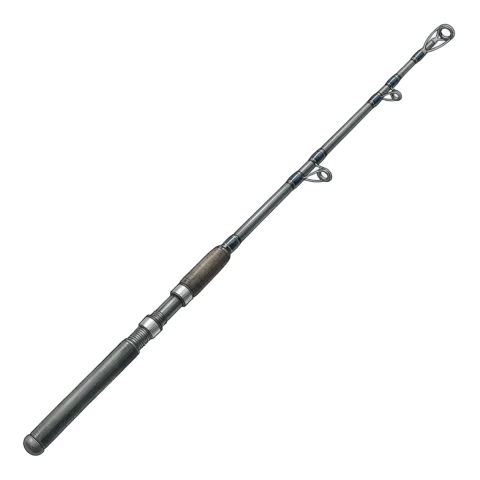
Rod
Surfcasting rod
A surfcasting rod is the long beach fishing rod for punching bait past the breakers. Length and a moderate-fast action load for distance.
Sized for a typical fish
medium-heavy · 3.6 m
- Reel seat
- Spinning
- Form factor
- Multi-piece
- Action
- Moderate-fast
- Grip
- EVA
Reel
Spinning reel
A spinning reel hangs under the fishing rod and is the default reel for casting lures and light baits. Line peels off an open spool with a bail.
Sized for a typical fish
1000 · 3 kg drag · 185 g
- Spool
- Fixed
- Mount
- Under
- Drag
- Front
- Retrieve
- Manual
Line
Braided line
Braided fishing line is the thin, no-stretch main for long casts, jigging, and feeling every tick on the retrieve.
Sized for a typical fish
6 kg · 0.1 mm
- Visibility
- High
- Abrasion
- Low
- Stretch
- None
- Sink rate
- Floats
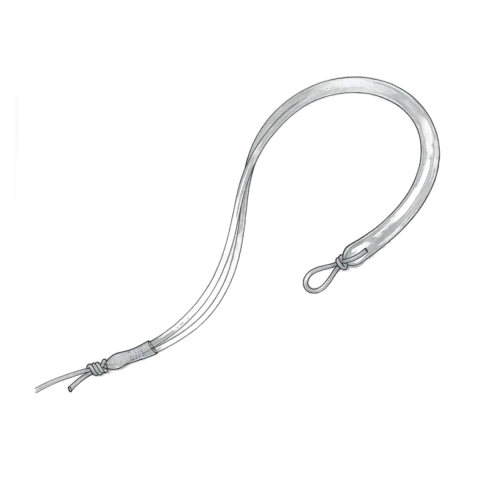
Leader
Shock leader
A shock leader is a thick mono or tapered section that takes the cast. Carp shock is heavy (around 0.65 to 0.75 mm), not thin fluorocarbon.
Sized for a typical fish
22.5 kg · 0.65 mm · 900 cm
- Visibility
- Medium
- Abrasion
- High
- Stretch
- High
- Sink rate
- Slow
Trolling
Drawing lures or baits behind a moving boat.
75% Effectiveness
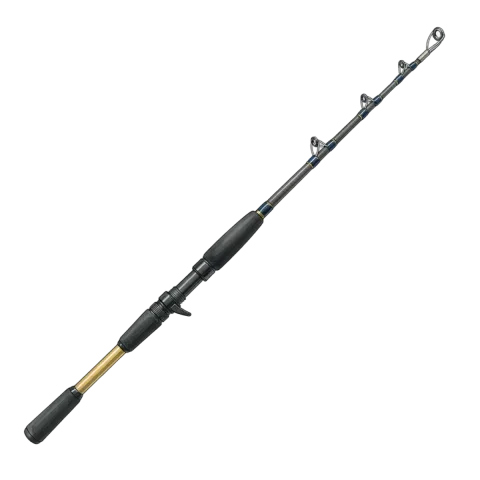
Rod
Trolling rod
A trolling rod is built to sit in a holder and pull a lure or bait at speed. Moderate action so the rod, not the reel, plays the fish.
Sized for a typical fish
medium · 1.83 m
- Reel seat
- Casting
- Form factor
- One-piece
- Action
- Moderate
- Grip
- EVA
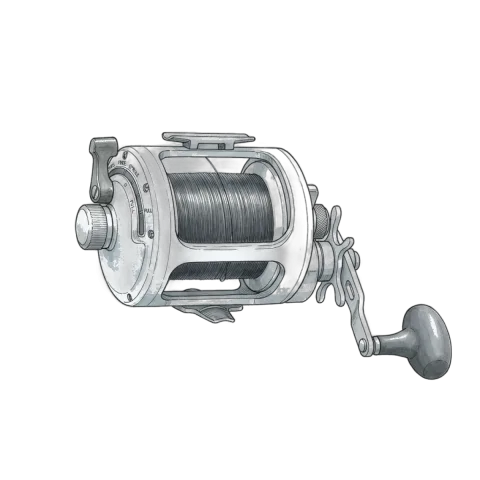
Reel
Trolling reel
A trolling reel is the dedicated lever-drag fishing reel for pulling lures behind a boat, often in a holder all day.
Sized for a typical fish
20 · 15 kg drag
- Spool
- Revolving
- Mount
- Over
- Drag
- Lever
- Retrieve
- Manual
Line
Braided line
Braided fishing line is the thin, no-stretch main for long casts, jigging, and feeling every tick on the retrieve.
Sized for a typical fish
6 kg · 0.1 mm
- Visibility
- High
- Abrasion
- Low
- Stretch
- None
- Sink rate
- Floats
Leader
Fluorocarbon leader
A fluorocarbon leader is the clear, fast-sinking join between a visible main line and the lure or hook.
Sized for a typical fish
7 kg · 0.3 mm · 90 cm
- Visibility
- Very low
- Abrasion
- High
- Stretch
- Low
- Sink rate
- Fast
Best lures and baits for Australian salmon
Ranked lures and natural baits from every method, best first.
02
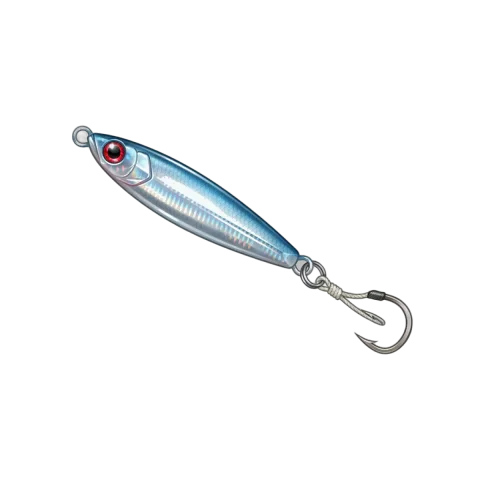
Metal jig
- Spinning
A long metal lure for speed-jigging the deep column.
04
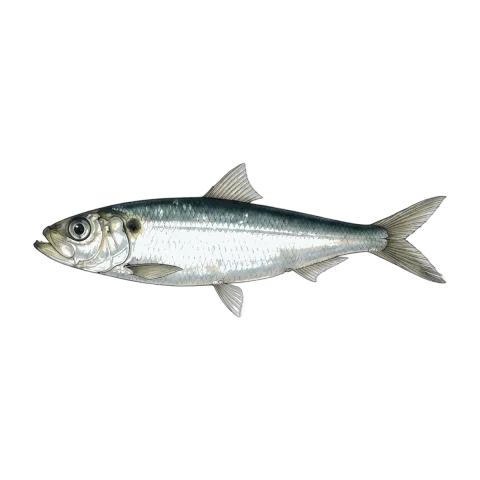
Sardine
- Surfcasting
Elongated silvery baitfish body releases strong scent trails.
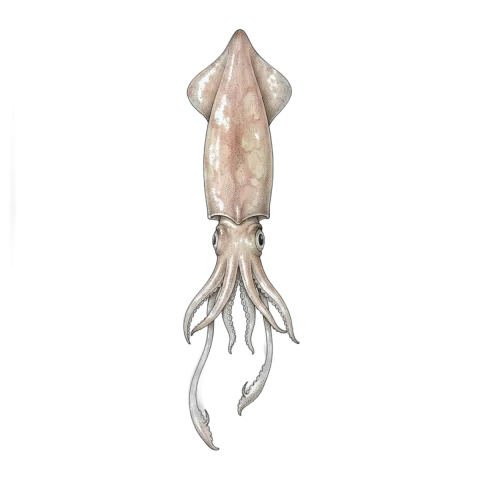
05
Squid
- Surfcasting
Elongated muscular body holds internal organs and secretes scent in the water.
How Australian salmon migrates — Anadromous
Grows at sea and swims into rivers to spawn. Target the run as fish leave the ocean and push upstream.
1 Eggs
Fresh water
Laid in fresh water, usually well up the river.
2 Juveniles
→ Sea
Grow in the river, then head downstream to the sea.
3 Adults
Sea
Feed and grow at sea.
4 Spawners
→ Fresh water
Run back up the river to spawn.
Some populations never go to sea and complete the cycle in rivers and lakes.
Hover or tap a number to read each stage.
Diet and behavior of Australian salmon
-
Diet
Top predator -
Feeds by
Hunts animals -
Hunts
Dawn · Dusk -
Feeds over
Soft bottom · Hard bottom · Seagrass · Coral reefs · Mangroves -
Main prey
Baitfish · Bottom prey -
Used as bait
Yes
Prey and predators of Australian salmon
Prey is what Australian salmon eats. Predators are the animals that eat it.
That is how it feeds, and how it is hunted.
Prey
What it eats
Predators
What hunts it
Fish
Where Australian salmon lives
Pelagic over the continental shelf — coastal open water, not the deep ocean.
30–39 m

Estuary
Where this species lives
Australian salmon photos for identification
Compare these photos with the catalog plate to identify the species.
Where to fish for Australian salmon
Mapped fishing spots where Australian salmon is recorded — open a pin for access and methods.


