How to catch Bigeye trevally
Caranx sexfasciatus Quoy & Gaimard, 1825
About Bigeye trevally fishing
The bigeye trevally is a robust marine fish belonging to the jack family Carangidae, recognized by its deep fusiform body, large reflective eyes, and a distinct dark opercular spot. Growing up to 120 cm in total length and 18 kg, this powerful predator inhabits tropical and subtropical coastal waters, reef complexes, and estuaries down to 146 metres. Juveniles frequently venture into shallow mangroves and rivers, while adults form dense daytime schools before dispersing to hunt solitarily at night. Their diet consists primarily of small fish, crustaceans, and cephalopods. Highly regarded by light-tackle and big-game anglers alike, the species offers exceptional sport through its explosive strikes and vigorous fights.
-
Difficulty
Medium
-
Average size
60 cm FL
-
Market value
High
-
Habitat
Freshwater, Brackish, Saltwater
-
Season
Spring, Summer, Autumn, Winter
-
Also known as
Banded cavalla, Bigeye jack, Bigeye kingfish, Big-eye kingfish, Big-eye trevally, Dusk jack

Caudal shape
Deeply forked caudal fin helps distinguish carangids.
Mouth position
Terminal mouth position identifies the predatory profile.
Caudal-fin marks
Colored margins on caudal fin distinguish the species.
Bigeye trevally fishing facts
Characteristics
-
Typical size
60 cm FL (max 120 cm TL ) -
Typical weight
2.5 kg (max 18 kg ) -
Preferred temperature
22.3–28.9 °C -
Depth
0–146 m -
Longevity
11 years -
Body shape
Fusiform / Normal -
Commercial?
-
Vulnerability score
45.2
Best hours
-
Active
Dawn
First light
-
Low
Morning
After sunrise
-
Low
Midday
High sun
-
Low
Afternoon
Late day
-
Peak
Dusk
Last light
-
Peak
Night
After dark
When to fish for Bigeye trevally
How to catch Bigeye trevally
Tips for catching Bigeye trevally
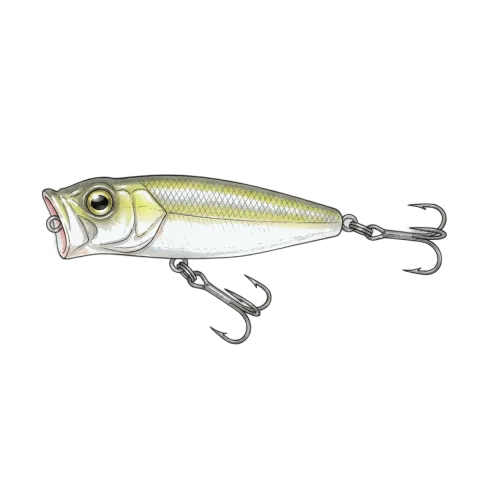
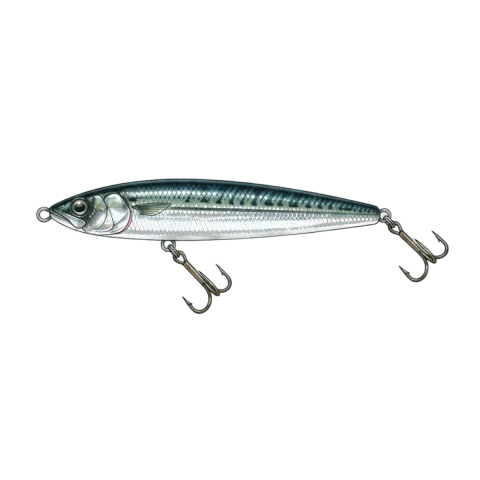
Target these powerful predators around deep reef drop-offs, current-swept channel edges, and rocky headlands where schools congregate during daylight hours. Because they transition into aggressive nocturnal hunters, switching to aggressive presentations after sunset greatly increases success. Cast heavy metal jigs or surface poppers near structural drop-offs during moving tides to provoke vicious reaction strikes. When targeting them with natural presentations, drift live baits or fresh squid close to the bottom near underwater ledges. Equip yourself with robust saltwater gear featuring strong drag systems, as these fish make lightning-fast initial runs and use reef structures to attempt escape.
Other names for Bigeye trevally
Local and alternate names anglers use for Bigeye trevally.
-
Bigeye trevally
-
Big-eye kingfish
-
Bigeye kingfish
-
Horse-eye jack
-
Horse mackerel trevally
-
Tille jack
-
Turrum
-
Orange-spotted trevally
-
Six banded trevally
-
Great trevally
-
Dusky jack
-
Giant trevally
-
Dusk jack
-
Bigeye jack
-
Jack
-
Kingfish
-
Sixband trevally
-
Horse mackerel
Best equipment to catch Bigeye trevally
Compare fishing methods for Bigeye trevally — sized kit for each technique.
Note: Typical fish is 2.5 kg Our algorithm will suggest the best equipment for you based on this weight.
Spinning
Casting and retrieving lures with a spinning rod and reel.
90% Effectiveness

Rod
Spinning rod
A spinning rod is a fishing rod built to carry a spinning reel under the blank. You cast lures and light baits with it from shore or a boat.
Sized for a typical fish
medium · 2.13 m
- Reel seat
- Spinning
- Form factor
- Multi-piece
- Action
- Fast
- Grip
- EVA

Reel
Spinning reel
A spinning reel hangs under the fishing rod and is the default reel for casting lures and light baits. Line peels off an open spool with a bail.
Sized for a typical fish
1000 · 3 kg drag · 185 g
- Spool
- Fixed
- Mount
- Under
- Drag
- Front
- Retrieve
- Manual

Line
Braided line
Braided fishing line is the thin, no-stretch main for long casts, jigging, and feeling every tick on the retrieve.
Sized for a typical fish
6 kg · 0.1 mm
- Visibility
- High
- Abrasion
- Low
- Stretch
- None
- Sink rate
- Floats

Leader
Fluorocarbon leader
A fluorocarbon leader is the clear, fast-sinking join between a visible main line and the lure or hook.
Sized for a typical fish
7 kg · 0.3 mm · 90 cm
- Visibility
- Very low
- Abrasion
- High
- Stretch
- Low
- Sink rate
- Fast
Popping
Working surface poppers or stickbaits for inshore and tropical predators.
85% Effectiveness
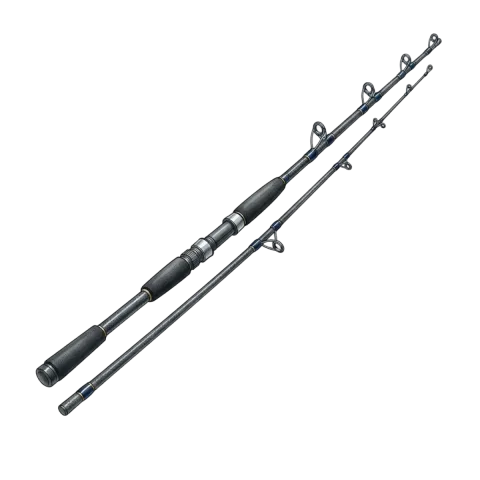
Rod
Offshore rod
An offshore rod is the one-piece boat fishing rod for deep jigging, trolling, and live bait in open salt water.
Sized for a typical fish
heavy · 1.68 m
- Reel seat
- Casting
- Form factor
- One-piece
- Action
- Fast
- Grip
- EVA
Reel
Spinning reel
A spinning reel hangs under the fishing rod and is the default reel for casting lures and light baits. Line peels off an open spool with a bail.
Sized for a typical fish
1000 · 3 kg drag · 185 g
- Spool
- Fixed
- Mount
- Under
- Drag
- Front
- Retrieve
- Manual
Line
Braided line
Braided fishing line is the thin, no-stretch main for long casts, jigging, and feeling every tick on the retrieve.
Sized for a typical fish
6 kg · 0.1 mm
- Visibility
- High
- Abrasion
- Low
- Stretch
- None
- Sink rate
- Floats
Leader
Fluorocarbon leader
A fluorocarbon leader is the clear, fast-sinking join between a visible main line and the lure or hook.
Sized for a typical fish
7 kg · 0.3 mm · 90 cm
- Visibility
- Very low
- Abrasion
- High
- Stretch
- Low
- Sink rate
- Fast
Jigging
Working vertical lures with an active up-and-down motion.
80% Effectiveness
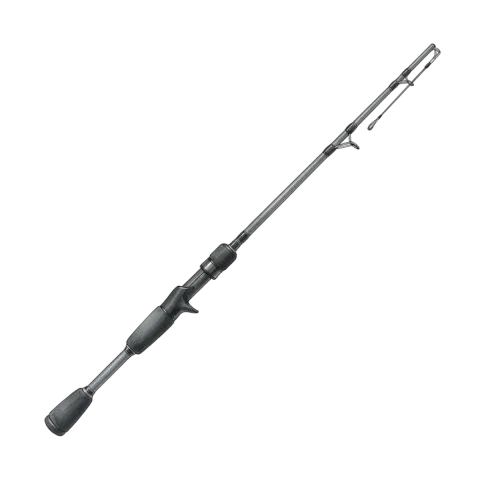
Rod
Jigging rod
A jigging rod is the short, powerful fishing rod for working a metal jig up through the column, including freshwater jigging.
Sized for a typical fish
heavy · 1.52 m
- Reel seat
- Casting
- Form factor
- One-piece
- Action
- Fast
- Grip
- EVA
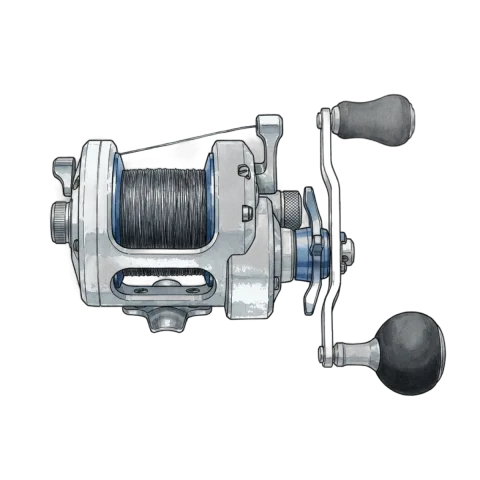
Reel
Jigging reel
A jigging reel is a compact, high-speed conventional for working metal jigs. A short retrieve picks up slack fast.
Sized for a typical fish
10 · 10 kg drag
- Spool
- Revolving
- Mount
- Over
- Drag
- Star
- Retrieve
- Manual
Line
Braided line
Braided fishing line is the thin, no-stretch main for long casts, jigging, and feeling every tick on the retrieve.
Sized for a typical fish
6 kg · 0.1 mm
- Visibility
- High
- Abrasion
- Low
- Stretch
- None
- Sink rate
- Floats
Leader
Fluorocarbon leader
A fluorocarbon leader is the clear, fast-sinking join between a visible main line and the lure or hook.
Sized for a typical fish
7 kg · 0.3 mm · 90 cm
- Visibility
- Very low
- Abrasion
- High
- Stretch
- Low
- Sink rate
- Fast
Bottom Fishing
Presenting bait or rigs on or near the lake or sea floor.
75% Effectiveness
Rod
Spinning rod
A spinning rod is a fishing rod built to carry a spinning reel under the blank. You cast lures and light baits with it from shore or a boat.
Sized for a typical fish
medium · 2.13 m
- Reel seat
- Spinning
- Form factor
- Multi-piece
- Action
- Fast
- Grip
- EVA
Reel
Spinning reel
A spinning reel hangs under the fishing rod and is the default reel for casting lures and light baits. Line peels off an open spool with a bail.
Sized for a typical fish
1000 · 3 kg drag · 185 g
- Spool
- Fixed
- Mount
- Under
- Drag
- Front
- Retrieve
- Manual

Line
Monofilament line
Monofilament fishing line is the everyday main line: easy to knot, cheap to replace, and stretchy enough to forgive a hard strike.
Sized for a typical fish
7.5 kg · 0.3 mm
- Visibility
- Medium
- Abrasion
- Medium
- Stretch
- High
- Sink rate
- Slow
Leader
Fluorocarbon leader
A fluorocarbon leader is the clear, fast-sinking join between a visible main line and the lure or hook.
Sized for a typical fish
9 kg · 0.35 mm · 100 cm
- Visibility
- Very low
- Abrasion
- High
- Stretch
- Low
- Sink rate
- Fast

Hook
Circle hook
A circle hook turns in the mouth and usually finds the corner of the jaw. You do not strike hard — you come tight. It includes freshwater.
Sized for a typical fish
2
- Points
- 1
- Offset
- No
- Barbed
- Yes
- Gap
- Standard
Live Baiting
Fishing a live baitfish or live invertebrate as the primary presentation.
70% Effectiveness
Rod
Spinning rod
A spinning rod is a fishing rod built to carry a spinning reel under the blank. You cast lures and light baits with it from shore or a boat.
Sized for a typical fish
medium · 2.13 m
- Reel seat
- Spinning
- Form factor
- Multi-piece
- Action
- Fast
- Grip
- EVA
Reel
Spinning reel
A spinning reel hangs under the fishing rod and is the default reel for casting lures and light baits. Line peels off an open spool with a bail.
Sized for a typical fish
1000 · 3 kg drag · 185 g
- Spool
- Fixed
- Mount
- Under
- Drag
- Front
- Retrieve
- Manual
Line
Monofilament line
Monofilament fishing line is the everyday main line: easy to knot, cheap to replace, and stretchy enough to forgive a hard strike.
Sized for a typical fish
7.5 kg · 0.3 mm
- Visibility
- Medium
- Abrasion
- Medium
- Stretch
- High
- Sink rate
- Slow
Leader
Fluorocarbon leader
A fluorocarbon leader is the clear, fast-sinking join between a visible main line and the lure or hook.
Sized for a typical fish
9 kg · 0.35 mm · 100 cm
- Visibility
- Very low
- Abrasion
- High
- Stretch
- Low
- Sink rate
- Fast
Hook
Circle hook
A circle hook turns in the mouth and usually finds the corner of the jaw. You do not strike hard — you come tight. It includes freshwater.
Sized for a typical fish
2
- Points
- 1
- Offset
- No
- Barbed
- Yes
- Gap
- Standard
Best lures and baits for Bigeye trevally
Ranked lures and natural baits from every method, best first.
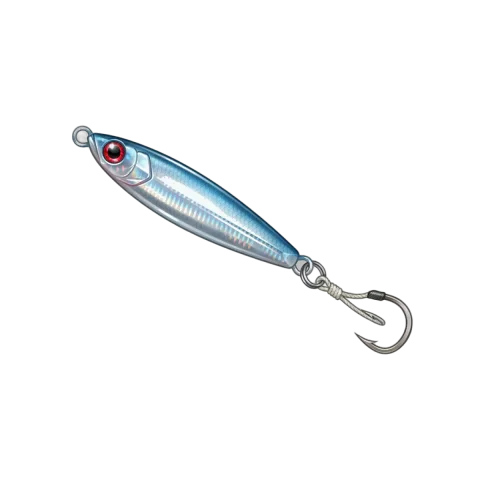
02
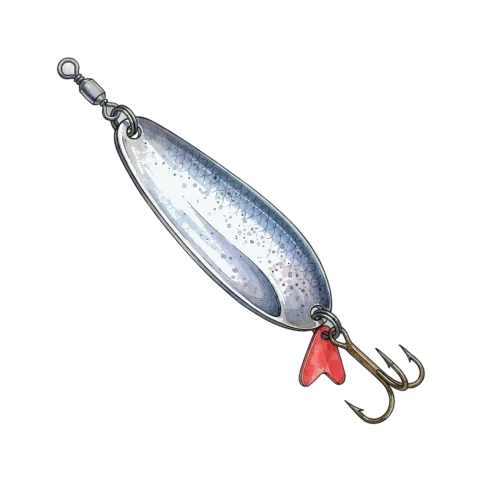
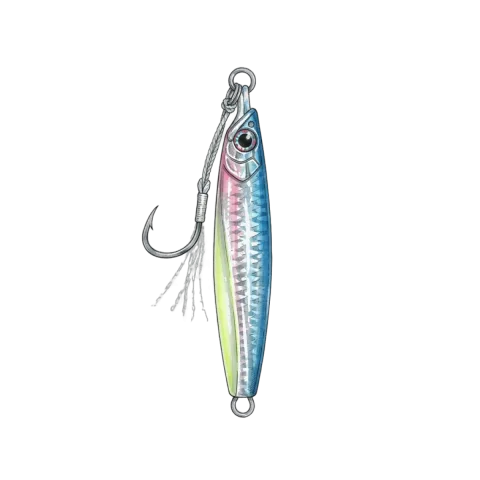
Metal jig
- Spinning
A long metal lure for speed-jigging the deep column.
06
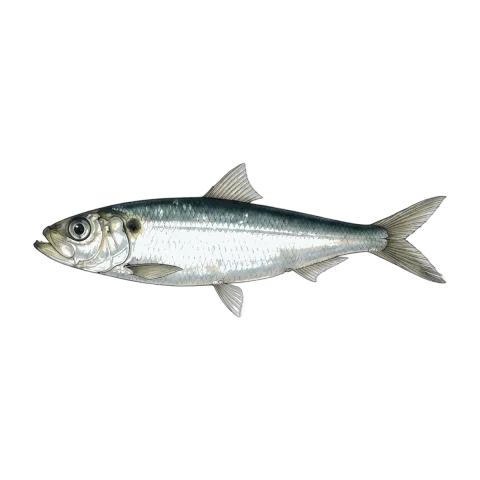
Sardine
- Bottom Fishing
Elongated silvery baitfish body releases strong scent trails.
07
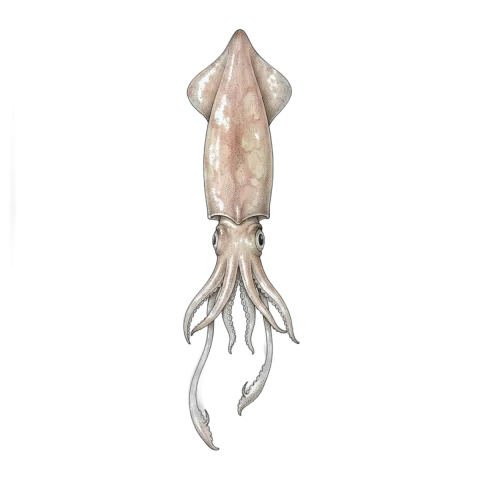
Squid
- Bottom Fishing
Elongated muscular body holds internal organs and secretes scent in the water.
08
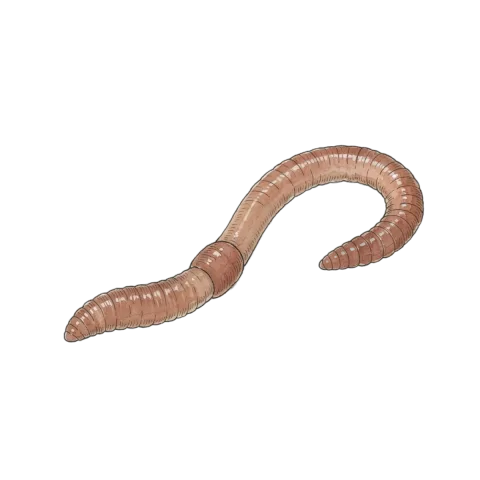
Live baitfish
- Live Baiting
Elongated segmented worm body provides natural movement to attract fish.
How Bigeye trevally migrates — Amphidromous
Moves between fresh and salt water during its life, but not specifically to spawn. Fish the estuary and the lower river.
1 Eggs
Sea
Spawned at sea or along the coast.
2 Larvae
→ Estuary
Drift inshore with the currents.
3 Juveniles
Fresh water
Move into estuaries, lagoons and fresh water to feed and grow.
4 Adults
→ Sea
Return to the sea to mature and spawn.
The crossing is for feeding and growth, not to spawn.
Hover or tap a number to read each stage.
Diet and behavior of Bigeye trevally
-
Diet
Top predator -
Feeds by
Hunts animals -
Hunts
Dusk · Night -
Feeds over
Soft bottom · Hard bottom · Intertidal · Coral reefs · Mangroves -
Main prey
Baitfish
Prey and predators of Bigeye trevally
Prey is what Bigeye trevally eats. Predators are the animals that eat it.
That is how it feeds, and how it is hunted.
Prey
What it eats
Predators
What hunts it
Fish
Where Bigeye trevally lives
Tied to reefs and rocky structure in shallow coastal water.
0–146 m

River mouth
Where this species lives
Bigeye trevally photos for identification
Compare these photos with the catalog plate to identify the species.