How to catch Black scorpionfish
Scorpaena porcus Linnaeus, 1758
About Black scorpionfish fishing
The black scorpionfish belongs to the family Scorpaenidae and exhibits a fusiform body shape with a broad head, short snout, and mottled brown colouration featuring a distinct dark spot on the dorsal fin. Growing up to a maximum length of forty centimetres with a normal adult size around fifteen centimetres, this demersal marine species inhabits rocky bottoms, seagrass beds, and shallow coastal zones down to significant depths across the eastern Atlantic and Mediterranean. It is a solitary, sedentary ambush predator that feeds primarily on small benthic fishes, crustaceans, and invertebrates. While carrying venomous spines that demand careful handling, it is frequently encountered by recreational anglers exploring rocky coastal margins.
-
Difficulty
Medium
-
Average size
15 cm TL
-
Market value
Low
-
Habitat
Saltwater
-
Season
Spring, Summer, Autumn
-
Also known as
Black scorpion fish, Black scorpion-fish, European scorpionfish, Rascasse, Sea pig, Sea scorpion

Occipital pit
Well-developed occipital pit behind eyes distinguishes this scorpionfish species.
Head cirri
Fleshy cirri well developed over entire head and body help provide camouflage.
Spiny lacrimal
Lacrimal with prominent spines over maxilla pointing at nearly right angles.
Black scorpionfish fishing facts
Characteristics
-
Typical size
15 cm TL (max 40.5 cm TL ) -
Typical weight
0.2 kg (max 0.9 kg ) -
Preferred temperature
11.2–15.8 °C -
Depth
1–800 m -
Longevity
11 years -
Body shape
Fusiform / Normal -
Commercial?
-
Vulnerability score
47.1
Best hours
-
Active
Dawn
First light
-
Low
Morning
After sunrise
-
Low
Midday
High sun
-
Low
Afternoon
Late day
-
Peak
Dusk
Last light
-
Peak
Night
After dark
When to fish for Black scorpionfish
How to catch Black scorpionfish
Tips for catching Black scorpionfish
To target this sedentary ambush hunter, anglers should focus on rocky shorelines, breakwaters, and weed beds using light tackle designed for precision presentation close to the seabed. Presenting small soft plastic lures or natural baits right among the crevices and boulders mimics their natural prey of small fish and crustaceans. Because these fish remain motionless waiting for meals to pass within striking distance, imparting subtle hops and pauses to the presentation triggers aggressive strikes. Fishing during low-light periods such as dawn and dusk or after dark yields the most consistent action, and anglers must always exercise caution to avoid painful punctures from the venomous dorsal spines.
Other names for Black scorpionfish
Local and alternate names anglers use for Black scorpionfish.
-
Black scorpionfish
-
Smallscaled scorpion-fish
-
Small-scaled scorpionfish
-
Smallscaled scorpionfish
-
Small-scaled scorpion fish
-
Sea scorpion
-
Sea pig
-
Rascasse
-
European scorpionfish
-
Black scorpion-fish
-
Black scorpion fish
Best equipment to catch Black scorpionfish
Compare fishing methods for Black scorpionfish — sized kit for each technique.
Note: Typical fish is 0.2 kg Our algorithm will suggest the best equipment for you based on this weight.
Spinning
Casting and retrieving lures with a spinning rod and reel.
85% Effectiveness

Rod
Spinning rod
A spinning rod is a fishing rod built to carry a spinning reel under the blank. You cast lures and light baits with it from shore or a boat.
Sized for a typical fish
ultralight · 1.8 m
- Reel seat
- Spinning
- Form factor
- Multi-piece
- Action
- Fast
- Grip
- EVA

Reel
Spinning reel
A spinning reel hangs under the fishing rod and is the default reel for casting lures and light baits. Line peels off an open spool with a bail.
Sized for a typical fish
1000 · 3 kg drag · 185 g
- Spool
- Fixed
- Mount
- Under
- Drag
- Front
- Retrieve
- Manual

Line
Braided line
Braided fishing line is the thin, no-stretch main for long casts, jigging, and feeling every tick on the retrieve.
Sized for a typical fish
6 kg · 0.1 mm
- Visibility
- High
- Abrasion
- Low
- Stretch
- None
- Sink rate
- Floats

Leader
Fluorocarbon leader
A fluorocarbon leader is the clear, fast-sinking join between a visible main line and the lure or hook.
Sized for a typical fish
7 kg · 0.3 mm · 90 cm
- Visibility
- Very low
- Abrasion
- High
- Stretch
- Low
- Sink rate
- Fast
Bottom Fishing
Presenting bait or rigs on or near the lake or sea floor.
80% Effectiveness
Rod
Spinning rod
A spinning rod is a fishing rod built to carry a spinning reel under the blank. You cast lures and light baits with it from shore or a boat.
Sized for a typical fish
ultralight · 1.8 m
- Reel seat
- Spinning
- Form factor
- Multi-piece
- Action
- Fast
- Grip
- EVA
Reel
Spinning reel
A spinning reel hangs under the fishing rod and is the default reel for casting lures and light baits. Line peels off an open spool with a bail.
Sized for a typical fish
1000 · 3 kg drag · 185 g
- Spool
- Fixed
- Mount
- Under
- Drag
- Front
- Retrieve
- Manual

Line
Monofilament line
Monofilament fishing line is the everyday main line: easy to knot, cheap to replace, and stretchy enough to forgive a hard strike.
Sized for a typical fish
1.3 kg · 0.125 mm
- Visibility
- Medium
- Abrasion
- Medium
- Stretch
- High
- Sink rate
- Slow
Leader
Fluorocarbon leader
A fluorocarbon leader is the clear, fast-sinking join between a visible main line and the lure or hook.
Sized for a typical fish
4 kg · 0.2 mm · 80 cm
- Visibility
- Very low
- Abrasion
- High
- Stretch
- Low
- Sink rate
- Fast

Hook
Circle hook
A circle hook turns in the mouth and usually finds the corner of the jaw. You do not strike hard — you come tight. It includes freshwater.
Sized for a typical fish
4
- Points
- 1
- Offset
- No
- Barbed
- Yes
- Gap
- Standard
Best lures and baits for Black scorpionfish
Ranked lures and natural baits from every method, best first.
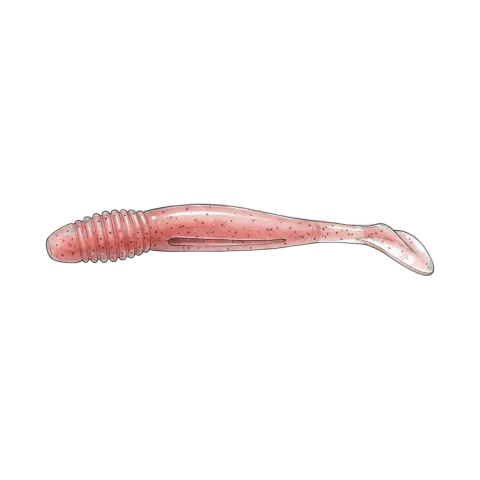
01
Soft worm
- Spinning
A long soft worm for Texas, wacky, and ned-style spinning.
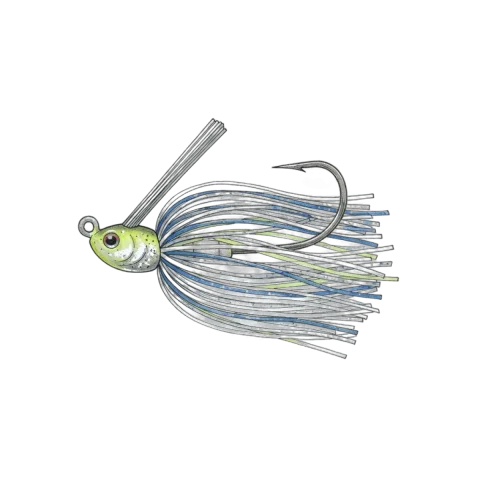
02
Casting jig
- Spinning
A casting jig you hop, drag, and swim on the bottom.
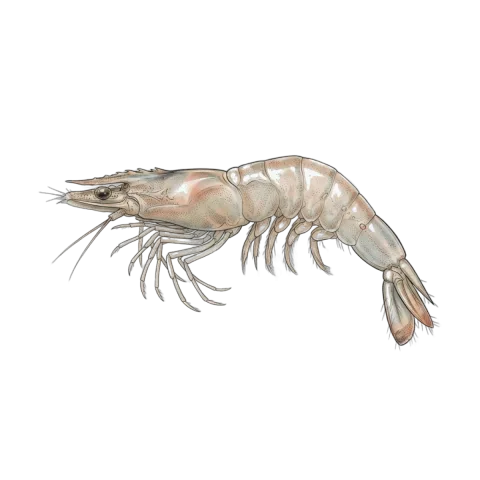
03
Shrimp
- Bottom Fishing
Translucent segmented carapace protects the body.
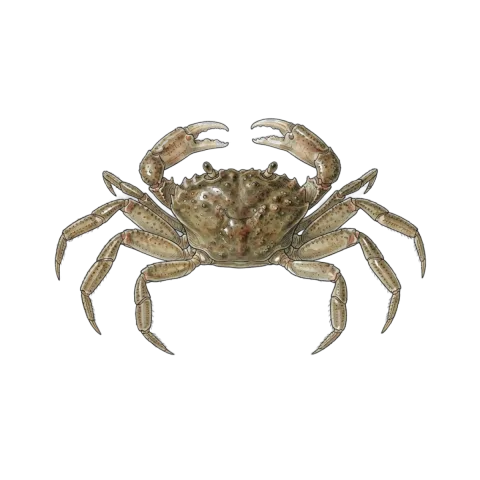
04
Crab
- Bottom Fishing
Hard upper shell protects the crab and anchors its vital organs.
05
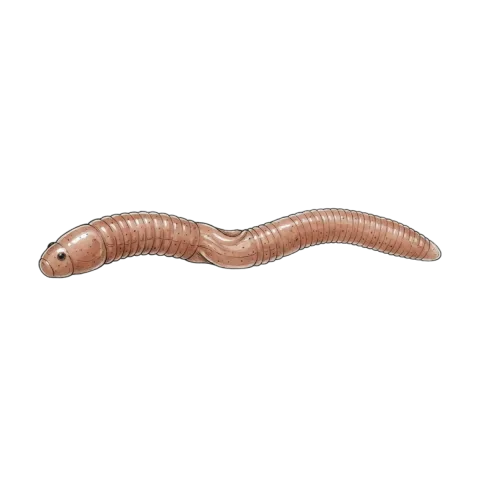
Worm
- Bottom Fishing
Rounded anterior end containing the mouth used for anchoring the bait on the hook.
Where Black scorpionfish spends the year — Non-migratory
Stays in the same waters year-round. Look for it on the same grounds rather than timing a run.
1 Eggs
Same water all year
Laid on the home grounds.
2 Juveniles
Same water all year
Grow up close by.
3 Adults
Same water all year
Keep to a small home range.
4 Spawners
Same water all year
Spawn on the same grounds, with only short moves.
Hover or tap a number to read each stage.
Diet and behavior of Black scorpionfish
-
Diet
Carnivore -
Feeds by
Hunts animals -
Hunts
Dusk · Night -
Feeds over
Seagrass -
Main prey
Baitfish · Bottom prey
Prey and predators of Black scorpionfish
Prey is what Black scorpionfish eats. Predators are the animals that eat it.
That is how it feeds, and how it is hunted.
Prey
What it eats
Predators
What hunts it
Fish
Where Black scorpionfish lives
Lives on or just above the bottom. Work jigs, bait, and lures along the seabed.
1–800 m

Where this species lives
Black scorpionfish photos for identification
Compare these photos with the catalog plate to identify the species.