How to catch Blue-barred parrotfish
Scarus ghobban Fabricius, 1775
About Blue-barred parrotfish fishing
The blue-barred parrotfish is a marine ray-finned fish belonging to the wrasse and parrotfish family Labridae. It features a robust fusiform body with a rounded snout and specialized dental plates formed by fused teeth, enabling it to reach a maximum length of seventy-five centimetres and a longevity of thirteen years. The species displays striking sexual dimorphism, with females showing dull yellowish or reddish hues and terminal males exhibiting vibrant blue-green tones marked with pinkish scales and distinctive facial stripes. It inhabits brackish and saltwater environments across coral reefs, lagoons, marginal reef structures, seagrass beds, and sandy bottoms down to depths of ninety metres. As a diurnal browser, it uses its powerful jaws to scrape benthic turf algae and detritus from hard substrates, playing an important ecological role in sediment transport. Although primarily caught by commercial and artisanal traps or nets rather than targeted as a classic game fish, it occasionally appears in localized catches.
-
Difficulty
Medium
-
Average size
30 cm TL
-
Market value
High
-
Habitat
Brackish, Saltwater
-
Season
Spring, Summer, Autumn, Winter
-
Also known as
Blue barred parrotfish, Blue trim parrotfish, Blue-barred orange parrotfish, Bluebarred parrotfish, Blue-barred Parrotfish, Bluechin parrotfish

Caudal fin lobes
Lunate caudal fin with prolonged lobes identifies the adult male phase.
Head markings
Bright green bands around the mouth and eye distinguish this parrotfish.
Body stripes
Sides featuring pinkish-orange vertical stripes across blue scales.
Blue-barred parrotfish fishing facts
Characteristics
-
Typical size
30 cm TL (max 75 cm TL ) -
Typical weight
1.2 kg (max 7.2 kg ) -
Preferred temperature
24.5–29.1 °C -
Depth
1–90 m -
Longevity
13 years -
Body shape
Fusiform / Normal -
Commercial?
-
Vulnerability score
36.1
Best hours
-
Low
Dawn
First light
-
Peak
Morning
After sunrise
-
Peak
Midday
High sun
-
Active
Afternoon
Late day
-
Low
Dusk
Last light
-
Low
Night
After dark
When to fish for Blue-barred parrotfish
How to catch Blue-barred parrotfish
Tips for catching Blue-barred parrotfish
The blue-barred parrotfish inhabits coastal coral reefs, rocky drop-offs, and adjacent sandy areas where it feeds primarily on benthic algae and plant material. Anglers target this species using light bottom rigs or precision float setups positioned near rocky ledges and shallow reef structures. Presentation requires small hooks baited with pieces of prawn, shrimp, or crustacean flesh, as these fish use powerful dental plates to crush hard items. Fishing is most productive during bright daylight hours when the fish actively graze across the substrate. Because they possess strong teeth and heavy bodies, tackle should include abrasion-resistant leaders to prevent line breakage during the fight.
Other names for Blue-barred parrotfish
Local and alternate names anglers use for Blue-barred parrotfish.
-
Blue-barred parrotfish
-
Bluebarred parrotfish
-
Blue-barred orange parrotfish
-
Yellowscale parrotfish
-
Yellow parrotfish
-
Yellow scale parrot fish
-
Parrotfish
-
Parrot fish
-
Globe-headed parrotfish
-
Green blotched parrotfish
-
Flame-breasted parrot-fish
-
Cream parrotfish
-
Bluechin parrotfish
-
Blue trim parrotfish
-
Blue barred parrotfish
Best equipment to catch Blue-barred parrotfish
Compare fishing methods for Blue-barred parrotfish — sized kit for each technique.
Note: Typical fish is 1.2 kg Our algorithm will suggest the best equipment for you based on this weight.
Bottom Fishing
Presenting bait or rigs on or near the lake or sea floor.
70% Effectiveness

Rod
Spinning rod
A spinning rod is a fishing rod built to carry a spinning reel under the blank. You cast lures and light baits with it from shore or a boat.
Sized for a typical fish
medium-light · 2.13 m
- Reel seat
- Spinning
- Form factor
- Multi-piece
- Action
- Fast
- Grip
- EVA

Reel
Spinning reel
A spinning reel hangs under the fishing rod and is the default reel for casting lures and light baits. Line peels off an open spool with a bail.
Sized for a typical fish
1000 · 3 kg drag · 185 g
- Spool
- Fixed
- Mount
- Under
- Drag
- Front
- Retrieve
- Manual

Line
Monofilament line
Monofilament fishing line is the everyday main line: easy to knot, cheap to replace, and stretchy enough to forgive a hard strike.
Sized for a typical fish
3.6 kg · 0.2 mm
- Visibility
- Medium
- Abrasion
- Medium
- Stretch
- High
- Sink rate
- Slow

Leader
Fluorocarbon leader
A fluorocarbon leader is the clear, fast-sinking join between a visible main line and the lure or hook.
Sized for a typical fish
4 kg · 0.2 mm · 80 cm
- Visibility
- Very low
- Abrasion
- High
- Stretch
- Low
- Sink rate
- Fast

Hook
Circle hook
A circle hook turns in the mouth and usually finds the corner of the jaw. You do not strike hard — you come tight. It includes freshwater.
Sized for a typical fish
2
- Points
- 1
- Offset
- No
- Barbed
- Yes
- Gap
- Standard
Float Fishing
Suspending bait beneath a float at a controlled depth.
60% Effectiveness
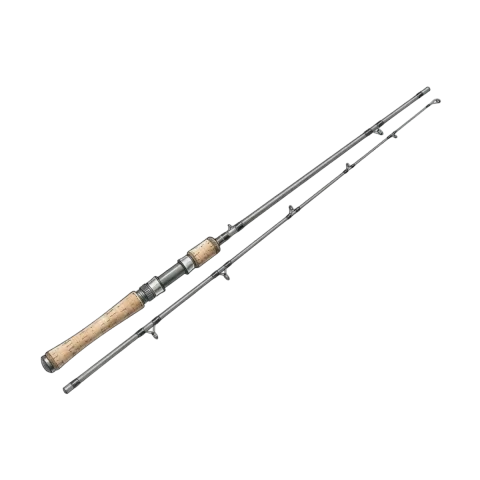
Rod
Float rod
A float rod is the all-round fishing rod for a float in rivers and still water, a step down in length from match.
Sized for a typical fish
light · 3.6 m
- Reel seat
- Spinning
- Form factor
- Multi-piece
- Action
- Moderate
- Grip
- Cork
Reel
Spinning reel
A spinning reel hangs under the fishing rod and is the default reel for casting lures and light baits. Line peels off an open spool with a bail.
Sized for a typical fish
1000 · 3 kg drag · 185 g
- Spool
- Fixed
- Mount
- Under
- Drag
- Front
- Retrieve
- Manual
Line
Monofilament line
Monofilament fishing line is the everyday main line: easy to knot, cheap to replace, and stretchy enough to forgive a hard strike.
Sized for a typical fish
3.6 kg · 0.2 mm
- Visibility
- Medium
- Abrasion
- Medium
- Stretch
- High
- Sink rate
- Slow
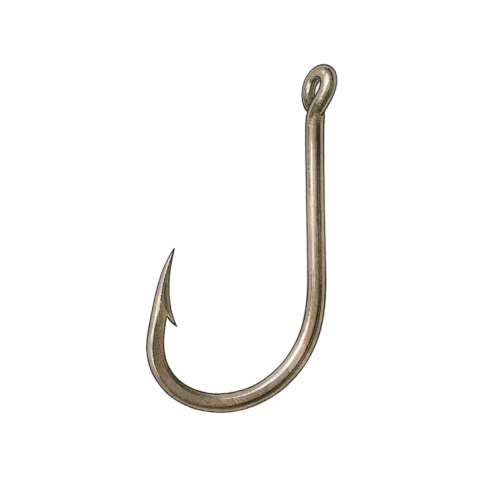
Hook
J-hook
A J-hook is the classic J-bend fishing hook for bait. You set it with a strike. Sizes are tokens such as 12 or 1/0.
Sized for a typical fish
4
- Points
- 1
- Offset
- No
- Barbed
- Yes
- Gap
- Standard
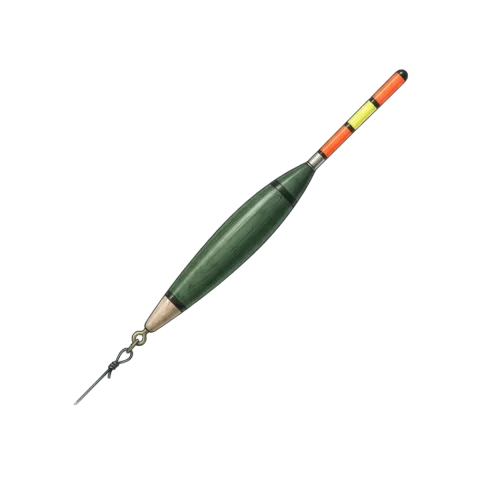
Float
Waggler
A waggler is a bottom-only attachment float for stillwaters and slow rivers. You shot it down and watch the antenna.
Sized for a typical fish
4 g
- Attachment
- Fixed
- Habitats
- Freshwater
- Methods
- Float Fishing
Best lures and baits for Blue-barred parrotfish
Ranked lures and natural baits from every method, best first.
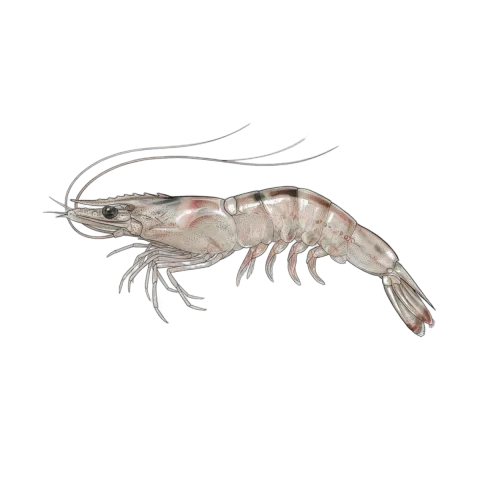
01
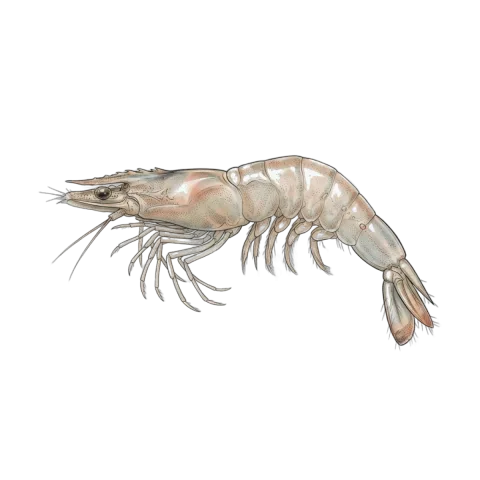
Prawn
- Bottom Fishing
Powerful fan-shaped tail propels the prawn backward when escaping predatory fish.
02
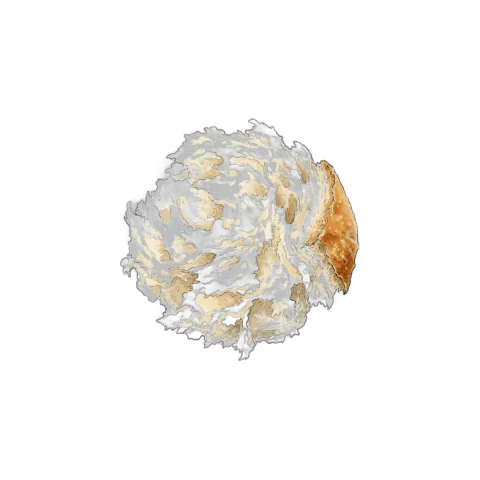
Shrimp
- Bottom Fishing
Translucent segmented carapace protects the body.
03
Bread
- Float Fishing
Soft inner bread compressed onto the hook for surface feeding.
How Blue-barred parrotfish migrates — Inshore–offshore
Shifts between shallow inshore water and deeper offshore grounds with the season.
1 Warm months
Inshore
Stay close inshore through the warm months.
2 Cold months
Offshore
Move offshore into deeper water as it cools.
Hover or tap a number to read each stage.
Diet and behavior of Blue-barred parrotfish
-
Diet
Herbivore -
Feeds by
Browses the bottom -
Hunts
Morning · Midday -
Feeds over
Soft bottom · Hard bottom · Seagrass · Coral reefs · Mangroves
Prey and predators of Blue-barred parrotfish
Prey is what Blue-barred parrotfish eats. Predators are the animals that eat it.
That is how it feeds, and how it is hunted.
Prey
What it eats
Other prey
Predators
What hunts it
Fish
Where Blue-barred parrotfish lives
Tied to reefs and rocky structure in shallow coastal water.
1–90 m

Estuary
Where this species lives
Blue-barred parrotfish photos for identification
Compare these photos with the catalog plate to identify the species.