How to catch Broad whitefish
Coregonus nasus (Pallas, 1776)
About Broad whitefish fishing
The broad whitefish is a cold-water salmonid member of the genus Coregonus, native to Arctic-draining basins across northern Eurasia and North America. It features a compressed, herring-shaped body with a convex head, a mild overbite, short gill rakers, an iridescent dark olive-brown back, silvery-grey sides, and a whitish belly. Growing up to 71 centimetres and 16 kilograms, this nerito-pelagic fish inhabits lowland rivers, lakes, streams, and coastal estuaries down to 50 metres depth. Adults feed primarily on benthic organisms including chironomid midge larvae, molluscs, and crustaceans, undertaking extensive upstream spawning migrations during late summer and autumn into swift gravel-bottomed reaches. Prized for its rich, high-quality flesh, it is targeted by commercial fisheries and valued as a resilient sport fish in northern waters.
-
Difficulty
Medium
-
Average size
46 cm TL
-
Market value
Very high
-
Habitat
Freshwater, Brackish
-
Season
Summer, Autumn
-
Also known as
Large Bottom Whitefish, Round-nosed whitefish, Sheep-nosed whitefish

Adipose fin
Fairly large fleshy adipose fin present on the back.
Caudal shape
Deeply forked caudal fin typical of whitefish.
Head profile
Rounded to flat profile of the head.
Broad whitefish fishing facts
Characteristics
-
Typical size
46 cm TL (max 71 cm TL ) -
Typical weight
2.5 kg (max 16 kg ) -
Depth
5–50 m -
Longevity
15 years -
Body shape
Fusiform / Normal -
Commercial?
-
Vulnerability score
65
Best hours
-
Peak
Dawn
First light
-
Active
Morning
After sunrise
-
Low
Midday
High sun
-
Low
Afternoon
Late day
-
Peak
Dusk
Last light
-
Low
Night
After dark
When to fish for Broad whitefish
How to catch Broad whitefish
Tips for catching Broad whitefish
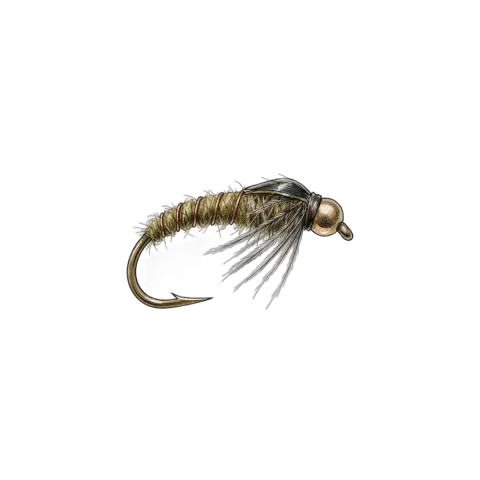
Anglers target broad whitefish by presenting baits and artificial flies near the bottom in deep river pools, lake drop-offs, and estuary edges where they forage for aquatic invertebrates. Because their small, subterminal mouths are designed for vacuuming benthic prey, successful float fishing requires light rigs with small hooks baited with worms or maggots, balanced with just enough split shot to tick the substrate. Fly fishers achieve success by dead-drifting heavy nymphs or small wet flies along current seams and gravel bars. Focus efforts during the cooler months of summer and early autumn when fish actively feed before their upstream spawning migrations, concentrating on low-light periods around dawn and dusk for optimal catches.
Other names for Broad whitefish
Local and alternate names anglers use for Broad whitefish.
-
Broad whitefish
-
Sheep-nosed whitefish
-
Round-nosed whitefish
-
Large Bottom Whitefish
Best equipment to catch Broad whitefish
Compare fishing methods for Broad whitefish — sized kit for each technique.
Note: Typical fish is 2.5 kg Our algorithm will suggest the best equipment for you based on this weight.
Float Fishing
Suspending bait beneath a float at a controlled depth.
80% Effectiveness
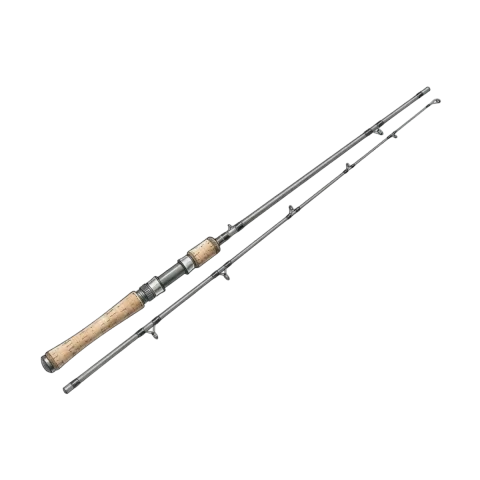
Rod
Float rod
A float rod is the all-round fishing rod for a float in rivers and still water, a step down in length from match.
Sized for a typical fish
medium · 4.2 m
- Reel seat
- Spinning
- Form factor
- Multi-piece
- Action
- Moderate
- Grip
- Cork

Reel
Spinning reel
A spinning reel hangs under the fishing rod and is the default reel for casting lures and light baits. Line peels off an open spool with a bail.
Sized for a typical fish
1000 · 3 kg drag · 185 g
- Spool
- Fixed
- Mount
- Under
- Drag
- Front
- Retrieve
- Manual

Line
Monofilament line
Monofilament fishing line is the everyday main line: easy to knot, cheap to replace, and stretchy enough to forgive a hard strike.
Sized for a typical fish
7.5 kg · 0.3 mm
- Visibility
- Medium
- Abrasion
- Medium
- Stretch
- High
- Sink rate
- Slow
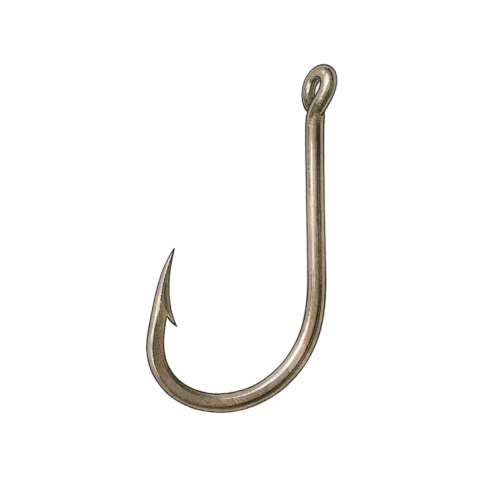
Hook
J-hook
A J-hook is the classic J-bend fishing hook for bait. You set it with a strike. Sizes are tokens such as 12 or 1/0.
Sized for a typical fish
4
- Points
- 1
- Offset
- No
- Barbed
- Yes
- Gap
- Standard
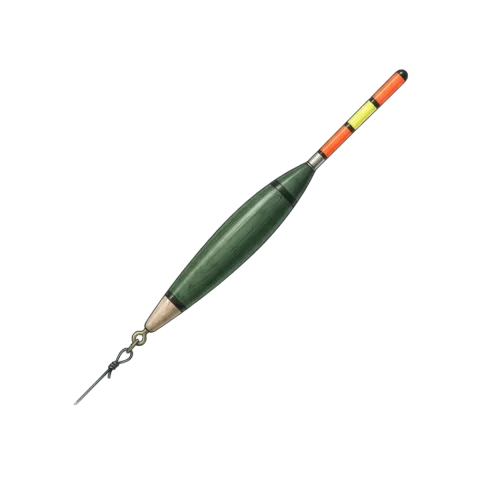
Float
Waggler
A waggler is a bottom-only attachment float for stillwaters and slow rivers. You shot it down and watch the antenna.
Sized for a typical fish
4 g
- Attachment
- Fixed
- Habitats
- Freshwater
- Methods
- Float Fishing
Fly Fishing
Presenting artificial flies with a fly rod and weighted line.
70% Effectiveness
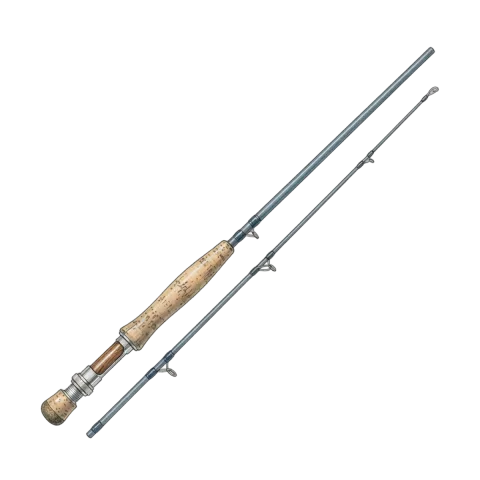
Rod
Fly rod
A fly rod is a fishing rod sized by line weight, with a fly reel seat. The fly line, not a heavy lure, loads the blank.
Sized for a typical fish
2.74 m · 6wt
- Reel seat
- Fly
- Form factor
- Multi-piece
- Action
- Moderate-fast
- Grip
- Cork
Reel
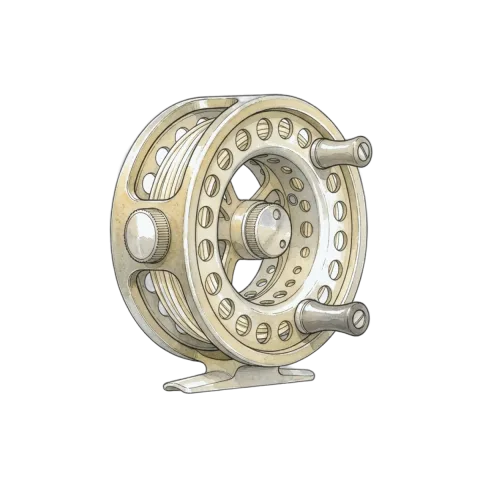
Fly reel
A fly reel is a large-arbor drum that stores backing and fly line. Drag is a disc; the reel does not cast the fly.
Sized for a typical fish
5 kg drag · 6wt
- Spool
- Drum
- Mount
- Under
- Drag
- Disc
- Retrieve
- Manual
Line
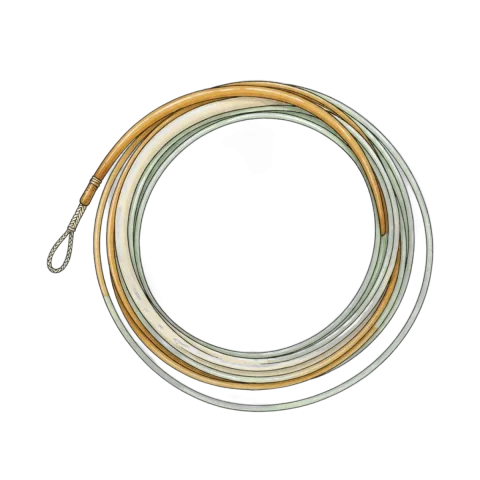
Fly line
Fly line is the weighted shooting line that carries a near-weightless fly. Match it by weight class to the fly rod, not by kilo rating.
Sized for a typical fish
6wt
- Visibility
- Medium
- Abrasion
- Medium
- Stretch
- Low
- Sink rate
- Slow
Leader
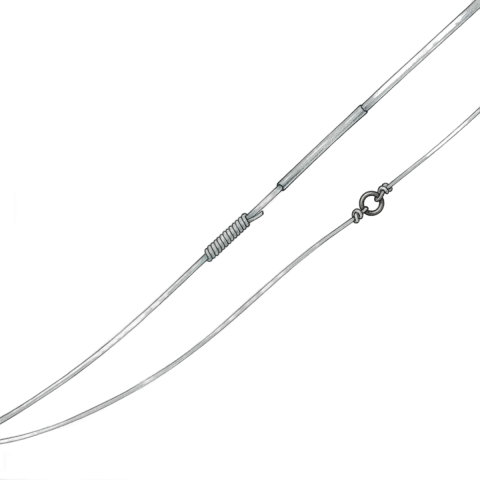
Tippet
Tippet is the fine, replaceable end of a fly leader, sized in X so you can match the fly and the fish.
Sized for a typical fish
3.6 kg · 0.2 mm · 80 cm · 3X
- Visibility
- Medium
- Abrasion
- Medium
- Stretch
- Medium
- Sink rate
- Slow
Bottom Fishing
Presenting bait or rigs on or near the lake or sea floor.
50% Effectiveness

Rod
Spinning rod
A spinning rod is a fishing rod built to carry a spinning reel under the blank. You cast lures and light baits with it from shore or a boat.
Sized for a typical fish
medium · 2.13 m
- Reel seat
- Spinning
- Form factor
- Multi-piece
- Action
- Fast
- Grip
- EVA
Reel
Spinning reel
A spinning reel hangs under the fishing rod and is the default reel for casting lures and light baits. Line peels off an open spool with a bail.
Sized for a typical fish
1000 · 3 kg drag · 185 g
- Spool
- Fixed
- Mount
- Under
- Drag
- Front
- Retrieve
- Manual
Line
Monofilament line
Monofilament fishing line is the everyday main line: easy to knot, cheap to replace, and stretchy enough to forgive a hard strike.
Sized for a typical fish
7.5 kg · 0.3 mm
- Visibility
- Medium
- Abrasion
- Medium
- Stretch
- High
- Sink rate
- Slow

Leader
Fluorocarbon leader
A fluorocarbon leader is the clear, fast-sinking join between a visible main line and the lure or hook.
Sized for a typical fish
9 kg · 0.35 mm · 100 cm
- Visibility
- Very low
- Abrasion
- High
- Stretch
- Low
- Sink rate
- Fast

Hook
Circle hook
A circle hook turns in the mouth and usually finds the corner of the jaw. You do not strike hard — you come tight. It includes freshwater.
Sized for a typical fish
2
- Points
- 1
- Offset
- No
- Barbed
- Yes
- Gap
- Standard
Best lures and baits for Broad whitefish
Ranked lures and natural baits from every method, best first.
01
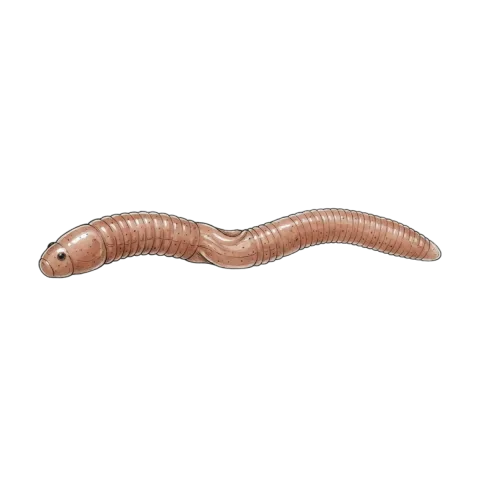
Worm
- Float Fishing
- Bottom Fishing
Rounded anterior end containing the mouth used for anchoring the bait on the hook.
02
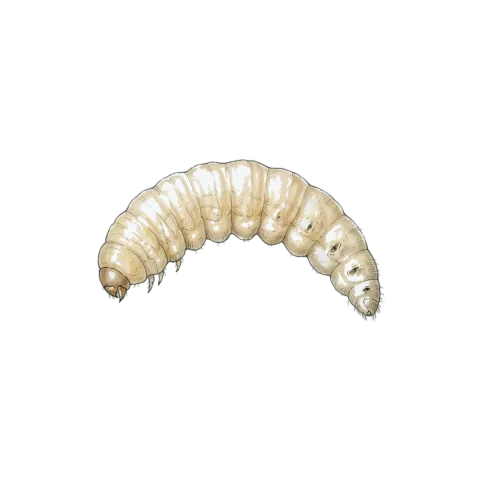
Maggot
- Float Fishing
Segmented white body provides enticing natural movement and scent.
04
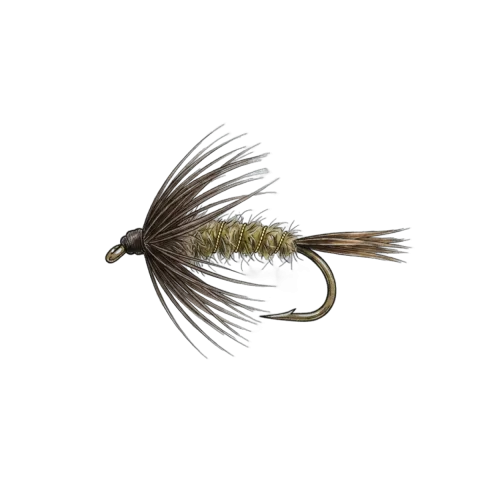
Wet fly
- Fly Fishing
A soft-hackle fly swung or drifted just under the film.
How Broad whitefish migrates — Anadromous
Grows at sea and swims into rivers to spawn. Target the run as fish leave the ocean and push upstream.
1 Eggs
Fresh water
Laid in fresh water, usually well up the river.
2 Juveniles
→ Sea
Grow in the river, then head downstream to the sea.
3 Adults
Sea
Feed and grow at sea.
4 Spawners
→ Fresh water
Run back up the river to spawn.
Some populations never go to sea and complete the cycle in rivers and lakes.
Hover or tap a number to read each stage.
Diet and behavior of Broad whitefish
-
Diet
Carnivore -
Feeds by
Hunts animals -
Hunts
Dawn · Dusk
Prey and predators of Broad whitefish
Prey is what Broad whitefish eats. Predators are the animals that eat it.
That is how it feeds, and how it is hunted.
Predators
What hunts it
Fish
Where Broad whitefish lives
Pelagic over the continental shelf — coastal open water, not the deep ocean.
5–50 m

Where this species lives
Broad whitefish photos for identification
Compare these photos with the catalog plate to identify the species.