How to catch Burbot
Lota lota (Linnaeus, 1758)
About Burbot fishing
The burbot is the sole freshwater representative of the cod family, easily recognised by its elongated, serpent-like body, mottled olive-brown skin covered in thick slime, flattened head, and single prominent barbel on the chin. Growing up to an impressive size, it features a short first dorsal fin, a very long second dorsal fin, and a rounded tail. Native to cold, well-oxygenated rivers, deep lakes, and occasional brackish coastal areas, this benthic predator hides in rocky crevices and tree roots during daylight hours. It thrives in frigid temperatures, becoming an active nocturnal hunter that preys on bottom-dwelling invertebrates and various fish species. European anglers prize the burbot as a cult winter target, pursued during the coldest months when other species turn sluggish.
-
Difficulty
Medium
-
Average size
40 cm TL
-
Market value
Very high
-
Habitat
Freshwater, Brackish
-
Season
Spring, Autumn, Winter
-
Also known as
American burbot, Eelpout, Ellpout, Freshwater cod, Freshwater eel, Lawyer

Chin Barbel
Single barbel on the chin is characteristic of the burbot.
Long Second Dorsal
Very long second dorsal fin distinguishes it from the short first dorsal.
Body Spotting
Mottled pattern of dark spots on the body distinguishes the species.
Burbot fishing facts
Characteristics
-
Typical size
40 cm TL (max 152 cm TL ) -
Typical weight
2.5 kg (max 34 kg ) -
Depth
1–700 m -
Longevity
20 years -
Body shape
Elongated -
Commercial?
-
Vulnerability score
66.4
Best hours
-
Active
Dawn
First light
-
Low
Morning
After sunrise
-
Low
Midday
High sun
-
Low
Afternoon
Late day
-
Peak
Dusk
Last light
-
Peak
Night
After dark
When to fish for Burbot
How to catch Burbot
Tips for catching Burbot
To target freshwater cod successfully, plan your sessions during the coldest months of the year when icy water temperatures provoke heavy feeding and pre-spawning congregation near rocky shoals and deep drop-offs. Because these fish are nocturnal hunters that rest in structural cover by day, focus your efforts from dusk through the deep night hours. Use heavy bottom-fishing rigs or short ice rods equipped with luminescent jigs and spoons designed to pound the substrate, kicking up silt and emitting strong vibrations and glow signatures that attract curious fish from afar. Always tip your terminal tackle with chunks of oily fish or large worms to release a potent scent trail in the darkness. Keep your presentation tight to the floor, maintaining minimal slack to detect subtle bites from fish moving along the gravel.
Other names for Burbot
Local and alternate names anglers use for Burbot.
-
Burbot
-
Ling
-
Lush
-
Freshwater eel
-
Lawyer
-
Freshwater cod
-
Ellpout
-
Thin-tailed burbot
-
Maria
-
Mud shark
-
Eelpout
-
American burbot
Best equipment to catch Burbot
Compare fishing methods for Burbot — sized kit for each technique.
Note: Typical fish is 2.5 kg Our algorithm will suggest the best equipment for you based on this weight.
Ice Fishing
Fishing through ice with short rods, jigs, or tip-ups.
90% Effectiveness
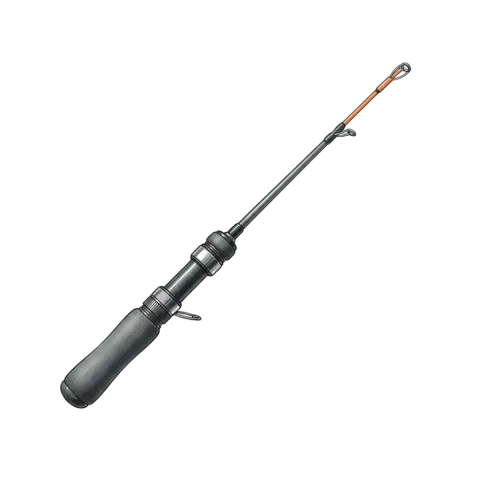
Rod
Ice fishing rod
An ice fishing rod is a short stick for fishing through a hole. Pair it with a small spinning or inline ice reel.
Sized for a typical fish
medium · 0.9 m
- Reel seat
- Spinning
- Form factor
- One-piece
- Action
- Fast
- Grip
- Foam
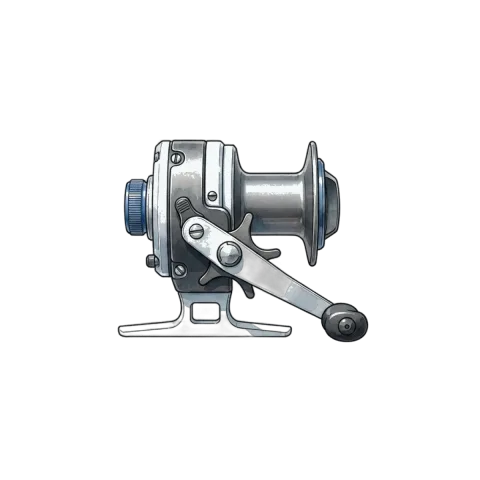
Reel
Ice fishing reel
An ice fishing reel is a small spinning or inline reel for fishing through a hole. Capacity is modest; the rod is short.
Sized for a typical fish
1000 · 3 kg drag
- Spool
- Fixed
- Mount
- Under
- Drag
- Rear
- Retrieve
- Manual

Line
Monofilament line
Monofilament fishing line is the everyday main line: easy to knot, cheap to replace, and stretchy enough to forgive a hard strike.
Sized for a typical fish
7.5 kg · 0.3 mm
- Visibility
- Medium
- Abrasion
- Medium
- Stretch
- High
- Sink rate
- Slow
Bottom Fishing
Presenting bait or rigs on or near the lake or sea floor.
85% Effectiveness

Rod
Spinning rod
A spinning rod is a fishing rod built to carry a spinning reel under the blank. You cast lures and light baits with it from shore or a boat.
Sized for a typical fish
medium · 2.13 m
- Reel seat
- Spinning
- Form factor
- Multi-piece
- Action
- Fast
- Grip
- EVA

Reel
Spinning reel
A spinning reel hangs under the fishing rod and is the default reel for casting lures and light baits. Line peels off an open spool with a bail.
Sized for a typical fish
1000 · 3 kg drag · 185 g
- Spool
- Fixed
- Mount
- Under
- Drag
- Front
- Retrieve
- Manual
Line
Monofilament line
Monofilament fishing line is the everyday main line: easy to knot, cheap to replace, and stretchy enough to forgive a hard strike.
Sized for a typical fish
7.5 kg · 0.3 mm
- Visibility
- Medium
- Abrasion
- Medium
- Stretch
- High
- Sink rate
- Slow

Leader
Fluorocarbon leader
A fluorocarbon leader is the clear, fast-sinking join between a visible main line and the lure or hook.
Sized for a typical fish
9 kg · 0.35 mm · 100 cm
- Visibility
- Very low
- Abrasion
- High
- Stretch
- Low
- Sink rate
- Fast

Hook
Circle hook
A circle hook turns in the mouth and usually finds the corner of the jaw. You do not strike hard — you come tight. It includes freshwater.
Sized for a typical fish
2
- Points
- 1
- Offset
- No
- Barbed
- Yes
- Gap
- Standard
Jigging
Working vertical lures with an active up-and-down motion.
80% Effectiveness
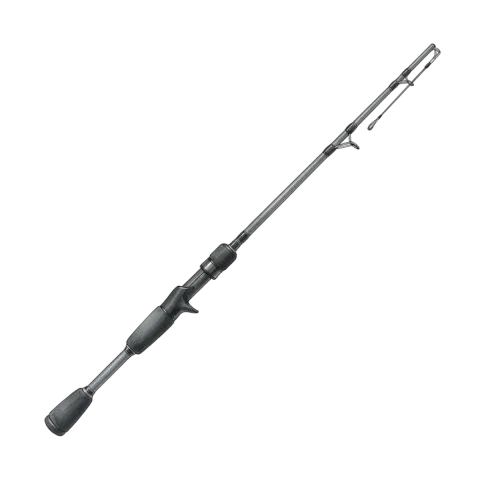
Rod
Jigging rod
A jigging rod is the short, powerful fishing rod for working a metal jig up through the column, including freshwater jigging.
Sized for a typical fish
heavy · 1.52 m
- Reel seat
- Casting
- Form factor
- One-piece
- Action
- Fast
- Grip
- EVA
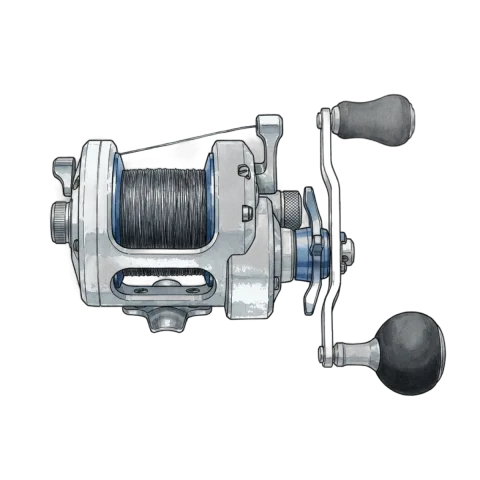
Reel
Jigging reel
A jigging reel is a compact, high-speed conventional for working metal jigs. A short retrieve picks up slack fast.
Sized for a typical fish
10 · 10 kg drag
- Spool
- Revolving
- Mount
- Over
- Drag
- Star
- Retrieve
- Manual
Line
Braided line
Braided fishing line is the thin, no-stretch main for long casts, jigging, and feeling every tick on the retrieve.
Sized for a typical fish
6 kg · 0.1 mm
- Visibility
- High
- Abrasion
- Low
- Stretch
- None
- Sink rate
- Floats
Leader
Fluorocarbon leader
A fluorocarbon leader is the clear, fast-sinking join between a visible main line and the lure or hook.
Sized for a typical fish
7 kg · 0.3 mm · 90 cm
- Visibility
- Very low
- Abrasion
- High
- Stretch
- Low
- Sink rate
- Fast
Best lures and baits for Burbot
Ranked lures and natural baits from every method, best first.
01
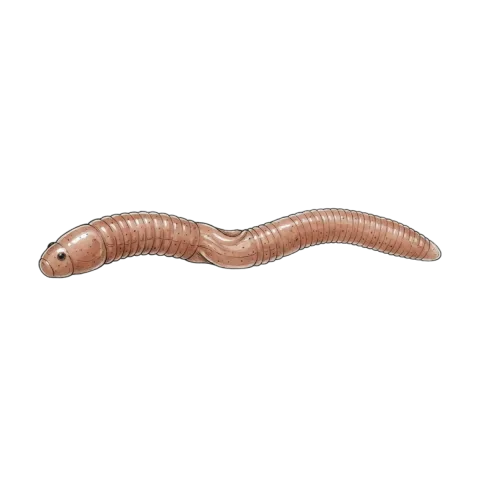
Worm
- Ice Fishing
- Bottom Fishing
Rounded anterior end containing the mouth used for anchoring the bait on the hook.
02
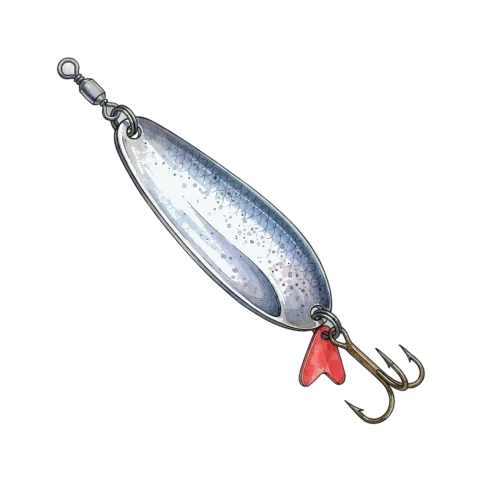
Spoon
- Ice Fishing
- Jigging
A metal flutter bait for spinning, trolling, and ice.
03
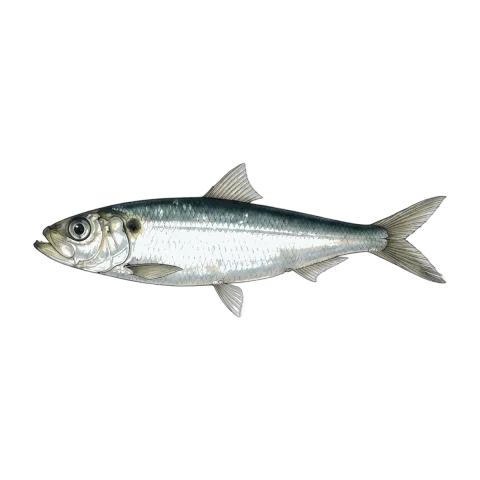
Sardine
- Ice Fishing
- Bottom Fishing
Elongated silvery baitfish body releases strong scent trails.
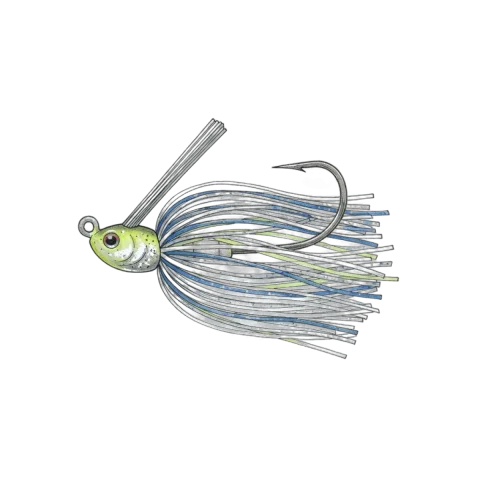
04
Casting jig
- Ice Fishing
- Jigging
A casting jig you hop, drag, and swim on the bottom.
How Burbot migrates — Potamodromous
Migrates within rivers and lakes only. Fish upstream runs and seasonal lake movements, not saltwater.
1 Eggs
Upstream
Laid on gravel or weed upstream or in flooded shallows.
2 Larvae
→ Main river or lake
Fry drift or swim down to slower water.
3 Adults
Main river or lake
Feed in the main river or lake.
4 Spawners
→ Upstream
Move upstream or into the shallows to spawn.
The whole cycle stays in fresh water.
Hover or tap a number to read each stage.
Diet and behavior of Burbot
-
Diet
Carnivore -
Feeds by
Hunts animals -
Hunts
Dusk · Night -
Feeds over
Vegetation -
Main prey
Baitfish · Bottom prey
Prey and predators of Burbot
Prey is what Burbot eats. Predators are the animals that eat it.
That is how it feeds, and how it is hunted.
Prey
What it eats
Predators
What hunts it
Where Burbot lives
Lives on or just above the bottom. Work jigs, bait, and lures along the seabed.
1–700 m

Where this species lives
Burbot photos for identification
Compare these photos with the catalog plate to identify the species.
Where to fish for Burbot
Mapped fishing spots where Burbot is recorded — open a pin for access and methods.


