How to catch Golden grey mullet
Chelon auratus (Risso, 1810)
About Golden grey mullet fishing
The golden grey mullet is a slender, torpedo-shaped coastal fish belonging to the family Mugilidae, featuring a dark grey back that transitions to a silvery white belly with faint horizontal stripes and a distinctive golden patch on the gill cover. Growing to a maximum length of sixty-one centimetres and a weight of two and a half kilograms, with common adults measuring around thirty centimetres, this species inhabits marine, brackish, and freshwater environments across the eastern Atlantic and Mediterranean. It is a neritic, schooling fish that frequents shallow coastal waters, estuaries, and lagoons down to twenty metres, feeding on benthic detritus, microalgae, and small invertebrates. Adults undertake seasonal movements, entering sheltered inshore areas during warmer months and heading to deeper sea areas for spawning between July and November.
-
Difficulty
Medium
-
Average size
30 cm SL
-
Market value
Medium
-
Habitat
Freshwater, Brackish, Saltwater
-
Season
Spring, Summer, Autumn
-
Also known as
Golden mullet, Long-finned grey mullet

Forked caudal shape
Deeply forked caudal fin indicates swimming agility.
Abdominal pelvic fins
Pelvic fins are located far back on the belly.
Opercle golden spot
Distinct golden patch on the operculum distinguishes this species.
Golden grey mullet fishing facts
Characteristics
-
Typical size
30 cm SL (max 61 cm FL ) -
Typical weight
0.4 kg (max 2.5 kg ) -
Preferred temperature
9.7–20.7 °C -
Depth
10–20 m -
Longevity
8 years -
Body shape
Fusiform / Normal -
Commercial?
-
Vulnerability score
44.9
Best hours
-
Low
Dawn
First light
-
Peak
Morning
After sunrise
-
Active
Midday
High sun
-
Peak
Afternoon
Late day
-
Low
Dusk
Last light
-
Low
Night
After dark
When to fish for Golden grey mullet
How to catch Golden grey mullet
Tips for catching Golden grey mullet
Anglers target golden grey mullet primarily with light float fishing tackle in calm estuarine shallows, harbours, and sandy lagoons where these fish congregate to feed on organic matter. Because they possess small mouths and cautious feeding habits, presentation must be delicate using fine lines, small hooks, and light wagglers that register subtle bites. Groundbaiting with a mixture of breadcrumbs, flour, cheese, and crushed fish scraps helps to draw the school into the swim and hold them near the surface or midwater. Baits such as soft dough pastes flavoured with cheese, pieces of crust, or small morsels of bread fished just off the bottom or suspended near weed beds produce the most consistent sport during daylight hours, particularly from late spring through early autumn when the fish are actively cruising the margins.
Other names for Golden grey mullet
Local and alternate names anglers use for Golden grey mullet.
-
Golden grey mullet
-
Long-finned grey mullet
-
Golden mullet
Best equipment to catch Golden grey mullet
Compare fishing methods for Golden grey mullet — sized kit for each technique.
Note: Typical fish is 0.4 kg Our algorithm will suggest the best equipment for you based on this weight.
Float Fishing
Suspending bait beneath a float at a controlled depth.
90% Effectiveness
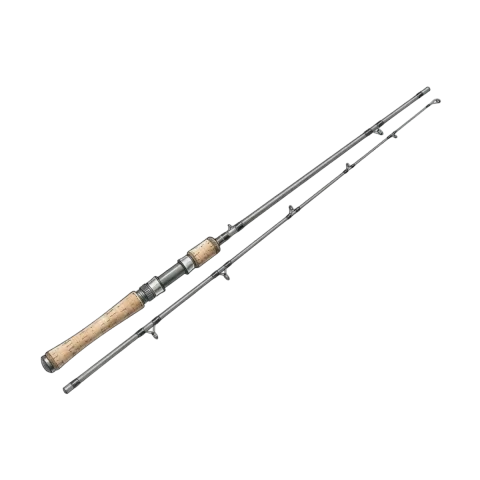
Rod
Float rod
A float rod is the all-round fishing rod for a float in rivers and still water, a step down in length from match.
Sized for a typical fish
light · 3.6 m
- Reel seat
- Spinning
- Form factor
- Multi-piece
- Action
- Moderate
- Grip
- Cork

Reel
Spinning reel
A spinning reel hangs under the fishing rod and is the default reel for casting lures and light baits. Line peels off an open spool with a bail.
Sized for a typical fish
1000 · 3 kg drag · 185 g
- Spool
- Fixed
- Mount
- Under
- Drag
- Front
- Retrieve
- Manual

Line
Monofilament line
Monofilament fishing line is the everyday main line: easy to knot, cheap to replace, and stretchy enough to forgive a hard strike.
Sized for a typical fish
2.5 kg · 0.16 mm
- Visibility
- Medium
- Abrasion
- Medium
- Stretch
- High
- Sink rate
- Slow
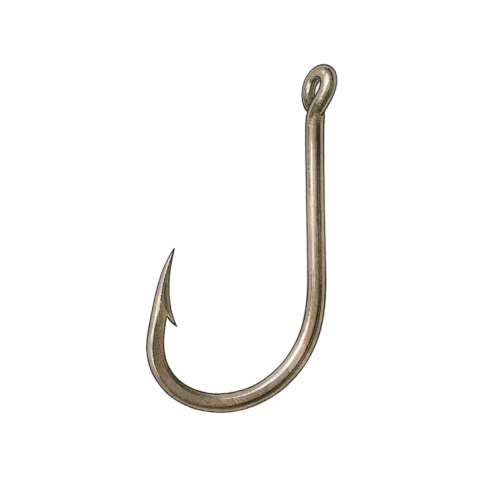
Hook
J-hook
A J-hook is the classic J-bend fishing hook for bait. You set it with a strike. Sizes are tokens such as 12 or 1/0.
Sized for a typical fish
8
- Points
- 1
- Offset
- No
- Barbed
- Yes
- Gap
- Standard
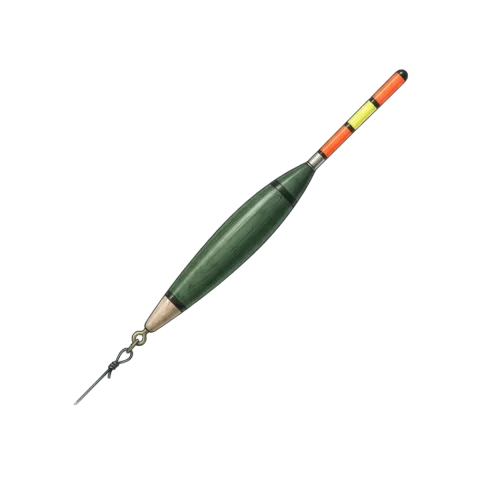
Float
Waggler
A waggler is a bottom-only attachment float for stillwaters and slow rivers. You shot it down and watch the antenna.
Sized for a typical fish
4 g
- Attachment
- Fixed
- Habitats
- Freshwater
- Methods
- Float Fishing
Bottom Fishing
Presenting bait or rigs on or near the lake or sea floor.
60% Effectiveness

Rod
Spinning rod
A spinning rod is a fishing rod built to carry a spinning reel under the blank. You cast lures and light baits with it from shore or a boat.
Sized for a typical fish
light · 2.1 m
- Reel seat
- Spinning
- Form factor
- Multi-piece
- Action
- Fast
- Grip
- EVA
Reel
Spinning reel
A spinning reel hangs under the fishing rod and is the default reel for casting lures and light baits. Line peels off an open spool with a bail.
Sized for a typical fish
1000 · 3 kg drag · 185 g
- Spool
- Fixed
- Mount
- Under
- Drag
- Front
- Retrieve
- Manual
Line
Monofilament line
Monofilament fishing line is the everyday main line: easy to knot, cheap to replace, and stretchy enough to forgive a hard strike.
Sized for a typical fish
2.5 kg · 0.16 mm
- Visibility
- Medium
- Abrasion
- Medium
- Stretch
- High
- Sink rate
- Slow

Leader
Fluorocarbon leader
A fluorocarbon leader is the clear, fast-sinking join between a visible main line and the lure or hook.
Sized for a typical fish
4 kg · 0.2 mm · 80 cm
- Visibility
- Very low
- Abrasion
- High
- Stretch
- Low
- Sink rate
- Fast

Hook
Circle hook
A circle hook turns in the mouth and usually finds the corner of the jaw. You do not strike hard — you come tight. It includes freshwater.
Sized for a typical fish
4
- Points
- 1
- Offset
- No
- Barbed
- Yes
- Gap
- Standard
Best lures and baits for Golden grey mullet
Ranked lures and natural baits from every method, best first.
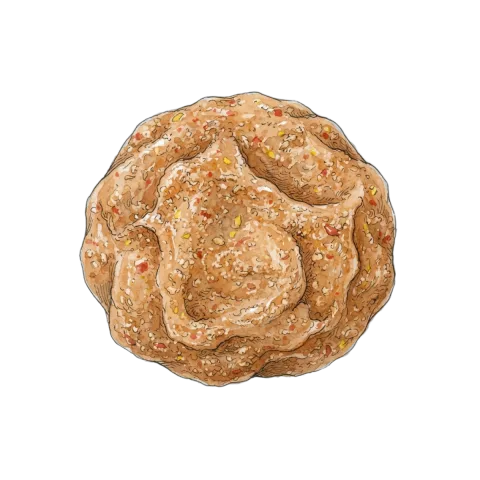
01
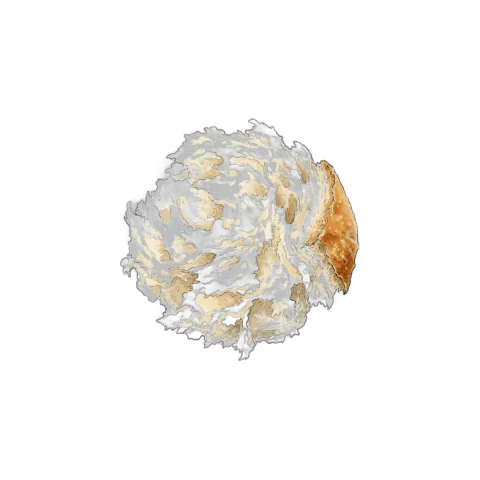
Dough bait
- Float Fishing
- Bottom Fishing
Molded round ball of prepared dough designed to stay on the hook.
02
Bread
- Float Fishing
- Bottom Fishing
Soft inner bread compressed onto the hook for surface feeding.
03
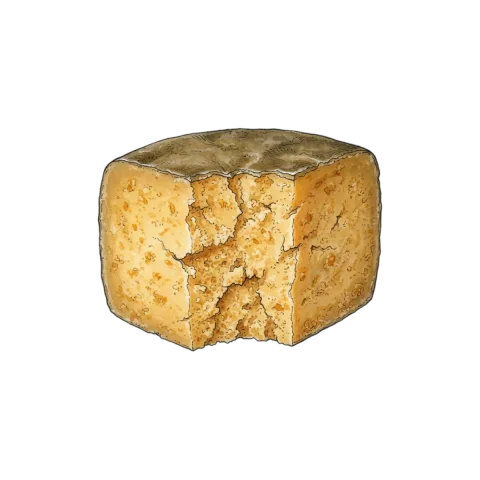
Cheese
- Float Fishing
Exposed yellow cheese interior reveals the textured bait for hooking.
How Golden grey mullet migrates — Catadromous
Grows in fresh or brackish water and migrates to the sea to spawn. Estuaries and lower rivers fire when adults drop downstream.
1 Eggs
Sea
Spawned out at sea.
2 Larvae
→ Estuary
Drift with the currents towards the coast.
3 Juveniles
→ Fresh water
Enter estuaries, and many move on into fresh water.
4 Adults
Fresh water
Feed and grow in rivers, lakes and estuaries, often for years.
5 Spawners
→ Sea
Head downstream and out to sea to spawn.
Many only reach estuaries and the lower river; eels travel far inland.
Hover or tap a number to read each stage.
Diet and behavior of Golden grey mullet
-
Diet
Carnivore -
Feeds by
Mixed feeder -
Hunts
Morning · Afternoon -
Feeds over
Soft bottom · Hard bottom -
Main prey
Baitfish · Plankton · Bottom prey
Prey and predators of Golden grey mullet
Prey is what Golden grey mullet eats. Predators are the animals that eat it.
That is how it feeds, and how it is hunted.
Prey
What it eats
Predators
What hunts it
Fish
Where Golden grey mullet lives
Pelagic over the continental shelf — coastal open water, not the deep ocean.
10–20 m

River mouth
Where this species lives
Golden grey mullet photos for identification
Compare these photos with the catalog plate to identify the species.