How to catch Cuban dogfish
Squalus cubensis Howell Rivero, 1936
About Cuban dogfish fishing
The Cuban dogfish is a small demersal shark belonging to the family Squalidae, recognised by its slender, elongated grey body, short rounded snout, and prominent venomous spines situated ahead of its two dorsal fins. Growing up to a moderate size, this deep-water species inhabits temperate and tropical marine waters along continental shelves and upper slopes, typically frequenting depths between sixty and four hundred metres where it forms large schools near the seabed. It feeds primarily on bottom-dwelling fishes and benthic invertebrates, playing a minor role in commercial fisheries while occasionally encountered by specialist deep-water anglers targeting marine dogfishes.
-
Difficulty
Medium
-
Average size
75 cm TL
-
Market value
Medium
-
Habitat
Saltwater
-
Season
Spring, Summer, Autumn, Winter
-
Also known as
Puppyshark dogfish

Placoid Scales
Smooth textured skin texture indicates typical shark placoid dermal denticles.
Dorsal Fin Spine
Spine preceding the first dorsal fin distinguishes dogfish sharks.
Second Dorsal Fin
Small second dorsal fin with a spine is characteristic of Squalidae.
Cuban dogfish fishing facts
Characteristics
-
Typical size
75 cm TL (max 110 cm TL ) -
Typical weight
1.2 kg (max 7.2 kg ) -
Preferred temperature
13.6–23.7 °C -
Depth
60–400 m -
Body shape
Elongated -
Commercial?
-
Vulnerability score
69.3
Best hours
-
Peak
Dawn
First light
-
Active
Morning
After sunrise
-
Active
Midday
High sun
-
Active
Afternoon
Late day
-
Peak
Dusk
Last light
-
Peak
Night
After dark
When to fish for Cuban dogfish
How to catch Cuban dogfish
Tips for catching Cuban dogfish
Targeting this deep-water dogfish requires heavy boat tackle capable of reaching the outer continental shelf and upper slope environments where these schooling sharks congregate near the sea floor. Because they rely heavily on scent to locate food in deep, dark waters, presentation of oily fish baits or squid strips on strong bottom rig setups is essential. Use sturdy terminal tackle with wire or heavy mono traces to withstand abrasion, and fish during calmer sea conditions when boat drift control allows precise presentation close to the bottom structure.
Other names for Cuban dogfish
Local and alternate names anglers use for Cuban dogfish.
-
Cuban dogfish
-
Puppyshark dogfish
Best equipment to catch Cuban dogfish
Compare fishing methods for Cuban dogfish — sized kit for each technique.
Note: Typical fish is 1.2 kg Our algorithm will suggest the best equipment for you based on this weight.
Bottom Fishing
Presenting bait or rigs on or near the lake or sea floor.
85% Effectiveness

Rod
Spinning rod
A spinning rod is a fishing rod built to carry a spinning reel under the blank. You cast lures and light baits with it from shore or a boat.
Sized for a typical fish
medium · 2.13 m
- Reel seat
- Spinning
- Form factor
- Multi-piece
- Action
- Fast
- Grip
- EVA

Reel
Spinning reel
A spinning reel hangs under the fishing rod and is the default reel for casting lures and light baits. Line peels off an open spool with a bail.
Sized for a typical fish
1000 · 3 kg drag · 185 g
- Spool
- Fixed
- Mount
- Under
- Drag
- Front
- Retrieve
- Manual

Line
Monofilament line
Monofilament fishing line is the everyday main line: easy to knot, cheap to replace, and stretchy enough to forgive a hard strike.
Sized for a typical fish
5.5 kg · 0.25 mm
- Visibility
- Medium
- Abrasion
- Medium
- Stretch
- High
- Sink rate
- Slow

Leader
Fluorocarbon leader
A fluorocarbon leader is the clear, fast-sinking join between a visible main line and the lure or hook.
Sized for a typical fish
5.5 kg · 0.25 mm · 80 cm
- Visibility
- Very low
- Abrasion
- High
- Stretch
- Low
- Sink rate
- Fast

Hook
Circle hook
A circle hook turns in the mouth and usually finds the corner of the jaw. You do not strike hard — you come tight. It includes freshwater.
Sized for a typical fish
2
- Points
- 1
- Offset
- No
- Barbed
- Yes
- Gap
- Standard
Drift Fishing
Presenting bait or lures from a boat moving with wind or current, not under trolling speed.
70% Effectiveness
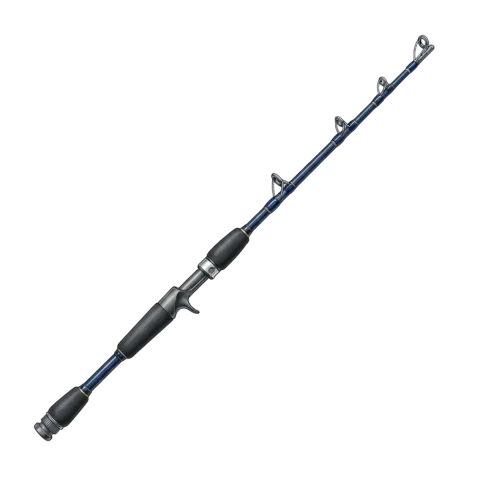
Rod
Boat rod
A boat rod is the short, stout fishing rod for work under the hull: bottom fishing, trolling, drift, and live bait in fresh or salt.
Sized for a typical fish
medium · 1.83 m
- Reel seat
- Casting
- Form factor
- One-piece
- Action
- Moderate-fast
- Grip
- EVA
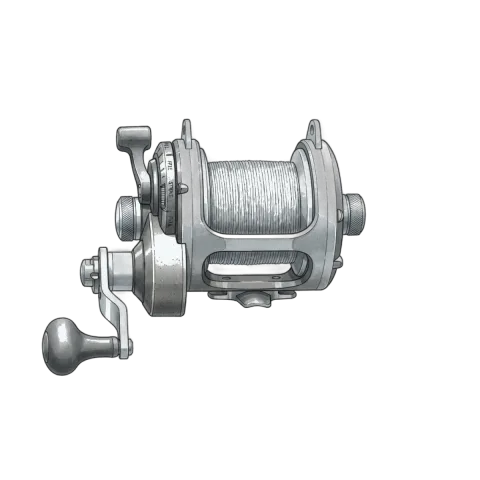
Reel
Conventional reel
A conventional reel is the lever-drag boat fishing reel for trolling and bottom fishing.
Sized for a typical fish
10 · 4 kg drag
- Spool
- Revolving
- Mount
- Over
- Drag
- Lever
- Retrieve
- Manual

Line
Braided line
Braided fishing line is the thin, no-stretch main for long casts, jigging, and feeling every tick on the retrieve.
Sized for a typical fish
6 kg · 0.1 mm
- Visibility
- High
- Abrasion
- Low
- Stretch
- None
- Sink rate
- Floats
Hook
Circle hook
A circle hook turns in the mouth and usually finds the corner of the jaw. You do not strike hard — you come tight. It includes freshwater.
Sized for a typical fish
2
- Points
- 1
- Offset
- No
- Barbed
- Yes
- Gap
- Standard
Best lures and baits for Cuban dogfish
Ranked lures and natural baits from every method, best first.
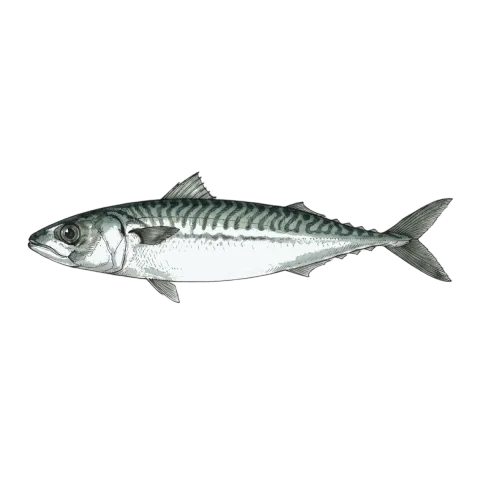
01
Mackerel
- Bottom Fishing
- Drift Fishing
Distinctive wavy dorsal stripes provide high contrast and flash underwater.
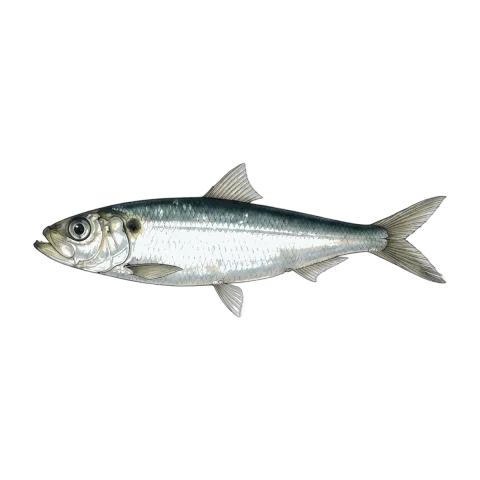
02
Sardine
- Bottom Fishing
Elongated silvery baitfish body releases strong scent trails.
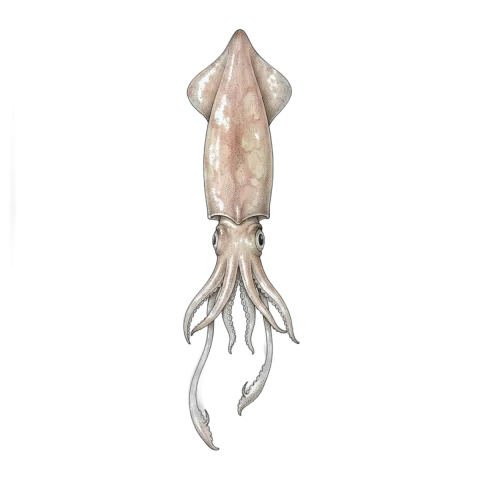
03
Squid
- Bottom Fishing
Elongated muscular body holds internal organs and secretes scent in the water.
How Cuban dogfish migrates — Bathymetric
Shifts between shallow and deeper water with the seasons rather than moving along the coast. Change depth before you change venue.
1 Warm months
Shallow water
Feed in shallow water through the warm months.
2 Cold months
Deep water
Drop into deeper water as it cools.
Larger adults often stay deeper all year.
Hover or tap a number to read each stage.
Diet and behavior of Cuban dogfish
-
Diet
Top predator -
Feeds by
Hunts animals -
Hunts
Dawn · Dusk · Night -
Main prey
Bottom prey
Prey and predators of Cuban dogfish
Prey is what Cuban dogfish eats. Predators are the animals that eat it.
That is how it feeds, and how it is hunted.
Prey
What it eats
Where Cuban dogfish lives
Lives on or just above the bottom. Work jigs, bait, and lures along the seabed.
60–400 m

Where this species lives
Cuban dogfish photos for identification
Compare these photos with the catalog plate to identify the species.