How to catch Cubera snapper
Lutjanus cyanopterus (Cuvier, 1828)
About Cubera snapper fishing
The cubera snapper is the largest marine representative of the snapper family Lutjanidae, featuring a robust, streamlined body coloured grey to dark brown with pale flanks and large canine teeth visible even when the mouth is closed. Growing up to a maximum length of 160 centimetres and a weight of 57 kilograms, adults inhabit deeper rocky ledges, drop-offs, and coral reefs down to 70 metres, while juveniles shelter in shallow mangroves and estuaries. This solitary, long-lived predatory fish feeds primarily on fishes, crabs, lobsters, and shrimp, and it undertakes offshore migrations during the summer months to form massive spawning aggregations timed with lunar cycles.
-
Difficulty
Medium
-
Average size
90 cm TL
-
Market value
High
-
Habitat
Brackish, Saltwater
-
Season
Spring, Summer
-
Also known as
Canteen snapper, Cuban snapper, Cubera, Cubera Snapper, Gray snapper, Guasinuco

Caudal shape
Truncate caudal fin shape helps identify this snapper species.
Mouth position
Terminal mouth position is characteristic of the cubera snapper.
Forehead shape
Straight forehead profile distinguishes it from other lutjanids.
No body spots
Unmarked body without spots or stripes separates it from similar snappers.
Cubera snapper fishing facts
Characteristics
-
Typical size
90 cm TL (max 160 cm TL ) -
Typical weight
10.1 kg (max 57 kg ) -
Preferred temperature
21.7–27.6 °C -
Depth
18–70 m -
Longevity
55 years -
Body shape
Fusiform / Normal -
Commercial?
-
Vulnerability score
82.9
Best hours
-
Active
Dawn
First light
-
Low
Morning
After sunrise
-
Low
Midday
High sun
-
Low
Afternoon
Late day
-
Peak
Dusk
Last light
-
Peak
Night
After dark
When to fish for Cubera snapper
How to catch Cubera snapper
Tips for catching Cubera snapper
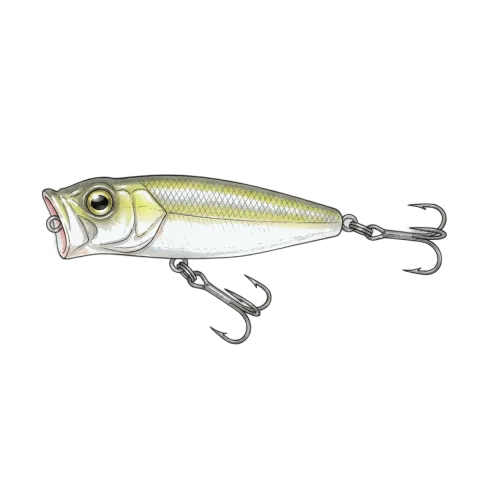
Target this large predatory snapper around deep offshore rocky ledges, drop-offs, and wrecks where adults congregate near the seabed. Use heavy tackle with robust lines because these wary fish fight hard and try to cut off gear on sharp reef structures. Present whole dead baits, large squid strips, or heavy crabs right on the bottom, or work large surface poppers and heavy jigs around structural edges during dawn and dusk to trigger aggressive strikes.
Other names for Cubera snapper
Local and alternate names anglers use for Cubera snapper.
-
Cubera snapper
-
Guasinuco
-
Gray snapper
-
Cubera
-
Cuban snapper
-
Canteen snapper
Best equipment to catch Cubera snapper
Compare fishing methods for Cubera snapper — sized kit for each technique.
Note: Typical fish is 10.1 kg Our algorithm will suggest the best equipment for you based on this weight.
Bottom Fishing
Presenting bait or rigs on or near the lake or sea floor.
90% Effectiveness

Rod
Spinning rod
A spinning rod is a fishing rod built to carry a spinning reel under the blank. You cast lures and light baits with it from shore or a boat.
Sized for a typical fish
extra-heavy · 2.18 m
- Reel seat
- Spinning
- Form factor
- Multi-piece
- Action
- Fast
- Grip
- EVA

Reel
Spinning reel
A spinning reel hangs under the fishing rod and is the default reel for casting lures and light baits. Line peels off an open spool with a bail.
Sized for a typical fish
8000 · 15 kg drag
- Spool
- Fixed
- Mount
- Under
- Drag
- Front
- Retrieve
- Manual

Line
Monofilament line
Monofilament fishing line is the everyday main line: easy to knot, cheap to replace, and stretchy enough to forgive a hard strike.
Sized for a typical fish
37 kg · 0.8 mm
- Visibility
- Medium
- Abrasion
- Medium
- Stretch
- High
- Sink rate
- Slow

Leader
Fluorocarbon leader
A fluorocarbon leader is the clear, fast-sinking join between a visible main line and the lure or hook.
Sized for a typical fish
59 kg · 1.087 mm · 150 cm
- Visibility
- Very low
- Abrasion
- High
- Stretch
- Low
- Sink rate
- Fast

Hook
Circle hook
A circle hook turns in the mouth and usually finds the corner of the jaw. You do not strike hard — you come tight. It includes freshwater.
Sized for a typical fish
6/0
- Points
- 1
- Offset
- No
- Barbed
- Yes
- Gap
- Standard
Popping
Working surface poppers or stickbaits for inshore and tropical predators.
70% Effectiveness
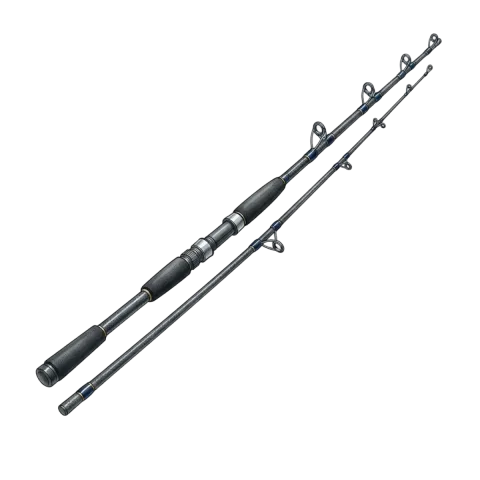
Rod
Offshore rod
An offshore rod is the one-piece boat fishing rod for deep jigging, trolling, and live bait in open salt water.
Sized for a typical fish
heavy · 1.68 m
- Reel seat
- Casting
- Form factor
- One-piece
- Action
- Fast
- Grip
- EVA
Reel
Spinning reel
A spinning reel hangs under the fishing rod and is the default reel for casting lures and light baits. Line peels off an open spool with a bail.
Sized for a typical fish
5000 · 11 kg drag · 290 g
- Spool
- Fixed
- Mount
- Under
- Drag
- Front
- Retrieve
- Manual

Line
Braided line
Braided fishing line is the thin, no-stretch main for long casts, jigging, and feeling every tick on the retrieve.
Sized for a typical fish
27 kg · 0.3 mm
- Visibility
- High
- Abrasion
- Low
- Stretch
- None
- Sink rate
- Floats
Leader
Fluorocarbon leader
A fluorocarbon leader is the clear, fast-sinking join between a visible main line and the lure or hook.
Sized for a typical fish
36.3 kg · 0.847 mm · 150 cm
- Visibility
- Very low
- Abrasion
- High
- Stretch
- Low
- Sink rate
- Fast
Spinning
Casting and retrieving lures with a spinning rod and reel.
60% Effectiveness
Rod
Spinning rod
A spinning rod is a fishing rod built to carry a spinning reel under the blank. You cast lures and light baits with it from shore or a boat.
Sized for a typical fish
heavy · 2.13 m
- Reel seat
- Spinning
- Form factor
- Multi-piece
- Action
- Fast
- Grip
- EVA
Reel
Spinning reel
A spinning reel hangs under the fishing rod and is the default reel for casting lures and light baits. Line peels off an open spool with a bail.
Sized for a typical fish
5000 · 11 kg drag · 290 g
- Spool
- Fixed
- Mount
- Under
- Drag
- Front
- Retrieve
- Manual
Line
Braided line
Braided fishing line is the thin, no-stretch main for long casts, jigging, and feeling every tick on the retrieve.
Sized for a typical fish
27 kg · 0.3 mm
- Visibility
- High
- Abrasion
- Low
- Stretch
- None
- Sink rate
- Floats
Leader
Fluorocarbon leader
A fluorocarbon leader is the clear, fast-sinking join between a visible main line and the lure or hook.
Sized for a typical fish
36.3 kg · 0.847 mm · 150 cm
- Visibility
- Very low
- Abrasion
- High
- Stretch
- Low
- Sink rate
- Fast
Best lures and baits for Cubera snapper
Ranked lures and natural baits from every method, best first.
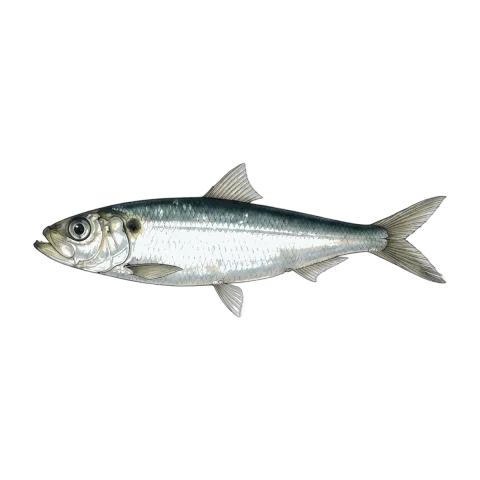
01
Sardine
- Bottom Fishing
Elongated silvery baitfish body releases strong scent trails.
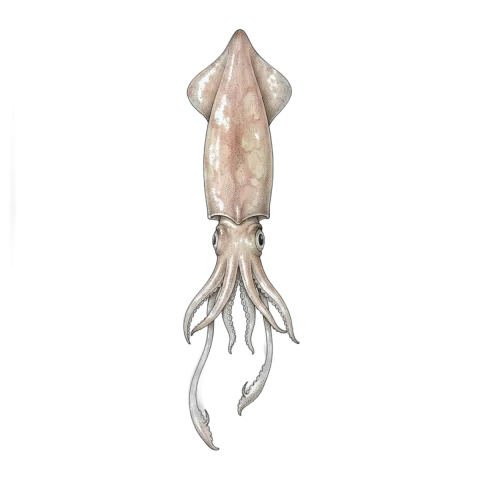
02
Squid
- Bottom Fishing
Elongated muscular body holds internal organs and secretes scent in the water.
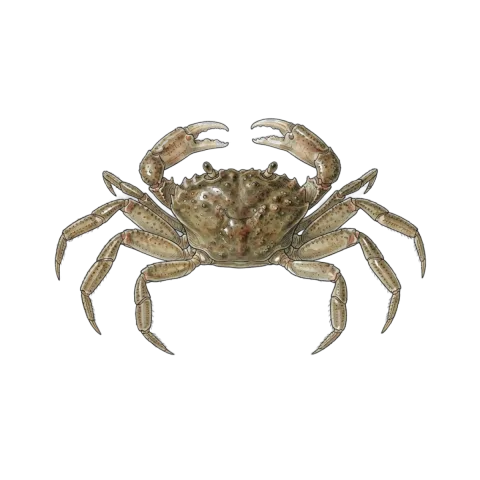
03
Crab
- Bottom Fishing
Hard upper shell protects the crab and anchors its vital organs.
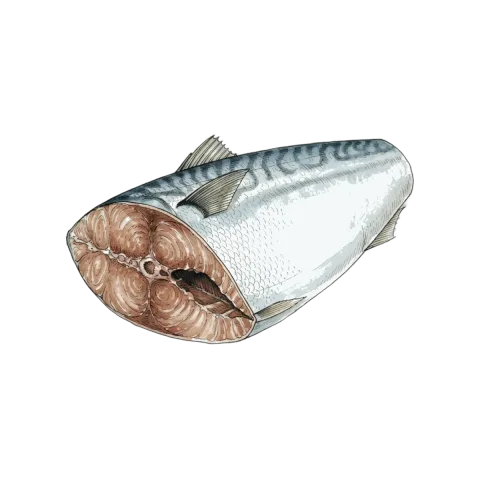
04
Fish chunks
- Bottom Fishing
Freshly sliced fish chunk providing rich scent attraction for bottom fishing.
How Cubera snapper migrates — Inshore–offshore
Shifts between shallow inshore water and deeper offshore grounds with the season.
1 Warm months
Inshore
Stay close inshore through the warm months.
2 Cold months
Offshore
Move offshore into deeper water as it cools.
Hover or tap a number to read each stage.
Diet and behavior of Cubera snapper
-
Diet
Top predator -
Feeds by
Hunts animals -
Hunts
Dusk · Night -
Feeds over
Hard bottom · Coral reefs · Mangroves
Prey and predators of Cubera snapper
Prey is what Cubera snapper eats. Predators are the animals that eat it.
That is how it feeds, and how it is hunted.
Prey
What it eats
Other prey
Where Cubera snapper lives
Tied to reefs and rocky structure in shallow coastal water.
18–70 m

Estuary
Where this species lives
Cubera snapper photos for identification
Compare these photos with the catalog plate to identify the species.