How to catch Cyphocharax abramoides
Cyphocharax abramoides (Kner, 1858)
About Cyphocharax abramoides fishing
Cyphocharax abramoides is a freshwater fish belonging to the family Curimatidae, native to major tropical river basins in South America including the Amazon, Orinoco, and Rio Negro. Exhibiting a short and deep body shape with a high back reminiscent of a freshwater bream, it features a silvery appearance with fine scales and subtle orange tones on the fins. As a benthopelagic detritivore with a low trophic level, it feeds primarily on organic detritus and micro-flora along soft river substrates. It forms peaceful schools in flooded forests and flowing channels, undertaking seasonal movements linked to water levels.
-
Difficulty
Medium
-
Average size
15 cm
-
Habitat
Freshwater

Lateral Stripe
Distinct dark midlateral stripe running horizontally across the flank to the tail.
Adipose Fin
Small fleshy adipose fin present on the dorsal surface before the caudal fin.
Cyphocharax abramoides fishing facts
Characteristics
-
Typical size
15 cm (max 21.3 cm SL ) -
Typical weight
0.2 kg (max 0.2 kg ) -
Body shape
Short And / Or Deep -
Vulnerability score
34.8
How to catch Cyphocharax abramoides
Tips for catching Cyphocharax abramoides
To target this benthopelagic freshwater species, anglers should focus on slow-flowing tropical rivers and marginal habitats where individuals graze on aufwuchs and fine organic matter. Because these fish possess specialized toothless jaws adapted for scraping biofilm and algae from submerged surfaces, traditional baited hooks are largely ineffective. Instead, use ultra-light tackle equipped with tiny micro-jigs or small artificial flies drifted precisely near submerged wood, roots, and rocky structures where current slows. Early morning and late afternoon hours offer the most productive windows when fish move actively around shallow structure. Keep presentations subtle and maintain light contact with the bottom to detect the delicate, cautious taps typical of toothless grazers.
Best equipment to catch Cyphocharax abramoides
Compare fishing methods for Cyphocharax abramoides — sized kit for each technique.
Note: Typical fish is 0.2 kg Our algorithm will suggest the best equipment for you based on this weight.
Bottom Fishing
Presenting bait or rigs on or near the lake or sea floor.
50% Effectiveness

Rod
Spinning rod
A spinning rod is a fishing rod built to carry a spinning reel under the blank. You cast lures and light baits with it from shore or a boat.
Sized for a typical fish
ultralight · 1.8 m
- Reel seat
- Spinning
- Form factor
- Multi-piece
- Action
- Fast
- Grip
- EVA

Reel
Spinning reel
A spinning reel hangs under the fishing rod and is the default reel for casting lures and light baits. Line peels off an open spool with a bail.
Sized for a typical fish
1000 · 3 kg drag · 185 g
- Spool
- Fixed
- Mount
- Under
- Drag
- Front
- Retrieve
- Manual

Line
Monofilament line
Monofilament fishing line is the everyday main line: easy to knot, cheap to replace, and stretchy enough to forgive a hard strike.
Sized for a typical fish
1.3 kg · 0.125 mm
- Visibility
- Medium
- Abrasion
- Medium
- Stretch
- High
- Sink rate
- Slow

Leader
Fluorocarbon leader
A fluorocarbon leader is the clear, fast-sinking join between a visible main line and the lure or hook.
Sized for a typical fish
4 kg · 0.2 mm · 80 cm
- Visibility
- Very low
- Abrasion
- High
- Stretch
- Low
- Sink rate
- Fast

Hook
Circle hook
A circle hook turns in the mouth and usually finds the corner of the jaw. You do not strike hard — you come tight. It includes freshwater.
Sized for a typical fish
4
- Points
- 1
- Offset
- No
- Barbed
- Yes
- Gap
- Standard
Float Fishing
Suspending bait beneath a float at a controlled depth.
40% Effectiveness
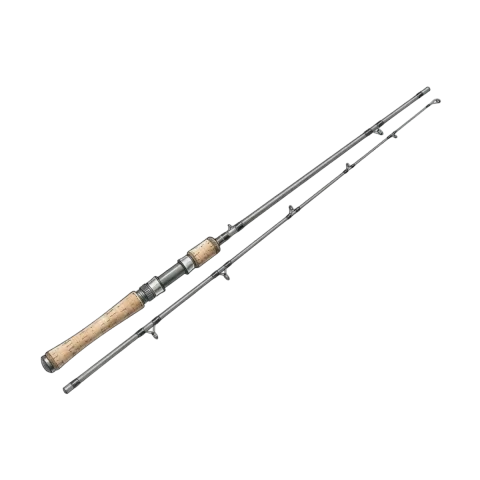
Rod
Float rod
A float rod is the all-round fishing rod for a float in rivers and still water, a step down in length from match.
Sized for a typical fish
light · 3.6 m
- Reel seat
- Spinning
- Form factor
- Multi-piece
- Action
- Moderate
- Grip
- Cork
Reel
Spinning reel
A spinning reel hangs under the fishing rod and is the default reel for casting lures and light baits. Line peels off an open spool with a bail.
Sized for a typical fish
1000 · 3 kg drag · 185 g
- Spool
- Fixed
- Mount
- Under
- Drag
- Front
- Retrieve
- Manual
Line
Monofilament line
Monofilament fishing line is the everyday main line: easy to knot, cheap to replace, and stretchy enough to forgive a hard strike.
Sized for a typical fish
1.3 kg · 0.125 mm
- Visibility
- Medium
- Abrasion
- Medium
- Stretch
- High
- Sink rate
- Slow
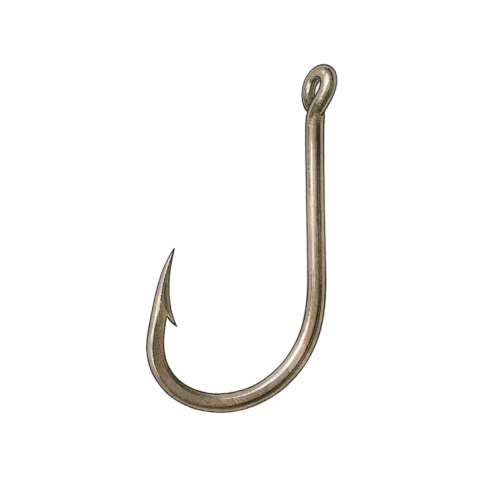
Hook
J-hook
A J-hook is the classic J-bend fishing hook for bait. You set it with a strike. Sizes are tokens such as 12 or 1/0.
Sized for a typical fish
12
- Points
- 1
- Offset
- No
- Barbed
- Yes
- Gap
- Standard
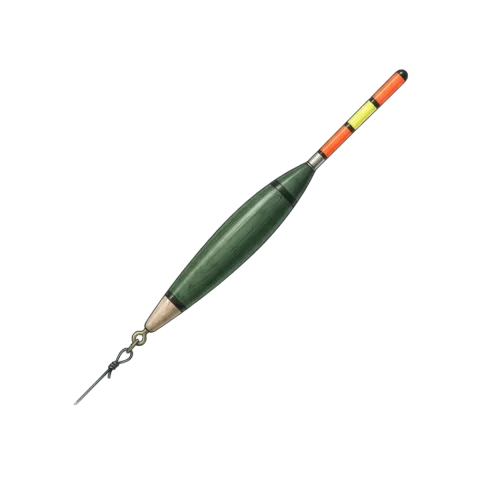
Float
Waggler
A waggler is a bottom-only attachment float for stillwaters and slow rivers. You shot it down and watch the antenna.
Sized for a typical fish
4 g
- Attachment
- Fixed
- Habitats
- Freshwater
- Methods
- Float Fishing
Best lures and baits for Cyphocharax abramoides
Ranked lures and natural baits from every method, best first.
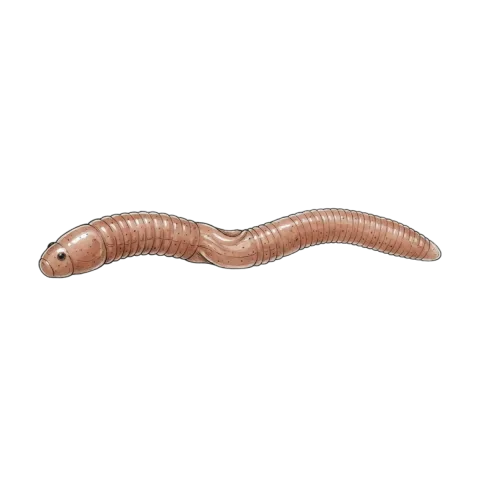
01
Worm
- Bottom Fishing
Rounded anterior end containing the mouth used for anchoring the bait on the hook.
02
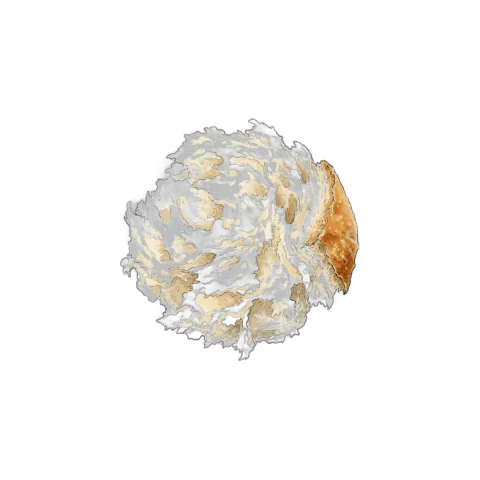
Bread
- Float Fishing
Soft inner bread compressed onto the hook for surface feeding.
How Cyphocharax abramoides migrates — Potamodromous
Migrates within rivers and lakes only. Fish upstream runs and seasonal lake movements, not saltwater.
1 Eggs
Upstream
Laid on gravel or weed upstream or in flooded shallows.
2 Larvae
→ Main river or lake
Fry drift or swim down to slower water.
3 Adults
Main river or lake
Feed in the main river or lake.
4 Spawners
→ Upstream
Move upstream or into the shallows to spawn.
The whole cycle stays in fresh water.
Hover or tap a number to read each stage.
Diet and behavior of Cyphocharax abramoides
-
Diet
Herbivore
Where Cyphocharax abramoides lives
Lives near the bottom but swims in the water just above it. Cover the lower column, not only the mud.

Where this species lives