How to catch Flounder
Rhombosolea retiaria Hutton, 1874
About Flounder fishing
The black flounder belongs to the family Rhombosoleidae and is easily recognised by its short, deep oval body featuring a dark upper surface marked with distinctive orange spots. Growing to a maximum length of twenty five centimetres, this demersal flatfish inhabits shallow coastal waters, estuaries, mudflats, and sheltered bays while uniquely demonstrating the ability to venture far upstream into freshwater rivers and lakes. Juveniles spend their early years in protected inshore nurseries before moving into deeper adult habitats. As a catadromous species, it relies on complex movements between fresh and marine environments to complete its lifecycle. Anglers and commercial fishers value this species for its presence in accessible shallow grounds.
-
Difficulty
Medium
-
Average size
30 cm
-
Market value
Medium
-
Habitat
Freshwater, Brackish, Saltwater
-
Season
Spring, Summer, Autumn, Winter
-
Also known as
Black flounder, New Zealand flounder

Flatfish Body
Deep, rounded asymmetrical body profile identifies this as a flatfish.
Reticulated Markings
Distinctive network of reddish-brown spots and reticulations covers the body.
Sinuous Lateral Line
Prominent arched lateral line curves clearly above the pectoral fin region.
Flounder fishing facts
Characteristics
-
Typical size
30 cm (max 25 cm TL ) -
Typical weight
0.4 kg (max 0.2 kg ) -
Longevity
4 years -
Body shape
Short And / Or Deep -
Commercial?
-
Vulnerability score
19.5
Best hours
-
Peak
Dawn
First light
-
Active
Morning
After sunrise
-
Low
Midday
High sun
-
Low
Afternoon
Late day
-
Peak
Dusk
Last light
-
Active
Night
After dark
When to fish for Flounder
How to catch Flounder
Tips for catching Flounder
When targeting this unique flatfish in shallow estuarine flats or slow-flowing rivers, success relies on presenting baits or lures directly on the sandy or muddy bottom where the fish lies in ambush. Use light spinning gear equipped with small soft plastic lures or micro jigs that imitate local crustaceans and small fish, working them with a slow and subtle retrieve close to the seabed. Natural presentations such as small marine worms, pieces of crab, or shrimp threaded onto light hooks are equally effective when ledgered gently across the mud. Pay attention to the tides, concentrating your efforts as the rising water pushes over the flats where these fish actively feed. Low light conditions around dawn and dusk often yield the best results as fish move into very thin water to hunt.
Other names for Flounder
Local and alternate names anglers use for Flounder.
-
Flounder
-
New Zealand flounder
-
Black flounder
Best equipment to catch Flounder
Compare fishing methods for Flounder — sized kit for each technique.
Note: Typical fish is 0.4 kg Our algorithm will suggest the best equipment for you based on this weight.
Spinning
Casting and retrieving lures with a spinning rod and reel.
75% Effectiveness

Rod
Spinning rod
A spinning rod is a fishing rod built to carry a spinning reel under the blank. You cast lures and light baits with it from shore or a boat.
Sized for a typical fish
light · 2.1 m
- Reel seat
- Spinning
- Form factor
- Multi-piece
- Action
- Fast
- Grip
- EVA

Reel
Spinning reel
A spinning reel hangs under the fishing rod and is the default reel for casting lures and light baits. Line peels off an open spool with a bail.
Sized for a typical fish
1000 · 3 kg drag · 185 g
- Spool
- Fixed
- Mount
- Under
- Drag
- Front
- Retrieve
- Manual

Line
Braided line
Braided fishing line is the thin, no-stretch main for long casts, jigging, and feeling every tick on the retrieve.
Sized for a typical fish
6 kg · 0.1 mm
- Visibility
- High
- Abrasion
- Low
- Stretch
- None
- Sink rate
- Floats

Leader
Fluorocarbon leader
A fluorocarbon leader is the clear, fast-sinking join between a visible main line and the lure or hook.
Sized for a typical fish
7 kg · 0.3 mm · 90 cm
- Visibility
- Very low
- Abrasion
- High
- Stretch
- Low
- Sink rate
- Fast
Bottom Fishing
Presenting bait or rigs on or near the lake or sea floor.
70% Effectiveness
Rod
Spinning rod
A spinning rod is a fishing rod built to carry a spinning reel under the blank. You cast lures and light baits with it from shore or a boat.
Sized for a typical fish
light · 2.1 m
- Reel seat
- Spinning
- Form factor
- Multi-piece
- Action
- Fast
- Grip
- EVA
Reel
Spinning reel
A spinning reel hangs under the fishing rod and is the default reel for casting lures and light baits. Line peels off an open spool with a bail.
Sized for a typical fish
1000 · 3 kg drag · 185 g
- Spool
- Fixed
- Mount
- Under
- Drag
- Front
- Retrieve
- Manual

Line
Monofilament line
Monofilament fishing line is the everyday main line: easy to knot, cheap to replace, and stretchy enough to forgive a hard strike.
Sized for a typical fish
1.3 kg · 0.125 mm
- Visibility
- Medium
- Abrasion
- Medium
- Stretch
- High
- Sink rate
- Slow
Leader
Fluorocarbon leader
A fluorocarbon leader is the clear, fast-sinking join between a visible main line and the lure or hook.
Sized for a typical fish
4 kg · 0.2 mm · 80 cm
- Visibility
- Very low
- Abrasion
- High
- Stretch
- Low
- Sink rate
- Fast

Hook
Circle hook
A circle hook turns in the mouth and usually finds the corner of the jaw. You do not strike hard — you come tight. It includes freshwater.
Sized for a typical fish
4
- Points
- 1
- Offset
- No
- Barbed
- Yes
- Gap
- Standard
Best lures and baits for Flounder
Ranked lures and natural baits from every method, best first.
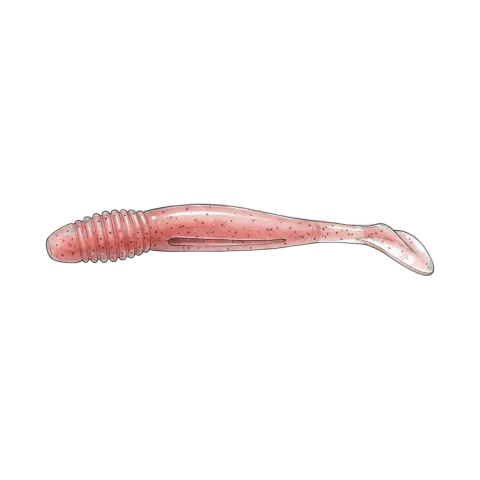
01
Soft worm
- Spinning
A long soft worm for Texas, wacky, and ned-style spinning.
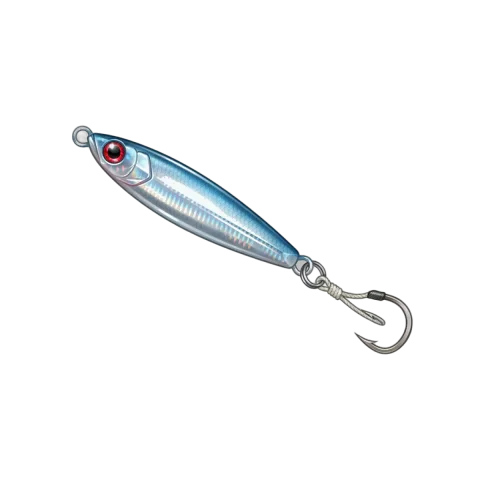
02
Metal jig
- Spinning
A long metal lure for speed-jigging the deep column.
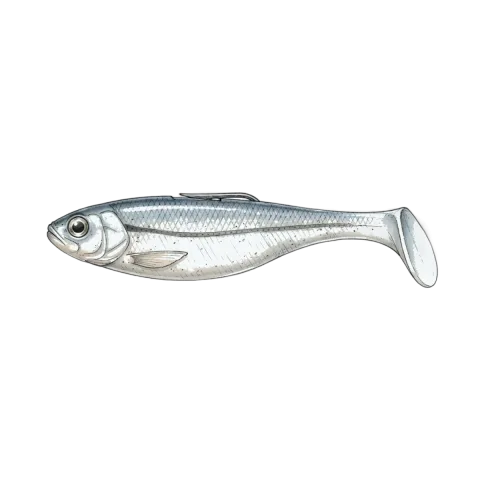
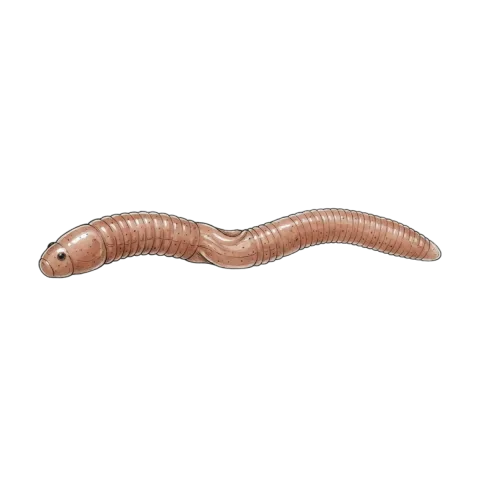
04
Worm
- Bottom Fishing
Rounded anterior end containing the mouth used for anchoring the bait on the hook.
05
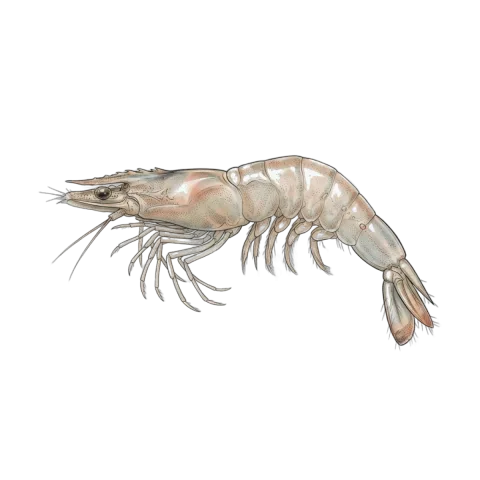
Shrimp
- Bottom Fishing
Translucent segmented carapace protects the body.
06
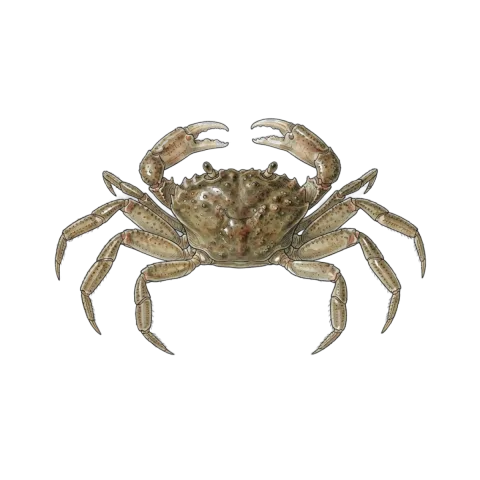
Crab
- Bottom Fishing
Hard upper shell protects the crab and anchors its vital organs.
How Flounder migrates — Catadromous
Grows in fresh or brackish water and migrates to the sea to spawn. Estuaries and lower rivers fire when adults drop downstream.
1 Eggs
Sea
Spawned out at sea.
2 Larvae
→ Estuary
Drift with the currents towards the coast.
3 Juveniles
→ Fresh water
Enter estuaries, and many move on into fresh water.
4 Adults
Fresh water
Feed and grow in rivers, lakes and estuaries, often for years.
5 Spawners
→ Sea
Head downstream and out to sea to spawn.
Many only reach estuaries and the lower river; eels travel far inland.
Hover or tap a number to read each stage.
Diet and behavior of Flounder
-
Diet
Carnivore -
Hunts
Dawn · Dusk
Where Flounder lives
Lives on or just above the bottom. Work jigs, bait, and lures along the seabed.

River mouth
Where this species lives
Flounder photos for identification
Compare these photos with the catalog plate to identify the species.