How to catch Giant bully
Gobiomorphus gobioides (Valenciennes, 1837)
About Giant bully fishing
The giant bully is a robust freshwater and estuarine fish belonging to the family Eleotridae, endemic to the coastal rivers and tidal zones of New Zealand. Recognized as the largest member of its genus, it features a classic fusiform body shape and typically achieves a length between twelve and fifteen centimetres, though exceptional specimens can exceed twenty-five centimetres. Adults inhabit shallow, lower river reaches and brackish environments, often sheltering among boulders, woody debris, or estuarine vegetation. This species exhibits a diadromous life cycle where larvae drift out to sea before returning to freshwater as juveniles. It feeds primarily as a benthic carnivore on small aquatic invertebrates.
-
Difficulty
Medium
-
Average size
13.5 cm
-
Habitat
Freshwater, Brackish, Saltwater

Large terminal mouth
Large, slightly oblique mouth reaching below the eye identifies this bully.
Mottled body pattern
Heavy dark brown mottle and irregular saddles camouflage the thick cylindrical body.
Spotted fin arrays
Densely spotted fin membranes help distinguish this species from plain bullies.
Giant bully fishing facts
Characteristics
-
Typical size
13.5 cm (max 17.4 cm TL ) -
Typical weight
0.2 kg (max 0.1 kg ) -
Preferred temperature
13.1–20.2 °C -
Depth
1–50 m -
Body shape
Fusiform / Normal -
Vulnerability score
29.3
How to catch Giant bully
Tips for catching Giant bully
Target this demersal species around shallow coastal rivers and estuarine margins where rocky structure and slow-moving tidal currents provide cover. Since these fish feed primarily on benthic invertebrates, ledgering small worm baits tight to the riverbed or presenting them beneath a lightly weighted float near undercut banks yields the best results. Approach quietly as coastal bullies spook easily in clear, shallow water, and concentrate your efforts during lower light periods when they emerge from hiding to forage actively over the substrate.
Other names for Giant bully
Local and alternate names anglers use for Giant bully.
-
Giant bully
Best equipment to catch Giant bully
Compare fishing methods for Giant bully — sized kit for each technique.
Note: Typical fish is 0.2 kg Our algorithm will suggest the best equipment for you based on this weight.
Bottom Fishing
Presenting bait or rigs on or near the lake or sea floor.
70% Effectiveness

Rod
Spinning rod
A spinning rod is a fishing rod built to carry a spinning reel under the blank. You cast lures and light baits with it from shore or a boat.
Sized for a typical fish
ultralight · 1.8 m
- Reel seat
- Spinning
- Form factor
- Multi-piece
- Action
- Fast
- Grip
- EVA

Reel
Spinning reel
A spinning reel hangs under the fishing rod and is the default reel for casting lures and light baits. Line peels off an open spool with a bail.
Sized for a typical fish
1000 · 3 kg drag · 185 g
- Spool
- Fixed
- Mount
- Under
- Drag
- Front
- Retrieve
- Manual

Line
Monofilament line
Monofilament fishing line is the everyday main line: easy to knot, cheap to replace, and stretchy enough to forgive a hard strike.
Sized for a typical fish
1.3 kg · 0.125 mm
- Visibility
- Medium
- Abrasion
- Medium
- Stretch
- High
- Sink rate
- Slow

Leader
Fluorocarbon leader
A fluorocarbon leader is the clear, fast-sinking join between a visible main line and the lure or hook.
Sized for a typical fish
4 kg · 0.2 mm · 80 cm
- Visibility
- Very low
- Abrasion
- High
- Stretch
- Low
- Sink rate
- Fast

Hook
Circle hook
A circle hook turns in the mouth and usually finds the corner of the jaw. You do not strike hard — you come tight. It includes freshwater.
Sized for a typical fish
4
- Points
- 1
- Offset
- No
- Barbed
- Yes
- Gap
- Standard
Float Fishing
Suspending bait beneath a float at a controlled depth.
60% Effectiveness

Rod
Float rod
A float rod is the all-round fishing rod for a float in rivers and still water, a step down in length from match.
Sized for a typical fish
light · 3.6 m
- Reel seat
- Spinning
- Form factor
- Multi-piece
- Action
- Moderate
- Grip
- Cork
Reel
Spinning reel
A spinning reel hangs under the fishing rod and is the default reel for casting lures and light baits. Line peels off an open spool with a bail.
Sized for a typical fish
1000 · 3 kg drag · 185 g
- Spool
- Fixed
- Mount
- Under
- Drag
- Front
- Retrieve
- Manual
Line
Monofilament line
Monofilament fishing line is the everyday main line: easy to knot, cheap to replace, and stretchy enough to forgive a hard strike.
Sized for a typical fish
1.3 kg · 0.125 mm
- Visibility
- Medium
- Abrasion
- Medium
- Stretch
- High
- Sink rate
- Slow

Hook
J-hook
A J-hook is the classic J-bend fishing hook for bait. You set it with a strike. Sizes are tokens such as 12 or 1/0.
Sized for a typical fish
12
- Points
- 1
- Offset
- No
- Barbed
- Yes
- Gap
- Standard

Float
Waggler
A waggler is a bottom-only attachment float for stillwaters and slow rivers. You shot it down and watch the antenna.
Sized for a typical fish
4 g
- Attachment
- Fixed
- Habitats
- Freshwater
- Methods
- Float Fishing
Best lures and baits for Giant bully
Ranked lures and natural baits from every method, best first.
01
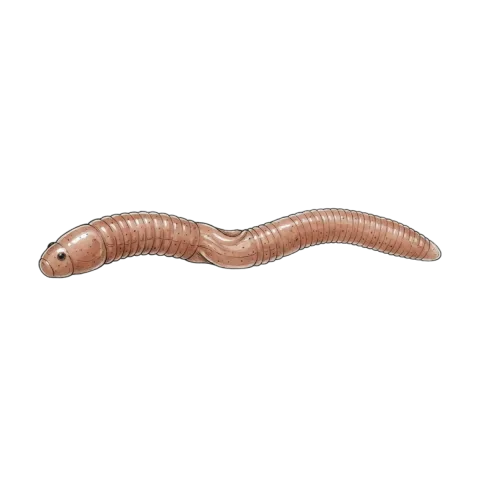
Worm
- Bottom Fishing
- Float Fishing
Rounded anterior end containing the mouth used for anchoring the bait on the hook.
How Giant bully migrates — Amphidromous
Moves between fresh and salt water during its life, but not specifically to spawn. Fish the estuary and the lower river.
1 Eggs
Sea
Spawned at sea or along the coast.
2 Larvae
→ Estuary
Drift inshore with the currents.
3 Juveniles
Fresh water
Move into estuaries, lagoons and fresh water to feed and grow.
4 Adults
→ Sea
Return to the sea to mature and spawn.
The crossing is for feeding and growth, not to spawn.
Hover or tap a number to read each stage.
Diet and behavior of Giant bully
-
Diet
Carnivore
Where Giant bully lives
Lives on or just above the bottom. Work jigs, bait, and lures along the seabed.
1–50 m

River mouth
Where this species lives
Giant bully photos for identification
Compare these photos with the catalog plate to identify the species.