How to catch Greater pipefish
Syngnathus acus Linnaeus, 1758
About Greater pipefish fishing
The greater pipefish is a slender marine fish belonging to the family Syngnathidae, recognised by its elongated, rigid body encased in bony rings and a long, tubular snout. Growing up to fifty centimetres in total length, it displays a mottled brownish-green colouration with subtle alternating light and dark markings that provide camouflage among vegetation. This demersal species inhabits coastal and estuarine waters from shallow depths down to several hundred metres, frequenting sandy substrates, mud bottoms, and dense seagrass beds or algal zones. It feeds primarily on small benthic crustaceans, hunting microfauna with a quick snap of its toothless jaws. Spawning occurs during the warmer spring and summer months, after which the males carry developing eggs in a specialised ventral brood pouch until they hatch.
-
Difficulty
Medium
-
Average size
35 cm
-
Habitat
Brackish, Saltwater
-
Season
Spring, Summer, Autumn
-
Also known as
Common pipefish, Great pipefish, Greater pipe-fish, Longsnout pipefish

Tube-like Mouth
Elongated tubular snout adapted for suction feeding.
Body Rings
Distinct bony rings armor the elongated body.
Greater pipefish fishing facts
Characteristics
-
Typical size
35 cm (max 50 cm TL ) -
Typical weight
0.2 kg (max 0.1 kg ) -
Preferred temperature
10.3–22.6 °C -
Depth
4–500 m -
Body shape
Eel Like -
Vulnerability score
34.3
Best hours
-
Active
Dawn
First light
-
Peak
Morning
After sunrise
-
Low
Midday
High sun
-
Peak
Afternoon
Late day
-
Active
Dusk
Last light
-
Low
Night
After dark
When to fish for Greater pipefish
How to catch Greater pipefish
Tips for catching Greater pipefish
The greater pipefish is a delicate coastal inhabitant frequently encountered by micro-anglers exploring shallow marine bays, sheltered estuaries, and rockpools around seaweed or seagrass beds. Because this species possesses a tiny, fixed snout that functions as a feeding tube, traditional hooks and bulky baits are ineffective; instead, targeting them requires specialized micro-fishing tackle with microscopic hooks baited with tiny pieces of marine worms or small copepods. Fish close to sandy or muddy substrates during calm daytime conditions when the water is clear and movement is minimal. Anglers should present baits very gently near underwater vegetation structure where these slender fish rely on camouflage for protection.
Other names for Greater pipefish
Local and alternate names anglers use for Greater pipefish.
-
Greater pipe-fish
-
Longsnout pipefish
-
Greater pipefish
-
Great pipefish
-
Common pipefish
Best equipment to catch Greater pipefish
Compare fishing methods for Greater pipefish — sized kit for each technique.
Note: Typical fish is 0.2 kg Our algorithm will suggest the best equipment for you based on this weight.
Float Fishing
Suspending bait beneath a float at a controlled depth.
30% Effectiveness
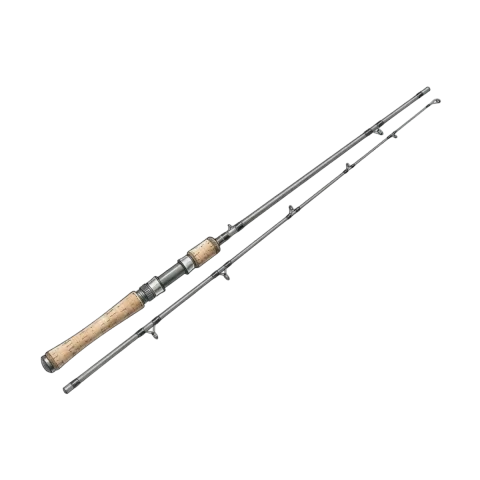
Rod
Float rod
A float rod is the all-round fishing rod for a float in rivers and still water, a step down in length from match.
Sized for a typical fish
light · 3.6 m
- Reel seat
- Spinning
- Form factor
- Multi-piece
- Action
- Moderate
- Grip
- Cork

Reel
Spinning reel
A spinning reel hangs under the fishing rod and is the default reel for casting lures and light baits. Line peels off an open spool with a bail.
Sized for a typical fish
1000 · 3 kg drag · 185 g
- Spool
- Fixed
- Mount
- Under
- Drag
- Front
- Retrieve
- Manual

Line
Monofilament line
Monofilament fishing line is the everyday main line: easy to knot, cheap to replace, and stretchy enough to forgive a hard strike.
Sized for a typical fish
1.3 kg · 0.125 mm
- Visibility
- Medium
- Abrasion
- Medium
- Stretch
- High
- Sink rate
- Slow
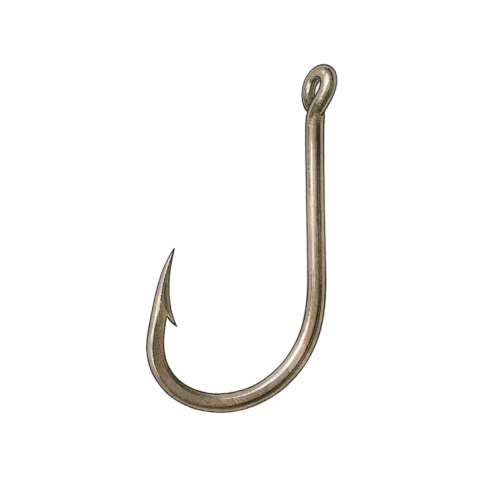
Hook
J-hook
A J-hook is the classic J-bend fishing hook for bait. You set it with a strike. Sizes are tokens such as 12 or 1/0.
Sized for a typical fish
12
- Points
- 1
- Offset
- No
- Barbed
- Yes
- Gap
- Standard
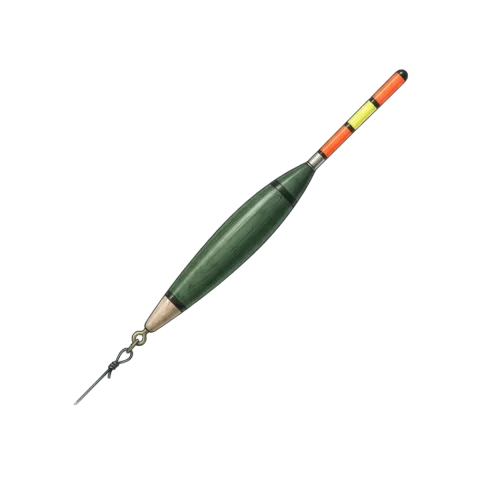
Float
Waggler
A waggler is a bottom-only attachment float for stillwaters and slow rivers. You shot it down and watch the antenna.
Sized for a typical fish
4 g
- Attachment
- Fixed
- Habitats
- Freshwater
- Methods
- Float Fishing
Bottom Fishing
Presenting bait or rigs on or near the lake or sea floor.
20% Effectiveness

Rod
Spinning rod
A spinning rod is a fishing rod built to carry a spinning reel under the blank. You cast lures and light baits with it from shore or a boat.
Sized for a typical fish
ultralight · 1.8 m
- Reel seat
- Spinning
- Form factor
- Multi-piece
- Action
- Fast
- Grip
- EVA
Reel
Spinning reel
A spinning reel hangs under the fishing rod and is the default reel for casting lures and light baits. Line peels off an open spool with a bail.
Sized for a typical fish
1000 · 3 kg drag · 185 g
- Spool
- Fixed
- Mount
- Under
- Drag
- Front
- Retrieve
- Manual
Line
Monofilament line
Monofilament fishing line is the everyday main line: easy to knot, cheap to replace, and stretchy enough to forgive a hard strike.
Sized for a typical fish
1.3 kg · 0.125 mm
- Visibility
- Medium
- Abrasion
- Medium
- Stretch
- High
- Sink rate
- Slow

Leader
Fluorocarbon leader
A fluorocarbon leader is the clear, fast-sinking join between a visible main line and the lure or hook.
Sized for a typical fish
4 kg · 0.2 mm · 80 cm
- Visibility
- Very low
- Abrasion
- High
- Stretch
- Low
- Sink rate
- Fast

Hook
Circle hook
A circle hook turns in the mouth and usually finds the corner of the jaw. You do not strike hard — you come tight. It includes freshwater.
Sized for a typical fish
4
- Points
- 1
- Offset
- No
- Barbed
- Yes
- Gap
- Standard
Best lures and baits for Greater pipefish
Ranked lures and natural baits from every method, best first.
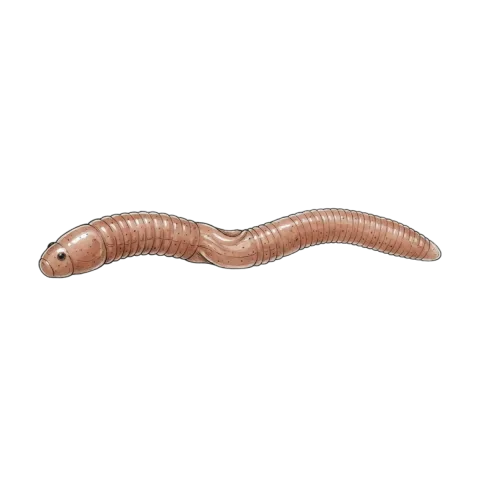
01
Worm
- Float Fishing
- Bottom Fishing
Rounded anterior end containing the mouth used for anchoring the bait on the hook.
Where Greater pipefish spends the year — Non-migratory
Stays in the same waters year-round. Look for it on the same grounds rather than timing a run.
1 Eggs
Same water all year
The male carries the eggs in a brood pouch.
2 Juveniles
Same water all year
Leave the pouch as tiny young that drift before settling.
3 Adults
Same water all year
Keep to a small home range.
4 Spawners
Same water all year
Spawn on the same grounds, with only short moves.
Hover or tap a number to read each stage.
Diet and behavior of Greater pipefish
-
Diet
Carnivore -
Feeds by
Hunts animals -
Hunts
Morning · Afternoon -
Feeds over
Hard bottom · Seagrass -
Main prey
Plankton · Bottom prey
Prey and predators of Greater pipefish
Prey is what Greater pipefish eats. Predators are the animals that eat it.
That is how it feeds, and how it is hunted.
Prey
What it eats
Predators
What hunts it
Fish
Where Greater pipefish lives
Lives on or just above the bottom. Work jigs, bait, and lures along the seabed.
4–500 m

Estuary
Where this species lives
Greater pipefish photos for identification
Compare these photos with the catalog plate to identify the species.